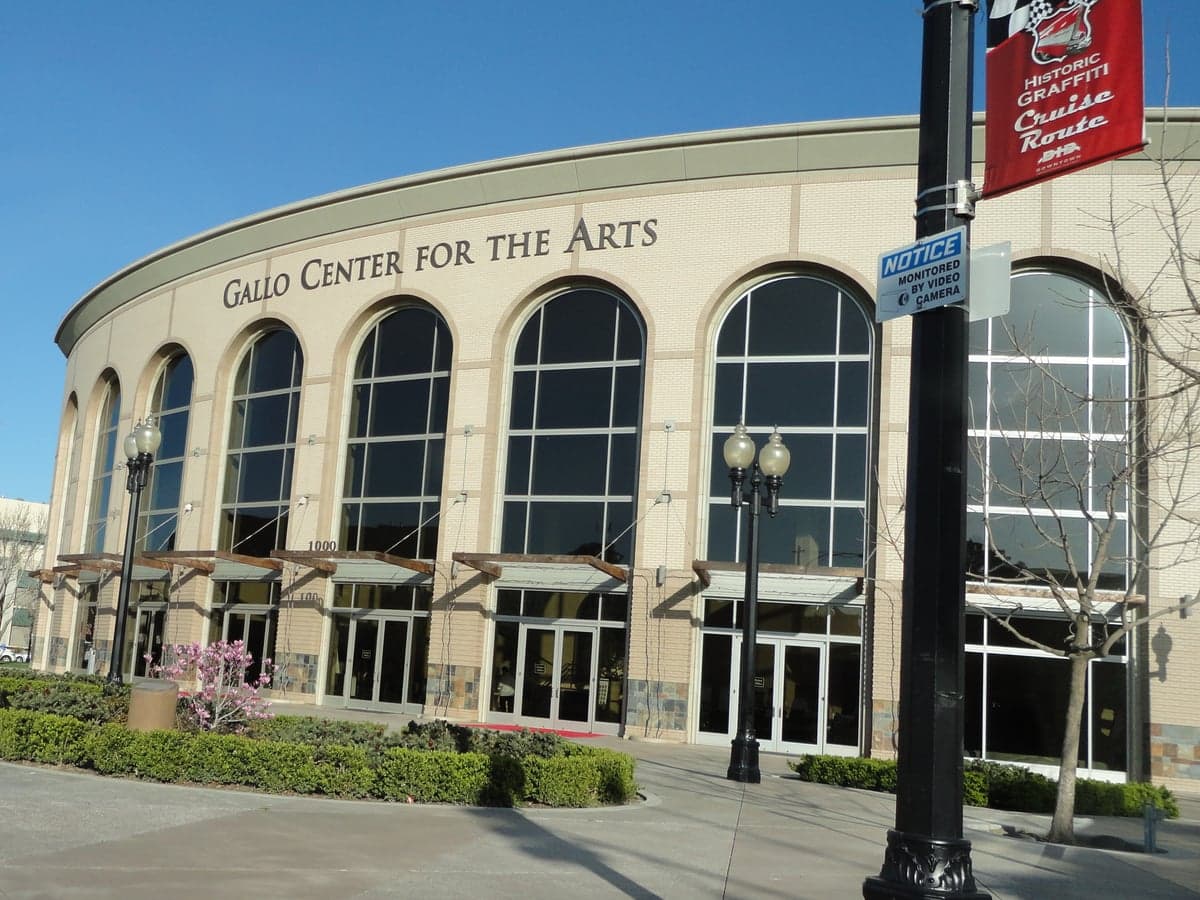
Photo: Wikipedia
Personal Sovereignty in Modesto, CA
Moderate friction. Expect trade-offs in some aspect of personal liberty and independence.
What does Personal Sovereignty tell us?
Personal Sovereignty measures your capacity for self-reliance and independence with minimal government friction. Higher scores mean fewer barriers between you and the way you want to live... but it assumes you have the space you need and good neighbors.
What does this tell us?
Personal Sovereignty measures your capacity for self-reliance and independence with minimal government friction. Higher scores mean fewer barriers between you and the way you want to live... but it assumes you have the space you need and good neighbors.
State Policy
Energy independence: Importer (33% of energy produced in-state)
Personal Liberty
Homesteading

Personal Liberty Analysis
For the individual or family approaching relocation through a lens of personal sovereignty, Modesto, California presents a deeply conflicted picture. The city sits in the heart of the Central Valley, a region with a strong agricultural independent streak, yet it operates under the full weight of California’s state-level apparatus—a system that, from a survivalist or prepper perspective, systematically erodes personal autonomy through high taxation, restrictive land use, and a regulatory environment that prioritizes collective compliance over individual liberty. While the local culture retains a certain frontier practicality, the legal and financial reality is that your personal sovereignty in Modesto is significantly constrained by Sacramento, making it a location that demands careful, strategic trade-offs rather than offering a straightforward haven for self-reliant living.
Tax burden and regulatory posture: the cost of operating outside the system
Your ability to act independently in Modesto is directly limited by one of the highest state and local tax burdens in the nation. California’s progressive income tax, which can reach 13.3% on high earners, applies to all earned income, and there is no way to legally opt out if you reside here. Property taxes, while capped at 1% of assessed value under Proposition 13, are layered with Mello-Roos community facility districts and special assessments that can add hundreds to your annual bill, particularly in newer subdivisions. Sales tax in Stanislaus County sits around 8.375%, hitting every purchase you make. For the prepper mindset, this tax burden is not just a financial drain—it is a direct reduction of the resources you could otherwise allocate to food storage, land, equipment, and self-sufficiency projects. The regulatory posture is equally aggressive: building codes are strict, water rights are heavily managed by the state, and any attempt to operate a home-based business or modify your property for self-reliance (like installing a large rainwater catchment system or keeping livestock in city limits) will require permits and inspections that invite government oversight into your daily life. The state’s regulatory reach means that "doing it yourself" often requires first doing it with a bureaucrat’s approval.
Self-defense and gun law specifics: navigating California’s firearm restrictions
For those who view the Second Amendment as a cornerstone of personal sovereignty, Modesto is a legally challenging environment. California has some of the strictest gun laws in the country, and they apply fully here. The state bans so-called "assault weapons" by feature, limits magazine capacity to 10 rounds, and requires a 10-day waiting period and a Firearm Safety Certificate for all purchases. Carrying a concealed weapon requires a CCW permit, which in Stanislaus County is issued on a "may-issue" basis, though the sheriff’s office has become more permissive in recent years following the Bruen decision. However, you cannot carry in many "sensitive places" defined by state law, including parks, public buildings, and private businesses that post signs. For the survivalist, this means your ability to defend your home and family is legally intact, but your capacity to carry a firearm for personal protection in public is heavily regulated and subject to local sheriff discretion. Ammunition purchases are also tracked through a state database, and private firearm transfers must go through a licensed dealer. If self-defense is a primary concern, Modesto’s legal framework forces you to operate within a system that views armed citizens with suspicion, not as responsible stewards of their own safety.
Self-reliance and homesteading viability: lot sizes, zoning, and off-grid feasibility
True self-reliance in Modesto is difficult but not impossible, provided you look outside the city core. Within Modesto city limits, standard residential lots average 6,000 to 8,000 square feet, which severely limits your ability to garden, raise animals, or store significant supplies. Zoning codes restrict chickens (typically hens only, no roosters), prohibit goats or larger livestock, and limit the size and placement of sheds and outbuildings. Rainwater harvesting is technically allowed but capped at 5,000 gallons of storage without a permit, and graywater systems require approved plans. Going off-grid—solar with battery backup, well water, septic—is effectively impossible within city limits due to mandatory grid connection and utility hookup requirements. The real opportunity lies in the unincorporated areas of Stanislaus County, just a 15- to 20-minute drive from downtown Modesto, where 1- to 5-acre parcels are still available at relatively affordable prices (often under $100,000 per acre). In these areas, you can keep livestock, install larger rainwater systems, and build a shop or bunker with fewer restrictions. However, even there, California’s building codes, environmental regulations, and fire safety requirements (especially in high-fire-risk zones) impose significant costs and bureaucratic hurdles. For the serious prepper, the land is available, but the state’s regulatory apparatus will be a constant, expensive companion.
Personal liberties: parental rights, medical autonomy, speech, and property
On the spectrum of personal liberties, Modesto reflects the broader California trend of state intervention into family and medical decisions. Parental rights are a flashpoint: California law allows minors as young as 12 to consent to certain mental health services and, with some restrictions, reproductive health care without parental notification. The state also mandates comprehensive sexual education in public schools, and parents cannot opt their children out of LGBTQ-inclusive curriculum. For parents who want to control what their children are taught and what medical decisions they can make, this is a direct challenge to family sovereignty. Medical autonomy is similarly constrained: California has strict vaccine mandates for school attendance, and during public health emergencies, the state has demonstrated a willingness to impose lockdowns and business closures. On the positive side, property rights are somewhat protected by Proposition 13’s tax limits, but the state’s coastal and environmental commissions can restrict land use far beyond local zoning, and eminent domain is a real concern for large infrastructure projects. Free speech is protected by the First Amendment, but California’s "hate speech" laws and workplace harassment regulations create a legal environment where expressing certain political or religious views can carry professional or legal risk. For the individualist, Modesto offers a relatively tolerant local culture, but the state’s legal framework consistently prioritizes collective standards over personal choice.
In the final analysis, Modesto offers a moderate degree of personal sovereignty compared to coastal California cities like San Francisco or Los Angeles, but it falls far short of what you would find in states like Texas, Idaho, or Montana. The local culture is more independent and less ideologically rigid than the state’s reputation suggests, and the availability of affordable land in the surrounding county provides a real, if imperfect, path toward self-reliance. However, the state-level tax burden, gun restrictions, and regulatory overreach into family and medical decisions are significant and inescapable. For the strategic relocator who values personal sovereignty above all, Modesto is a compromise—a place where you can carve out a degree of autonomy, but only if you are willing to fight the state bureaucracy at every turn. It is not a sanctuary, but it is a viable base of operations for those who understand the rules and are prepared to work within—and occasionally around—them.

* Values derived from national, state, county, city and local statistics and may differ in a specific area. Last updated: 2026-04-30T00:09:03.000Z
Narrative content on this page is AI-generated and may contain mistakes. Verify any details that matter before acting on them.
ReloMaps may earn a commission from affiliate links at no extra cost to you.

