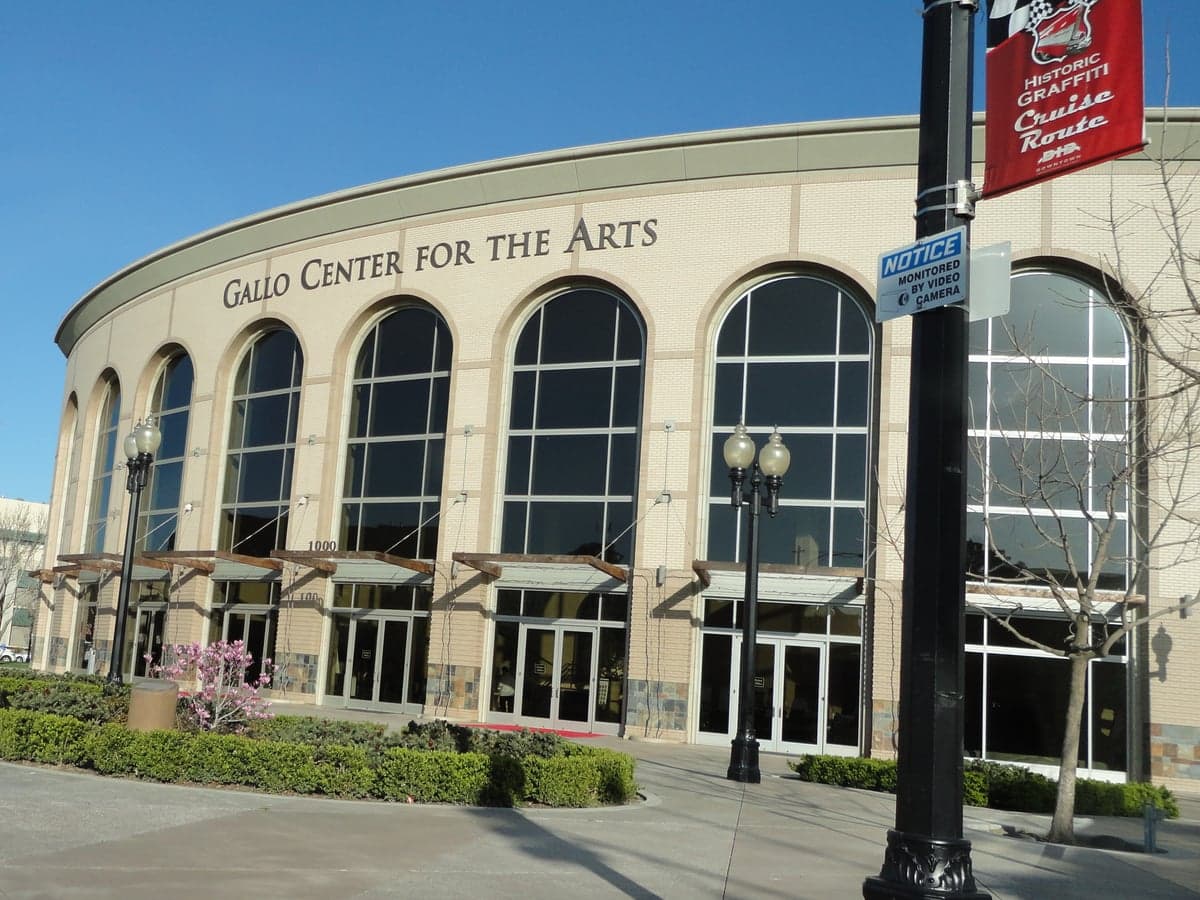
Photo: Wikipedia
Political ClimatePolitical Climate in Modesto, CA
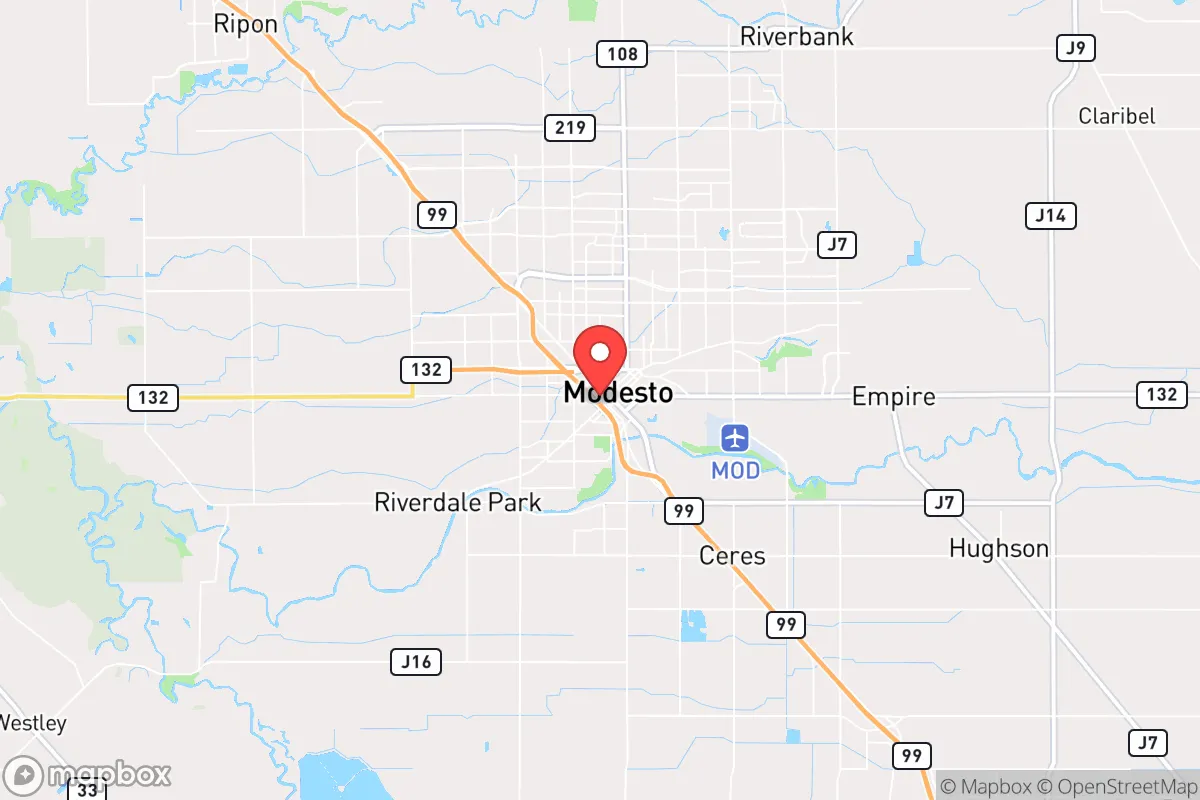
District shown is the primary district for this city’s centroid. Cities may span multiple districts.
Local Political AnalysisPolitical Analysis of Modesto, CA
Modesto has long been a place where folks value their independence and don’t take kindly to being told how to live their lives, and that’s still the backbone of the local political climate. The Cook PVI sits at R+1, which tells you this area is a true toss-up, but if you’ve been around here for a while, you know the conservative roots run deeper than the numbers suggest. We’ve seen a slow but steady shift toward more progressive policies in recent years, especially from the state level, and it’s got a lot of us worried about what’s coming next. The old Modesto—where neighbors looked out for each other and government stayed out of the way—is still here, but it’s fighting for air.
How it compares
When you look at the surrounding towns, the contrast is pretty stark. Head east to Oakdale or Riverbank, and you’ll find communities that lean much more reliably conservative, with folks who are dead set against the kind of overreach we’re seeing in Sacramento. But drive west toward Tracy or Stockton, and you’ll hit places that have swung hard left, especially as transplants from the Bay Area bring their big-city ideas with them. Modesto sits right in the middle, and that’s what makes it a battleground. The rural parts of Stanislaus County still vote red, but the city itself has gotten younger and more diverse, and that’s changed the conversation. We used to be a solid conservative stronghold, but now we’re watching progressive groups push for things like rent control and higher taxes, stuff that would’ve been laughed out of town twenty years ago.
What this means for residents
For the average person living here, the political tug-of-war shows up in your wallet and your daily life. Property taxes are already a headache, and there’s constant chatter about new fees and regulations that make it harder to run a small business or just fix up your own home. The push for more government involvement in housing and land use feels like a direct threat to the freedom we’ve always had to do what we want with our own property. On the plus side, the conservative hold on local law enforcement and the sheriff’s office means we’ve avoided some of the worst defunding nonsense you see in bigger cities. But you can feel the pressure building—every election cycle brings more ballot measures that sound good on paper but end up tying your hands. If you’re someone who values personal liberty and low taxes, you’ll want to keep a close eye on who’s running for city council and the school board, because that’s where the real battles are happening.
One thing that sets Modesto apart is the strong sense of community that still pushes back against the progressive wave. We’ve got a deep agricultural history, and that’s kept a lot of folks grounded in common sense and self-reliance. You’ll still see more pickup trucks than Teslas, and the local churches and gun clubs are as active as ever. But the long-term trend is concerning—if the state keeps tightening its grip on everything from water rights to zoning laws, we could lose the character that makes this place worth living in. For now, Modesto is a place where you can still have a voice, but you’ve got to show up and use it, because nobody else is going to fight for your freedoms but you.

State Political ClimatePolitical Climate in California
State Political AnalysisPolitical Environment in the State
California is a deep blue state dominated by the Democratic Party, with a partisan lean of roughly D+23 in recent presidential elections, but this monolithic label hides a fractured reality. The state’s political trajectory over the last 20 years has been a steady march leftward, driven by massive population growth in coastal metros and a simultaneous exodus of conservatives from rural and suburban areas. While the state legislature and governor’s office have been firmly in Democratic control for decades, the margins have actually widened since the early 2000s, as the GOP has become nearly extinct in statewide races and many local offices. For a conservative considering a move here, the key takeaway is that California’s politics are not a monolith—but the state-level policy machine is aggressively progressive, and the cultural tide is moving in a direction that many find concerning.
Urban vs. rural divide
The political map of California is a stark study in contrasts. The coastal urban corridors—Los Angeles, San Francisco, Oakland, San Jose, and San Diego—drive the state’s blue lean, with these metros accounting for over 60% of the state’s population and voting margins of D+40 or higher in many precincts. In contrast, the Central Valley and inland regions—places like Bakersfield, Fresno, Redding, and the Inland Empire cities of Riverside and San Bernardino—are reliably red, often voting R+15 to R+30. The real story is in the suburbs that have flipped dramatically: Orange County, once a GOP stronghold, voted for Biden in 2020 and has trended blue for a decade, while San Diego County’s northern suburbs like Escondido and Vista have shifted left as well. Meanwhile, rural counties like Modoc, Siskiyou, and Lassen remain deeply conservative, but their populations are too small to offset the coastal vote. The divide is not just geographic but cultural: urban Californians tend to prioritize environmentalism, social justice, and government intervention, while rural residents focus on property rights, water access, and resistance to state mandates.
Policy environment
California’s policy environment is a case study in progressive governance, with a tax burden that ranks among the highest in the nation. The state has a progressive income tax with a top marginal rate of 13.3%, a state sales tax that can exceed 10% in some cities, and some of the highest gas taxes in the country—currently over 60 cents per gallon. Regulatory posture is aggressive: California has its own environmental agency (CARB) that sets emissions standards stricter than federal law, and its housing and land-use policies have contributed to a severe affordability crisis. Education policy is dominated by teachers’ unions and progressive curriculum mandates, including the 2021 Ethnic Studies Model Curriculum that critics argue promotes a divisive worldview. Healthcare is heavily regulated, with the state expanding Medi-Cal to cover all low-income adults regardless of immigration status. Election laws are among the most liberal in the nation: universal mail-in voting was made permanent after 2020, same-day voter registration is available, and ballot harvesting is legal. For a conservative, the policy environment feels like a constant expansion of government reach into daily life, from energy choices to school curriculum.
Trajectory & freedom
Over the last decade, California has become decidedly less free in the eyes of many conservatives, with a series of laws that have contracted personal liberty. On gun rights, the state has passed some of the strictest laws in the nation, including the 2016 “unsafe handgun” law (AB 884) that effectively bans new models of semi-automatic pistols, and the 2023 law (SB 2) that severely restricts where concealed carry permits are valid, effectively gutting the Bruen decision. Parental rights have been eroded by laws like AB 1955 (2024), which prohibits school districts from requiring parental notification when a child changes their gender identity. Medical autonomy took a hit with the 2022 law (AB 2098) that allows the medical board to discipline doctors for “misinformation” about COVID-19, a chilling effect on free speech in medicine. Property rights are under constant pressure from rent control expansions (AB 1482, 2019) and the 2023 law (SB 9) that allows duplexes and lot splits in single-family zones, overriding local zoning. Taxation has only increased, with Proposition 30 (2012) raising income taxes on the wealthy and Proposition 56 (2016) hiking cigarette taxes. The trajectory is clear: more regulation, less individual choice, and a government that increasingly sees itself as the arbiter of truth and behavior.
Civil unrest & political movements
California has been a flashpoint for civil unrest and political movements, particularly since 2020. The George Floyd protests in Los Angeles and Oakland were among the largest and most destructive in the nation, with billions in property damage and a lasting impact on public safety perceptions. The state’s sanctuary policies, including SB 54 (2017) which limits local law enforcement cooperation with federal immigration authorities, have made it a magnet for immigration politics and a target for conservative criticism. Secession rhetoric is not just a fringe idea: the “Calexit” movement, while unsuccessful, has gained enough traction to appear on ballots, and the State of Jefferson movement in the far northern counties—places like Yreka and Alturas—continues to push for a separate, conservative state. Election integrity controversies have been a persistent issue, with the 2020 election seeing widespread use of mail-in ballots and ballot drop boxes that many conservatives view as vulnerable to fraud. Visible flashpoints for a new resident include the frequent homeless encampments in cities like San Francisco and Los Angeles, which have become symbols of failed progressive policies, and the ongoing battles over school board meetings where parents clash with administrators over curriculum and library books.
Projection
Over the next 5-10 years, California’s political trajectory is likely to continue leftward, but with increasing internal friction. Demographic shifts are working against conservatives: the state’s population is aging, with a declining birth rate among white and Asian residents, while Latino and immigrant populations—who tend to vote Democratic—are growing. In-migration from other states has been negative for years, with more people leaving than arriving, and those leaving tend to be higher-income and more conservative, accelerating the blue shift. However, the exodus is also creating a brain drain and a housing affordability crisis that may eventually force policy changes. The rise of remote work could allow more conservatives to move to red counties like El Dorado or Placer while still working for coastal employers, potentially creating new conservative enclaves. But at the state level, expect more of the same: higher taxes, stricter regulations, and a continued erosion of personal freedoms. A new resident moving in now should expect to find a state where the government is deeply involved in every aspect of life, from the car you drive to the education your children receive.
For a conservative considering California, the bottom line is this: you can find like-minded communities in the Central Valley, the Sierra foothills, and the far north, but you will be fighting an uphill battle against a state government that is increasingly hostile to your values. The cost of living is high, the tax burden is crushing, and your personal freedoms—especially around guns, speech, and parenting—are under constant threat. If you value individual liberty and limited government, California is likely not the place for you, unless you are prepared to be a political minority and pay a premium for the privilege. The state’s natural beauty and economic opportunities are real, but they come at a steep price in terms of freedom and affordability.
* Values derived from national, state, county, city and local statistics and may differ in a specific area. Last updated: 2026-04-30T00:09:03.000Z
Narrative content on this page is AI-generated and may contain mistakes. Verify any details that matter before acting on them.
ReloMaps may earn a commission from affiliate links at no extra cost to you.

