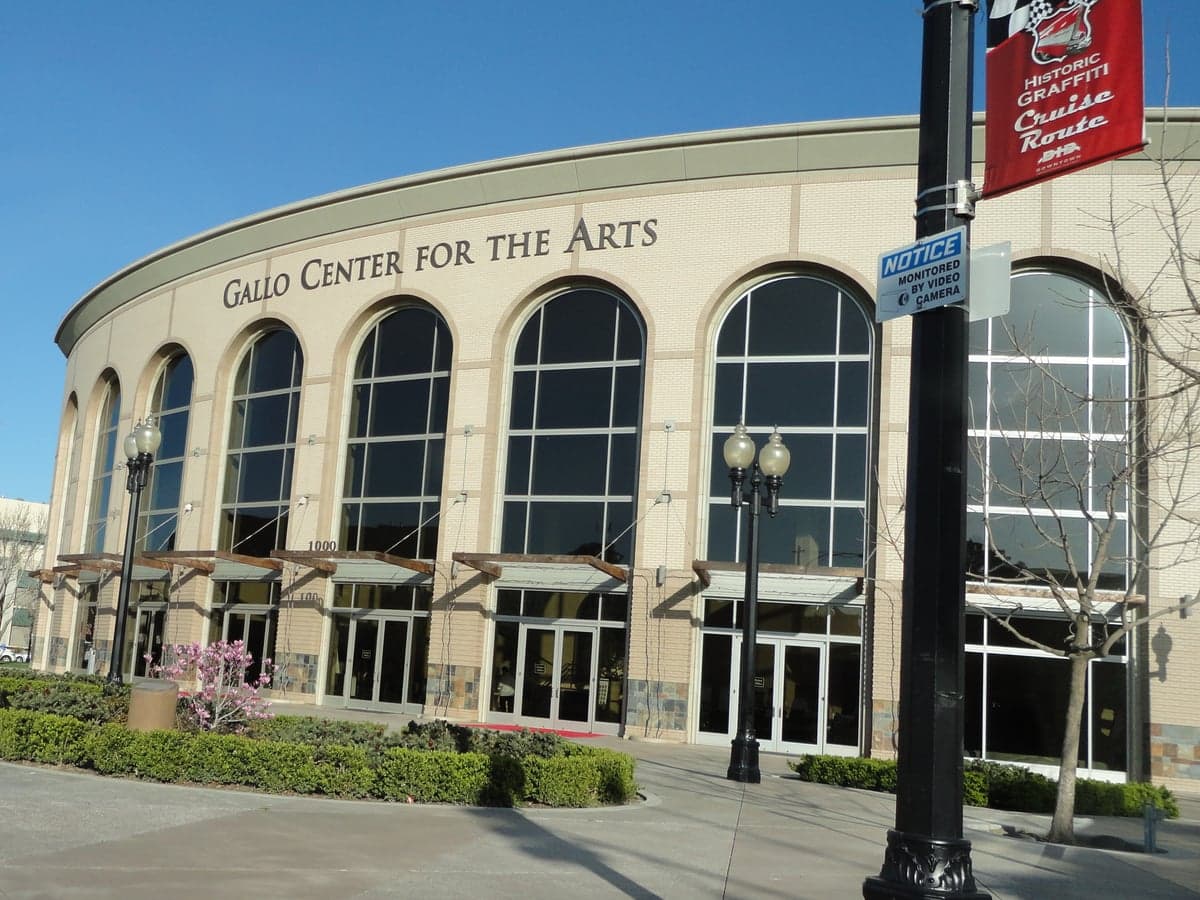
Photo: Wikipedia
Strategic Assessment of Modesto, CA
Multiple tactical vulnerabilities. Population density, target proximity, or disaster risk are likely compounding. A retreat property and exit planning is required.
What does the Strategic Assessment tell us?
Our Strategic Assessment grades tactical survivability of an area. Major population centers, military targets, fallout zones, natural disasters, and border exposure all drive risk — lower exposure means a more defensible position in a crisis.
This is heavily inspired by Joel Skousen's Strategic Relocation book. Highly recommended you checkout the book ($)What does this tell us?
Our Strategic Assessment grades tactical survivability of an area. Major population centers, military targets, fallout zones, natural disasters, and border exposure all drive risk — lower exposure means a more defensible position in a crisis.
This is heavily inspired by Joel Skousen's Strategic Relocation book. Highly recommended you checkout the book ($)Strategic Pillars

Key Distances
Regional Safe Places
Below is our recommended "safe zones" in California and the surrounding area based on our strategic heuristics. For most people, it's unrealistic to live in a “safe zone” full-time due to work, family or other personal reasons. They tend to be more rural. However, many of these areas are perfect for second homes and retreat properties that double as a vacation home or even a short-term rental.

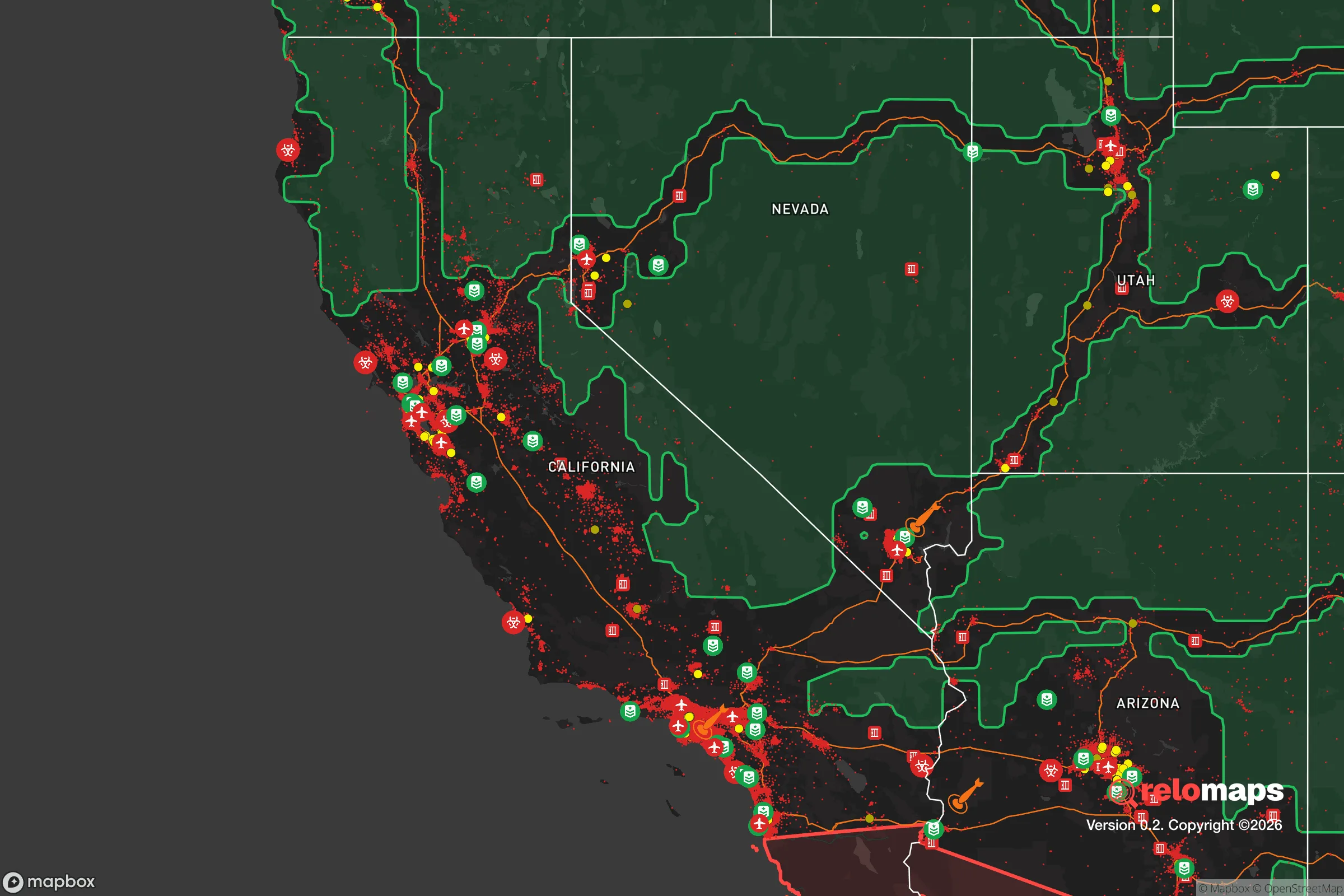


Important Note: For informational purposes only. This does not mean nothing bad ever happens in the green zones. Please use common sense. This is based on public data and modeled with AI. We tried to take a conservative approach but mistakes happen. We update this regularly as new information becomes available.
Solar Generator Recommendations
Backup power matters more here than in safer locations. We've picked three solar generators across budgets and capacity tiers — start with the budget unit if you only need a few essentials, or step up if you want to run a fridge and HVAC for days at a time.

Jackery Portable Power Station Explorer 300
Budget OptionPower on the Go: Weighing only 11 lbs, it's convenient to set up and store with book-sized foldable solar panels

BLUETTI Portable Power Station AC180
Designed for both indoor and outdoor scenarios, AC180 is highly capable as it has a robost capacity and continuous output power.

EF ECOFLOW DELTA Pro Ultra Power Station
Upgraded PickEcoFlow DELTA Pro Ultra is a whole-home energy system designed to grow with your family. Integrated with the Smart Home Panel 2, it scales to meet your evolving energy needs — keeping your home powered, intelligent, and secure through every stage of life.
We earn a commission, at no additional cost to you.
Strategic Assessment Analysis
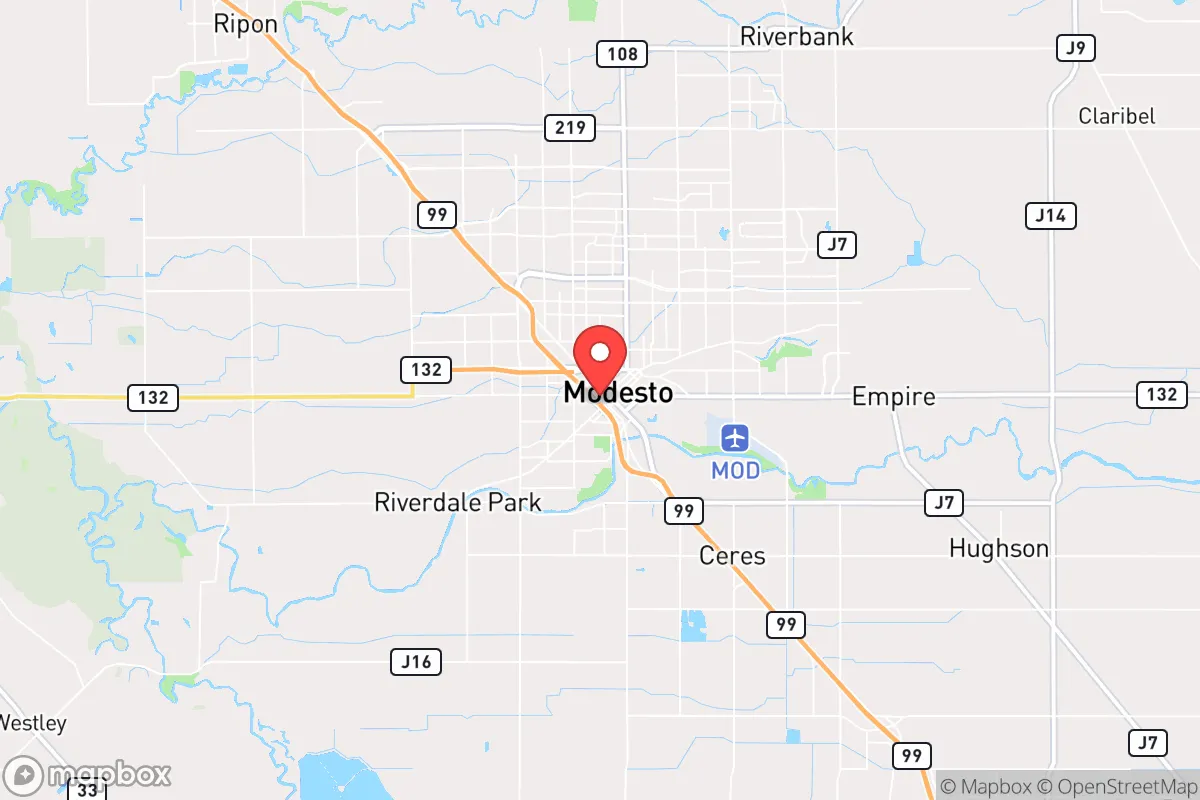
Modesto, California, sits in a geographic sweet spot that offers a surprising degree of strategic resilience for those thinking long-term, but it’s not without serious trade-offs. Located in the heart of the Central Valley, roughly 90 miles east of San Francisco and 70 miles south of Sacramento, this city of about 220,000 is the anchor of Stanislaus County. For a relocator with a prepper mindset, Modesto’s primary advantage is its position as a regional agricultural hub—surrounded by some of the most productive farmland in the world—while being far enough from the immediate blast zones of major coastal targets. However, its proximity to critical infrastructure, including major highways and a major port, also introduces risks that demand careful consideration. This analysis breaks down the strategic picture for a conservative-leaning individual or family weighing Modesto as a relocation destination in an increasingly uncertain world.
Geographic position and natural advantages for long-term security
Modesto’s location in the San Joaquin Valley is its strongest card for a survivalist strategy. The city sits at the confluence of the Tuolumne and San Joaquin Rivers, providing a reliable freshwater source—a non-negotiable asset in any collapse scenario. The surrounding agricultural land is not just scenic; it’s a functional food-production zone. Stanislaus County ranks among the top U.S. counties for dairy, almonds, and walnuts, meaning that in a prolonged disruption of supply chains, residents here have a head start on local food access. The climate is Mediterranean, with hot, dry summers and mild, wet winters, which supports year-round growing seasons for those willing to put in the work. For a family looking to establish a semi-self-sufficient homestead, the area’s soil quality and water rights (though increasingly contested) are a tangible advantage over most suburban sprawl. Additionally, Modesto’s elevation—roughly 90 feet above sea level—keeps it out of the floodplain of the major rivers, unlike parts of the Delta to the west. The Sierra Nevada foothills, a defensible retreat zone, are less than an hour east, offering a bug-out option if the valley floor becomes untenable.
Risks, exposures, and proximity to fallout-relevant landmarks
The same geography that provides agricultural bounty also places Modesto near several high-value targets that could become liabilities in a major conflict or terrorist event. The most obvious risk is the proximity to the San Francisco Bay Area, a dense population center with multiple potential targets: the Port of Oakland, the Bay Bridge, Silicon Valley tech campuses, and the Lawrence Livermore National Laboratory (a nuclear weapons research facility) are all within 90 miles. In a worst-case scenario involving a nuclear detonation or a coordinated attack on the Bay Area’s infrastructure, Modesto would likely face fallout, refugee flows, and supply chain choke points. The city itself sits near Interstate 5 and Highway 99, two major north-south arteries that would become clogged evacuation routes or invasion corridors during civil unrest. Another concern is the California Aqueduct, which runs just west of Modesto and supplies water to millions in Southern California. This is a critical piece of infrastructure that could be targeted by state or non-state actors, disrupting local water access even if the immediate threat is elsewhere. For a prepper, the presence of a major international airport (Modesto City-County Airport) and a rail yard adds to the risk profile—these are natural magnets for looting or military seizure in a breakdown scenario. On the plus side, Modesto is far from the Diablo Canyon nuclear power plant (over 150 miles away) and the San Onofre plant (decommissioned), reducing direct radiation exposure risk from those sites.
Practical resilience for a relocator: food, water, energy, and defensibility
For a family or individual serious about self-reliance, Modesto offers a mixed bag. On the food front, the local farmers’ markets and U-pick operations are abundant, but the city itself is heavily dependent on trucked-in goods from the same supply chains that could fail. A smart relocator would secure a property with at least a quarter-acre of arable land—common in the outer neighborhoods or unincorporated areas like Salida or Riverbank—to grow vegetables, raise chickens, or even keep a goat. Water is the bigger concern: the region has been in a decades-long drought cycle, and groundwater pumping has led to subsidence and well failures in some areas. A prepper should budget for a deep well (300-500 feet) and a rainwater catchment system, as municipal water supplies are vulnerable to contamination or rationing. Energy-wise, Modesto gets plenty of sun—over 260 sunny days per year—making solar panels a no-brainer. The city’s grid is part of the larger California ISO, which has shown fragility during heat waves and wildfire seasons; a battery backup system is essential. Defensibility is where Modesto falls short for a survivalist. The city is flat, with a grid-like street layout that offers few natural chokepoints. The downtown area is dense and walkable but would be a nightmare to secure in a riot or invasion scenario. The better bet is a rural property on the eastern edge, near the foothills, where terrain and distance from population centers provide a buffer. The local gun culture is present but not as pronounced as in rural counties further east; Stanislaus County has a shall-issue concealed carry policy, but California’s overall firearm laws are restrictive, so stockpiling and training require careful legal navigation.
Overall strategic picture for a conservative relocator
Modesto is not a prepper’s paradise, but it’s a viable option for someone who wants to stay in California for family or work reasons while hedging against systemic collapse. The agricultural base and water access give it a leg up over most coastal cities, and the proximity to the Sierra Nevada offers a realistic bug-out route. However, the risks from nearby high-value targets, the state’s overbearing regulatory environment, and the city’s own density (over 4,000 people per square mile) mean it’s not a standalone fortress. A conservative relocator should view Modesto as a base of operations—a place to build skills, store supplies, and establish a network—while maintaining a secondary property or plan in a more remote area like the foothills or even out of state. The political climate in Stanislaus County is more moderate than the Bay Area, with a mix of agricultural conservatives and suburban independents, which offers some cultural alignment but not the deep-red solidarity of, say, Idaho or Texas. For a single individual or family willing to invest in solar, a well, and a defensible perimeter, Modesto can work as a strategic hub. Just don’t mistake it for a bunker. The key is to treat it as a launchpad for resilience, not a final destination, and to stay aware that the same highways that bring you fresh produce can also bring chaos.

* Values derived from national, state, county, city and local statistics and may differ in a specific area. Last updated: 2026-04-30T00:09:03.000Z
Narrative content on this page is AI-generated and may contain mistakes. Verify any details that matter before acting on them.
ReloMaps may earn a commission from affiliate links at no extra cost to you.

