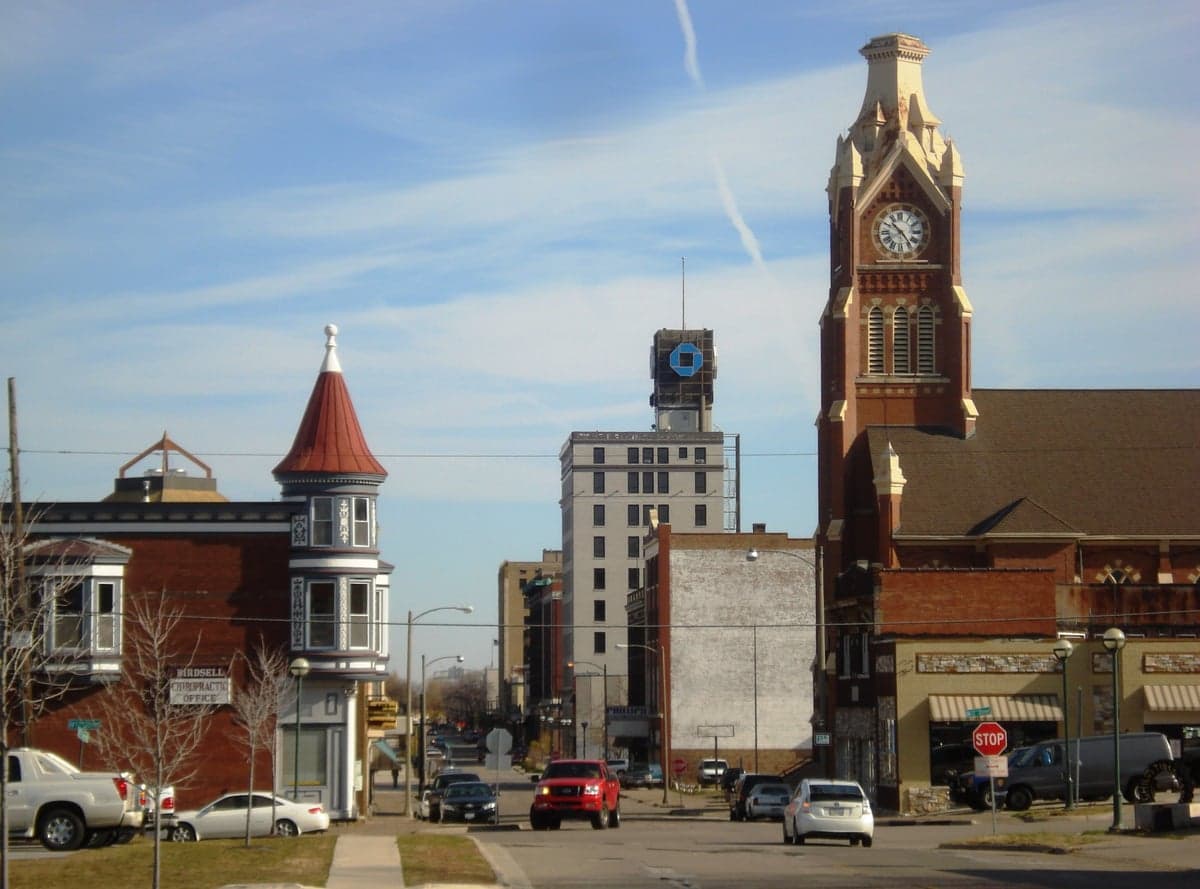
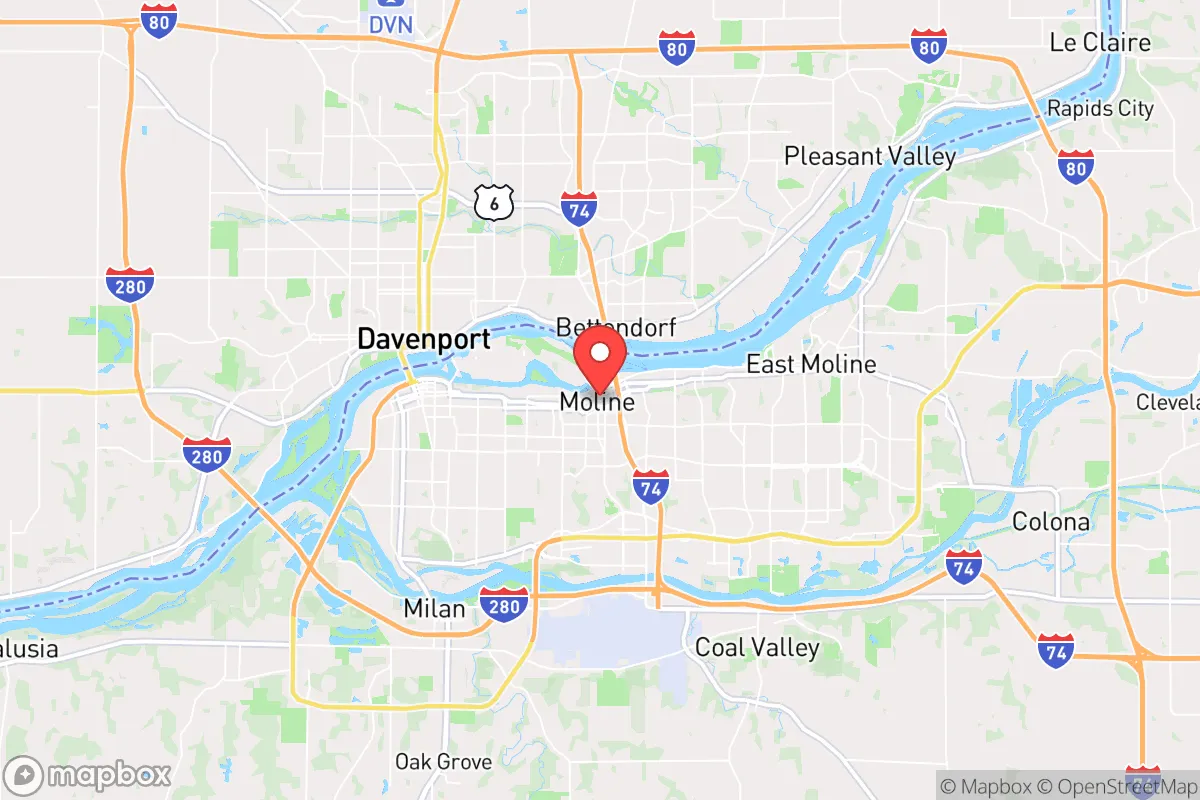
Photo: Wikipedia
Personal Sovereignty in Moline, IL
Viable for self-reliance. Generally workable, though some barriers may limit total independence.
What does Personal Sovereignty tell us?
Personal Sovereignty measures your capacity for self-reliance and independence with minimal government friction. Higher scores mean fewer barriers between you and the way you want to live... but it assumes you have the space you need and good neighbors.
What does this tell us?
Personal Sovereignty measures your capacity for self-reliance and independence with minimal government friction. Higher scores mean fewer barriers between you and the way you want to live... but it assumes you have the space you need and good neighbors.
State Policy
Energy independence: Importer (45% of energy produced in-state)
Personal Liberty
Homesteading

Personal Liberty Analysis
Moline, Illinois, presents a complex environment for personal sovereignty, where the promise of affordable land and a slower pace of life is weighed against a state-level political and regulatory framework that leans heavily toward collective authority over individual autonomy. For the survivalist or prepper, this means navigating a landscape where local resilience is possible, but constant vigilance against state overreach is a non-negotiable part of daily life. The city’s position on the Mississippi River offers strategic advantages for resource independence, yet the surrounding legal climate demands a careful, calculated approach to securing your freedoms.
Tax burden and regulatory posture: the cost of staying free in Illinois
The single greatest threat to personal sovereignty in Moline is the state of Illinois itself. The state’s tax burden is among the highest in the nation, anchored by a flat income tax rate of 4.95% and property taxes that routinely rank in the top five nationally. In Rock Island County, effective property tax rates often exceed 2.5% of a home’s assessed value, meaning a modest $200,000 home can carry an annual tax bill of $5,000 or more. This is not a one-time cost; it is a perpetual lien against your property and your labor. For the prepper, this directly reduces the capital available for land, supplies, and infrastructure. The state’s regulatory posture is equally aggressive. Illinois maintains a dense web of occupational licensing, environmental regulations, and building codes that can stifle independent construction, small-scale manufacturing, and even home-based food production. The Illinois Department of Revenue has broad powers to audit and seize assets, and the state’s pension crisis creates a long-term fiscal pressure that virtually guarantees future tax increases. While Moline itself is not a high-tax outlier within the state, you cannot escape the state’s reach. The practical takeaway: your sovereignty is taxed at every turn, and you must budget for a significantly higher overhead just to hold your ground.
Self-defense and gun law specifics: navigating Illinois’s restrictive framework
For those who view the Second Amendment as a cornerstone of personal sovereignty, Illinois presents a hostile environment. The state operates a “may-issue” concealed carry system in practice, though it is technically “shall-issue” after a lengthy and expensive process. The real flashpoint is the 2023 Protect Illinois Communities Act, which banned the sale and possession of many common semi-automatic rifles, including the AR-15 platform, and standard-capacity magazines. This law is currently under legal challenge, but as of 2026, it remains in effect, forcing law-abiding citizens to either register existing firearms or face felony charges. Moline’s local law enforcement, the Moline Police Department, generally respects lawful carry, but the state police have been aggressive in enforcing the new restrictions. The legal landscape is a minefield: magazine capacity is limited to 10 rounds for long guns and 15 for handguns, and the waiting period for firearm purchases is 72 hours. For the survivalist, this means your defensive capabilities are legally capped below what many consider a minimum for serious preparedness. Furthermore, Illinois has no “stand your ground” law; a duty to retreat applies before using deadly force outside the home. This shifts the legal burden onto the defender, making self-defense a potentially ruinous legal battle even when morally justified. The only saving grace is that Moline is in a relatively rural county where local sentiment is more pro-2A than Chicago, but state law overrides local custom. You must be prepared to navigate a complex, restrictive legal system to exercise your right to self-defense.
Self-reliance and homesteading viability: lot sizes, zoning, and off-grid feasibility
Moline offers moderate potential for self-reliance, but it requires careful property selection. Within city limits, standard residential lots are typically one-quarter to one-third of an acre, which limits large-scale gardening and animal husbandry. Zoning codes restrict livestock—chickens are often permitted with a permit, but goats, pigs, or larger animals are generally prohibited. The city’s building codes require permits for most structural changes, including sheds, fences, and solar panel installations, which can delay or increase the cost of off-grid infrastructure. However, the surrounding Rock Island County and nearby rural townships offer a different story. Just 10 to 15 minutes outside Moline, you can find properties with 1 to 5 acres at prices significantly lower than the national average—often under $10,000 per acre. These areas have far looser zoning, allowing for livestock, private wells, and septic systems. Off-grid feasibility is mixed: solar is viable given the region’s moderate sun exposure, but Illinois’s net metering policies are less favorable than in sunbelt states, and the state’s grid is aging. Rainwater collection is legal but regulated, and you must ensure your system does not create a nuisance. The Mississippi River provides a reliable water source, but accessing it for personal use requires permits. The key strategy for the prepper is to buy just outside city limits, where you can build a self-sufficient homestead without constant municipal interference. Inside Moline, you are largely dependent on municipal utilities and subject to city ordinances that can restrict your independence.
Personal liberties: parental rights, medical autonomy, speech, and property
Illinois has been a national leader in expanding state authority over personal and family decisions, which directly impacts the sovereignty-minded individual. Parental rights are under consistent pressure: the state mandates comprehensive sex education in public schools, and recent laws have removed parental notification requirements for certain medical decisions by minors, including reproductive health services. This creates a direct conflict for parents who wish to control their children’s upbringing and medical care. Medical autonomy is similarly constrained. Illinois has some of the strictest vaccine mandates in the country, including for school attendance, and the state’s public health authorities have broad emergency powers that were exercised aggressively during the COVID-19 pandemic. For the prepper, this means that during a crisis, the state can compel medical interventions, restrict movement, and seize property under emergency declarations. Free speech is protected under the First Amendment, but Illinois has enacted laws against “hate speech” and disinformation that can be interpreted broadly, creating a chilling effect on political discourse. Property rights are perhaps the most concerning area. Illinois has a robust eminent domain framework, and the state’s environmental regulations can restrict how you use your land, particularly near waterways. The Illinois EPA has authority to inspect private property for environmental compliance, and the state’s inheritance tax is among the highest in the nation, effectively taxing your legacy. For the survivalist, the message is clear: your rights are conditional, and the state reserves the power to override them in the name of public health, safety, or welfare.
In the broader context of the Midwest, Moline offers a middle ground for personal sovereignty—better than the authoritarian grip of Chicago or the coastal states, but far inferior to the constitutional refuges of Missouri, Indiana, or Iowa just across the river. The Mississippi River is more than a geographic boundary; it is a legal and cultural dividing line. Crossing into Iowa gives you a state with no income tax, a “stand your ground” law, and far fewer restrictions on firearms and property use. For the strategic relocator, Moline can serve as a base of operations—a place to buy cheap land and build a network—but the long-term play for maximum sovereignty likely involves a move to a neighboring state. If you choose to stay in Moline, you must be prepared to fight for every inch of your freedom, document every transaction, and maintain a low profile. The area’s affordability and community potential are real, but they come with the constant, grinding cost of living under a state government that views personal autonomy as a threat to its power.

* Values derived from national, state, county, city and local statistics and may differ in a specific area. Last updated: 2026-04-19T06:54:13.000Z
Narrative content on this page is AI-generated and may contain mistakes. Verify any details that matter before acting on them.
ReloMaps may earn a commission from affiliate links at no extra cost to you.

