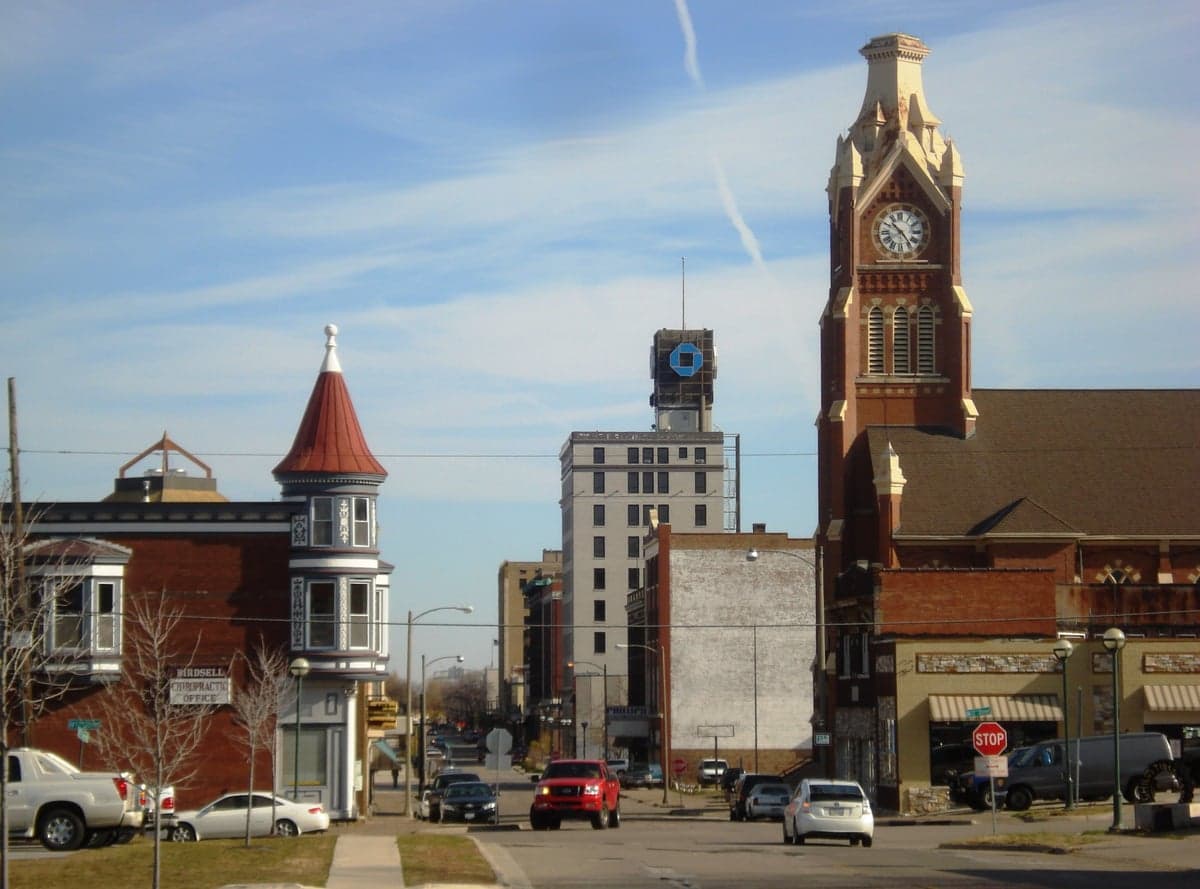
Photo: Wikipedia
Quality of Life in Moline, IL
A high quality of life with strong walkability, manageable living costs, healthy neighborhood signals, and solid amenity access.
What does Quality of Life tell us?
Quality of Life blends cost of living, nearby amenities, socioeconomic signals, and neighborhood character. City-level scores represent the whole municipality; individual neighborhoods can differ.
What does this tell us?
Quality of Life blends cost of living, nearby amenities, socioeconomic signals, and neighborhood character. City-level scores represent the whole municipality; individual neighborhoods can differ.
Cost of Living
34% below national average
The Real Cost of Living in Moline, IL for 2026
| Tier | Individual | Family (4) |
|---|---|---|
| Survival | $14k | $27k |
| Comfortable | $28k | $41k |
| Luxury | $105k+ | $162k+ |
| Elite (Top 5%) | $123k+ | $191k+ |
158%
The Area Signal
A metric tracking the socioeconomic signals of the area.


Hobbies
Explore the areaGroceries
5 within 10 miles
Gas
0 within 10 miles
Hospital
3 within 20 miles
Airport
ORD — O'Hare International
Post Office
USPS — Moline, IL
Critical Amenities
Quality-of-Life Analysis
Moline, Illinois, offers a notably affordable quality of life that attracts a mix of working-class families, young professionals, and retirees seeking a lower cost of living without sacrificing Midwestern community character. With a cost of living index of 66—well below the national average of 100—the city provides a financial cushion that allows residents to stretch their incomes further than in many other parts of the country. The population skews toward long-term homeowners and blue-collar workers, many employed in manufacturing, healthcare, and logistics, giving the area a stable, grounded feel rather than a transient or high-growth one.
How Moline's cost of living and housing compare to nearby cities
Moline's housing market is a standout draw, with a median home value of $141,900 and a median rent of $887—both significantly lower than in larger Midwestern metros like Chicago or Madison. For context, the median home value in the Quad Cities region as a whole hovers around $160,000, making Moline one of the more affordable entry points. The average commute time of 18.8 minutes is notably short, reflecting the city's compact layout and the fact that many residents work within the Quad Cities area—including at major employers like John Deere headquarters in Moline itself or at Rock Island Arsenal just across the river. This low commute time reduces transportation costs and frees up time for family or recreation, a tangible benefit of living here. Compared to neighboring Bettendorf, Iowa, where median home values exceed $200,000, Moline offers a clear affordability advantage, though property taxes in Illinois are higher than in Iowa, which buyers should factor into their budgets.
What daily life is like for families: schools, parks, and local amenities
Daily life in Moline centers on a blend of accessible outdoor spaces, solid public schools, and a modest but functional downtown. The Moline-Coal Valley School District serves most of the city, with Moline High School offering a range of extracurriculars and Advanced Placement courses. For younger children, the district's elementary schools like Lincoln-Irving and John Deere Middle School are well-regarded locally. The city maintains over 30 parks, with Riverside Park along the Mississippi River being a popular spot for walking, fishing, and summer concerts. The Vibrant Arena at The MARK hosts concerts and minor league hockey, while the Quad City Botanical Center and Niabi Zoo (in nearby Coal Valley) provide family-friendly outings. The downtown area, anchored by the John Deere Pavilion and a growing number of local restaurants and breweries, has seen reinvestment in recent years, though it remains quieter than larger urban cores. Grocery stores, pharmacies, and basic retail are well-distributed, and residents often cross into Bettendorf or Davenport for more extensive shopping and dining options.
Moline is best suited for those who prioritize financial stability and a slower, community-oriented pace over urban excitement. Families on a budget, first-time homebuyers, and retirees on fixed incomes will find the low housing costs and short commutes especially appealing. Professionals working at John Deere or the Rock Island Arsenal will appreciate the proximity to major employers, while anyone seeking a vibrant nightlife or high-end cultural scene may find the area lacking. For those who value affordability, a manageable daily routine, and access to the Mississippi River's recreational opportunities, Moline delivers a solid, no-frills quality of life.

Crime in Moline, IL
Crime rates similar to the national median for U.S. locations.
Violent CrimeViolent Crime Analysis
Property CrimeProperty Crime Analysis
Crime Analysis
Moline, Illinois, reports a violent crime rate of 411 incidents per 100,000 residents and a property crime rate of 2,893.9 per 100,000, placing it above national averages for both categories. As a small city within the larger Quad Cities metro area, its safety profile is shaped by regional crime trends and local justice policies that residents should weigh carefully. The data suggests that while Moline is not among the most dangerous cities in Illinois, its crime rates warrant close attention from prospective movers.
Crime in context
Moline's violent crime rate of 411 per 100,000 is roughly 17% higher than the national average of about 350 per 100,000, and significantly above the Illinois state average of approximately 380 per 100,000. Property crime in Moline, at 2,893.9 per 100,000, also exceeds the national benchmark of around 1,950 per 100,000. These figures place Moline in a tier with other mid-sized Midwestern cities that face persistent property crime challenges. The Quad Cities metro area, which includes Rock Island and Davenport across the Mississippi River, has historically struggled with drug-related offenses and property theft, and Moline's numbers reflect that broader regional pattern.
What residents experience
For daily life in Moline, the elevated property crime rate is the most tangible concern. Residents commonly report theft from vehicles, burglaries, and occasional vandalism, particularly in areas near commercial corridors like John Deere Road and the SouthPark Mall district. Violent crime, while less frequent, includes aggravated assault and robbery, with incidents concentrated in specific neighborhoods rather than spread evenly across the city. Progressive judicial policies in Rock Island County, including the use of pretrial release programs and diversionary sentencing for nonviolent offenders, have drawn criticism from law enforcement and some residents who argue these approaches contribute to recidivism and a revolving-door justice system. Critics point to the county's reduced incarceration rates and lenient plea deals as factors that may embolden repeat offenders, undermining public safety and victim rights.
Neighborhood-level variation is notable in Moline. Areas west of the Rock River, including the 7th Ward and parts of the 5th Ward, tend to report higher crime volumes, while eastern neighborhoods near the John Deere Pavilion and the riverfront generally see lower incident rates. The city's police department has implemented community policing initiatives and targeted patrols in high-crime zones, but the effectiveness of these efforts is tempered by the broader justice environment. Prospective residents should research specific blocks and consult local crime maps, as safety can differ markedly even within a few streets. Overall, Moline offers a mixed safety picture where proactive awareness and neighborhood selection are essential for minimizing risk.
* Values derived from national, state, county, city and local statistics and may differ in a specific area. Last updated: 2026-04-19T06:54:13.000Z
Narrative content on this page is AI-generated and may contain mistakes. Verify any details that matter before acting on them.
ReloMaps may earn a commission from affiliate links at no extra cost to you.

