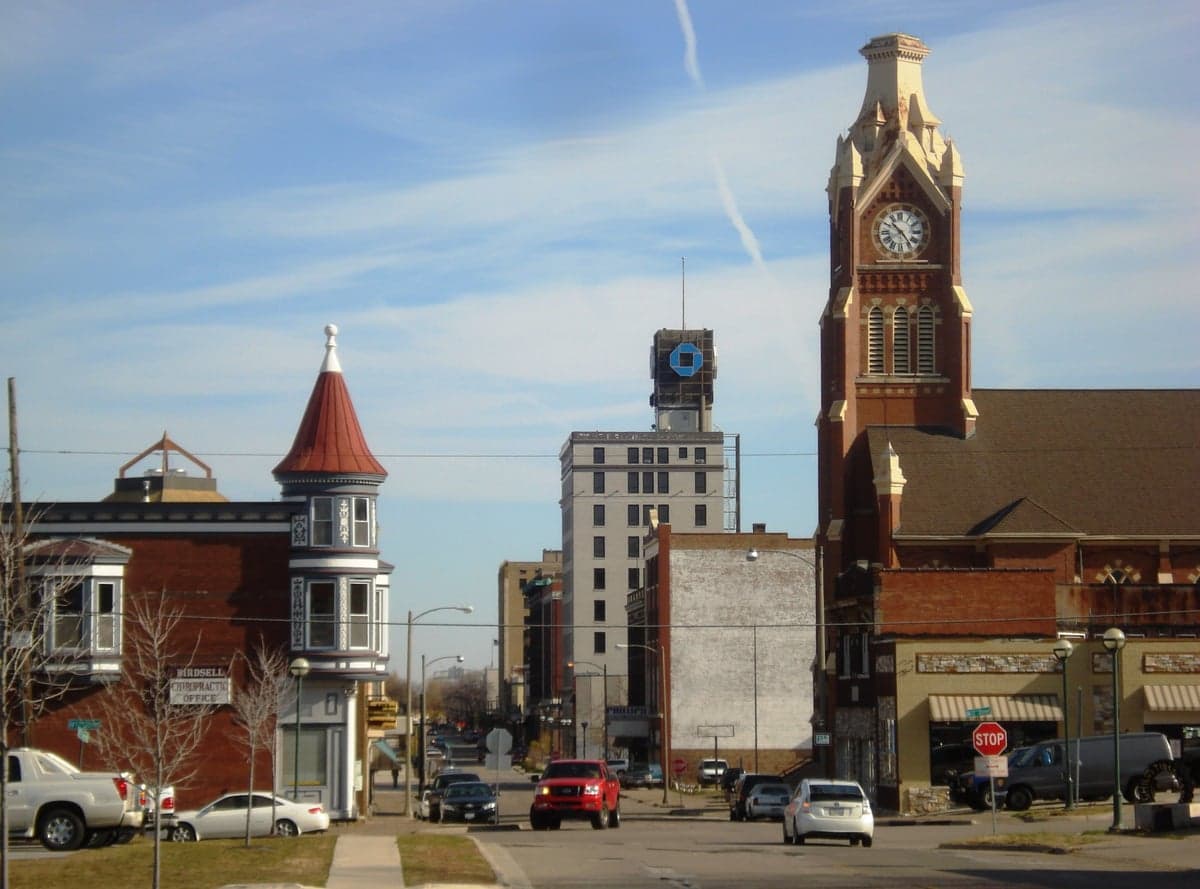

Photo: Wikipedia
Political ClimatePolitical Climate in Moline, IL
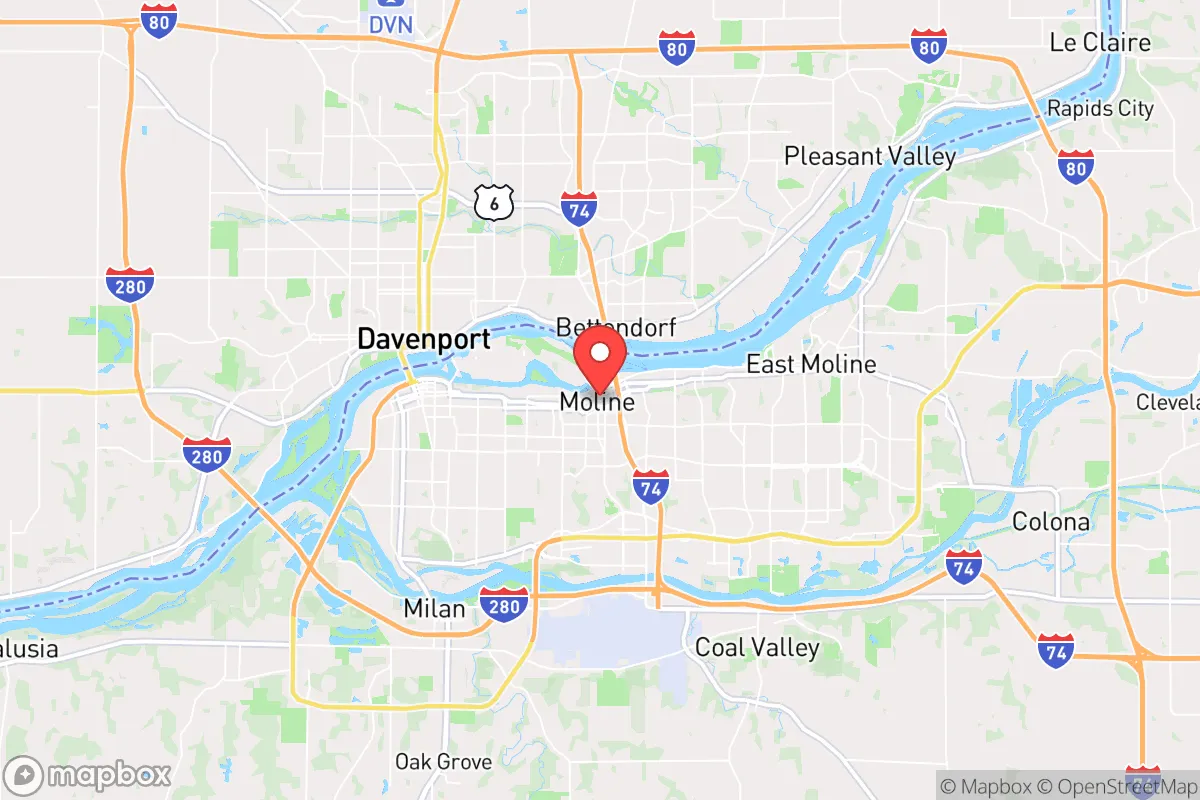
District shown is the primary district for this city’s centroid. Cities may span multiple districts.
Local Political AnalysisPolitical Analysis of Moline, IL
Moline, Illinois, sits in a county that has been trending blue for a while now, and the Cook PVI of D+3 tells you the basics—it leans Democratic by about three points compared to the national average. But if you’ve lived here as long as I have, you know that number doesn’t tell the whole story. The Quad Cities area has always had a strong union and working-class backbone, but over the last decade or so, you’ve seen a real shift away from the kind of common-sense, live-and-let-live politics that used to define the place. It’s not that everyone here is suddenly a progressive activist, but the local government and school boards have definitely started pushing a more centralized, top-down agenda that rubs a lot of folks the wrong way.
How it compares
Drive ten minutes east to Bettendorf, Iowa, and you’ll feel like you’re in a different world. That side of the river is reliably Republican, with a much stronger emphasis on property rights, lower taxes, and a general distrust of government overreach. Same goes for Port Byron and Hampton just north of Moline—smaller towns where people still expect the county to stay out of their business. Moline itself, though, has become a bit of an outlier. The city council and county board have been more willing to adopt state-level mandates on things like zoning, mask requirements during the pandemic, and even some local energy regulations that feel like they’re coming from Springfield rather than from the neighbors you see at the grocery store. It’s a stark contrast when you cross the river and see how Bettendorf handles the same issues with a lighter touch.
What this means for residents
For the average family or small business owner in Moline, the political climate translates into a few concrete headaches. Property taxes have crept up as the city takes on more social programs and administrative layers, and there’s a growing sense that your local dollars are being spent on priorities you didn’t vote for. If you run a small shop or a contracting business, you’ve probably noticed more paperwork and compliance costs tied to new city ordinances—things like paid leave mandates and stricter building codes that sound good on paper but hit your bottom line hard. On the personal freedom side, the push for “equity” initiatives in the school district has raised eyebrows among parents who just want their kids to get a solid education without the political messaging. It’s not a full-blown crisis, but it’s a slow drift that makes you wonder how much longer the old Moline—where people minded their own business and the government stayed small—will last.
What to watch for in the near future
Looking ahead, the biggest concern is that Moline could follow the path of Davenport just across the river, which has seen a more aggressive push for progressive policies on housing, policing, and public spending. If the current trend holds, you might see more ballot initiatives that try to raise taxes for things like universal pre-K or climate action plans—stuff that sounds nice but often comes with strings attached. The good news is that the rural parts of Rock Island County still lean conservative, and they’ve been a check on some of the wilder ideas. But if you value your Second Amendment rights, low taxes, and the freedom to run your life without a government checklist, you’d be wise to keep an eye on local elections. The D+3 rating isn’t set in stone, and a few smart votes could keep Moline from sliding further into the kind of overreach that’s already chased a lot of good people over to the Iowa side.

State Political ClimatePolitical Climate in Illinois
State Political AnalysisPolitical Environment in the State
Illinois is a deeply blue state in statewide elections, but that label hides a fierce internal war between the Chicago machine and the rest of the state. For the last 20 years, Democrats have held a supermajority in the legislature and the governor’s mansion, but that power is concentrated almost entirely in Cook County and the collar counties around Chicago. Outside of that metro area, the state is reliably red, with places like Effingham and Marion voting +40 points Republican in 2024. The real story is the slow-motion exodus: Illinois has lost population for nine straight years, and the political divide is the primary reason.
Urban vs. rural divide
The political map of Illinois is a tale of two states. Chicago and its inner suburbs—places like Evanston and Oak Park—are among the most progressive jurisdictions in the Midwest, routinely voting 80%+ Democrat. The collar counties (DuPage, Lake, Kane) have shifted left over the past decade, flipping from purple to solid blue as suburbanites embraced Democratic social policies. Meanwhile, downstate Illinois—everything south of I-80—is overwhelmingly conservative. Mount Vernon and Quincy are Republican strongholds, and even once-purple areas like Peoria and Rockford have trended redder as manufacturing jobs left and cultural issues took center stage. The divide isn’t just political; it’s economic and cultural, with Chicago dictating state policy while rural communities feel ignored and overtaxed.
Policy environment
Illinois’s policy environment is a cautionary tale for anyone considering a move. The state has the second-highest property tax burden in the nation, with effective rates averaging over 2.0%—and in Cook County, it’s even worse. The state income tax is a flat 4.95%, but there’s constant pressure from Springfield to make it progressive. Governor JB Pritzker and the Democratic supermajority have passed a slew of progressive laws: a $15 minimum wage (2019), universal mail-in voting (2023), and a strict assault weapons ban (2023) that prohibits the sale of many common rifles. Education policy is dominated by Chicago Public Schools, which has seen declining enrollment and repeated financial crises. On healthcare, Illinois expanded Medicaid aggressively and passed the Healthcare Protection Act (2024), which bans short-term insurance plans and limits out-of-network billing. Election laws are among the most permissive in the country—no-excuse mail voting, same-day registration, and automatic voter registration—which critics argue opens the door to fraud, though no major scandals have been proven.
Trajectory & freedom
Illinois is becoming less free by almost any measure, especially for gun owners, taxpayers, and parents. The 2023 Protect Illinois Communities Act banned the sale of dozens of semi-automatic firearms and high-capacity magazines, and required existing owners to register them with the state police—a move that sparked a massive legal challenge and a surge in gun sales. On parental rights, the state passed the Keeping Youth Safe and Healthy Act (2022), which mandates comprehensive sex education in public schools, including LGBTQ+ content, and allows students to access reproductive health services without parental consent. Medical autonomy took a hit with the state’s strict COVID-19 mandates, which were among the longest-lasting in the Midwest. Property rights are under pressure from Chicago’s rent control push and the state’s aggressive use of eminent domain for transit projects. The tax burden is the biggest freedom killer: Illinois has the worst pension debt in the nation (over $140 billion unfunded), and that debt is driving relentless tax increases with no end in sight.
Civil unrest & political movements
Illinois has seen its share of political flashpoints. The 2020 George Floyd protests in Chicago were among the largest and most destructive in the country, with looting and arson in the Loop and along the Magnificent Mile. The city’s sanctuary city status has been a constant source of tension, with Cook County refusing to cooperate with ICE detainers—a policy that has drawn criticism from downstate sheriffs. In 2023, the Madison County sheriff publicly refused to enforce the state’s new gun ban, and over 100 counties passed resolutions opposing it. Election integrity remains a hot-button issue: the 2020 and 2022 elections saw widespread use of mail-in ballots and ballot drop boxes, leading to lawsuits and calls for reform, though no widespread fraud was ever proven. The Illinois Freedom Caucus has emerged as a vocal minority in the state legislature, pushing back on gun control and tax hikes, but they are outnumbered 4-to-1. Immigration politics are particularly charged: Chicago’s status as a sanctuary city has attracted thousands of migrants from the southern border since 2022, straining city resources and creating visible tent encampments in places like Logan Square and Pilsen.
Projection
Over the next 5-10 years, Illinois will likely continue its slow demographic decline, with population losses concentrated in rural areas and the city of Chicago itself. The collar counties may continue to drift left, but the exodus of conservative-leaning families to Indiana, Wisconsin, and Tennessee will accelerate. The pension crisis will force either massive tax hikes or service cuts—or both. The gun ban will likely survive legal challenges, but enforcement will remain spotty downstate. The biggest wild card is Chicago’s fiscal health: the city’s pension systems are even worse than the state’s, and a bankruptcy or state takeover is a real possibility. For a conservative-leaning family or individual, the outlook is grim: higher taxes, less personal freedom, and a political culture that is increasingly hostile to traditional values. The state’s best-case scenario is a political realignment that breaks the Chicago monopoly on power, but that would require a constitutional convention or a major demographic shift—neither of which seems likely.
For a new resident, the bottom line is this: Illinois offers world-class amenities in Chicago and its suburbs—top-tier museums, restaurants, and universities—but the cost is high and rising. If you value low taxes, gun rights, and local control, you will find yourself fighting an uphill battle against a state government that is determined to centralize power in Springfield. The state is not unlivable, but it demands a clear-eyed understanding of the trade-offs. Many families are voting with their feet; the ones who stay are either deeply rooted or deeply committed to the fight. If you’re considering a move, spend a weekend in Edwardsville or Glen Carbon—two of the few remaining red-leaning suburbs with decent schools—and see if the trade-offs are worth it for you.
* Values derived from national, state, county, city and local statistics and may differ in a specific area. Last updated: 2026-04-19T06:54:13.000Z
Narrative content on this page is AI-generated and may contain mistakes. Verify any details that matter before acting on them.
ReloMaps may earn a commission from affiliate links at no extra cost to you.

