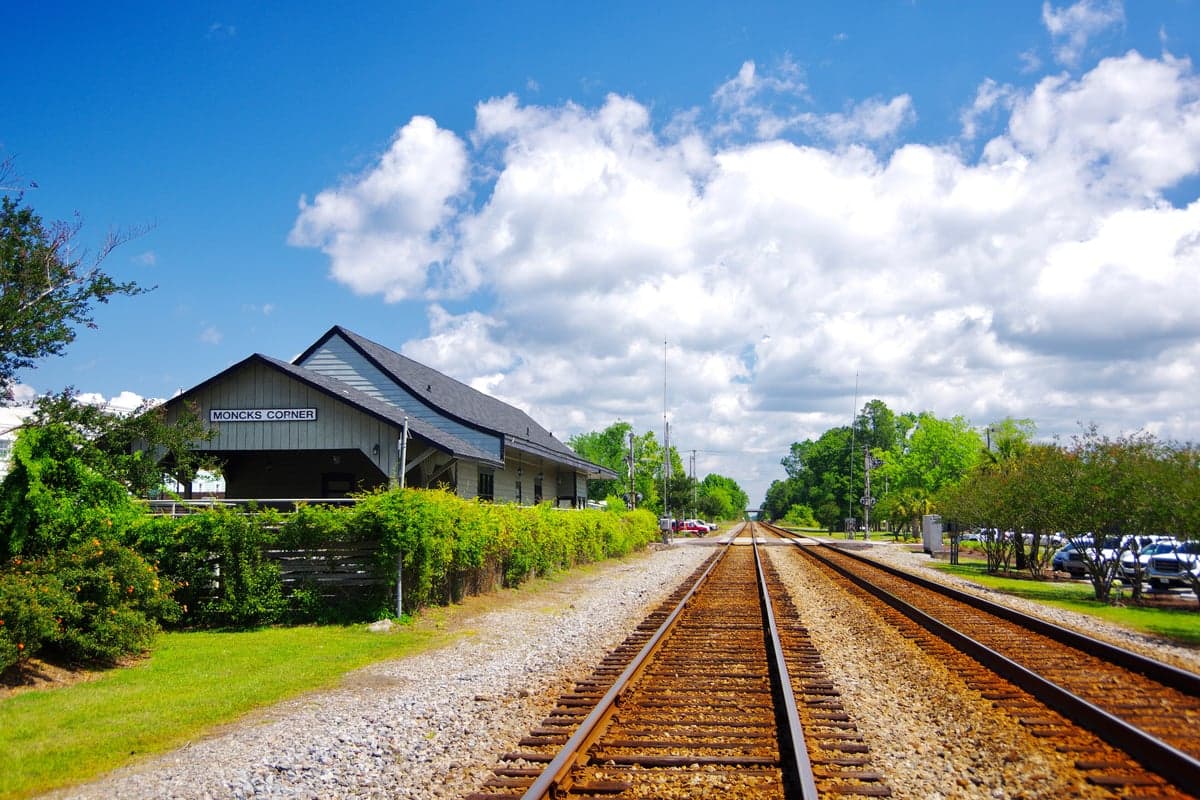
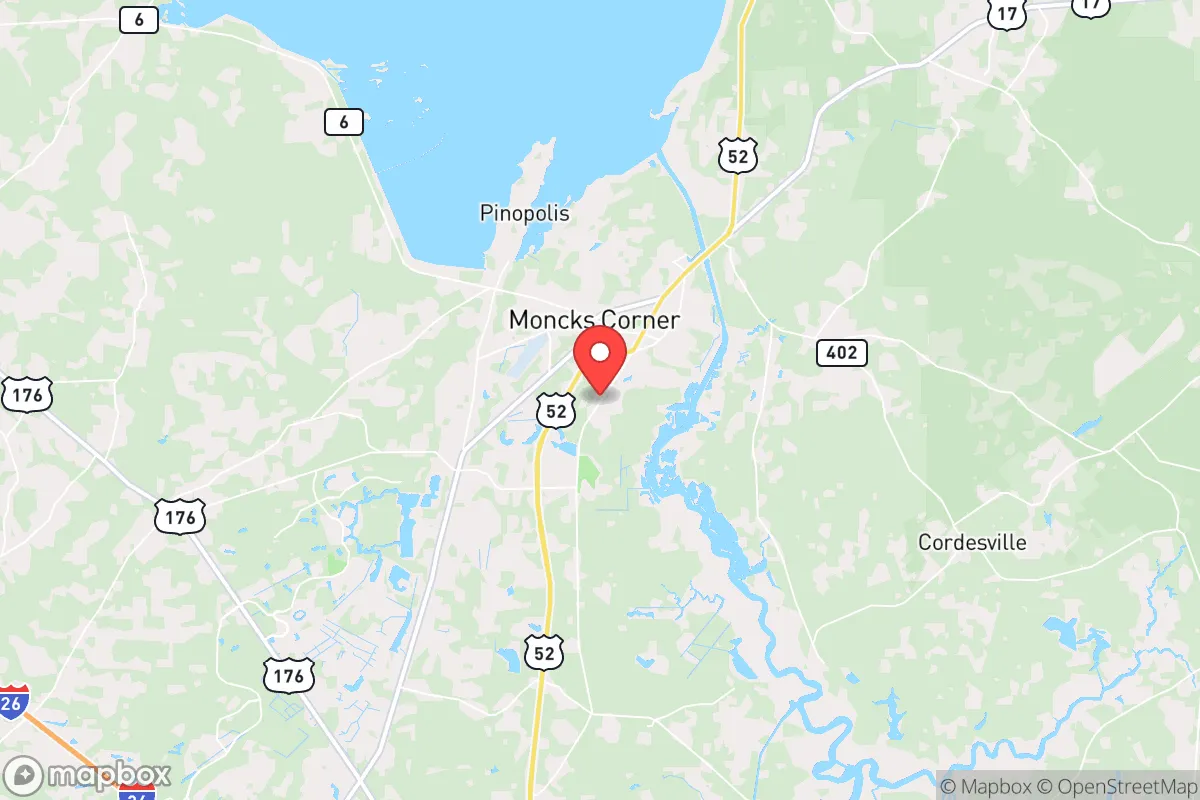

Photo: Wikipedia
Political ClimatePolitical Climate in Moncks Corner, SC
District shown is the primary district for this city’s centroid. Cities may span multiple districts.
Local Political AnalysisPolitical Analysis of Moncks Corner, SC
Moncks Corner leans solidly conservative, and that’s not just a feeling—it’s baked into the numbers. The area carries a Cook PVI of R+6, meaning it votes about six points more Republican than the national average, and that’s been the baseline for as long as most folks around here can remember. But if you’ve lived here a while, you’ve seen the shift: it’s not that the town has gone blue, but the pressure from Charleston’s growth and the influx of folks from up north has started to nudge things in a way that makes you pay attention. The local elections and school board races are where you really feel it—those used to be quiet affairs, and now they’re getting noisy with talk about diversity initiatives and zoning changes that feel like they’re coming from somewhere else entirely.
How it compares
Drive twenty minutes east to Charleston proper, and you’re in a completely different world—a blue-leaning city where progressive policies on housing and public spending are the norm. Head west toward Summerville, and you’ll find a more mixed bag, with some suburban pockets trending moderate. But Moncks Corner itself, along with the rest of Berkeley County, has held the line. The contrast is stark: while Charleston debates bike lanes and affordable housing mandates, Moncks Corner’s county council is still focused on keeping taxes low and letting people build what they want on their own land. That said, the worry is real. The same folks who pushed for more government control in Charleston are starting to show up at meetings here, talking about “equity” and “inclusion” in ways that usually end with new regulations on small businesses or property owners.
What this means for residents
For the people who live here, the political climate means a few concrete things. First, your property rights are still mostly respected—you can put up a shed or run a small business from your home without jumping through a dozen hoops. Second, the local schools and law enforcement are run by people who share your values, not by bureaucrats pushing a social agenda. But the warning signs are there. The recent push for a county-wide comprehensive plan raised eyebrows because it included language about “climate resilience” and “equitable access” that sounded like a backdoor for more government overreach. If you’re the type who values personal freedom and doesn’t want the county telling you what color to paint your fence or how many chickens you can keep, you need to stay engaged. The quiet years are over; the meetings are where the fight is now.
One thing that sets Moncks Corner apart from some of the more rural parts of the state is the cultural tension between the old guard and the newcomers. The folks who’ve been here for generations tend to vote on instinct—low taxes, strong Second Amendment support, and a deep distrust of federal mandates. The newer arrivals, especially those from out of state, sometimes bring a “we know better” attitude that rubs people the wrong way. You see it in the push for more public art, more bike paths, and more “community input” on things that used to be left to common sense. It’s not a crisis yet, but it’s a slow creep. If you’re looking for a place where the government stays out of your life and the local leaders still believe in individual responsibility, Moncks Corner is still that place—but you’d better keep an eye on the ballot box, because the winds are shifting, and not in a good direction.

State Political ClimatePolitical Climate in South Carolina
State Political AnalysisPolitical Environment in the State
South Carolina has long been a reliably red state, but the political landscape is more complex than a simple partisan label suggests. The state leans solidly Republican at the statewide level—Donald Trump won it by 11 points in 2024—but the coalition is shifting. Over the past 10-20 years, the GOP’s dominance has been reinforced by explosive growth in conservative-leaning suburbs and coastal retirement communities, even as the rural base shrinks and the Charleston-Columbia-Greenville corridor becomes more purple. The real story isn’t a blue wave; it’s a red realignment, with new residents from the North and Midwest bringing their own brand of conservatism that’s often more libertarian than traditional Southern Democratic.
Urban vs. rural divide
The political map of South Carolina is a tale of three regions. The Upstate, anchored by Greenville and Spartanburg, is the state’s conservative engine—think evangelical churches, manufacturing jobs, and a booming suburban ring that votes 65-70% Republican. Greenville County itself has become a GOP stronghold, but the city proper is trending younger and more moderate, with a growing arts scene and a tech corridor along I-85. The Midlands, centered on Columbia, is the swing zone: Richland County (Columbia) votes reliably Democratic thanks to the state capital’s government workforce and the University of South Carolina, while surrounding Lexington County is deep red. The Lowcountry, led by Charleston, is the wild card. Charleston County has flipped from red to purple over the past decade, driven by an influx of out-of-state professionals and a booming tourism economy. The city itself votes Democratic, but the suburbs—Mount Pleasant, Summerville, James Island—remain conservative, though they’re getting less so with each election cycle. Rural counties like Allendale, Bamberg, and Marlboro are overwhelmingly Democratic but shrinking fast, losing population and political clout. The real battleground is the exurbs: places like Bluffton near Hilton Head and Fort Mill near Charlotte, where new arrivals are voting Republican but with a more suburban, education-focused tilt.
Policy environment
South Carolina’s policy posture is broadly conservative, but with notable exceptions that matter for relocation. The state has a flat income tax of 6.2% (phasing down to 6% by 2026), and no estate or inheritance tax. Property taxes are low—among the lowest in the Southeast—but sales tax is 6% statewide, with local options pushing it to 9% in some counties. The regulatory environment is business-friendly: South Carolina is a right-to-work state, and the state’s labor force participation rate is above the national average. Education policy is a mixed bag. The state has a robust school choice program—the Education Scholarship Trust Fund provides up to $6,000 per year for private school or homeschooling expenses—but public school funding is uneven, with wealthy suburban districts like Lexington-Richland Five outperforming rural ones. Healthcare is a flashpoint: South Carolina did not expand Medicaid under the ACA, leaving a coverage gap for low-income adults, but the state has a thriving network of private hospitals and a growing telehealth sector. Election laws are strict: voter ID is required, early voting is limited to two weeks, and absentee voting requires an excuse. The state legislature has also passed laws restricting ballot drop boxes and limiting third-party ballot collection. For a conservative-leaning resident, the policy environment is generally favorable, but the lack of Medicaid expansion and the uneven school quality are real considerations.
Trajectory & freedom
South Carolina has been moving in a more libertarian direction on some fronts and a more restrictive one on others. On the freedom side, the state has expanded gun rights significantly: constitutional carry (permitless carry for adults 18 and older) became law in 2024, and the state has a strong preemption law that prevents local governments from enacting their own gun ordinances. Parental rights have been strengthened: the 2023 Parents’ Bill of Rights requires schools to notify parents of any changes to a child’s health or well-being and prohibits instruction on sexual orientation or gender identity in K-5 classrooms. Medical autonomy is a mixed bag: the state banned nearly all abortions after six weeks in 2023 (with a narrow exception for rape, incest, and life of the mother), but it also legalized medical cannabis in 2021—though the program has been slow to roll out due to federal restrictions. Property rights are strong: South Carolina is a “Dillon’s Rule” state, meaning local governments have only the powers explicitly granted by the state, which limits zoning overreach. On the concerning side, the state has increased its regulatory footprint in healthcare: the Certificate of Need (CON) law still requires state approval for new hospital facilities, which critics say stifles competition and drives up costs. The state has also expanded its surveillance powers: the 2023 Data Privacy Act gives law enforcement broader access to digital records without a warrant. Overall, the trajectory is toward more personal freedom on guns, education, and abortion, but with a growing government role in healthcare and data privacy that should give any liberty-minded resident pause.
Civil unrest & political movements
South Carolina has a relatively low level of visible civil unrest compared to states like Oregon or Georgia, but there are flashpoints. The most significant recent protests were the 2020 Black Lives Matter demonstrations in Charleston and Columbia, which were largely peaceful but saw some property damage and arrests. The state’s history of racial tension is never far from the surface—the 2015 Charleston church shooting and the subsequent removal of the Confederate flag from the Statehouse grounds remain a defining political moment. On the right, the Moms for Liberty movement has been highly active in school board races, particularly in Lexington and Greenville counties, where they’ve successfully pushed for book bans and curriculum transparency. Immigration politics are relatively quiet—South Carolina is not a border state, and the immigrant population is small (about 5% of the total)—but there have been localized controversies over sanctuary policies. In 2023, the state legislature passed a law requiring all law enforcement agencies to cooperate with federal immigration authorities, and several counties, including Richland, have resisted. Election integrity remains a hot-button issue: the 2020 election saw no major fraud cases in South Carolina, but the state has tightened voting laws in response to public concern. A new resident would notice that political activism is more localized and less confrontational than in many other states—people tend to engage through church, civic groups, and school boards rather than street protests.
Projection
Over the next 5-10 years, South Carolina is likely to become more Republican at the statewide level but more competitive in the suburbs. The key demographic driver is in-migration: the state is adding about 100,000 new residents per year, mostly from the Northeast and Midwest. These newcomers tend to be older, wealthier, and more conservative than the national average—think retirees from New York and New Jersey moving to Hilton Head or Bluffton. But they’re also more secular and less tied to traditional Southern culture, which could shift the GOP’s internal dynamics toward a more libertarian, less socially conservative platform. The rural counties will continue to shrink and lose political power, while the suburbs—especially around Charleston, Greenville, and Columbia—will become the decisive battlegrounds. The state’s congressional delegation is likely to remain heavily Republican, but the margins will narrow in the 1st District (coastal) and the 6th District (rural black belt). The biggest wildcard is education: if the school choice program succeeds in raising outcomes, it could cement the state’s conservative reputation; if it fails, expect a push for more funding and accountability that could shift the political center. For someone moving in now, the state will feel more conservative in 2035 than it does today, but the flavor of that conservatism will be more suburban and less rural—think HOA meetings and school board debates rather than county fairs and hunting clubs.
For a new resident, the bottom line is this: South Carolina offers a low-tax, low-regulation environment with strong protections for gun rights and parental authority, but you’ll need to navigate a healthcare system with gaps and a public school system that varies wildly by zip code. The politics are stable and broadly friendly to conservative values, but the growing suburban influence means you’ll encounter more debates about development, traffic, and school funding than about culture war issues. If you’re looking for a state where your vote counts and your freedoms are respected, South Carolina is a solid bet—just don’t expect it to stay exactly the same as it is today.
* Values derived from national, state, county, city and local statistics and may differ in a specific area. Last updated: 2026-04-30T02:02:51.000Z
Narrative content on this page is AI-generated and may contain mistakes. Verify any details that matter before acting on them.
ReloMaps may earn a commission from affiliate links at no extra cost to you.

