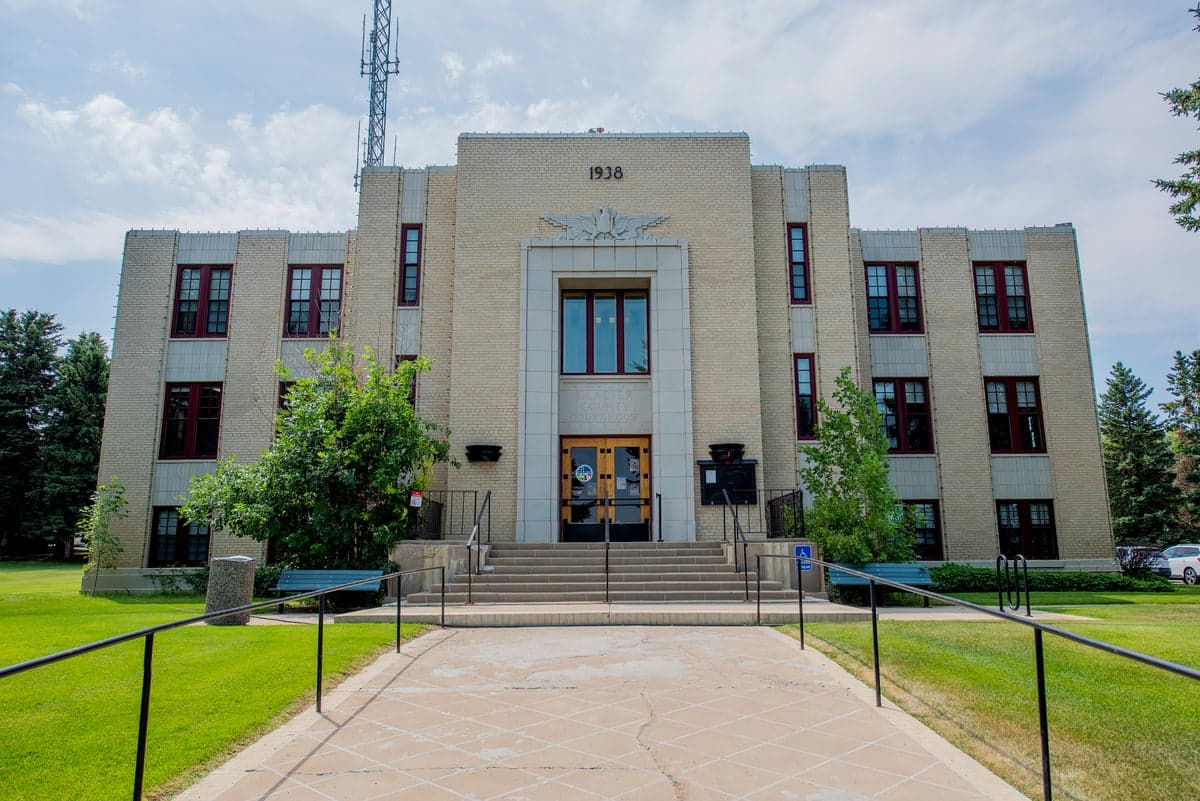
Photo: Wikipedia
Personal Sovereignty in Glacier County
Viable for self-reliance. Generally workable, though some barriers may limit total independence.
What does Personal Sovereignty tell us?
Personal Sovereignty measures your capacity for self-reliance and independence with minimal government friction. Higher scores mean fewer barriers between you and the way you want to live... but it assumes you have the space you need and good neighbors.
What does this tell us?
Personal Sovereignty measures your capacity for self-reliance and independence with minimal government friction. Higher scores mean fewer barriers between you and the way you want to live... but it assumes you have the space you need and good neighbors.
State Policy
Energy independence: Net exporter (120% of energy produced in-state)
Personal Liberty
Homesteading

Personal Liberty Analysis
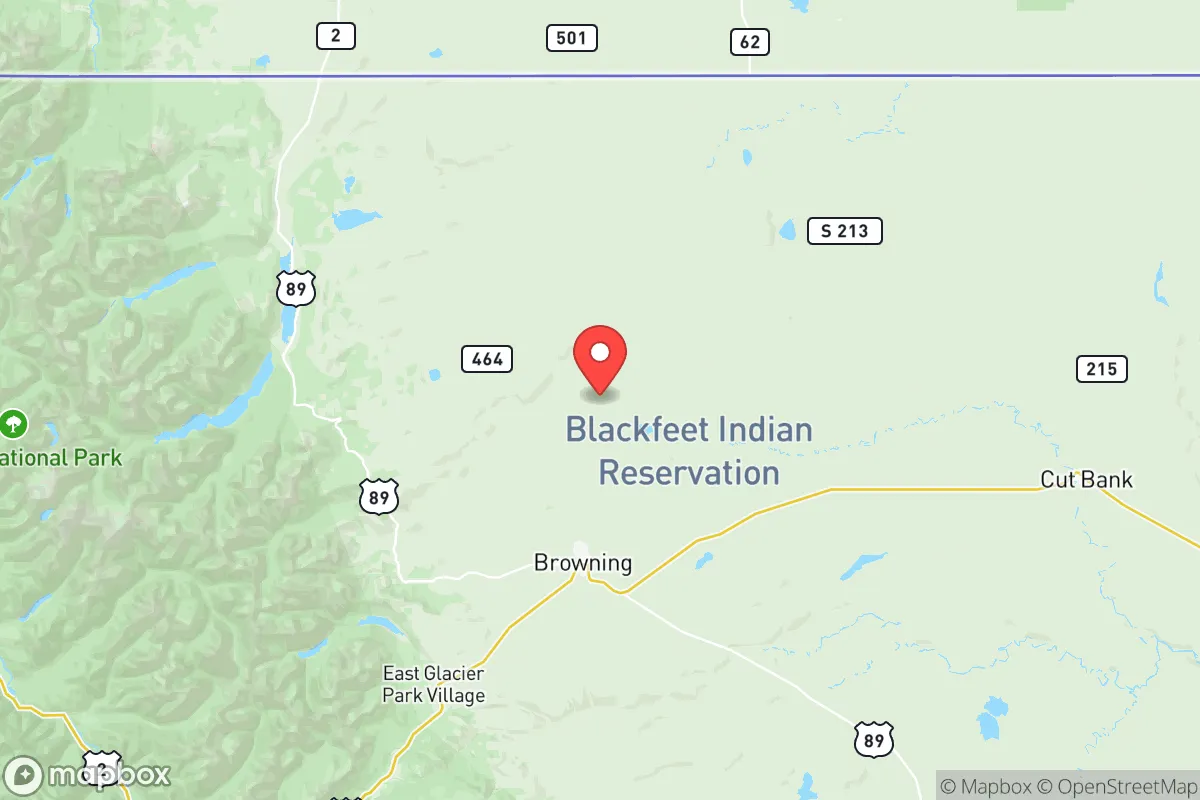
Glacier County, Montana, offers a notably high degree of personal sovereignty, particularly for those who value minimal government interference in daily life, self-defense rights, and the ability to live off the land. The county’s regulatory environment is shaped by Montana’s strong constitutional protections for individual liberties, a low tax burden, and a culture of self-reliance that is deeply embedded in the rural, frontier character of communities like Cut Bank, Browning, and the smaller settlements of Babb, St. Mary, and East Glacier Park Village. While the county is not a libertarian utopia—it operates under state and federal law, and the Blackfeet Indian Reservation (which covers much of the county) has its own tribal governance—the overall atmosphere is one of light-touch governance, especially outside the reservation boundaries. For a relocation-minded individual or family seeking independence, Glacier County presents a compelling mix of low taxes, permissive gun laws, and viable homesteading opportunities, though the trade-offs include harsh winters, limited services, and a sparse population.
Tax burden and regulatory posture: How Montana compares to surrounding states
Montana is a low-tax state, and Glacier County benefits from this posture. There is no state sales tax, which means residents pay no tax on groceries, clothing, or most services—a significant advantage for families and individuals managing their own budgets. Property taxes in Glacier County are moderate, with the effective rate hovering around 0.83% of assessed home value, slightly below the national average. The state’s income tax is a flat 5.9% (as of 2026), which is competitive but not the lowest in the region; Idaho and Wyoming have lower or no income taxes, but Montana’s lack of sales tax often offsets this. Regulatory posture in Glacier County is light, particularly outside the reservation. Building permits are required for new construction, but the county’s planning department is known for a straightforward, no-nonsense approach—unlike the more restrictive zoning found in Bozeman or Missoula. In unincorporated areas like the rural stretches near Cut Bank or along the Two Medicine River, there are few land-use restrictions beyond basic health and safety codes. The Blackfeet Reservation, however, has its own tribal tax and regulatory systems, which can be more complex; for example, businesses on the reservation may face additional tribal taxes and permitting requirements. For most non-tribal residents, the county’s regulatory environment is among the most permissive in the state, making it attractive for those who want to avoid bureaucratic red tape.
Self-defense and gun law specifics: What the Second Amendment looks like in practice
Montana is a constitutional carry state, meaning no permit is required to carry a concealed firearm for anyone 18 or older who can legally possess a firearm. Glacier County is deeply gun-friendly, with a culture that treats firearms as tools for self-defense, hunting, and daily life. In towns like Cut Bank and Browning, gun ownership is nearly universal, and there is no social stigma attached to carrying openly or concealed. The state has strong preemption laws that prevent local governments from enacting stricter gun ordinances than state law, so Glacier County’s cities and towns cannot impose their own bans or restrictions. This is a stark contrast to states like California or New York, where local jurisdictions often layer on additional regulations. Stand-your-ground laws are in effect, and there is no duty to retreat in any place where a person has a legal right to be. Castle doctrine protections apply to homes, vehicles, and workplaces. For a reader prioritizing self-defense, Glacier County offers one of the most permissive legal environments in the nation. The only notable caveat is that firearms are generally prohibited on the Blackfeet Reservation unless authorized by tribal law, so residents who live or travel on the reservation should be aware of tribal regulations. Otherwise, the county is a haven for those who view the Second Amendment as a fundamental right.
Self-reliance and homesteading viability: Lot sizes, zoning, and off-grid feasibility
Glacier County is one of the best places in Montana for homesteading and off-grid living, thanks to large lot sizes, minimal zoning, and a climate that demands self-sufficiency. In unincorporated areas, minimum lot sizes for rural residential parcels are typically 5 to 10 acres, though larger tracts of 20 to 160 acres are common and affordable. Near Cut Bank, land prices are among the lowest in the state, with raw acreage often selling for under $1,000 per acre. Zoning is virtually nonexistent outside the small towns; there are no county-wide building codes for rural properties, meaning you can build a cabin, yurt, or earthship without a permit, as long as you meet basic septic and well requirements. Off-grid living is entirely feasible: solar panels, wind turbines, and propane systems are common, and many residents rely on private wells and septic tanks. The county does not require grid connection, and there are no restrictions on rainwater collection. In the more remote areas around Babb and St. Mary, near the Canadian border, residents often live completely off-grid, with no mail delivery, no county services, and no law enforcement patrols—a true frontier lifestyle. The trade-off is the harsh climate: winter temperatures can drop to -40°F, and snow cover lasts from November to April. Homesteading here requires serious preparation, including a reliable wood stove, backup heat sources, and a four-wheel-drive vehicle. For those willing to embrace the challenge, Glacier County offers a level of self-reliance that is rare in the lower 48.
Personal liberties: Parental rights, medical autonomy, speech, and property
Montana has strong protections for personal liberties, and Glacier County reflects that ethos. Parental rights are robust: the state has a parental rights law that affirms parents’ authority to direct their children’s education, healthcare, and upbringing. School choice is available, with options including public schools in Cut Bank and Browning, private religious schools, and homeschooling, which is lightly regulated—no notification or testing requirements for most families. Medical autonomy is also respected; Montana does not have a state vaccine mandate for adults, and there are no restrictions on alternative or complementary medicine. The state’s constitution includes a right to privacy that has been interpreted to protect medical decisions, though this is subject to federal law. Free speech is protected by the Montana Constitution, which has its own strong free-expression clause, and there is no state-level hate speech law that would chill political or religious speech. Property rights are well-protected: eminent domain is limited to public uses, and there is no statewide rent control or landlord licensing. In Glacier County, property disputes are rare, and the county’s small government means that code enforcement is minimal. The Blackfeet Reservation has its own legal framework, which may differ on some of these issues, but for non-tribal residents, the county offers a high degree of personal freedom. The overall atmosphere is one of live-and-let-live, with a strong cultural expectation that individuals handle their own affairs without government interference.
Compared to other areas in Montana and the broader Rocky Mountain region, Glacier County stands out for its combination of low taxes, permissive gun laws, and homesteading viability. It is more freedom-oriented than the increasingly regulated towns of Bozeman or Missoula, and it offers a lighter regulatory touch than many rural counties in Colorado or Washington. For a conservative-leaning individual or family seeking maximum personal sovereignty, Glacier County is a strong contender, though the remote location and harsh climate require a serious commitment to self-reliance. The county is not for everyone, but for those who prioritize autonomy over convenience, it delivers.

* Values derived from national, state, county, city and local statistics and may differ in a specific area. Last updated: 2026-07-29T02:09:42.000Z
Narrative content on this page is AI-generated and may contain mistakes. Verify any details that matter before acting on them.
ReloMaps may earn a commission from affiliate links at no extra cost to you.

