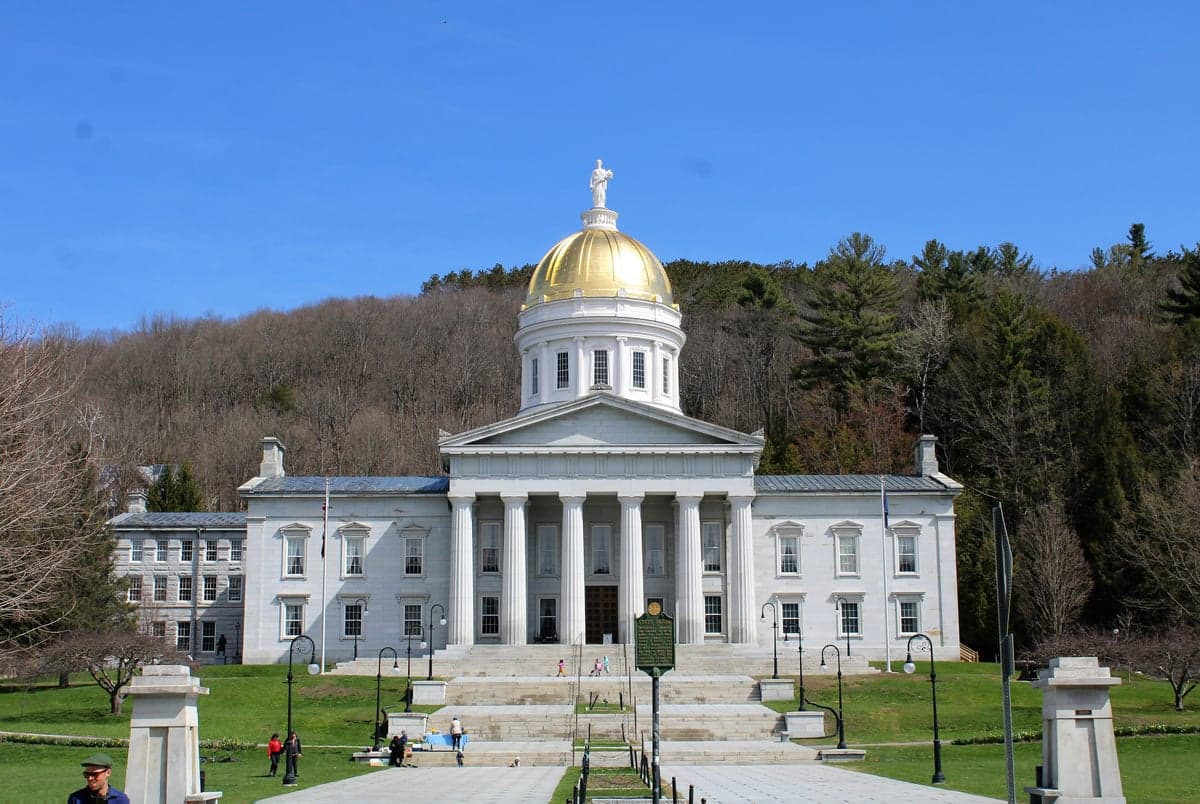
Photo: Wikipedia
Political ClimatePolitical Climate in Montpelier, VT
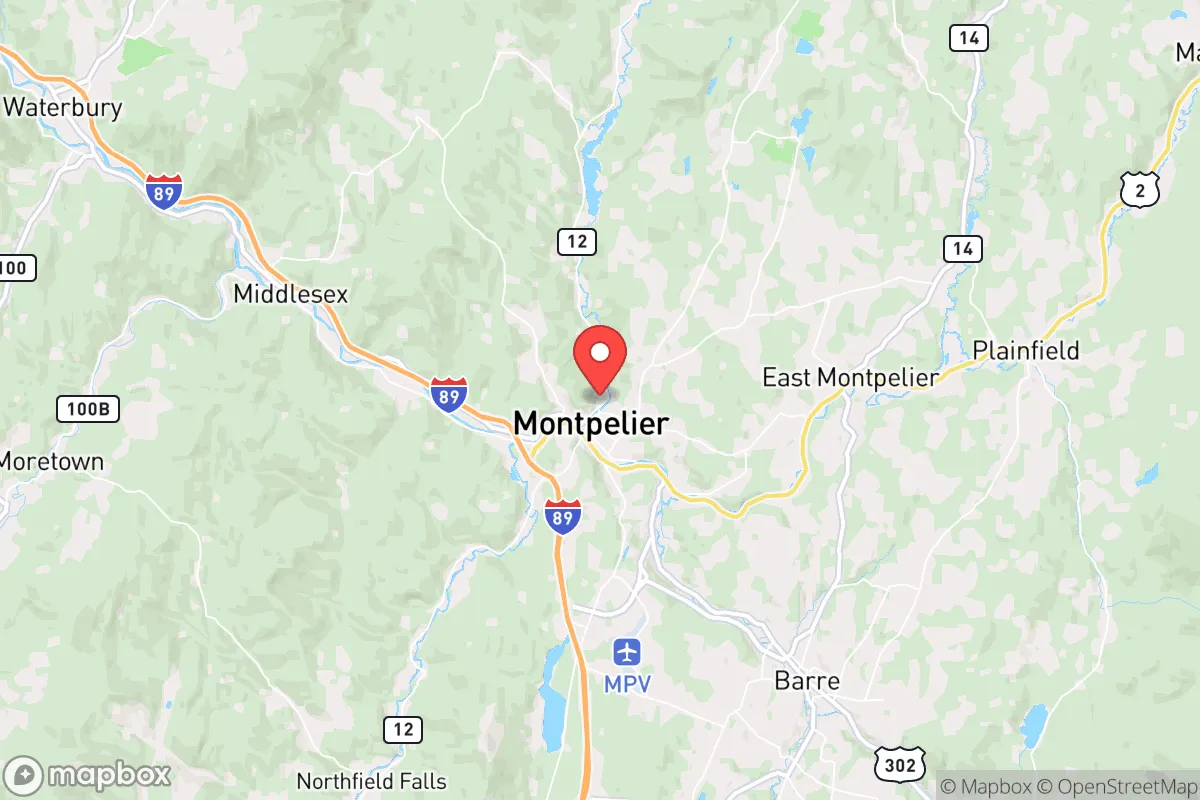
District shown is the primary district for this city’s centroid. Cities may span multiple districts.
Inherited from parent state — no local data available.
Local Political AnalysisPolitical Analysis of Montpelier, VT
Montpelier, Vermont, is about as blue as it gets in New England, and it’s been trending that way for decades. The Cook PVI of D+17 tells you the math is baked in—this isn’t a purple town that flips back and forth. In the 2024 presidential race, Washington County (where Montpelier sits) went for the Democratic candidate by roughly 30 points, and local elections rarely see a competitive Republican. If you’re looking for a place where your vote might actually balance things out, this isn’t it. The trajectory has been a slow, steady march leftward, especially since the early 2000s, when the state’s independent streak started getting replaced by a more uniform progressive agenda.
How it compares
Drive 15 minutes north to Barre, and you’ll feel a different vibe—working-class, more independent, and reliably more conservative in local races. Barre’s city council has a mix of Democrats and independents who actually push back on tax hikes and zoning overreach. Head 30 minutes south to Randolph, and you’re in a town that still votes Republican in state legislative races. Montpelier, by contrast, is the state capital, so you get the full weight of government employees, nonprofit staff, and out-of-state transplants who moved here specifically for the politics. The surrounding towns like Berlin and Middlesex are more moderate, but they’re small enough that Montpelier’s voting bloc dominates the county totals. The contrast is stark: Montpelier’s city council has been unanimous on things like rent control and sanctuary city policies, while Barre’s council has split votes on police funding and property tax relief.
What this means for residents
For a conservative or even a moderate, daily life here means watching your property taxes climb to fund state-level programs you might not support—Vermont has one of the highest property tax burdens in the country, and Montpelier’s local budgets add another layer. The city council has pushed through mandatory inclusionary zoning, which sounds nice but effectively limits what you can do with your own land. You’ll also see a heavy emphasis on climate mandates: the city has a net-zero energy goal for municipal buildings by 2030, and there’s talk of banning natural gas hookups in new construction. If you value personal freedom to heat your home how you want or build a garage without three layers of permits, this place will feel like a slow squeeze. The school board has leaned into DEI training and gender-inclusive policies that go beyond state law, which some parents find overbearing. On the plus side, the crime rate is low, and the downtown is walkable, but the trade-off is a constant sense that the government is in your business.
The cultural distinction here is that Montpelier doesn’t just vote left—it lives left. The city hosts the annual Vermont Festival of the Arts, which is heavy on social-justice themes, and the local paper’s opinion page rarely runs a conservative voice. Longtime residents who remember when Vermont was a live-and-let-live state—where you could hunt, fish, and keep to yourself—say that’s fading. The new wave of activism has brought stricter gun laws (magazine limits, waiting periods) and a push for universal health care that’s stalled but not dead. If you’re a conservative, you’ll find yourself in the minority at town meeting, and your views on personal responsibility and limited government will be politely dismissed. My honest take: if you’re okay with being the lone voice at the dinner table and paying a premium for it, Montpelier is safe and pretty. But if you want a place where your rights aren’t constantly up for debate, look at Barre or even further north to Hardwick.

State Political ClimatePolitical Climate in Vermont
State Political AnalysisPolitical Environment in the State
Vermont has long been a reliably blue state, but its political landscape is far more complex than a simple label suggests. For decades, the state has been dominated by a progressive coalition centered in Burlington and the Chittenden County metro area, but a deep and growing rural-conservative minority exists, particularly in the Northeast Kingdom and southern counties. Over the last 10-20 years, the state has shifted further left on social and economic issues, with the Democratic trifecta in Montpelier passing some of the most ambitious progressive legislation in the country, while simultaneously seeing a quiet but persistent exodus of conservative-leaning families and small business owners to neighboring New Hampshire.
Urban vs. rural divide
The political map of Vermont is a study in stark contrasts. The engine of the state’s progressive politics is Chittenden County, anchored by Burlington, South Burlington, and Winooski. This metro area, home to roughly a quarter of the state’s population, reliably delivers 70-80% of its votes to Democratic and Progressive candidates. In contrast, the Northeast Kingdom—counties like Essex, Orleans, and Caledonia—votes heavily Republican, often by 20-30 point margins. Towns like Newport and St. Johnsbury are conservative strongholds, with local politics focused on property rights, gun ownership, and resisting state mandates. The divide is also visible in southern Vermont: Rutland and Bennington counties are more purple, with Rutland City itself leaning Democratic while the surrounding towns vote red. The Upper Valley region (around Hanover, NH, and Norwich, VT) is a unique blend of wealthy, educated liberals and rural conservatives, but the overall tilt is left-leaning due to Dartmouth College’s influence.
Policy environment
Vermont’s policy environment is a case study in progressive governance, which many conservatives find concerning. The state has a progressive income tax with rates up to 8.75%, one of the highest in the nation, and a statewide property tax that funds education, leading to some of the highest property tax rates in the country. In 2024, the legislature passed a clean heat standard that effectively taxes heating fuel, and a payroll tax for a new paid family leave program. Education policy is heavily centralized, with the state board of education pushing diversity, equity, and inclusion mandates and a controversial ethnic studies framework for K-12 schools. Healthcare is dominated by the Green Mountain Care single-payer system, though it’s actually a heavily regulated private insurance market with high costs. Election laws are among the most liberal: automatic voter registration, same-day registration, and universal mail-in ballots for all elections. For a conservative, the regulatory posture feels stifling—from strict land-use laws (Act 250) that make building a home or business expensive and slow, to a ban on new gas stations in certain areas.
Trajectory & freedom
On the freedom front, Vermont is moving in a direction that alarms many conservatives. The state has some of the strictest gun laws in the nation, including a 2023 law (S.4) that bans the sale of many semi-automatic firearms and limits magazine capacity to 10 rounds. In 2024, the legislature passed H.289, which created a “red flag” law allowing for the temporary seizure of firearms without a criminal conviction. Parental rights have been eroded: a 2023 law (H.230) requires schools to affirm a student’s chosen name and pronouns without notifying parents, and the state’s “safe schools” policy effectively prohibits schools from disclosing a child’s gender identity to parents. Medical autonomy has been expanded for some but restricted for others: Vermont was the first state to legalize physician-assisted suicide (Act 39, 2013) and has no parental consent requirement for abortion, but it also mandates COVID-19 vaccines for healthcare workers and school staff. Property rights are under constant pressure from Act 250, which gives state agencies broad authority to block development. The overall trajectory is one of expanding state control over personal decisions, from what you can heat your home with to how you raise your children.
Civil unrest & political movements
Vermont has a long tradition of civil disobedience, but the flashpoints have shifted. The Black Lives Matter protests in Burlington in 2020 were large and occasionally violent, leading to the defunding of the police department by the city council. The Yellow Vests movement, a conservative and libertarian group, has held regular protests at the Statehouse against gun control and vaccine mandates, drawing hundreds of participants. The secessionist movement, while small, is real—the Second Vermont Republic group advocates for independence from the U.S., though it has little mainstream support. Immigration politics are relatively quiet due to Vermont’s small population, but the state is a sanctuary state by practice, with Burlington and other cities refusing to cooperate with ICE. Election integrity is a hot topic: after the 2020 election, conservative groups raised concerns about the state’s universal mail-in ballot system, but no major fraud was found. A visible flashpoint for new residents is the “F-35” controversy in Burlington, where activists have protested the basing of F-35 fighter jets at the airport, citing noise and safety concerns—a rare issue that unites left-wing pacifists and right-wing anti-government types.
Projection
Over the next 5-10 years, Vermont is likely to become more progressive, not less. The demographic trends are clear: young, college-educated liberals are moving into Chittenden County and the Upper Valley, while conservative-leaning families and retirees are leaving for New Hampshire, Florida, or Texas. The state’s population has been essentially flat for a decade, and the median age is rising. The in-migration of remote workers from New York and Boston during the pandemic has accelerated the leftward shift, as these newcomers tend to support the progressive agenda. The Republican Party in Vermont is in disarray, with no clear leader or platform beyond opposing taxes and gun control. The most likely scenario is that the Democratic trifecta will continue to pass ambitious legislation—a public option for healthcare, a wealth tax, and further gun restrictions—while the rural areas become increasingly resentful and economically stagnant. A new resident moving in now should expect to see higher taxes, more regulations, and a shrinking conservative footprint.
For a conservative individual or family considering a move to Vermont, the bottom line is this: you will be a political minority, and your values will be increasingly at odds with state law. The state offers stunning natural beauty, low crime rates, and a strong sense of community in its rural towns, but you will pay a high price in taxes and personal freedom. If you value gun rights, parental control over education, and low taxes, Vermont is likely not the right fit. However, if you are willing to fight for your beliefs and can find a niche in a conservative town like Newport or St. Johnsbury, you may find a rewarding, if challenging, place to live. Just be prepared for the state government to be working against you every step of the way.
* Values derived from national, state, county, city and local statistics and may differ in a specific area. Last updated: 2026-05-02T00:47:26.000Z
Narrative content on this page is AI-generated and may contain mistakes. Verify any details that matter before acting on them.
ReloMaps may earn a commission from affiliate links at no extra cost to you.

