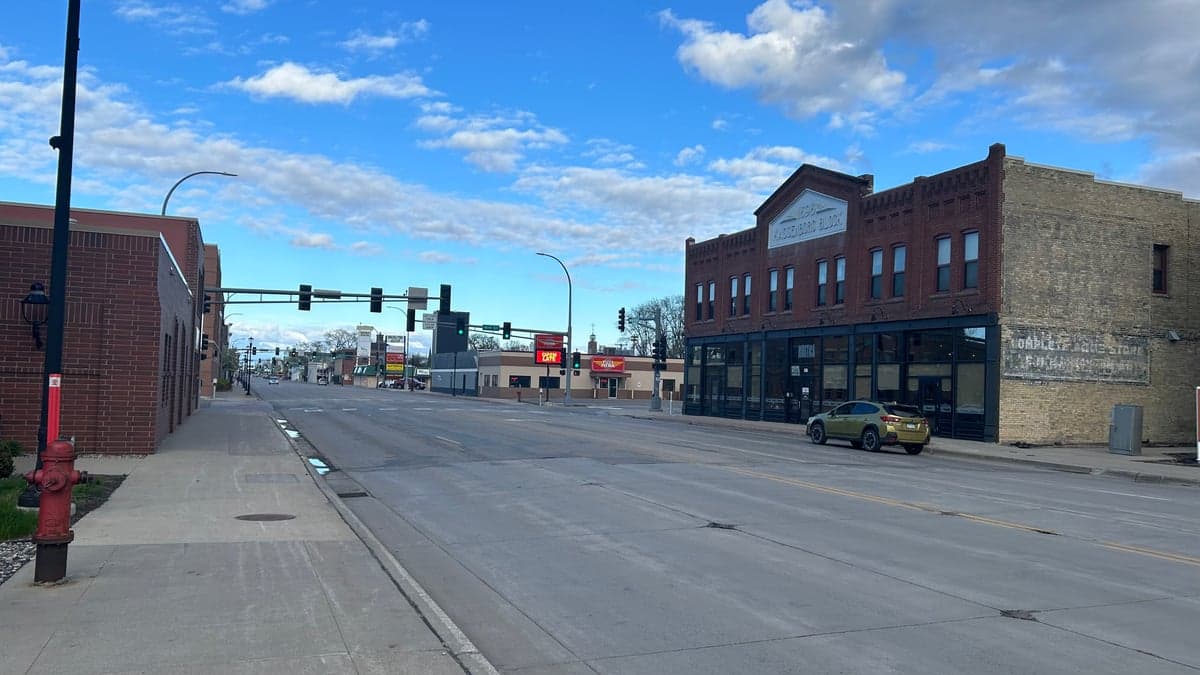
Photo: Wikipedia
Political ClimatePolitical Climate in Moorhead, MN
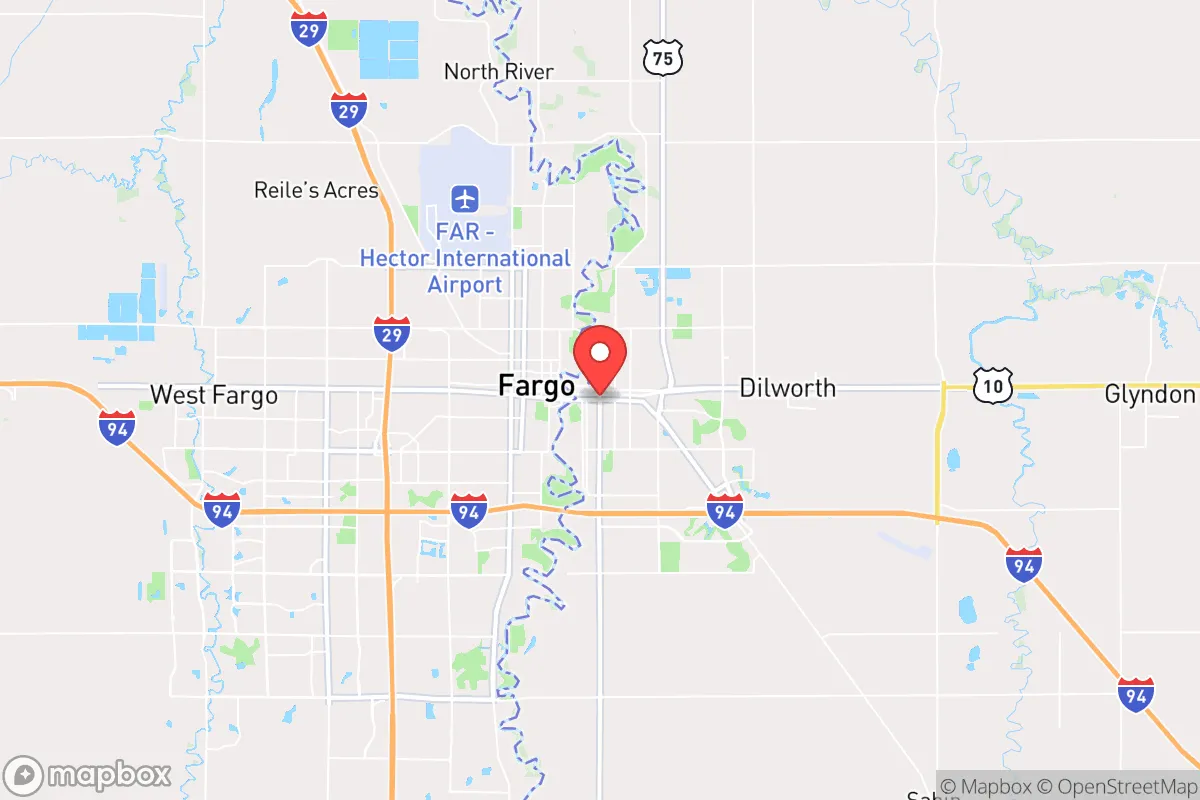
District shown is the primary district for this city’s centroid. Cities may span multiple districts.
Local Political AnalysisPolitical Analysis of Moorhead, MN
Moorhead, Minnesota, sits in a region that has historically leaned conservative, but like many places, the political winds are shifting in ways that long-time residents find concerning. The Cook PVI rating of R+18 for the surrounding area tells you this isn't a deep-blue enclave, but the city itself has been trending in a more progressive direction over the past decade, especially among younger voters and newcomers. If you've lived here for a while, you've watched the local conversations move from practical, common-sense issues toward more ideological battles, and it's left a lot of folks wondering what the next ten years will look like.
How it compares
To understand Moorhead's political climate, you have to look at its neighbors. Just across the Red River, Fargo, North Dakota, is still reliably conservative, with a strong libertarian streak and a "live and let live" attitude that keeps government out of most personal and business decisions. Moorhead, on the other hand, has started to mirror trends seen in Duluth or the Twin Cities metro, with more emphasis on environmental regulations, diversity initiatives, and public spending on social programs. Drive twenty minutes south to Hawley or Glyndon, and you're back in solidly red territory where folks are skeptical of any new mandates from St. Paul. The contrast is stark: Moorhead's city council has debated things like plastic bag bans and police reform measures that would never get a second look in most of Clay County. It's a reminder that even in a R+18 district, the local politics can feel disconnected from the broader regional values.
What this means for residents
For someone who values personal freedoms and limited government, the creeping progressive influence in Moorhead is a red flag. You're seeing more zoning restrictions that make it harder to start a small business out of your home, higher property taxes to fund programs you might not agree with, and a general attitude that the city knows better than you do about how to live your life. The school board has become a battleground, with debates over curriculum transparency and parental rights that would have been unthinkable twenty years ago. If you're a conservative or even a moderate who just wants to be left alone, you'll find yourself increasingly on the defensive at public meetings and in local elections. The silver lining is that the surrounding rural areas still vote overwhelmingly for candidates who prioritize fiscal responsibility and individual liberty, so there's a check on the most extreme proposals. But within city limits, the trajectory is clear: more government involvement in daily life, not less.
One cultural distinction worth noting is that Moorhead has a strong Norwegian Lutheran heritage that traditionally emphasized community responsibility without heavy-handed government. That ethos is fading as new residents arrive from more progressive parts of the state. The local paper, the Forum of Fargo-Moorhead, still runs plenty of letters to the editor from folks pushing back against overreach, but the editorial board has leaned left in recent years. If you're considering a move here, keep an eye on the city council elections and school board races—those are where the real battles over your rights and your wallet are being fought. For now, Moorhead is still a decent place to raise a family if you're willing to stay engaged, but don't expect it to stay the same for long.

State Political ClimatePolitical Climate in Minnesota
State Political AnalysisPolitical Environment in the State
Minnesota has shifted from a classic purple battleground to a reliably blue state over the past 15 years, with Democrats now holding a trifecta in state government and the state voting for the Democratic presidential candidate by margins of 7 to 10 points since 2012. The dominant coalition is the DFL (Democratic-Farmer-Labor Party), powered by the Twin Cities metroplex, while Greater Minnesota has swung hard toward Republicans. For a conservative considering relocation, the state’s trajectory is concerning: once known for pragmatic centrism, it now leads the Midwest in progressive legislation on taxes, education, and social policy.
Urban vs. rural divide
The political map of Minnesota is a stark study in contrast. The seven-county Twin Cities metro area—Hennepin, Ramsey, Dakota, Washington, Anoka, Carver, and Scott—generates roughly 55% of the state’s vote, and it leans heavily Democratic. Minneapolis and St. Paul are deep blue strongholds, but even suburbs like Edina, Bloomington, and Maple Grove have shifted leftward since 2016. Meanwhile, outstate Minnesota is overwhelmingly Republican. Counties like Otter Tail, Stearns, and Wright vote +30 to +40 points Republican. The Iron Range, once a DFL bastion, has flipped dramatically: St. Louis County (Duluth) still votes blue, but surrounding mining counties like Itasca and Lake have trended red. The 2020 election saw Scott County (a fast-growing exurb southwest of the Cities) flip from red to blue, a bellwether of suburban flight from the GOP. The rural-urban divide is now so deep that a candidate can win statewide while losing 80 of 87 counties, as Joe Biden did in 2020.
Policy environment
Minnesota’s policy environment has become aggressively progressive under the DFL trifecta that took full control in 2023. The state now has a progressive income tax with a top rate of 9.85% on income over $200,000 (single filers), one of the highest in the nation. Property taxes are moderate but vary wildly by locality; Hennepin County levies some of the highest rates in the state. The regulatory posture is business-friendly in name but burdensome in practice: Minnesota has a $15.57 minimum wage (indexed to inflation), paid family and medical leave (starting 2026), and strict environmental review laws that can delay construction projects for years. Education policy is a flashpoint: the state passed a universal school lunch program and expanded funding for public schools, but parental rights in education have eroded—the state now mandates LGBTQ-inclusive curricula and prohibits schools from notifying parents of a child’s gender identity changes without the child’s consent (a law that took effect in 2024). Election laws are among the most accessible in the country: no-excuse absentee voting, same-day registration, and automatic voter registration are all in place. The state also restored felon voting rights upon release from prison in 2023.
Trajectory & freedom
Minnesota is becoming less free by any measure of personal liberty, especially for conservatives. The 2023 session alone saw a flurry of legislation that expanded government control: a red-flag law (Extreme Risk Protection Order) allowing courts to temporarily seize firearms from individuals deemed a threat, a universal background check law for all gun transfers, and a repeal of the state’s preemption law that had prevented cities from enacting their own gun ordinances. On medical autonomy, the state codified abortion rights into law (the Protect Reproductive Options Act) and removed nearly all restrictions, including parental notification for minors. Property rights took a hit with the passage of a “clean energy” bill that mandates 100% carbon-free electricity by 2040, effectively forcing utilities to shut down natural gas plants. On the positive side for conservatives, the state did not pass a “conversion therapy” ban for minors (though it’s been proposed), and there is no state-level rent control. However, the trend is unmistakable: the DFL has used its trifecta to push through a progressive wish list that many residents—especially in Greater Minnesota—feel was imposed without their consent.
Civil unrest & political movements
Minnesota has been a national flashpoint for civil unrest since the 2020 murder of George Floyd in Minneapolis, which sparked the largest protests in the state’s history and led to the destruction of the Third Precinct police station. The aftermath saw a surge in left-wing activism, with groups like the Minnesota Freedom Fund bailing out protesters and the city of Minneapolis attempting (and failing) to replace its police department with a new public safety agency. On the right, the “Walz Must Go” movement and the “Minnesota Freedom Coalition” have organized around parental rights, school board elections, and opposition to COVID-19 mandates. Immigration politics are tense: Minnesota is a sanctuary state (by executive order from Governor Tim Walz), and the city of Minneapolis has a “Welcoming City” ordinance that limits cooperation with ICE. The 2022 election saw a surge in Republican turnout in rural areas, but the DFL still held the state Senate by a single seat. Election integrity remains a hot-button issue: the state uses paper ballots and has strong audit procedures, but the 2020 election saw allegations of absentee ballot irregularities in Hennepin County that were never substantiated. Visible flashpoints include the ongoing debate over the Line 3 oil pipeline (which was completed in 2021 after massive protests) and the push for a state-level “Green New Deal” that would ban new gas stations.
Projection
Over the next 5-10 years, Minnesota is likely to become more progressive, not less. Demographic trends favor the DFL: the Twin Cities metro is growing while rural counties shrink, and in-migration from blue states (Illinois, California) is accelerating. The state’s population is aging, but younger voters in the suburbs are solidly left-leaning. The DFL trifecta is likely to hold through at least 2026, and if it does, expect a state-level “public option” for health insurance, a carbon tax, and further restrictions on firearms. The one wild card is the 2026 gubernatorial election: if a Republican wins, they could veto the most aggressive bills, but they’d still face a DFL legislature. For a conservative moving in now, the state will feel increasingly like a blue island in a red Midwest. The practical reality is that your property taxes will rise, your school district will adopt progressive curricula, and your ability to own firearms will be more restricted than in neighboring Wisconsin or South Dakota. The best bet for a conservative is to settle in a red-leaning exurb like Elk River or St. Michael, or a rural county like Wright or Sherburne, where local government is still friendly to traditional values.
Bottom line: Minnesota is a beautiful state with strong communities and a robust economy, but the political climate is increasingly hostile to conservative values. If you value low taxes, gun rights, parental control in education, and limited government, you’ll find yourself fighting an uphill battle here. The state is not lost yet—rural Minnesota is still deeply red—but the demographic and policy trends are clear. Come for the lakes and the jobs, but be prepared to engage politically or watch your freedoms erode further.
* Values derived from national, state, county, city and local statistics and may differ in a specific area. Last updated: 2026-04-19T10:03:14.000Z
Narrative content on this page is AI-generated and may contain mistakes. Verify any details that matter before acting on them.
ReloMaps may earn a commission from affiliate links at no extra cost to you.

