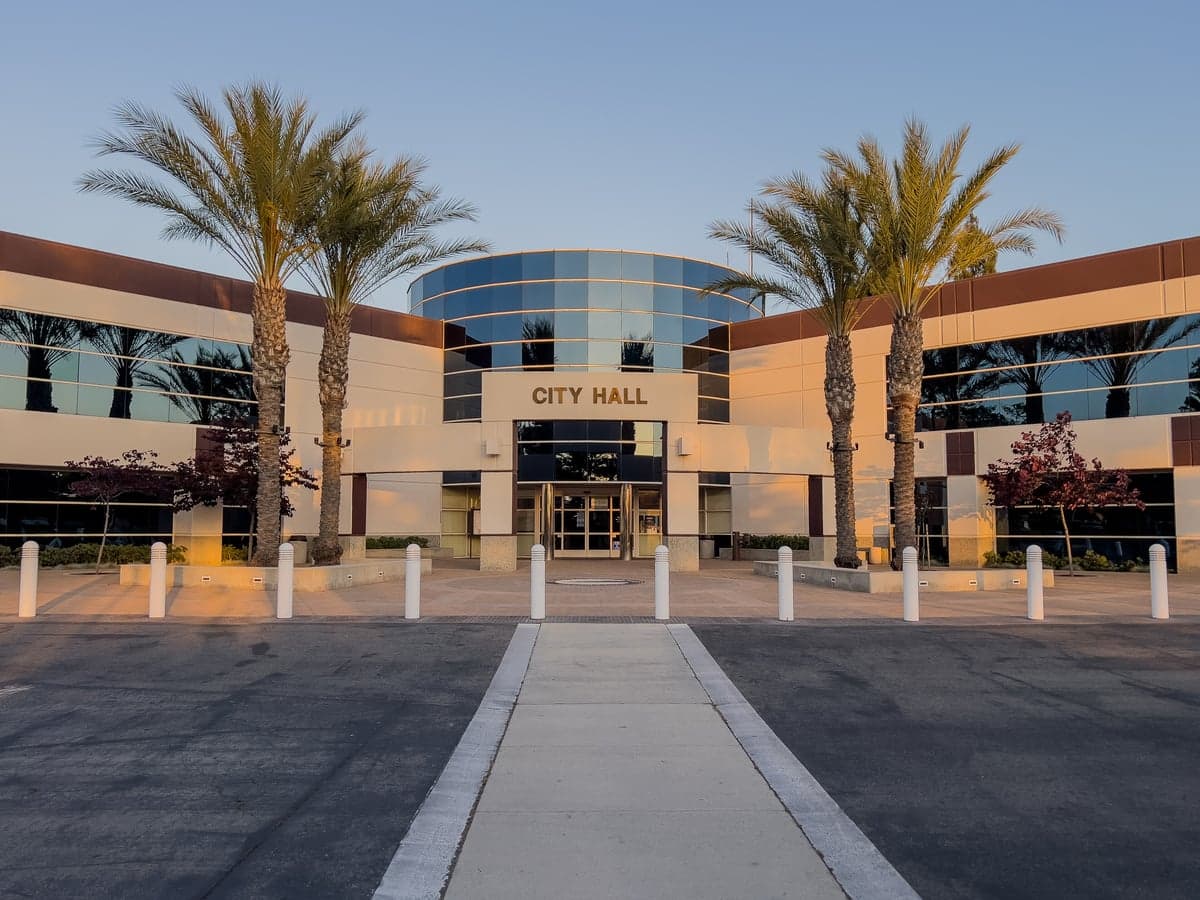
Photo: Wikipedia
Political ClimatePolitical Climate in Moreno Valley, CA
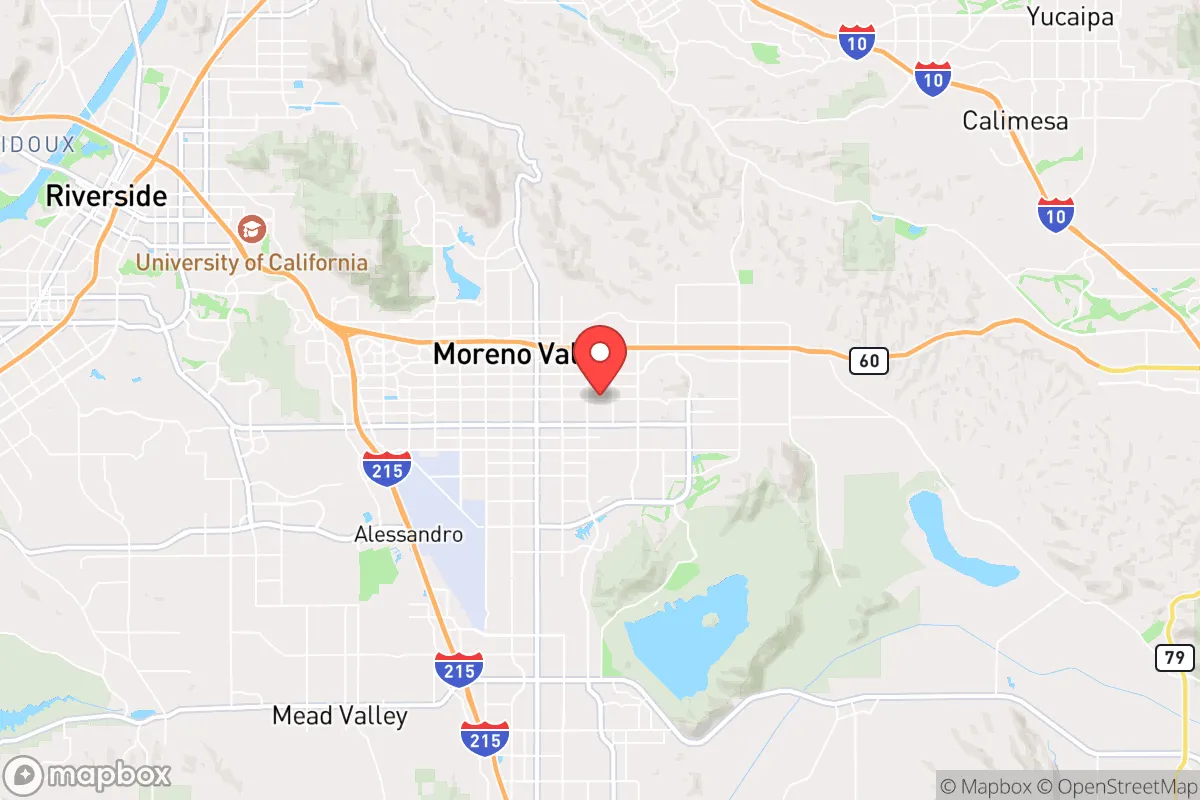
District shown is the primary district for this city’s centroid. Cities may span multiple districts.
Local Political AnalysisPolitical Analysis of Moreno Valley, CA
Moreno Valley leans solidly Democratic, with a Cook PVI of D+7, meaning it votes about seven points more Democratic than the national average. That wasn’t always the case—back in the 1990s and early 2000s, this was a purple area where local elections were genuinely competitive, and you’d see a mix of conservative and moderate candidates winning seats. Over the last decade, though, the shift has been steady and pronounced, driven largely by population growth from Los Angeles and Orange County transplants who bring their progressive voting habits with them. If you’re looking at the trajectory, it’s not trending back toward the center anytime soon.
How it compares
Drive 15 minutes west to Riverside, and you’ll find a city that’s still more moderate—Riverside County as a whole voted about D+5 in 2024, but the city itself has a stronger independent streak, with a city council that’s often split on development and tax issues. Head east to Beaumont or Banning, and the contrast is stark: those communities lean Republican by 10-15 points, with voters who are far more skeptical of state-level mandates on housing, energy, and land use. Moreno Valley sits in the middle geographically but politically it’s closer to the inland Empire’s progressive corridor, which includes San Bernardino and parts of Fontana. That means local policy tends to follow Sacramento’s lead more than the preferences of longtime residents who remember when this was a farming and logistics hub.
What this means for residents
For someone who values personal freedoms and limited government, the practical effect is noticeable. The city council has been increasingly willing to adopt state-level progressive policies—think rent control measures, density bonuses for developers, and restrictions on short-term rentals—without much pushback. Property taxes aren’t the issue (Prop 13 still holds), but you’ll see more local ordinances that feel like overreach, like limits on water use that go beyond state requirements or zoning changes that prioritize high-density apartments over single-family homes. The school board has also shifted left, with curriculum changes and equity initiatives that some parents find intrusive. If you’re a conservative or even a moderate libertarian, you’ll find yourself voting against most ballot measures and local candidates just to hold the line.
What daily life is like for families
On the ground, the political climate translates into a few concrete realities. You’ll see more “slow streets” and bike lane projects that reduce car access, even though this is a car-dependent suburb. The city has embraced “sanctuary” policies that limit local police cooperation with federal immigration enforcement, which some residents see as a safety concern. Business permits and home-based business licenses have gotten more bureaucratic, with extra fees and inspections that feel like government meddling. That said, the community itself is still family-oriented—parks are well-used, and there’s a strong sense of neighborliness that transcends politics. The tension is between the official direction of the city and the everyday values of the people who’ve been here for decades.
Culturally, Moreno Valley lacks the distinct identity of older Inland Empire towns like Riverside or Redlands. It’s a bedroom community, and the politics reflect that: less rooted, more reactive to state trends. The long-term concern for conservatives is that without a strong local counterweight, the city will continue to adopt policies that prioritize government solutions over individual choice—whether that’s in housing, education, or land use. If you’re considering a move here, know that the political climate is increasingly one-party, and the local government is aligned with Sacramento’s agenda. For those who prefer a lighter touch from their elected officials, the surrounding towns to the east offer a more balanced alternative.

State Political ClimatePolitical Climate in California
State Political AnalysisPolitical Environment in the State
California is a one-party Democratic state where Republicans have been reduced to a permanent minority, holding no statewide offices and just 11 of 52 U.S. House seats after the 2024 elections. The state’s partisan lean has shifted from a competitive purple state in the 1990s to a solidly blue stronghold, driven by massive population growth in coastal metros and a steady exodus of conservative-leaning voters to Texas, Idaho, and Arizona. Over the last 20 years, Democrats have consolidated power through gerrymandering, heavy reliance on mail-in voting, and a political culture that increasingly punishes dissent, making the state’s trajectory one of declining political freedom for anyone outside the progressive consensus.
Urban vs. rural divide
The political map of California is a tale of two worlds. The coastal urban crescent—from San Francisco and Oakland in the Bay Area down through Los Angeles, San Diego, and Orange County—drives the state’s Democratic supermajority. These metros account for roughly 70% of the state’s population and vote 65-80% Democratic in most elections. In contrast, the Central Valley and inland mountain regions—places like Bakersfield, Fresno, Redding, and Palmdale—vote reliably Republican, often by 20-30 point margins. The divide is stark: in 2024, Kamala Harris won San Francisco County with 84% of the vote, while Donald Trump won Tulare County (Visalia) with 62%. The Inland Empire, including Riverside and San Bernardino, has become a key battleground, trending redder as working-class families flee coastal costs but still voting blue overall due to heavy Latino turnout for Democrats. Orange County, once a GOP stronghold, flipped decisively blue after 2018, driven by suburban college-educated voters and Asian-American shifts leftward.
Policy environment
California’s policy environment is aggressively progressive, with a tax-and-regulate posture that makes it one of the highest-cost states in the nation. The state income tax tops out at 13.3%, the highest in the country, and sales taxes can exceed 10% in cities like Los Angeles and San Francisco. Property taxes are capped at 1% of assessed value under Proposition 13, but annual increases and transfer taxes in some cities add burden. Education policy is dominated by teachers’ unions, with school choice virtually nonexistent—California has no voucher program and only a weak charter school law. Healthcare is heavily regulated, with the state running its own insurance exchange (Covered California) and imposing mandates that drive premiums 30-40% above national averages. Election laws are among the most permissive in the nation: universal mail-in ballots were made permanent after COVID, same-day voter registration is allowed, and ballot harvesting is legal. This system, while convenient, has eroded trust in election integrity, with many conservatives pointing to the 2020 and 2022 cycles where late ballot dumps consistently flipped close races toward Democrats.
Trajectory & freedom
California is becoming less free by almost any measure, especially for conservatives. The state has enacted some of the strictest gun control laws in the nation, including a 2023 ban on carrying firearms in most public places (SB 2), which is currently tied up in court but signals the legislature’s intent. Parental rights have been under assault: in 2024, Governor Gavin Newsom signed AB 1955, which prohibits school districts from notifying parents if a child changes their gender identity or pronouns. Medical autonomy has been curtailed by vaccine mandates for schoolchildren and healthcare workers, with no religious exemptions allowed. Property rights are weak—rent control was expanded statewide in 2019 (AB 1482), and the California Coastal Commission routinely blocks development on private land. Speech is increasingly chilled by laws like AB 587, which requires social media platforms to report “hate speech” to the state, effectively pressuring them to censor conservative content. The trajectory is clear: each legislative session brings new restrictions on personal liberty, with no sign of reversal.
Civil unrest & political movements
California has been a flashpoint for civil unrest and political activism, particularly on the left. The 2020 George Floyd protests in Los Angeles, San Francisco, and Oakland turned into widespread looting and arson, with property damage exceeding $1 billion and a weak response from progressive district attorneys like George Gascón in LA and Chesa Boudin in San Francisco (both later recalled or voted out). Immigration politics are a constant battleground: California is a “sanctuary state” under SB 54, which limits local law enforcement cooperation with federal immigration authorities, leading to tensions with ICE and a surge in illegal border crossings in the southern part of the state. Secession rhetoric, while fringe, persists with the “Calexit” movement, though it has little traction. On the right, the “State of Jefferson” movement in far-northern counties like Siskiyou and Modoc continues to push for secession from California, citing rural neglect and progressive overreach. Election integrity remains a hot-button issue: in 2020, the state’s universal mail-in system saw widespread reports of ballot harvesting and signature verification problems, though courts dismissed most challenges. Visible flashpoints for a new resident include homeless encampments in every major city, frequent protests outside government buildings, and a palpable tension between coastal elites and inland conservatives.
Projection
Over the next 5-10 years, California’s political trajectory points toward further consolidation of one-party rule, with demographic shifts reinforcing the Democratic majority. The state is losing population—about 500,000 residents net since 2020—but those leaving are disproportionately conservative-leaning, while new arrivals from abroad (legal and illegal) tend to vote Democratic. The Central Valley is slowly trending bluer as Latino populations grow, while coastal suburbs like Orange County are now reliably blue. Republicans have no realistic path to statewide power without a major realignment, as the state’s electoral map is gerrymandered to protect Democratic incumbents. However, the cost of living crisis and housing shortage may create a backlash: if enough moderate Democrats and independents tire of high taxes and crime, a centrist or even conservative Democrat could emerge in a gubernatorial primary. For now, expect more of the same: higher taxes, stricter regulations, and a continued erosion of personal freedoms for anyone who doesn’t align with the progressive agenda.
For a conservative-leaning individual or family considering a move to California, the bottom line is sobering. You will be living in a state where your vote for statewide office is effectively meaningless, your tax burden will be among the highest in the nation, and your children will be exposed to a public school system that prioritizes gender ideology over academics. Your gun rights will be heavily restricted, your property rights weak, and your ability to opt out of vaccine mandates or school policies limited. If you can afford to live in a conservative enclave like Bakersfield or Redding, you may find a like-minded community, but you will still be subject to state laws that increasingly feel like they come from a different country. For most conservatives, the better bet is to look at Texas, Florida, or Tennessee—states where your vote still matters and your freedoms are respected.
* Values derived from national, state, county, city and local statistics and may differ in a specific area. Last updated: 2026-04-24T19:01:13.000Z
Narrative content on this page is AI-generated and may contain mistakes. Verify any details that matter before acting on them.
ReloMaps may earn a commission from affiliate links at no extra cost to you.

