Demographics of Mount Charleston, NV
Affluence Level in Mount Charleston, NV
A wealthy area with high-earning, well-educated households. Incomes, home values, and educational attainment meaningfully outpace national averages.
People of Mount Charleston, NV
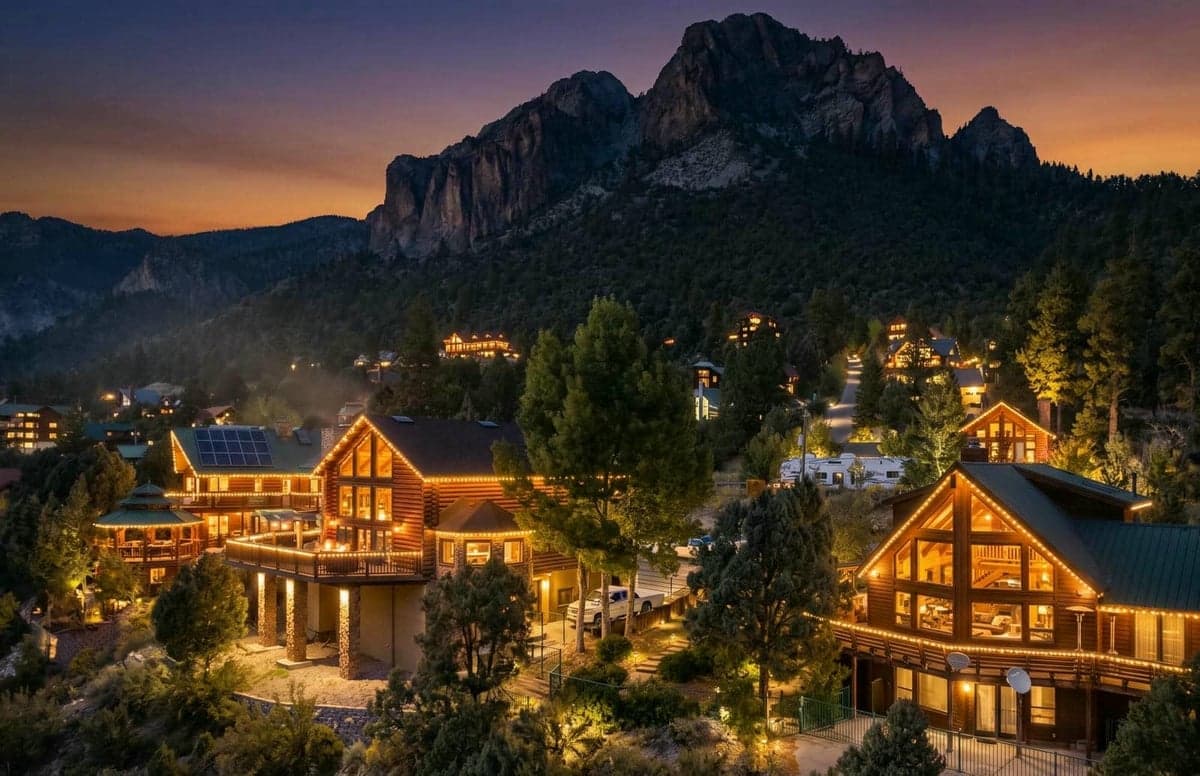
Mount Charleston, Nevada, is a tiny, high-altitude enclave of just 518 residents, distinguished by its exceptionally low density and a population that is overwhelmingly white (72.8%) with a notable East/Southeast Asian presence (10.8%). The community is defined by its remote, forested setting in the Spring Mountains, attracting those who prioritize seclusion, outdoor recreation, and a stark contrast to the Las Vegas Valley below. With nearly half of adults holding a college degree (46.8%), the population skews educated and affluent, creating a tight-knit, homogenous character that sets it apart from the diverse, sprawling suburbs of the metro area.
How the city was settled and grew
Mount Charleston’s human history is not one of pioneer homesteading or mining booms, but of deliberate, modern recreation and second-home development. The area was originally used seasonally by Southern Paiute tribes, but permanent settlement did not begin until the mid-20th century. The U.S. Forest Service established the Mount Charleston Recreation Area in the 1930s, building the Kyle Canyon and Lee Canyon roads, which opened the high country to Las Vegas residents seeking summer relief. The first wave of permanent residents arrived in the 1950s and 1960s, building cabins and small lodges in what is now the Old Town area near the Mount Charleston Lodge. These early settlers were largely white, middle-class Nevadans—government employees, casino workers, and small business owners—who built weekend retreats that gradually became year-round homes. The Rainbow Canyon subdivision, platted in the 1960s, absorbed the next wave: retirees and outdoor enthusiasts from California and the Midwest, drawn by the promise of pine forests and snow within an hour of the Strip. No significant immigrant or minority populations settled here during this period; the area remained a nearly all-white recreational outpost.
Modern era (post-1965)
The post-1965 era brought little demographic change to Mount Charleston, as its remote location and high property values limited in-migration. The 1990s and 2000s saw a modest influx of affluent professionals from the Las Vegas metro area, particularly those working in gaming management, healthcare, and technology, who built larger homes in the Echo Canyon and Fletcher View subdivisions. These newer residents were still predominantly white, but the data shows a notable East/Southeast Asian presence (10.8%) that likely arrived during this period—professionals in Las Vegas’s growing hospitality and tech sectors who sought a quiet, nature-oriented lifestyle. The Hispanic share (6.8%) is small and concentrated among service workers who commute from the valley, with no distinct Hispanic neighborhood within Mount Charleston itself. The Black population (0.4%) and Indian subcontinent population (0.0%) are negligible, reflecting the area’s lack of rental housing, employment base, and public transit. The foreign-born share (1.0%) is among the lowest in Nevada, confirming that Mount Charleston has not been a destination for immigrant communities. The population has remained stable at roughly 500 residents since 2000, with growth constrained by Forest Service land-use restrictions and limited water rights.
The future
Mount Charleston’s population is likely to remain static or decline slightly over the next 10-20 years. The community is homogenizing further, as rising home prices and strict building moratoria push out any potential for diverse, affordable housing. The small East/Southeast Asian cohort appears to be assimilating into the broader white-majority culture, with no signs of forming a distinct ethnic enclave. The Hispanic population is plateauing, as service workers are priced out of the area’s limited housing stock. The future points toward an even older, wealthier, and more uniformly white population, as retirees and remote workers from California and the Mountain West buy up the few available properties. No new subdivisions are planned, and the Forest Service’s emphasis on conservation over development will keep Mount Charleston a tiny, exclusive retreat.
For someone moving in now, Mount Charleston offers a stable, insular, and highly educated community with virtually no crime, excellent air quality, and a strong sense of shared outdoor identity. It is not a place of demographic change or cultural diversity, but a deliberate refuge for those who can afford its premiums and value its isolation. The kind of person who thrives here is one seeking a quiet, nature-focused life in a like-minded, low-density setting—not a launching pad for a family seeking urban amenities or ethnic diversity.

* Values derived from national, state, county, city and local statistics and may differ in a specific area. Last updated: 2026-04-29T01:43:49.000Z
Narrative content on this page is AI-generated and may contain mistakes. Verify any details that matter before acting on them.
ReloMaps may earn a commission from affiliate links at no extra cost to you.

