Political ClimatePolitical Climate in Mount Charleston, NV
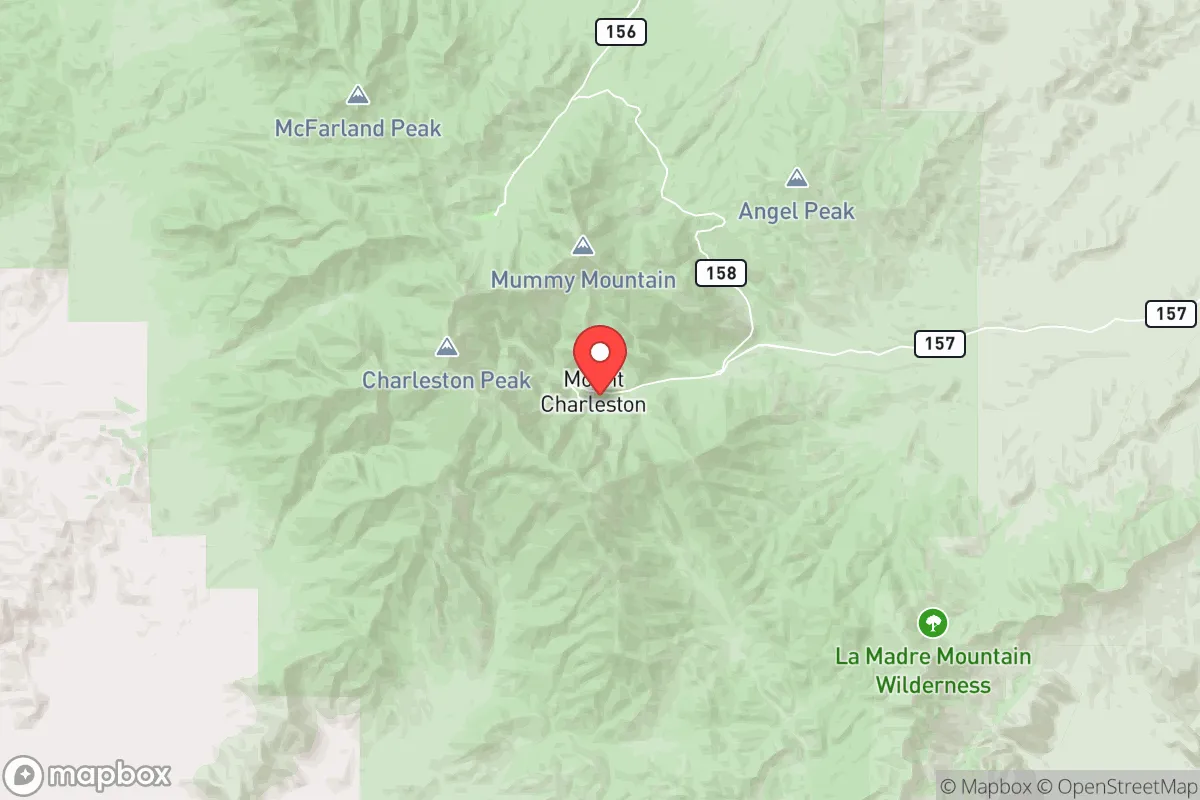
District shown is the primary district for this city’s centroid. Cities may span multiple districts.
Local Political AnalysisPolitical Analysis of Mount Charleston, NV
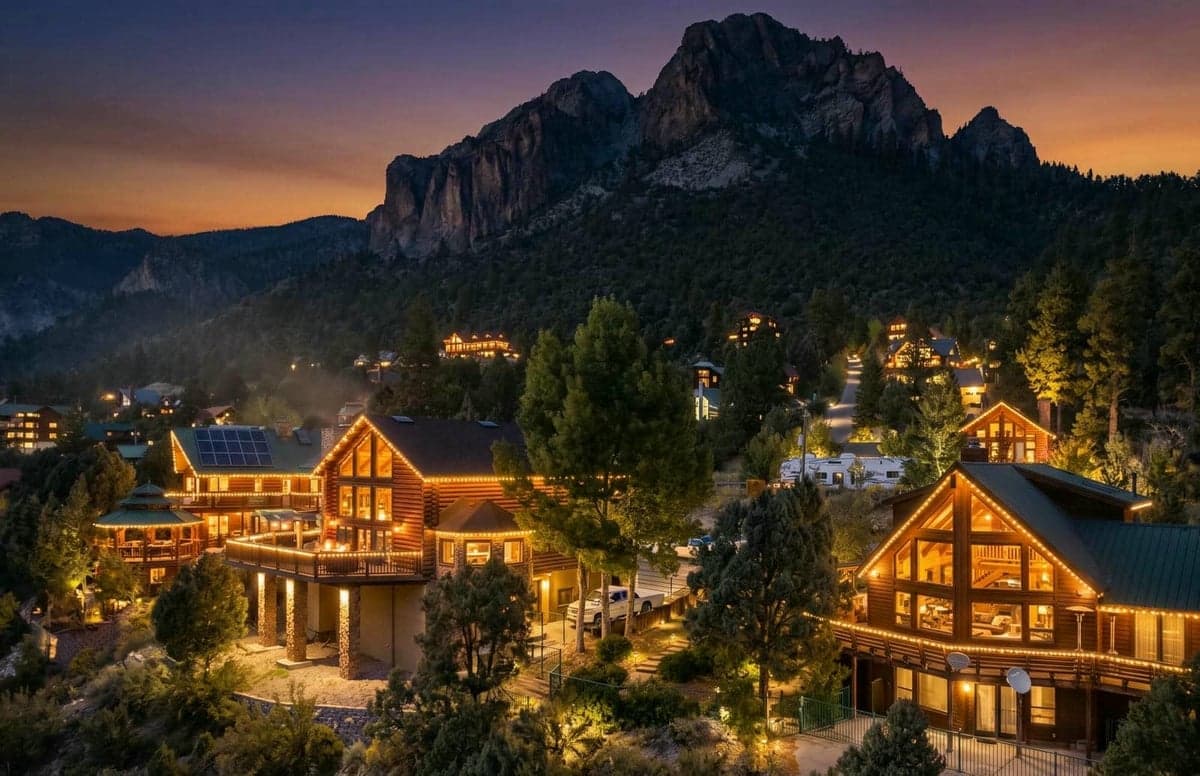
Mount Charleston has long been a quiet outlier in Clark County, a place where folks moved specifically to get away from the noise—both literal and political—of the Las Vegas Strip. While the county as a whole has been trending blue for years, this mountain community still leans noticeably more conservative than its valley neighbors, with a Cook PVI of D+2 that masks a real split between the resort corridor and the residential hills. The trajectory here is concerning: the same progressive energy that has reshaped Las Vegas and Henderson is creeping up the Kyle Canyon road, bringing with it a push for tighter land-use restrictions and a cultural shift that feels foreign to the old-timers who remember when the biggest local debate was whether to pave a stretch of State Route 157.
How it compares
Drive 30 minutes down the mountain and you hit the political reality of Clark County. Las Vegas proper votes reliably Democratic, with nearly 60% of the vote going to Joe Biden in 2020, and Henderson has swung left in recent cycles, especially in the newer master-planned communities. But up here in Mount Charleston, the precinct-level results tell a different story: Trump actually carried the immediate Mount Charleston area in 2020 by a slim margin, a stark contrast to the surrounding valley floor. The unincorporated towns of Blue Diamond and Sandy Valley lean more libertarian than the county average, but Mount Charleston stands out as the most consistently Republican-leaning enclave within a 20-mile radius of the Strip. The contrast is sharpest when you compare it to Summerlin, just 15 miles east, where the golf-course communities have embraced the same kind of progressive environmentalism that now threatens to impose new building moratoriums and fire-prevention mandates on mountain property owners.
What this means for residents
For the people who live here full-time, the political drift means a constant battle to preserve the way of life that brought them here. The county commission, dominated by Las Vegas interests, has floated stricter short-term rental bans and new wildfire evacuation rules that sound reasonable in a press release but translate to fewer freedoms for homeowners who just want to rent out their cabin for a weekend or decide for themselves when to evacuate. Property taxes have crept up as the county reassesses mountain homes at valley prices, and there's a growing sense that the government in downtown Las Vegas doesn't understand—or care—that life at 8,000 feet is different. The local volunteer fire department, once a model of community self-reliance, now faces pressure to professionalize and conform to county standards, which means more bureaucracy and less local control. Longtime residents watch the new arrivals from California and the Pacific Northwest bring their voting habits with them, and they worry that the next election cycle could tip the balance for good.
Culturally, Mount Charleston still holds onto a few distinctions that set it apart from the valley. The Mount Charleston Volunteer Fire Department remains a point of pride, run by locals who know the terrain and don't need a county administrator to tell them how to fight a forest fire. The annual Mount Charleston Fall Festival draws families from all over the county, but it's one of the few events up here that hasn't been co-opted by political activism or corporate sponsorship. The biggest policy fights right now center on land use: the U.S. Forest Service, backed by environmental groups, wants to limit development in the Spring Mountains National Recreation Area, while residents argue that they should have the right to build on their own private inholdings without endless permitting delays. If you're thinking of moving here, understand that you're buying into a community that values its independence and is wary of any government—county, state, or federal—that tries to tell it what to do. The views are spectacular, but the politics are a constant reminder that freedom isn't free; it's something you have to fight for at every planning commission meeting.

State Political ClimatePolitical Climate in Nevada
State Political AnalysisPolitical Environment in the State
Nevada is a classic swing state with a libertarian streak, but over the past 20 years it has drifted from a purple battleground to a reliably blue state in presidential elections, driven almost entirely by the explosive growth of the Las Vegas metro area. The state’s overall partisan lean is now roughly D+2 to D+3, but that masks a deep urban-rural chasm: Clark County (Las Vegas) and Washoe County (Reno) deliver the Democratic margins, while the vast rural counties—like Elko, Nye, and White Pine—vote Republican by 30 to 50 points. For a conservative considering relocation, the key question is whether the state’s libertarian foundation can hold against the progressive wave washing over its population centers.
Urban vs. rural divide
The political map of Nevada is a tale of two worlds. Clark County, home to nearly three-quarters of the state’s population, is the Democratic engine. Las Vegas, Henderson, and North Las Vegas vote blue by margins of 10 to 20 points, fueled by a heavily unionized hospitality workforce, a large Latino population, and a growing number of out-of-state transplants from California and the Northeast. Washoe County, anchored by Reno and Sparks, is more competitive—it flipped from red to blue in the 2010s and now leans Democratic by about 5 points, driven by the tech and logistics boom around the Tahoe Reno Industrial Center. In contrast, the rural “cow counties” like Elko, Ely, and Winnemucca are deeply red. Elko County, for instance, voted +42 points for Trump in 2020, and its economy is tied to mining and ranching, not tourism. The divide is stark: a conservative moving to rural Nevada will find a political culture closer to Idaho or Utah, while a move to Las Vegas means living in a blue city with all the policy consequences that entails.
Policy environment
Nevada’s policy environment is a mixed bag for conservatives. On the plus side, the state has no personal income tax, a major draw for high earners and business owners. Property taxes are capped by the “Nevada Plan” at a 3% annual increase, which keeps housing costs predictable. However, the state’s reliance on sales and gaming taxes means revenue is volatile, and the legislature has repeatedly raised the sales tax rate and expanded the base to cover services. On education, Nevada ranks near the bottom nationally in K-12 outcomes, and the state’s school choice options are limited—there is no universal voucher program, though a small Education Savings Account program was passed in 2023 for special needs students. Healthcare policy is a growing concern: Nevada expanded Medicaid under Obamacare and has some of the highest insurance premiums in the West. Election laws are relatively loose—no voter ID requirement, automatic voter registration at the DMV, and universal mail-in ballots were made permanent in 2021. For a conservative, the lack of election integrity measures and the heavy union influence in Carson City are red flags.
Trajectory & freedom
Nevada’s trajectory on personal freedom is a mixed signal. The state has long prided itself on a live-and-let-live ethos, but recent legislation has tilted toward government overreach. On gun rights, Nevada is a shall-issue state for concealed carry, but a 2016 ballot initiative expanded background checks to private sales—a move that gun rights advocates see as a slippery slope. There is no permitless carry, and local governments in Clark County have imposed additional restrictions on firearms in public buildings. On medical freedom, Nevada was one of the first states to mandate COVID-19 vaccines for state workers and has kept some of the most restrictive public health emergency powers on the books. Parental rights took a hit in 2023 when the legislature passed a law allowing minors to consent to gender-affirming care without parental notification, overriding parental authority. Property rights are relatively strong thanks to the tax cap, but the state’s land-use planning in Clark County is increasingly top-down, with the state imposing housing density mandates on local governments. The overall trend is concerning: the libertarian foundation is eroding as progressive majorities in Carson City push for more regulation and social engineering.
Civil unrest & political movements
Nevada has seen its share of political flashpoints. The 2020 election was a hotbed of controversy: Clark County’s mail-in ballot processing was plagued by logistical chaos, and the state was one of the few where Trump’s legal team filed multiple lawsuits over signature verification and observer access. While no fraud was proven in court, the experience left many conservatives deeply skeptical of the state’s election system. In 2020, the “Patriot Rally” in Carson City drew thousands protesting COVID-19 mandates, and the rural county commissions in Nye and Elko passed symbolic resolutions declaring themselves “Second Amendment sanctuaries.” On the left, the Culinary Union—a powerful political force—has organized massive rallies for pro-immigration and pro-union policies. Immigration politics are particularly charged: Nevada is a sanctuary state in practice, with Clark County refusing to cooperate with ICE detainers, and the legislature has passed laws limiting local police from inquiring about immigration status. The “Battle Born” libertarian tradition is still alive in rural areas, but in Las Vegas, the political energy is dominated by union activism and progressive social movements.
Projection
Looking ahead 5 to 10 years, Nevada is likely to become more Democratic and more progressive, not less. In-migration from California continues to fuel Clark County’s growth, and the state’s Latino population—which leans Democratic—is the fastest-growing demographic. The rural counties are losing population, which means their political weight in the legislature is shrinking. The state’s libertarian streak will likely survive in tax policy—no one is seriously proposing an income tax—but on social and regulatory issues, the trend is toward more government control. A conservative moving to Nevada today should expect that in a decade, the state will have stricter gun laws, more expansive Medicaid, higher sales taxes, and a school system that is still underperforming but with more progressive curriculum mandates. The best bet for a conservative is to settle in a rural county like Elko or a red-leaning exurb like Pahrump, where local government is still friendly to conservative values. But even there, state-level policy will increasingly feel like it’s coming from Sacramento-lite.
For a new resident, the bottom line is this: Nevada offers genuine financial freedom with no income tax and capped property taxes, but the social and regulatory environment is shifting left. If you’re a conservative who values low taxes and a hands-off government, you’ll find a lot to like in the rural parts of the state. But if you’re moving to Las Vegas or Reno expecting a libertarian paradise, you’ll be disappointed by the growing bureaucracy, the union-dominated politics, and the erosion of parental and gun rights. Pick your county carefully, and keep an eye on Carson City—because the fight for Nevada’s soul is far from over.
* Values derived from national, state, county, city and local statistics and may differ in a specific area. Last updated: 2026-04-29T01:43:49.000Z
Narrative content on this page is AI-generated and may contain mistakes. Verify any details that matter before acting on them.
ReloMaps may earn a commission from affiliate links at no extra cost to you.

