Personal Sovereignty in Mount Charleston, NV
Viable for self-reliance. Generally workable, though some barriers may limit total independence.
What does Personal Sovereignty tell us?
Personal Sovereignty measures your capacity for self-reliance and independence with minimal government friction. Higher scores mean fewer barriers between you and the way you want to live... but it assumes you have the space you need and good neighbors.
What does this tell us?
Personal Sovereignty measures your capacity for self-reliance and independence with minimal government friction. Higher scores mean fewer barriers between you and the way you want to live... but it assumes you have the space you need and good neighbors.
State Policy
Energy independence: Importer (15% of energy produced in-state)
Personal Liberty
Homesteading

Personal Liberty Analysis
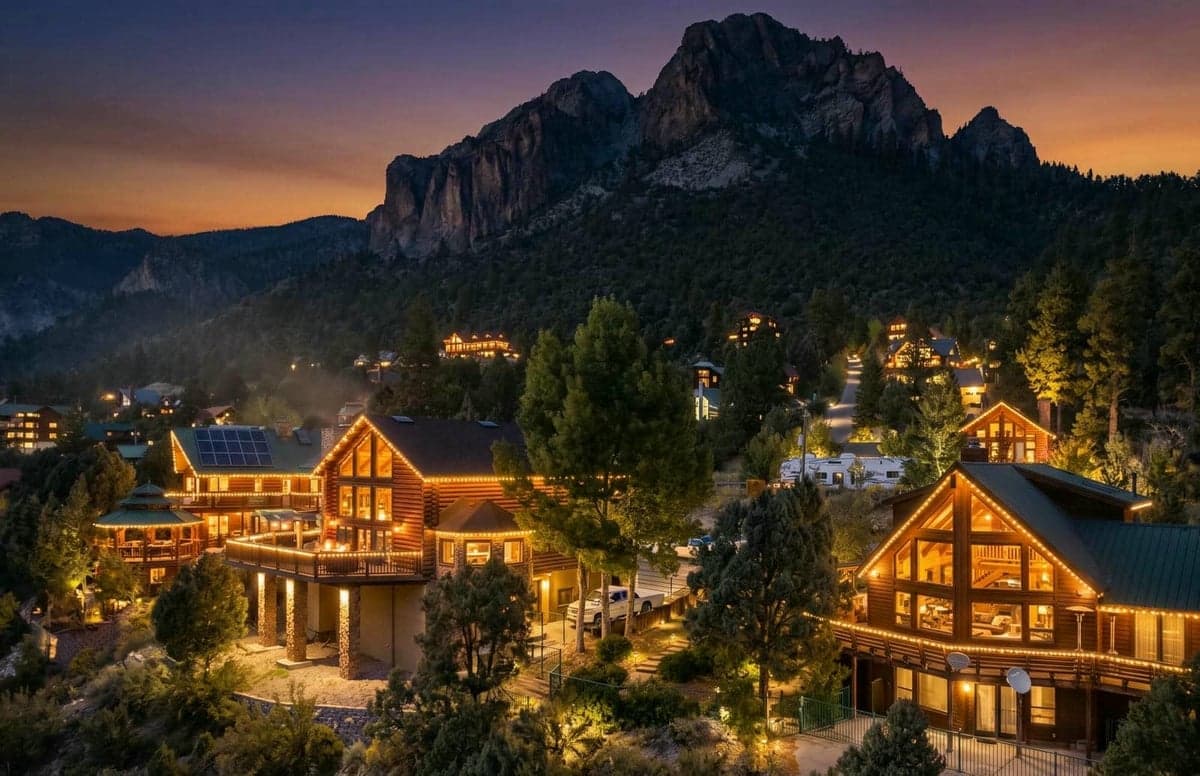
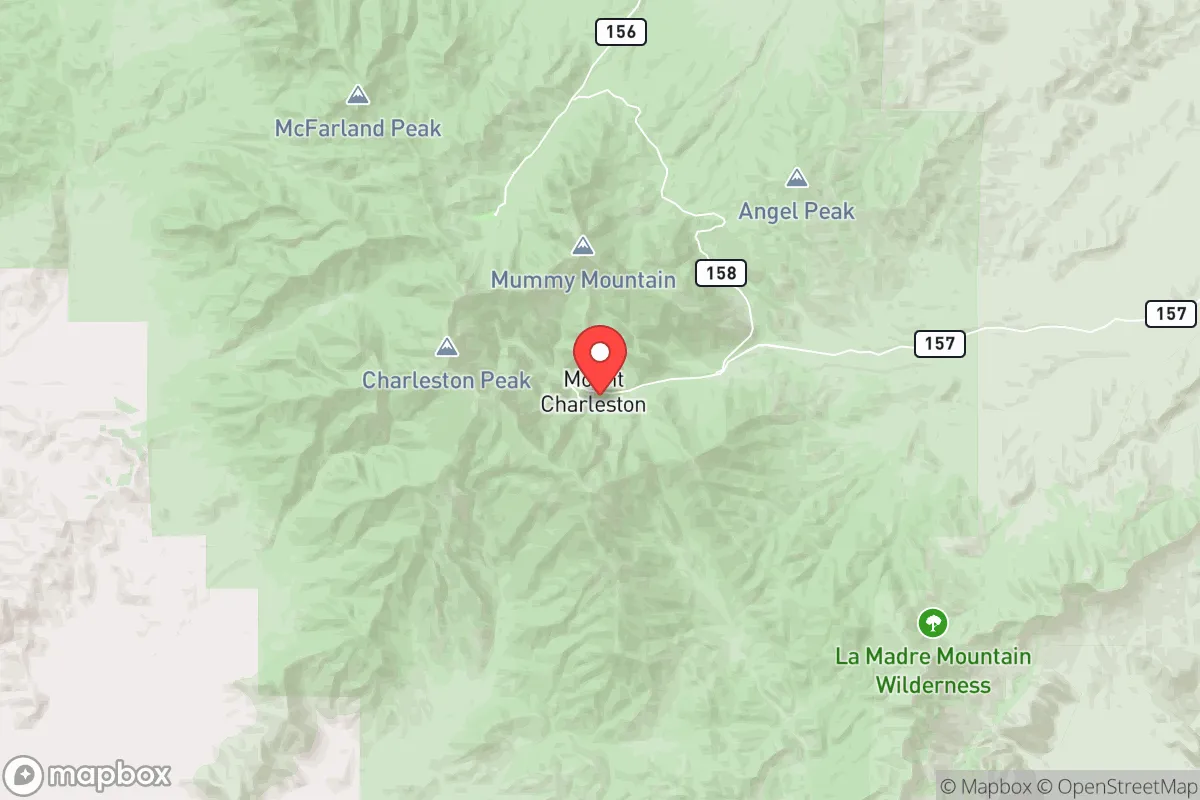
Mount Charleston, Nevada, offers a unique personal sovereignty environment that is best understood as a blend of extreme physical isolation and the legal framework of a state with a deliberately light-touch governance philosophy. For the survivalist or prepper, the primary appeal is the ability to live in a remote, high-altitude forest setting while still being within an hour of Las Vegas, but the legal reality is more nuanced than a simple escape from government. The area’s autonomy is defined less by local ordinances and more by the state’s constitutional protections and the practical challenges of living in a national forest buffer zone, where federal land management can clash with individual property rights. This analysis focuses on the concrete factors that determine how much control you actually have over your life, property, and family in this specific corner of the Clark County region.
Tax burden and regulatory posture for independent living
Nevada’s state-level tax structure is a significant advantage for anyone seeking to minimize government extraction from their income and assets. There is no state income tax, which means every dollar you earn from a remote job, a side business, or a retirement account stays in your pocket. This is a direct contrast to neighboring California or even Arizona, and it fundamentally changes the calculus for long-term wealth accumulation and self-sufficiency. Property taxes in Clark County, which includes Mount Charleston, are also relatively moderate, with effective rates typically hovering around 0.6% to 0.8% of assessed value, though the assessed value itself is capped at a 3% annual increase under the state’s abatement program. However, the regulatory posture at the local level is where the friction appears. Mount Charleston is unincorporated Clark County, meaning you answer to the county commission, not a small town council. This can be a double-edged sword: you avoid a local zoning board with a narrow agenda, but you are subject to county-wide building codes, health district regulations, and fire codes that are designed for the Las Vegas Valley, not a mountain community. For a prepper, the key takeaway is that while the state leaves your income alone, you must navigate county-level bureaucracy for any significant construction or land modification, and the Clark County Fire Department has strict vegetation clearance requirements around structures due to wildfire risk, which can limit how you manage your property’s perimeter.
Self-defense rights and Nevada gun law specifics
Nevada is a shall-issue state for concealed carry permits, and Mount Charleston residents benefit from the state’s strong preemption laws, which prevent local jurisdictions like Clark County from enacting their own gun control ordinances that are stricter than state law. This means the county cannot ban certain firearms or magazine capacities within the unincorporated area, preserving your ability to choose the tools you deem necessary for personal and family defense. The state also has a stand-your-ground law with no duty to retreat in any place where you are lawfully present, which is a critical legal protection for a remote property owner who may need to defend against a threat on their own land. There is no state-level requirement to register firearms, and private sales between individuals (outside of gun shows) are not subject to background checks under current law. For the survivalist, the practical reality is that you can maintain a comprehensive armory without local interference, but you must still comply with federal laws regarding NFA items (suppressors, short-barreled rifles) if you choose to go that route. The nearest gun-friendly businesses and ranges are in the Las Vegas Valley, about 45 minutes down the mountain, so stocking up on ammunition and components during trips into town is a standard practice. The legal environment is permissive, but the logistical reality of living in a high-fire-risk zone means you should also consider fire-safe storage solutions for your ammunition and powder.
Self-reliance and homesteading viability on the mountain
The feasibility of true self-reliance on Mount Charleston is heavily constrained by the physical environment and land ownership patterns. Most residential lots in the Mount Charleston area are within the Kyle Canyon or Lee Canyon communities, and they are typically small parcels of 0.25 to 1 acre, not the sprawling acreage needed for a full homestead. The land is also largely within the Humboldt-Toiyabe National Forest, meaning many properties are surrounded by federal land, which limits your ability to expand, harvest timber, or hunt without Forest Service permits. Zoning in the unincorporated area is primarily for single-family residential use, and while you can keep chickens and small livestock on most lots, the county’s health district has strict regulations on animal waste management and water rights. Off-grid living is legally difficult because Clark County requires a connection to the electrical grid if it is available within 300 feet of your property line, and the local water purveyors (such as the Mount Charleston Mutual Water Company) mandate connection to their systems in many subdivisions. Solar panels are allowed, but net metering rules and the need for a backup generator due to frequent winter power outages are practical considerations. For the prepper, the mountain offers a retreat location with good defensible terrain and a cooler climate, but it is not a place for a self-sufficient homestead in the traditional sense. You will rely on the Las Vegas Valley for most supplies, fuel, and medical care, and your ability to stockpile and sustain yourself is limited by lot size and county codes.
Personal liberties: parental rights, medical autonomy, and property control
Nevada’s legal framework provides a mixed bag for personal liberties that directly affect family and medical decisions. On parental rights, the state has a relatively hands-off approach to homeschooling, requiring only a simple notice of intent and no standardized testing or curriculum approval, which is a strong positive for families who want to control their children’s education. Medical autonomy is more complicated. Nevada has legalized recreational marijuana, which some preppers view as a personal liberty issue, but the state also has a mandatory vaccine law for school attendance that only allows medical and religious exemptions (no philosophical exemption), which can be a point of contention for parents who want full control over their children’s medical decisions. The state’s emergency powers, as seen during the COVID-19 pandemic, were exercised broadly by the governor, including business closures and mask mandates, which raised concerns about the durability of personal liberties during a crisis. On property rights, Nevada is generally favorable, with strong protections against eminent domain abuse and no state-level inheritance tax. However, the presence of the federal government as a neighbor on Mount Charleston means that your property rights are always subject to federal land management policies, including potential trail closures, fire restrictions, and even evacuation orders that you are legally required to follow. For the survivalist, this is the central tension: the state leaves you alone on most personal and economic matters, but the federal overlay on this specific geography means you are never truly sovereign on your own land.
Overall, Mount Charleston offers a higher degree of personal sovereignty than most urban or suburban areas in the United States, particularly in terms of tax burden, gun rights, and educational freedom. However, it falls short of the complete autonomy that a prepper might find in more remote, low-regulation states like Idaho or Montana. The mountain’s appeal is strategic: it provides a defensible, cool-weather retreat with legal protections for self-defense and minimal state income tax, all within striking distance of a major city’s resources. The trade-off is that you are still under the jurisdiction of a large county government and the federal land management system, and true off-grid independence is not legally or practically feasible on most available lots. For the conservative individual or family who wants a balance of liberty and access, and who is willing to navigate county bureaucracy and federal land restrictions, Mount Charleston is a viable option. For those seeking absolute sovereignty with no government oversight, it is not the answer, but it is a significant step in the right direction compared to the vast majority of the country.

* Values derived from national, state, county, city and local statistics and may differ in a specific area. Last updated: 2026-04-29T01:43:49.000Z
Narrative content on this page is AI-generated and may contain mistakes. Verify any details that matter before acting on them.
ReloMaps may earn a commission from affiliate links at no extra cost to you.

