Demographics of Mount Juliet, TN
Affluence Level in Mount Juliet, TN
An upper-middle-class area. Household wealth, education levels, and homeownership run ahead of national benchmarks.
People of Mount Juliet, TN
The people of Mount Juliet, Tennessee, today number roughly 40,828, forming a predominantly white, college-educated, and family-oriented suburb east of Nashville. The city is characterized by a dense, master-planned feel with a distinctly conservative-leaning civic culture, where 75.8% of residents identify as white, 7.7% as Black, 7.4% as Hispanic, 2.6% as Indian (subcontinent), and 2.2% as East/Southeast Asian. Its identity is shaped by rapid post-2000 growth, a high proportion of married couples with children, and a population that is notably more affluent and educated than the national average, with 49.5% holding a bachelor's degree or higher.
How the city was settled and grew
Mount Juliet's human history begins not with colonial-era farming but with the railroad. The city was officially founded in 1835 as a stop on the Louisville and Nashville Railroad, named after a local landowner's daughter. The original population was a mix of white yeoman farmers and a small number of enslaved Black laborers who worked the area's tobacco and corn fields. After the Civil War, the community remained a quiet, rural hamlet for nearly a century, with most residents living in scattered farmsteads and a tiny commercial core near the railroad depot. The first distinct neighborhood to emerge was Rutland, a historic district near the railroad tracks where the original white farming families settled. A small Black community, centered around the area near what is now North Mt. Juliet Road, formed after Reconstruction, with families working as sharecroppers and domestic laborers. By 1950, Mount Juliet's population was still under 1,000, almost entirely white and native-born, with a small Black minority living in segregated pockets.
Modern era (post-1965)
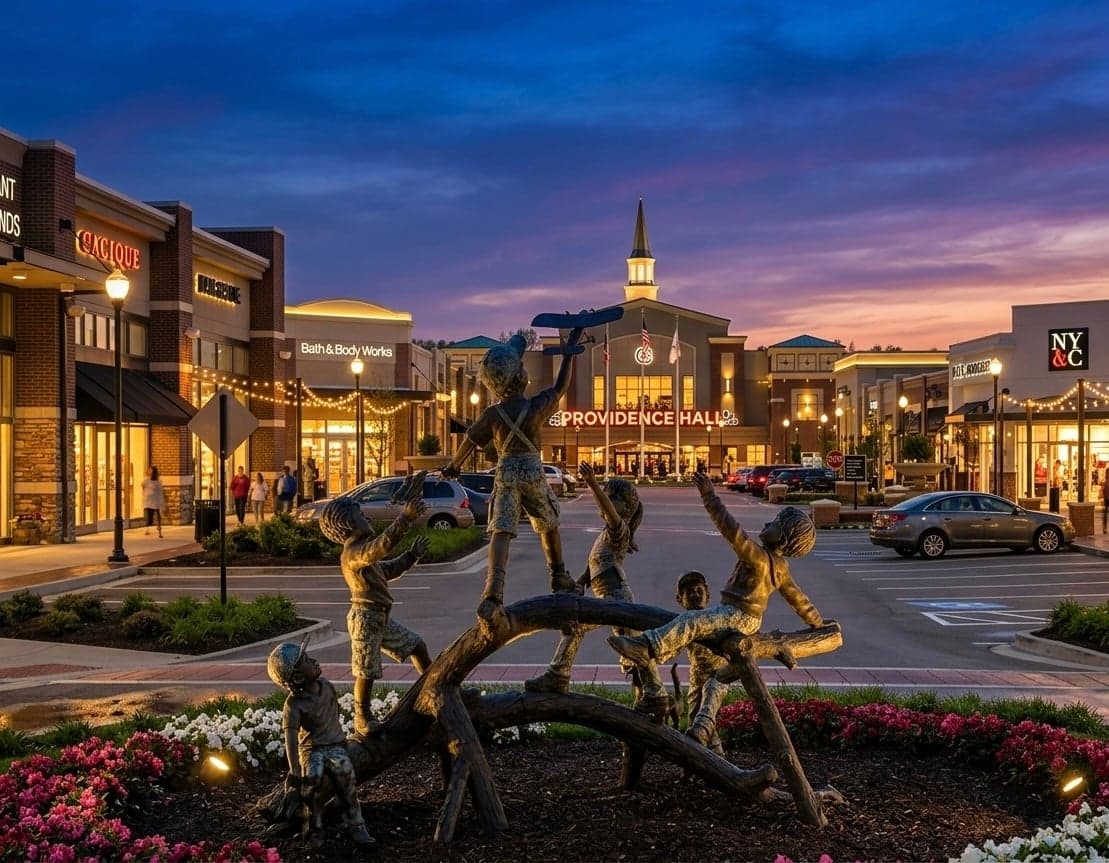
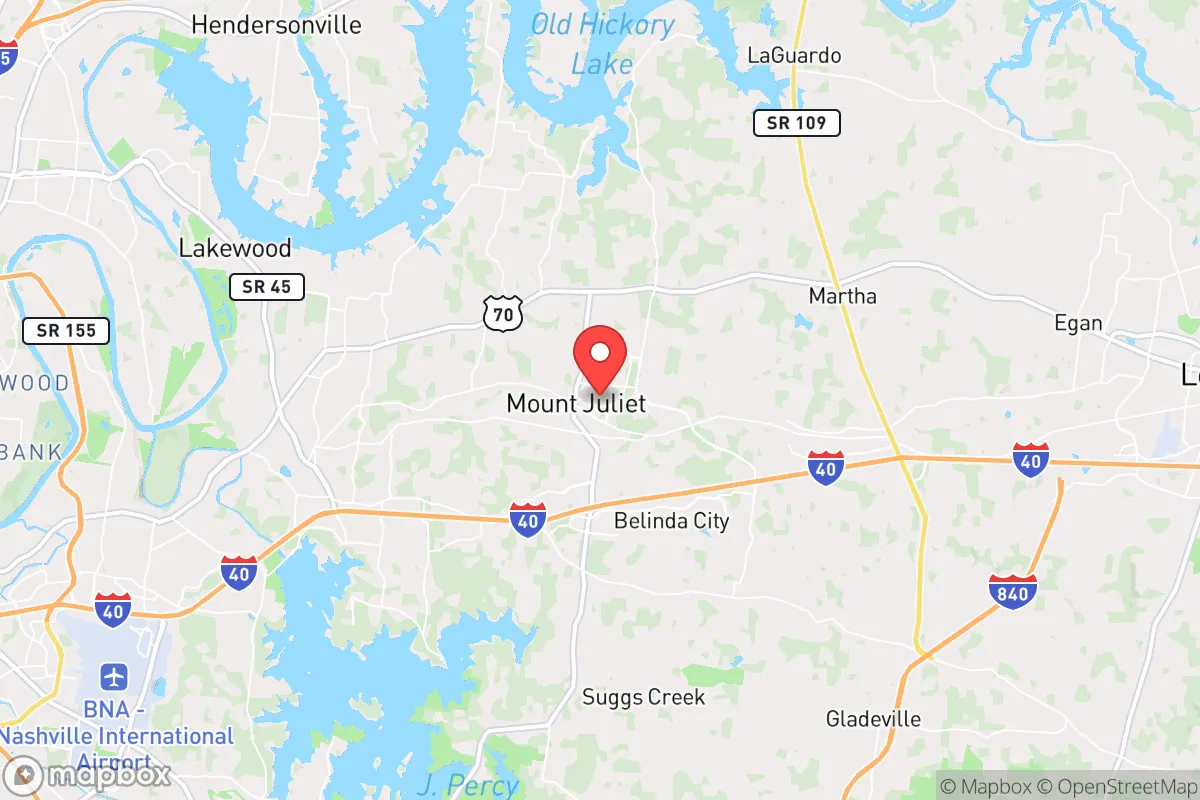
The post-1965 era transformed Mount Juliet from a sleepy crossroads into a booming suburb. The Immigration and Nationality Act of 1965 had little immediate effect here; the city's growth was driven overwhelmingly by domestic white flight from Nashville and by the construction of Interstate 40 in the 1970s, which made the city a viable commuter suburb. The first major wave of newcomers arrived in the 1980s and 1990s, drawn by cheap land and new subdivisions. The master-planned community of Providence, begun in the early 2000s, became the epicenter of this growth, attracting white middle-class families from across the Nashville metro area. Meanwhile, the area around Belinda Parkway saw a smaller but notable influx of Black families, many of them professionals relocating from Nashville for better schools and larger homes. The Hispanic population, now 7.4%, began arriving in the 1990s, primarily from Mexico and Central America, working in construction and service industries; they concentrated in the neighborhoods off Lebanon Road, near the city's industrial and commercial corridor. The Indian-subcontinent community (2.6%) and East/Southeast Asian community (2.2%) are more recent arrivals, largely post-2010, drawn by tech and healthcare jobs in Nashville; they have settled in the newer subdivisions off Golden Bear Gateway and in the Stewarts Ferry Pike area, where larger homes and good school districts are the main draws.
The future
Mount Juliet's population is heading toward continued growth, likely reaching 50,000 by 2035, but the demographic character is shifting subtly. The city is not homogenizing into a single white suburb; rather, it is tribalizing into distinct enclaves based on income and ethnicity. The Providence area remains overwhelmingly white and affluent, while the Lebanon Road corridor is becoming more Hispanic and working-class. The Indian and East/Southeast Asian communities are growing steadily but remain small, concentrated in newer, higher-end subdivisions. The Black population is stable but not growing rapidly, as many Black families choose other Nashville suburbs like Antioch or La Vergne. The foreign-born share, at 5.2%, is low compared to national suburbs, and immigrant communities are assimilating quickly into the city's conservative, family-oriented culture. The next decade will likely see continued white in-migration from other parts of Tennessee and the Midwest, with modest growth in Hispanic and Asian populations, but no dramatic racial or ethnic transformation.
For someone moving in now, Mount Juliet is becoming a stable, prosperous, and culturally conservative suburb where the population is overwhelmingly native-born, family-focused, and politically aligned with the broader Williamson and Wilson County Republican majority. The city offers a predictable, safe environment with strong schools, but newcomers should expect a community where the dominant culture is white, middle-class, and evangelical-leaning, and where ethnic diversity, while present, remains modest and largely assimilated into the mainstream.

* Values derived from national, state, county, city and local statistics and may differ in a specific area. Last updated: 2026-05-01T14:10:21.000Z
Narrative content on this page is AI-generated and may contain mistakes. Verify any details that matter before acting on them.
ReloMaps may earn a commission from affiliate links at no extra cost to you.

