Quality of Life in Mount Juliet, TN
A high quality of life with strong walkability, manageable living costs, healthy neighborhood signals, and solid amenity access.
What does Quality of Life tell us?
Quality of Life blends cost of living, nearby amenities, socioeconomic signals, and neighborhood character. City-level scores represent the whole municipality; individual neighborhoods can differ.
What does this tell us?
Quality of Life blends cost of living, nearby amenities, socioeconomic signals, and neighborhood character. City-level scores represent the whole municipality; individual neighborhoods can differ.
Cost of Living
57% above national average
The Real Cost of Living in Mount Juliet, TN for 2026
| Tier | Individual | Family (4) |
|---|---|---|
| Survival | $30k | $56k |
| Comfortable | $82k | $121k |
| Luxury | $195k+ | $302k+ |
| Elite (Top 5%) | $235k+ | $364k+ |
89%
The Area Signal
A metric tracking the socioeconomic signals of the area.
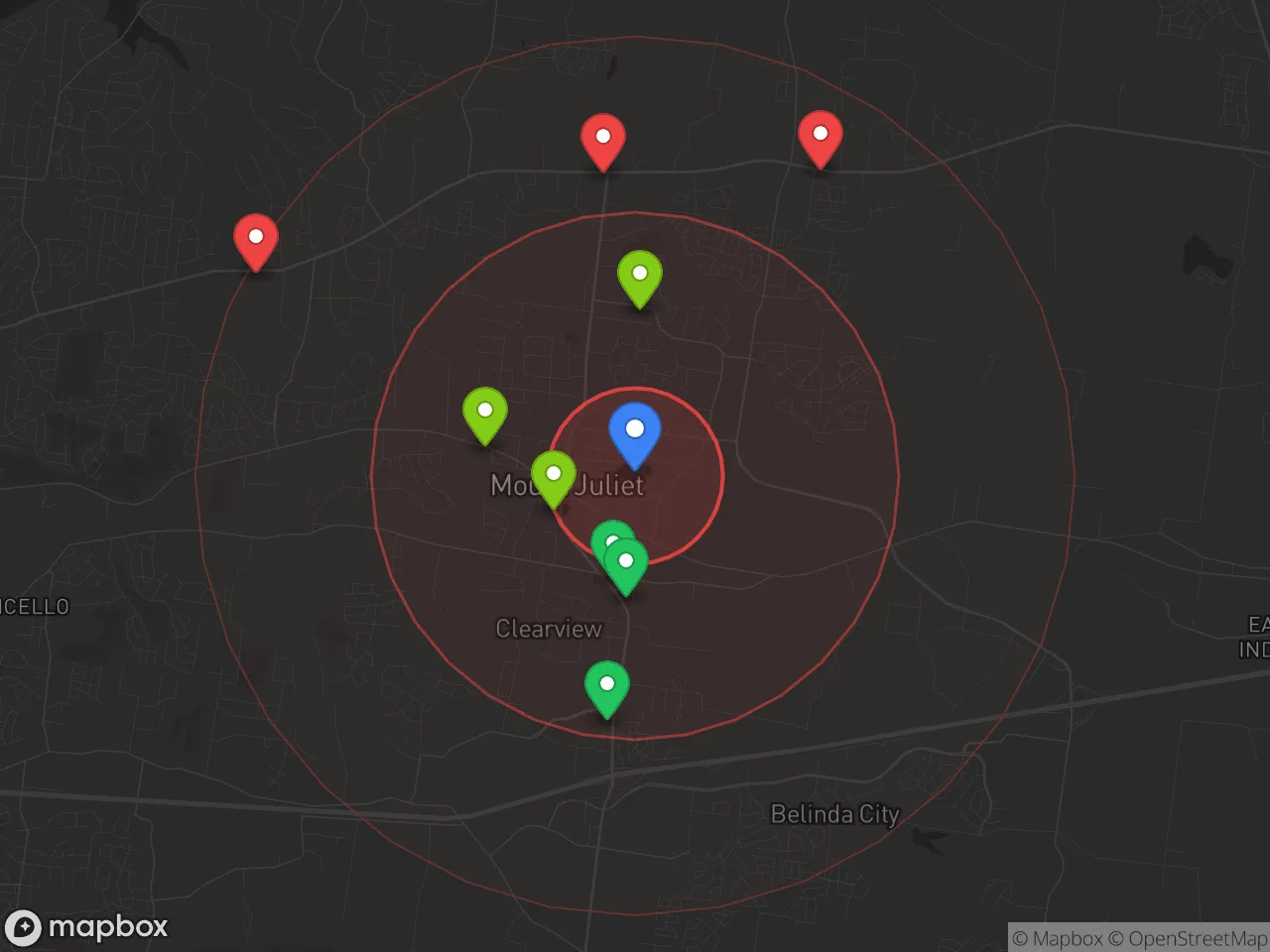
Hobbies
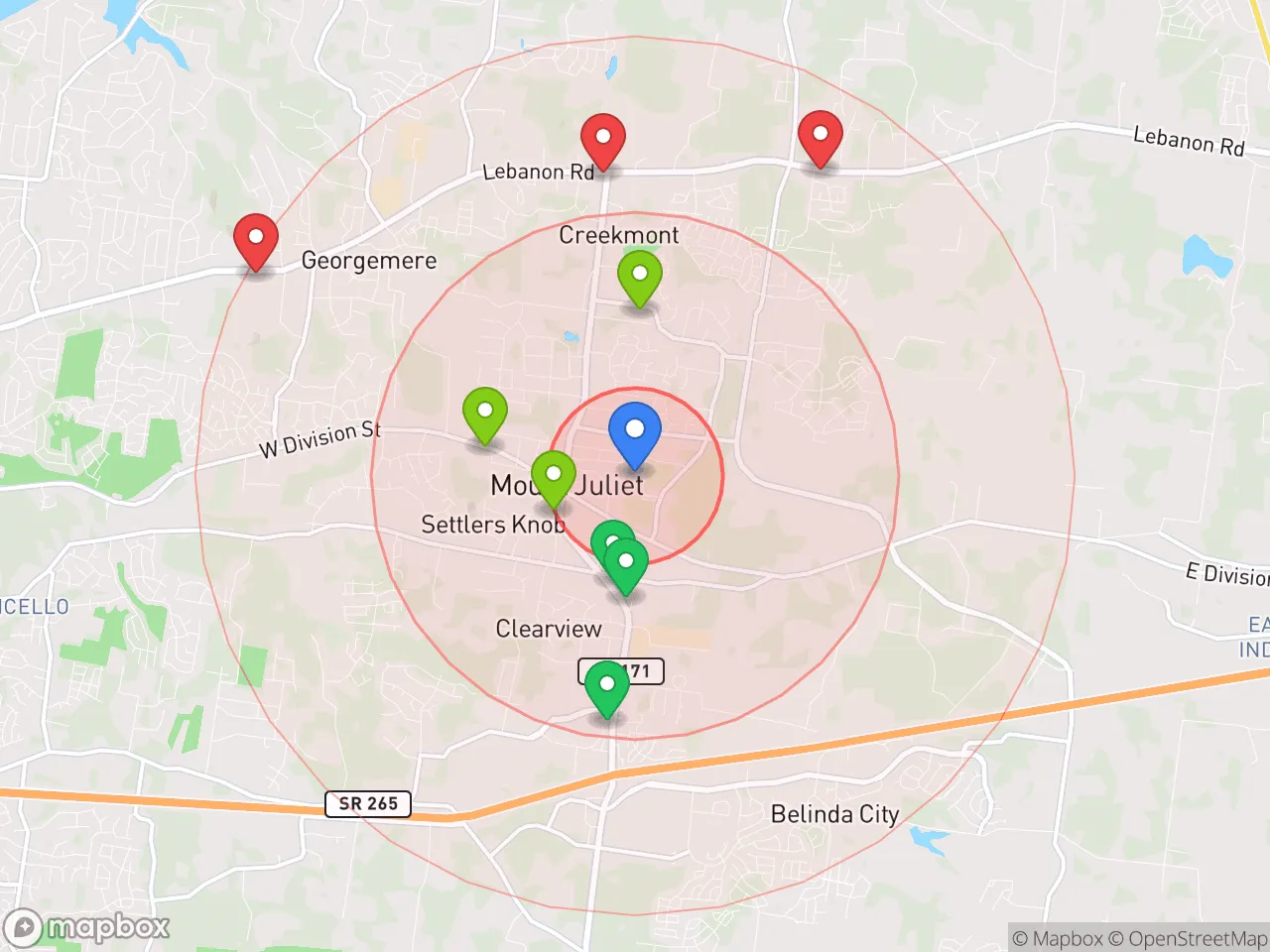
Explore the areaGroceries
7 within 10 miles
Gas
20 within 10 miles
Hospital
20 within 20 miles
Airport
BNA — Nashville International
Post Office
USPS — Mount Juliet, TN
Critical Amenities
Quality-of-Life Analysis
Mount Juliet, Tennessee, has evolved from a quiet bedroom community into one of the Nashville region’s most sought-after suburbs, drawing families and professionals with its combination of affluence and small-town feel. The city’s population has surged past 40,000, fueled by newcomers seeking lower crime rates and newer housing stock than what is available inside Davidson County. With a median household income well above the national average and a demographic profile that skews toward married couples with children, Mount Juliet’s quality of life is defined by stability, space, and access to Middle Tennessee’s job market.
Cost of living and housing affordability compared to Nashville and surrounding suburbs
Mount Juliet’s cost of living index sits at 157, meaning everyday expenses run 57 percent higher than the U.S. average — a figure driven almost entirely by housing. The median home value of $423,000 is roughly $50,000 less than the median in nearby Brentwood or Franklin, but still significantly above the national median of about $350,000. Renters face a median monthly rent of $1,875, which is comparable to what one would pay in the more expensive pockets of Nashville’s urban core. For buyers, the trade-off is clear: Mount Juliet offers newer construction (most homes built after 2000) and larger lot sizes than older Nashville neighborhoods, but at a price point that has risen roughly 40 percent since 2020. Property taxes remain a relative bargain — Wilson County’s rate of about $2.50 per $100 of assessed value is roughly half of Davidson County’s — which partially offsets the high purchase price. The average one-way commute of 31 minutes is a reality for most residents who work in Nashville or at the large employers along the I-40 corridor, including Amazon’s distribution hub and the Nissan North America headquarters in Franklin.
Parks, schools, and the daily rhythm of life in Mount Juliet
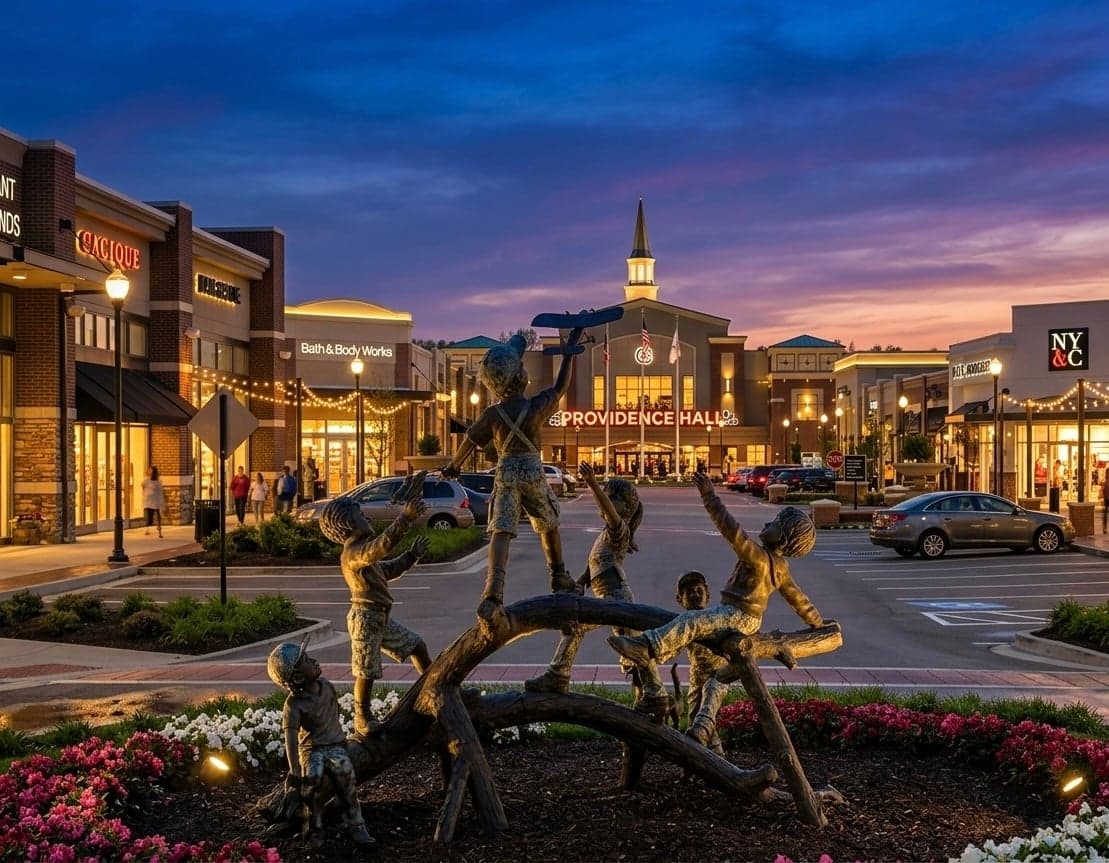
Daily life in Mount Juliet revolves around its highly rated public schools, which are part of the Wilson County School System. Mount Juliet High School consistently ranks among the top 20 percent of Tennessee high schools by U.S. News, and the district’s elementary schools — such as West Elementary and Stoner Creek Elementary — draw families specifically for their low student-teacher ratios and strong test scores. The city’s park system, anchored by the 200-acre Charlie Daniels Park, offers sports fields, walking trails, and a dog park that serve as community gathering points. Retail and dining are concentrated along the Mt. Juliet Road corridor, anchored by the Providence Marketplace shopping center, which includes a Regal Cinemas, a Publix, and a mix of national chains and local restaurants. The rhythm of life is car-dependent and family-oriented: weekends fill with youth soccer games at the Park at Mt. Juliet, trips to the nearby Cedars of Lebanon State Park for hiking, and the occasional commute into Nashville for concerts or dining. The city lacks a traditional downtown square or walkable core, which means most errands require a vehicle, but the trade-off is a quiet, low-crime environment where violent crime rates are roughly 60 percent below the national average.
Mount Juliet is best suited for families and professionals who prioritize school quality, newer housing, and a safe, predictable suburban environment over urban walkability or nightlife. Remote workers and those with flexible schedules will appreciate the space and lower tax burden, while daily commuters to Nashville should budget for the 30-minute drive that can stretch to 45 minutes during peak I-40 congestion. For buyers and renters who find Nashville’s urban core too expensive or crowded, Mount Juliet offers a proven alternative that balances affordability with access to the region’s economic engine.

Crime in Mount Juliet, TN
Lower crime rates than 89% of comparable U.S. locations.
Violent CrimeViolent Crime Analysis
Property CrimeProperty Crime Analysis
Crime Analysis
Mount Juliet consistently ranks as one of the safest cities in Tennessee, with violent crime rates dramatically lower than both state and national averages. The city's violent crime rate of 97.3 incidents per 100,000 residents is roughly one-fifth the national median, while property crime sits at 680.9 per 100,000, well below the Tennessee state average of approximately 2,800 per 100,000. These figures place Mount Juliet among the safest suburbs in the Nashville metropolitan area, a region where crime rates vary significantly by jurisdiction.
Crime in context
Mount Juliet's crime profile stands in stark contrast to nearby Nashville-Davidson County, where violent crime rates exceed 1,100 per 100,000 and property crime tops 4,500 per 100,000. The city benefits from its own dedicated police department and a local government that prioritizes public safety funding. However, residents should note that Wilson County, which encompasses Mount Juliet, elects its own district attorney and judges. Unlike some larger metro counties where progressive prosecutorial policies have led to reduced incarceration rates and increased recidivism, Wilson County maintains a more traditional law-and-order approach. This distinction matters: jurisdictions with liberal district attorneys and judges who emphasize offender rehabilitation over public safety often see higher rates of repeat offenses and property crime. Mount Juliet's low crime numbers reflect a justice system that prioritizes victim rights and community protection.
What residents experience
Most Mount Juliet residents report feeling safe walking their neighborhoods at night and leaving homes unlocked during the day. The city's violent crime is rare and typically involves domestic incidents rather than random attacks. Property crime, while higher than violent crime, remains manageable: vehicle break-ins and package thefts are the most common complaints, particularly near retail corridors like Mt. Juliet Road and Providence Marketplace. The police department maintains a visible presence with community policing programs and a dedicated crime prevention unit. Annual crime reports show no significant upward trend since 2020, a period when many peer suburbs saw double-digit increases in theft and burglary.
Neighborhood-level variation is modest but worth noting. Newer subdivisions in the northern and eastern parts of the city, such as those near Beckwith Road and the Rutland community, report near-zero crime. Older areas closer to Interstate 40 and commercial zones see slightly higher property crime, though still far below regional averages. Apartment complexes along Lebanon Road have occasionally reported theft from vehicles, but violent incidents remain extremely rare. For families and professionals seeking a safe suburban environment within commuting distance of Nashville, Mount Juliet offers one of the most secure options in Middle Tennessee, supported by a justice system that does not compromise public safety for progressive ideology.
* Values derived from national, state, county, city and local statistics and may differ in a specific area. Last updated: 2026-05-01T14:10:21.000Z
Narrative content on this page is AI-generated and may contain mistakes. Verify any details that matter before acting on them.
ReloMaps may earn a commission from affiliate links at no extra cost to you.

