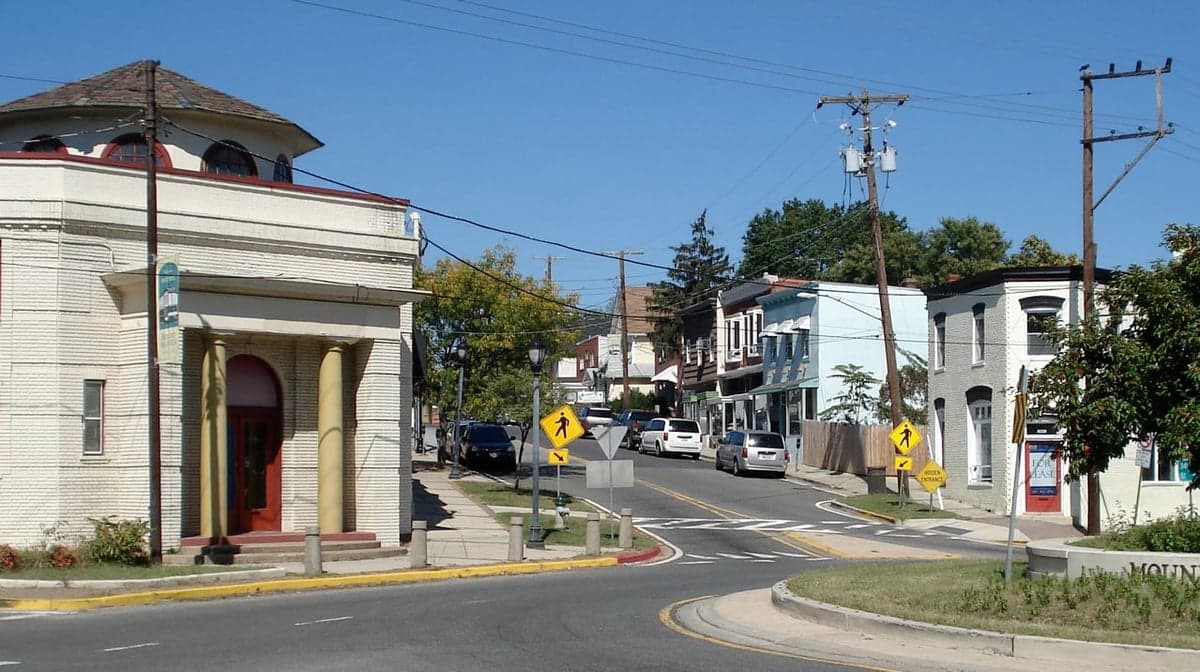
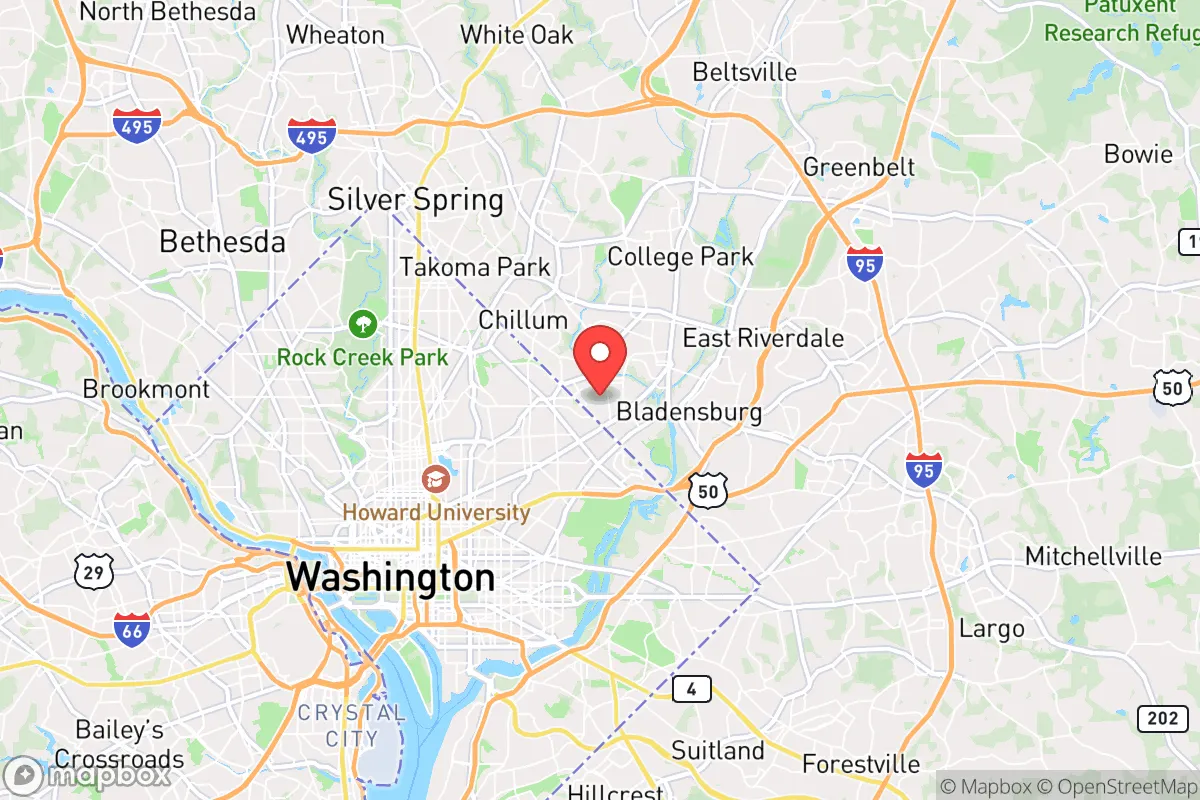
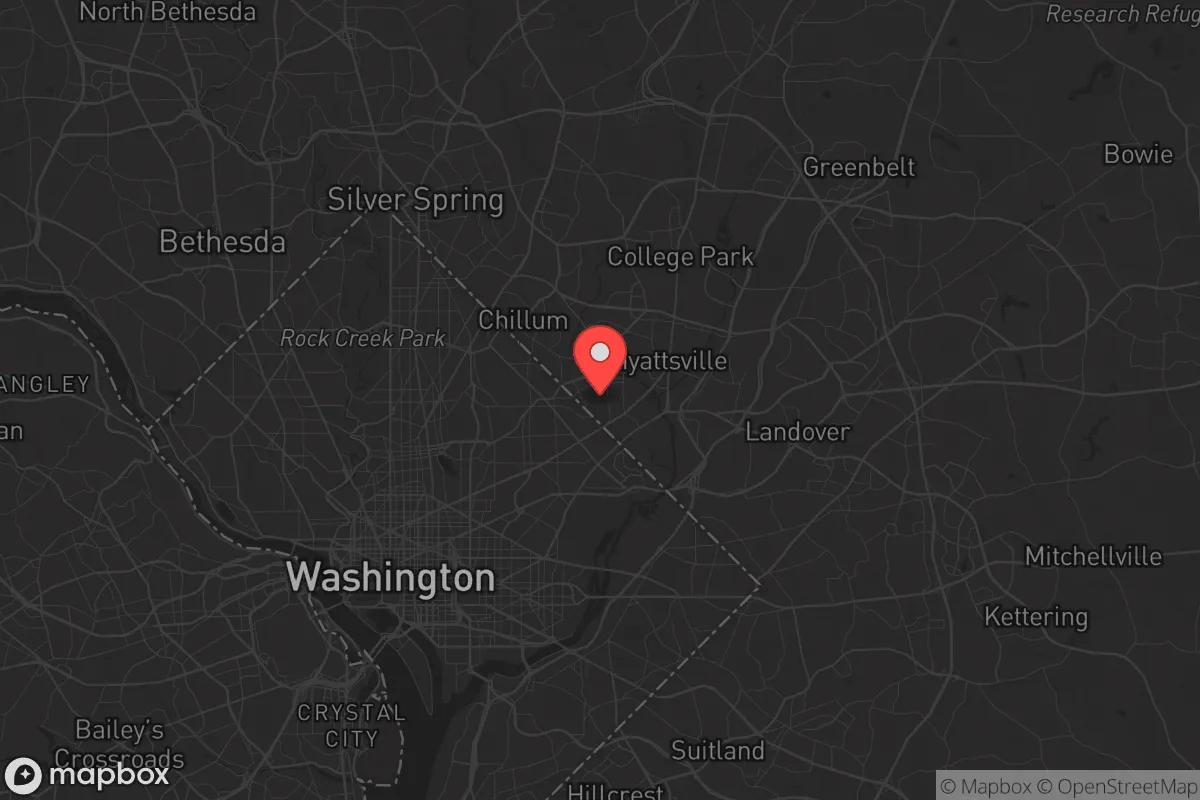
Photo: Wikipedia
Quality of Life in Mount Rainier, MD
Above-average quality of iife. The area offers a reasonable cost of living, decent mobility, and a mix of neighborhood amenities.
What does Quality of Life tell us?
Quality of Life blends cost of living, nearby amenities, socioeconomic signals, and neighborhood character. City-level scores represent the whole municipality; individual neighborhoods can differ.
What does this tell us?
Quality of Life blends cost of living, nearby amenities, socioeconomic signals, and neighborhood character. City-level scores represent the whole municipality; individual neighborhoods can differ.
Cost of Living
48% above national average
The Real Cost of Living in Mount Rainier, MD for 2026
| Tier | Individual | Family (4) |
|---|---|---|
| Survival | $23k | $43k |
| Comfortable | $71k | $105k |
| Luxury | $104k+ | $162k+ |
| Elite (Top 5%) | $123k+ | $190k+ |
65%
The Area Signal
A metric tracking the socioeconomic signals of the area.
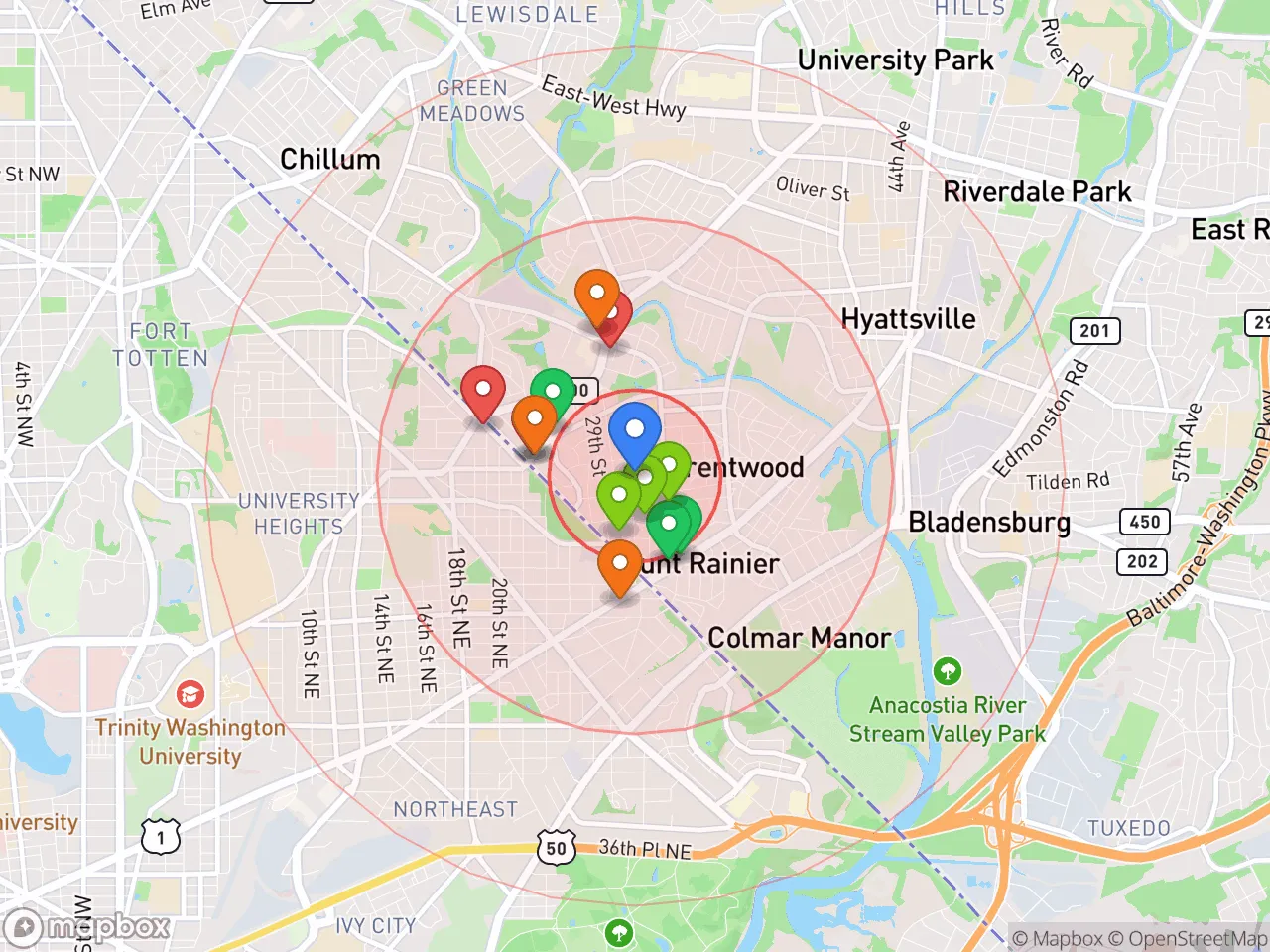
Hobbies
Explore the areaGroceries
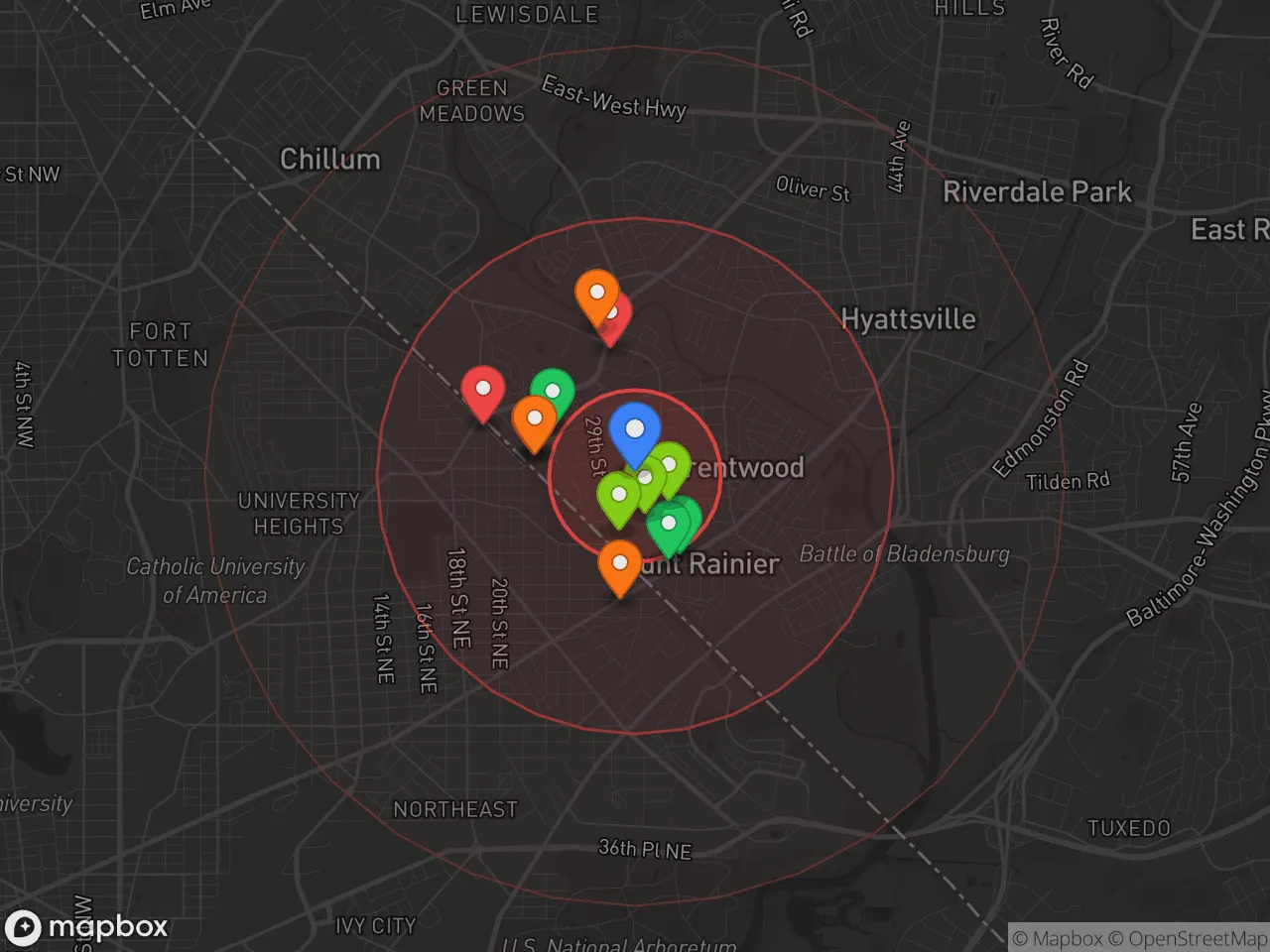
8 within 10 miles
Gas
20 within 10 miles
Hospital
20 within 20 miles
Airport
DCA — Ronald Reagan Washington National
Post Office
USPS — Mount Rainier, MD
Critical Amenities
Quality-of-Life Analysis
Mount Rainier, Maryland, is a small, walkable city just northeast of Washington, D.C., where the cost of living is significantly above the national average but remains more attainable than in the District itself. With a cost of living index of 148 (48% above the U.S. average), the area attracts a mix of young professionals, artists, and long-term residents who value urban proximity and a tight-knit community feel over suburban sprawl. The city’s demographic skews toward renters and first-time homebuyers, many of whom work in government, education, or the creative sectors in D.C. or nearby Hyattsville.
How housing costs and affordability compare to D.C. and Prince George’s County
Mount Rainier’s median home value of $522,100 is roughly $100,000 below the D.C. median, making it one of the more affordable entry points for buyers inside the Capital Beltway. The median rent of $1,434 is notably lower than the D.C. average of around $2,200, though it has risen steadily since 2020 as demand for Beltway-adjacent neighborhoods has grown. The average commute of 31 minutes is typical for the region—residents often drive to the West Hyattsville Metro station (Green Line) or take Metrobus routes directly into downtown D.C. Property taxes in Prince George’s County hover around 1.0% of assessed value, which is moderate compared to neighboring Montgomery County. While Mount Rainier is not cheap by national standards, it offers a significant price discount relative to D.C. proper, with the trade-off being older housing stock and fewer luxury amenities.
What daily life is like for families and professionals: schools, parks, and local amenities
Daily life in Mount Rainier centers on its walkable commercial corridor along Rhode Island Avenue, which features independent coffee shops, a cooperative grocery store (Glut Food Co-op), and a handful of casual restaurants. The city is part of the Prince George’s County Public Schools system, with Mount Rainier Elementary School serving most local families; the school has a student-teacher ratio of about 14:1 and offers a Spanish dual-language program. For recreation, residents use the 27-acre Mount Rainier Nature and Recreation Center, which includes a community pool, sports fields, and a nature center with trails. The city’s small size—roughly 1.7 square miles and a population under 9,000—means most errands are done on foot or by bike, and the nearby Arts District Hyattsville provides additional dining and cultural options a 10-minute walk away. Crime rates in Mount Rainier are higher than the national average, but property crime is the primary concern; violent crime is concentrated in a few blocks and has declined since 2022.
Mount Rainier is best suited for people who want an urban-adjacent lifestyle without paying D.C. prices and who are comfortable with an older, more modest housing stock. It works well for D.C. commuters, especially those who can use the Green Line or bike to work, and for families who prioritize walkability and community events like the weekly farmers market. The city is less ideal for those seeking top-tier public schools, large single-family homes, or a low-crime suburban environment. For the right buyer or renter—particularly one drawn to the area’s historic bungalows, active civic life, and easy access to the nation’s capital—Mount Rainier offers a genuine, affordable foothold inside the Beltway.

Crime in Mount Rainier, MD
Generally safer than 58% of comparable U.S. locations.
Violent CrimeViolent Crime Analysis
Property CrimeProperty Crime Analysis
Crime Analysis
Mount Rainier, Maryland, presents a mixed safety profile for prospective residents. The city’s violent crime rate of 290.6 incidents per 100,000 residents is notably lower than the national average, but its property crime rate of 2,215.8 per 100,000 is significantly higher, exceeding both state and national benchmarks. As a small city within the Washington, D.C. metropolitan area, Mount Rainier’s crime dynamics are influenced by its proximity to a large urban center and the broader regional justice policies.
Crime in context
Mount Rainier’s violent crime rate sits well below the U.S. average of roughly 380 per 100,000, placing it in a safer tier for personal safety compared to many similarly sized communities. However, the property crime rate is a clear concern, running about 40% higher than the national average and well above Maryland’s statewide figure. This disparity means residents face a heightened risk of theft, burglary, and vehicle-related crimes. The city’s location in Prince George’s County, which has a reputation for progressive prosecutorial policies, is a factor worth noting. Critics argue that such an approach—prioritizing rehabilitation and diversion over incarceration—can lead to higher recidivism and embolden property criminals, as offenders face fewer consequences for repeat offenses.
What residents experience
Daily life in Mount Rainier involves a tangible awareness of property crime. Residents commonly report package thefts, car break-ins, and occasional home burglaries, particularly in areas with older housing stock and less foot traffic. Violent incidents are rarer but do occur, often concentrated in specific blocks or tied to domestic disputes. The city’s police department maintains a visible presence, but staffing levels are modest, and response times can vary. The broader context of the D.C. metro area’s liberal judiciary—where judges and district attorneys often impose lighter sentences—is a persistent source of frustration for victims, who may see offenders cycle through the system without meaningful accountability. This dynamic can erode trust in the justice system and leave residents feeling that property crimes are not taken seriously enough.
Neighborhood-level variation is notable in Mount Rainier. Areas closer to the D.C. border, such as along Rhode Island Avenue, tend to see higher property crime due to easier access for transients and higher traffic. In contrast, quieter residential streets near the Northwest Branch Park and the city’s northern edge report lower incident rates. Prospective renters or buyers should examine block-level crime maps and talk to local community associations, as safety can shift dramatically within a few blocks. Overall, while Mount Rainier is not a high-violence area, its property crime problem—exacerbated by regional leniency in prosecution—demands vigilance and practical precautions like security cameras and neighborhood watch participation.
* Values derived from national, state, county, city and local statistics and may differ in a specific area. Last updated: 2026-04-22T02:58:03.000Z
Narrative content on this page is AI-generated and may contain mistakes. Verify any details that matter before acting on them.
ReloMaps may earn a commission from affiliate links at no extra cost to you.

