 Popular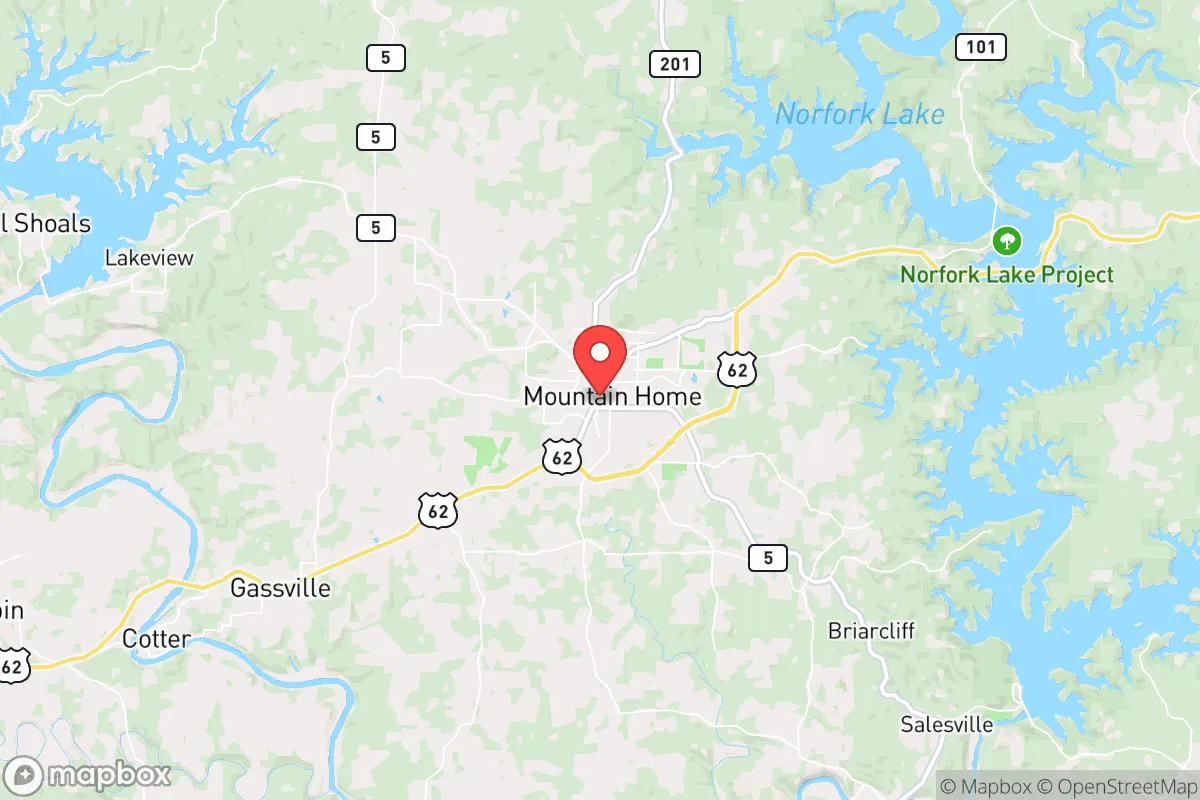
Photo: Wikipedia
Political ClimatePolitical Climate in Mountain Home, AR
District shown is the primary district for this city’s centroid. Cities may span multiple districts.
Local Political AnalysisPolitical Analysis of Mountain Home, AR
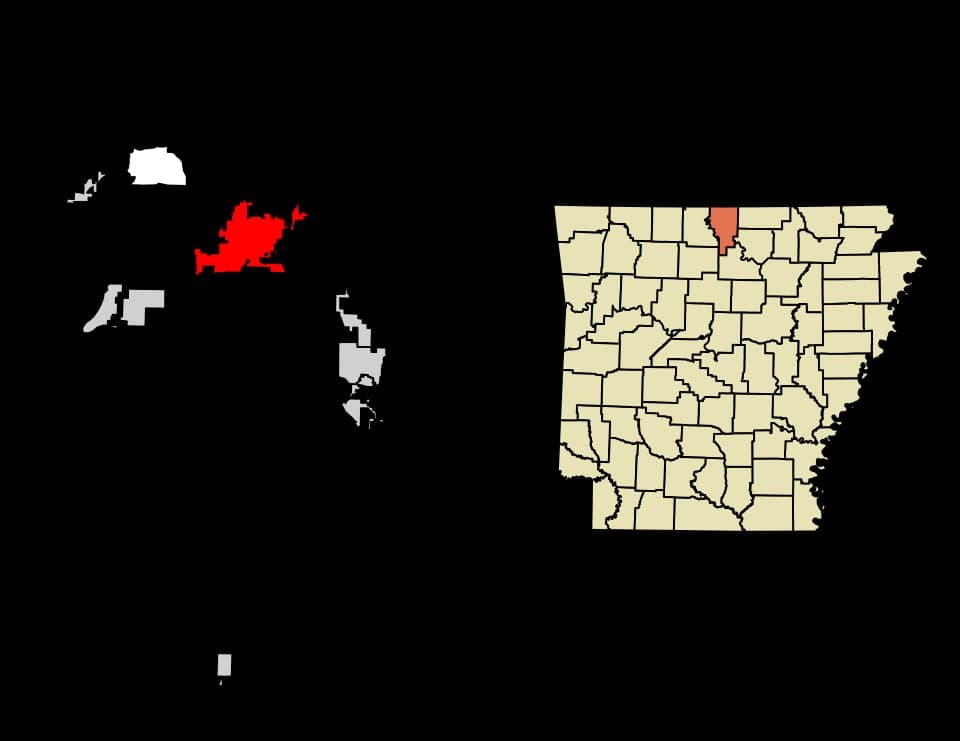
Mountain Home, Arkansas, sits in one of the most reliably conservative corners of the country, with a Cook PVI of R+23 that puts it deep in solid-red territory. This isn’t a purple area that flips back and forth—it’s a place where Republican candidates routinely win by double digits, and the local culture reflects that. The political lean here has been steady for decades, but like a lot of rural America, there’s a growing unease about outside influences creeping in, especially from the more progressive pockets of the state like Fayetteville or Little Rock. If you’re looking for a place where traditional values and limited government are still the norm, this is it—but it’s worth keeping an eye on how things shift over the next few years.
How it compares
Compared to the rest of Baxter County, Mountain Home is the political anchor—the county itself votes about 75% Republican in most elections, and the city tends to mirror that. Drive an hour south to Harrison, and you’ll find a similar vibe, though maybe a bit more libertarian-leaning on property rights. The real contrast comes when you head west toward Fayetteville or east to Memphis—those areas are trending bluer by the year, with younger populations and more transplants bringing progressive policies on taxes, zoning, and school curriculum. Mountain Home, by contrast, still feels like the Ozarks of the 1990s: low taxes, minimal red tape, and a general distrust of government overreach. The R+23 rating isn’t just a number—it reflects a community that votes against mandates, against gun control, and against anything that smells like federal overstep. That said, the retirement influx from states like California and Illinois has started to introduce some mild shifts, mostly on environmental issues like lake access and development, but so far the core conservative identity holds strong.
What this means for residents
For folks living here, the political climate translates into a pretty hands-off daily life. You won’t see heavy-handed local ordinances on things like short-term rentals or home-based businesses—the county commission tends to side with property owners over regulators. Property taxes are low, and there’s no city income tax, which is a big draw for retirees and remote workers. The school board and city council elections are usually low-key affairs, dominated by candidates who run on fiscal responsibility and local control, not national culture wars. But there’s a quiet concern among long-time residents that the next decade could bring more pressure from state-level mandates—especially if Little Rock keeps pushing for uniform standards on education or health mandates. The local vibe is: we like our freedom, and we’ll fight to keep it, but we’re not naive enough to think it’s guaranteed. If you’re moving here, you’ll find neighbors who are friendly but fiercely independent, and who expect you to respect that same independence.
One cultural distinction worth noting: Mountain Home has a strong Second Amendment culture, with gun shops and shooting ranges common, and open carry is widely accepted. The local paper, the Baxter Bulletin, leans center-right but isn’t overtly partisan. There’s also a noticeable absence of the kind of progressive activism you’d see in college towns—no big protests, no city council fights over pride flags or critical race theory. That’s not to say it’s a monolith—there are a handful of moderate Democrats, mostly older folks who remember when the area was more split—but the overall trajectory is conservative, and likely to stay that way as long as the population doesn’t shift too fast. If you value personal freedom, low taxes, and a community that doesn’t meddle, Mountain Home is a solid bet. Just don’t expect it to stay exactly the same forever—nothing does.

State Political ClimatePolitical Climate in Arkansas
State Political AnalysisPolitical Environment in the State
Arkansas has been a reliably red state for decades, but don't let that fool you into thinking it's a monolith. The state leans solidly Republican at the presidential level — Donald Trump won it by 27 points in 2024 — but the real story is a slow, steady shift rightward that began in earnest around 2010, when the state legislature flipped from Democrat-controlled to a supermajority Republican body. That trajectory has accelerated, and today Arkansas is one of the most conservative states in the country on paper, though the lived reality in its growing metro areas is more nuanced than the rural vote totals suggest.
Urban vs. rural divide
The political map of Arkansas is a textbook case of the urban-rural split, but with a twist. The two major metros — Little Rock (Pulaski County) and Fayetteville-Springdale-Rogers (Washington and Benton counties) — are the only real blue-ish anchors, and even they aren't solidly Democratic. Pulaski County went for Biden in 2020 by about 14 points, but that's driven almost entirely by the city of Little Rock itself; the surrounding suburbs like Maumelle and Sherwood are purple-to-red. Meanwhile, Northwest Arkansas — home to Walmart, Tyson Foods, and JB Hunt — is a fascinating case: Benton County voted for Trump by 20 points in 2024, but the city of Fayetteville (home to the University of Arkansas) is a liberal island, voting for Biden by 18 points. The rest of the state — places like Jonesboro in the northeast, Texarkana on the Texas border, and the vast Delta region — is deeply red, often voting 70%+ Republican. The Delta counties, historically Democratic due to old Southern voting patterns, have flipped hard; Mississippi County, for example, went from voting for Obama in 2008 to Trump by 30 points in 2024. That rural shift is the engine of Arkansas's conservative dominance.
Policy environment
Arkansas's policy environment is aggressively conservative, and it's been shaped by a legislature that has moved further right than the electorate in some ways. The state has a flat income tax of 4.4% as of 2025, down from a top rate of 7% in 2015, and Governor Sarah Huckabee Sanders signed a law in 2023 to phase it down to 3.9% by 2027. There's no state property tax on vehicles, and the sales tax is 6.5% (local add-ons push it higher in some cities). Education policy is a major flashpoint: the LEARNS Act of 2023 created a universal school voucher program, expanded charter schools, and banned "critical race theory" and "indoctrination" in K-12 classrooms. On healthcare, Arkansas is one of the few red states that expanded Medicaid under the private option model, but the legislature has tightened work requirements and is pushing for more privatization. Election laws have tightened significantly: voter ID is required, absentee ballot drop boxes were banned in 2021, and the state purged over 80,000 inactive voters from the rolls in 2024. Gun laws are among the most permissive in the nation — constitutional carry passed in 2013, and there's no permit required to carry a concealed handgun. The state also passed a near-total abortion ban in 2019 (triggered by Dobbs), with no exceptions for rape or incest.
Trajectory & freedom
On the freedom front, Arkansas is moving in a decidedly libertarian-leaning direction on most fronts, but there are warning signs. The LEARNS Act is a huge win for parental rights — it lets families take state funding to private or homeschool settings, and it bans school boards from mandating masks or vaccines. Gun rights expanded further in 2023 with a law allowing permitless carry on college campuses. On medical autonomy, the state passed a law in 2023 prohibiting gender transition procedures for minors, and in 2024 it banned "gender-affirming care" for adults using state funds. Property rights got a boost with a 2024 law limiting the use of eminent domain for private economic development. However, there are concerning trends: the state's medical marijuana program, approved by voters in 2016, has been hamstrung by a legislature that refuses to expand qualifying conditions or allow home cultivation. And on the taxation front, while income taxes are falling, local property taxes have crept up in growing areas like Bentonville and Rogers to fund infrastructure. The biggest red flag for freedom-minded folks is the state's broad emergency powers — the governor can shut down businesses or mandate restrictions without legislative approval, a power that was used aggressively during COVID and hasn't been fully reined in.
Civil unrest & political movements
Arkansas has seen relatively little civil unrest compared to coastal states, but there have been flashpoints. The most visible was the 2020 George Floyd protests in Little Rock, which turned violent for two nights, with looting and fires along the University Avenue corridor. That event galvanized a strong "Back the Blue" movement in the state, and the legislature responded in 2021 with a law increasing penalties for rioting and blocking highways. Immigration politics are less heated here than in border states, but there's a growing tension in Northwest Arkansas, where the Latino population has surged — Springdale is now over 40% Hispanic. The state passed a law in 2023 requiring local law enforcement to cooperate with ICE, and there's been talk of a "sanctuary city" ban. Election integrity remains a hot-button issue: the 2020 election saw no major scandals, but the legislature passed a slew of voting restrictions anyway, citing "confidence." There's a small but vocal secessionist movement in the Ozarks, mostly online chatter, and a more serious nullification push — in 2021, the legislature passed a bill asserting the state's right to ignore federal gun laws. The most visible political movement on the ground is the Moms for Liberty chapter in Benton County, which has been active in school board races and library book challenges.
Projection
Over the next 5-10 years, Arkansas is likely to become even more conservative, but with a growing libertarian streak. The in-migration pattern is key: people are moving to Northwest Arkansas from California, Colorado, and Illinois, drawn by low taxes and jobs at Walmart and Tyson. These newcomers tend to be center-right, not far-right, and they're pushing for better infrastructure, more parks, and less government interference in local zoning. That could create a tension between the rural, evangelical base and the more secular, business-friendly conservatives in the metros. The state's demographic future is also shifting: the Delta is depopulating, while Northwest Arkansas is booming — that means the political center of gravity is moving away from the old cotton country and toward the Ozarks. Expect continued fights over education (vouchers vs. rural school funding), medical marijuana expansion, and property taxes. The biggest wildcard is the state's prison system — Arkansas has one of the highest incarceration rates in the country, and a 2024 federal lawsuit over prison conditions could force the state to spend billions on reform, potentially sparking a tax revolt.
Bottom line for a new resident: If you're moving to Arkansas for freedom from government overreach, you'll find a state that largely delivers on guns, taxes, and school choice — but don't expect a libertarian paradise. The state government is still comfortable using its power to enforce social conservatism, especially on medical and educational issues. The best bet for a like-minded community is Northwest Arkansas, specifically Bentonville or Rogers, where the politics are conservative but the culture is more live-and-let-live. Avoid the Delta unless you're prepared for deep poverty and a shrinking tax base. And keep an eye on Little Rock — the city's politics are drifting left, and the state legislature is increasingly willing to preempt local ordinances, which could lead to some ugly fights over the next decade.
* Values derived from national, state, county, city and local statistics and may differ in a specific area. Last updated: 2026-04-23T02:11:34.000Z
Narrative content on this page is AI-generated and may contain mistakes. Verify any details that matter before acting on them.
ReloMaps may earn a commission from affiliate links at no extra cost to you.

