
Photo by Drew Dempsey on Unsplash
Personal Sovereignty in Mountain Village, AK
Strong independent fundamentals that actively favor personal liberty and low regulation.
What does Personal Sovereignty tell us?
Personal Sovereignty measures your capacity for self-reliance and independence with minimal government friction. Higher scores mean fewer barriers between you and the way you want to live... but it assumes you have the space you need and good neighbors.
What does this tell us?
Personal Sovereignty measures your capacity for self-reliance and independence with minimal government friction. Higher scores mean fewer barriers between you and the way you want to live... but it assumes you have the space you need and good neighbors.
State Policy
Energy independence: Net exporter (350% of energy produced in-state)
Personal Liberty
Homesteading

Personal Liberty Analysis
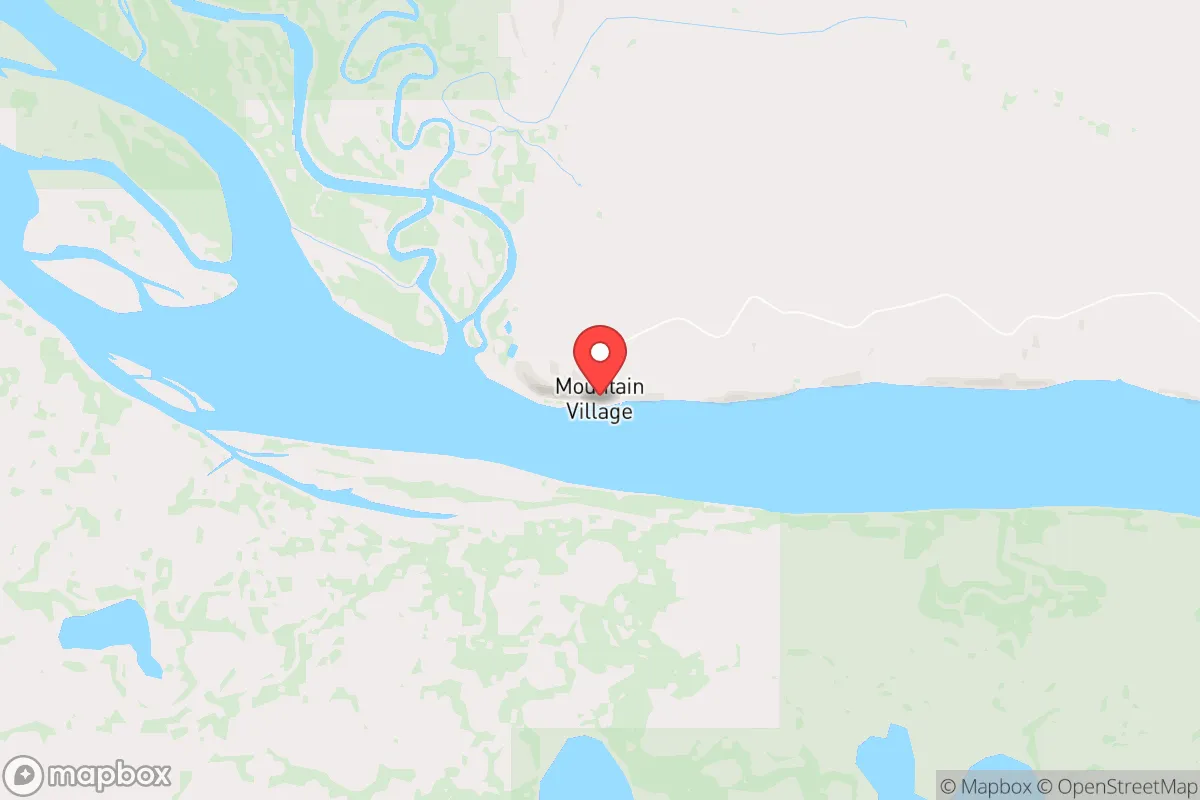
Mountain Village, Alaska, offers an environment of personal sovereignty that is rare in the Lower 48, but it comes with extreme trade-offs. This Yup'ik village of roughly 800 people, accessible only by air or river, operates under a unique blend of tribal, state, and federal jurisdictions that can both protect and complicate individual autonomy. For the survivalist or prepper seeking to escape government overreach, the practical reality here is that the state's physical remoteness and harsh climate already enforce a level of self-reliance that most regulations cannot touch, though the legal framework still carries the fingerprints of Juneau and Washington.
Tax burden and regulatory posture in a remote Alaska village
Alaska’s statewide tax structure is a major draw for those seeking to minimize government extraction. There is no state income tax and no state sales tax, though local communities can levy their own sales taxes—Mountain Village does not currently impose one, meaning your earnings and purchases are largely untaxed at the point of transaction. Property taxes are also absent at the local level, as the village operates under the Alaska Native Claims Settlement Act (ANCSA) through the Yukon-Kuskokwim Health Corporation and the Asa'carsarmiut Tribal Council, which means land is held in trust or by native corporations, not subject to standard municipal property tax rolls. However, this also means you cannot simply buy land as you would in the Lower 48; you must navigate tribal land-use permissions or lease arrangements. The regulatory posture is light by design—Alaska’s state government has historically taken a hands-off approach to rural villages, but federal environmental and subsistence laws still apply, particularly around the Yukon River and Kuskokwim River watersheds. For the prepper, the lack of building codes, zoning enforcement, and business licensing in practice means you can construct a cabin, raise animals, or operate a small trade with minimal bureaucratic friction, though you must still respect tribal council authority and federal fish and game regulations.
Self-defense and gun law specifics in a remote Alaskan context
Alaska is one of the most firearm-friendly states in the union, and Mountain Village sits squarely within that tradition. No permit is required to purchase, own, or carry a firearm, whether open or concealed, for anyone 21 or older (18 for long guns). The state preempts local gun ordinances, so the tribal council cannot legally ban firearms on village lands, though social pressure and community norms may apply. Magazine capacity restrictions, assault weapon bans, and waiting periods are nonexistent. Stand-your-ground and castle doctrine laws are fully in effect, meaning you have no duty to retreat before using deadly force in your home or anywhere you are lawfully present. For the survivalist, this is critical: in a village where law enforcement response times can stretch to hours or days (the nearest Alaska State Trooper post is in Bethel, a 45-minute flight away), the ability to defend your family and supplies is not just a right but a practical necessity. Bear defense is also a real concern—grizzlies and black bears roam the area, and carrying a large-caliber handgun or a shotgun with slugs is common sense. The only caveat is that transporting firearms by air (the only way in or out) requires compliance with TSA and airline policies, which can be a hassle for those with multiple long guns.
Self-reliance and homesteading viability in Mountain Village
True homesteading is not just possible here—it is the default lifestyle. The village sits on the Yukon River delta, with lot sizes typically ranging from one to five acres under tribal or native corporation ownership, though you cannot buy fee-simple land outright; you must lease or obtain a land-use permit from the Asa'carsarmiut Tribal Council or the Yukon-Kuskokwim Corporation. Zoning is essentially nonexistent, so you can build a cabin, set up a greenhouse, raise chickens or reindeer, and harvest firewood without permits. Off-grid feasibility is high: there is no municipal power grid, so residents rely on diesel generators, solar panels, or wind turbines. The village does have a central water and sewer system, but many homes still use hauled water and honey buckets. For the prepper, this means you can achieve true energy independence, but the cost of shipping solar panels, batteries, and fuel is astronomical—expect to pay two to three times retail for any heavy equipment. Subsistence hunting and fishing are the backbone of local food security: salmon, moose, caribou, and waterfowl are abundant, and state subsistence laws prioritize rural residents for harvest. However, federal subsistence regulations under the Alaska National Interest Lands Conservation Act (ANILCA) can create conflicts, and the U.S. Fish and Wildlife Service occasionally restricts hunting seasons. The growing season is short (June to August), but cold frames and root cellars work well for potatoes, cabbage, and hardy greens.
Personal liberties in a tight-knit tribal community
Parental rights are strong in Alaska generally, but in Mountain Village, the tribal council and the local school (run by the Lower Yukon School District) hold significant sway over children’s education. Homeschooling is legal and requires only a simple notification to the district, with no standardized testing mandates or curriculum approval, making it a viable option for parents who want to control their children’s exposure to state ideology. Medical autonomy is a mixed bag: the village has a health clinic run by the Yukon-Kuskokwim Health Corporation, a tribal entity, but for anything beyond basic care, you must fly to Bethel or Anchorage. Vaccine mandates and public health orders from the state are technically enforceable, but in practice, the remote nature of the village means enforcement is lax—many residents simply ignore them. Speech and assembly rights are protected by the Alaska Constitution, which is more expansive than the U.S. Constitution on privacy and expression, but the social dynamics of a small village can be stifling; gossip and ostracism are more effective controls than any law. Property rights are the weakest link here: because most land is held in trust or by native corporations, you cannot own the land beneath your home outright, and the tribal council can theoretically revoke a lease or permit. For the survivalist, this is a critical vulnerability—your retreat is not truly your own in the legal sense.
Overall, Mountain Village offers a level of personal sovereignty that is exceptional by national standards, but it is not a libertarian paradise. The absence of income and property taxes, the unrestricted gun laws, and the off-grid homesteading potential are powerful draws for those seeking to escape the creeping overreach of federal and state governments. However, the reliance on tribal land tenure, the extreme logistical costs, and the social pressures of a small community mean that your autonomy is always conditional. Compared to rural areas in the Lower 48, where zoning boards, school districts, and county sheriffs can still impose their will, Mountain Village is a genuine frontier where the government’s reach is limited by geography and practicality. For the prepper willing to trade convenience for freedom, and to navigate the complexities of tribal governance, this is one of the last places in America where you can truly live on your own terms—provided you can handle the cold, the isolation, and the reality that your land is not legally yours.

* Values derived from national, state, county, city and local statistics and may differ in a specific area. Last updated: 2026-04-19T19:32:30.000Z
Narrative content on this page is AI-generated and may contain mistakes. Verify any details that matter before acting on them.
ReloMaps may earn a commission from affiliate links at no extra cost to you.

