
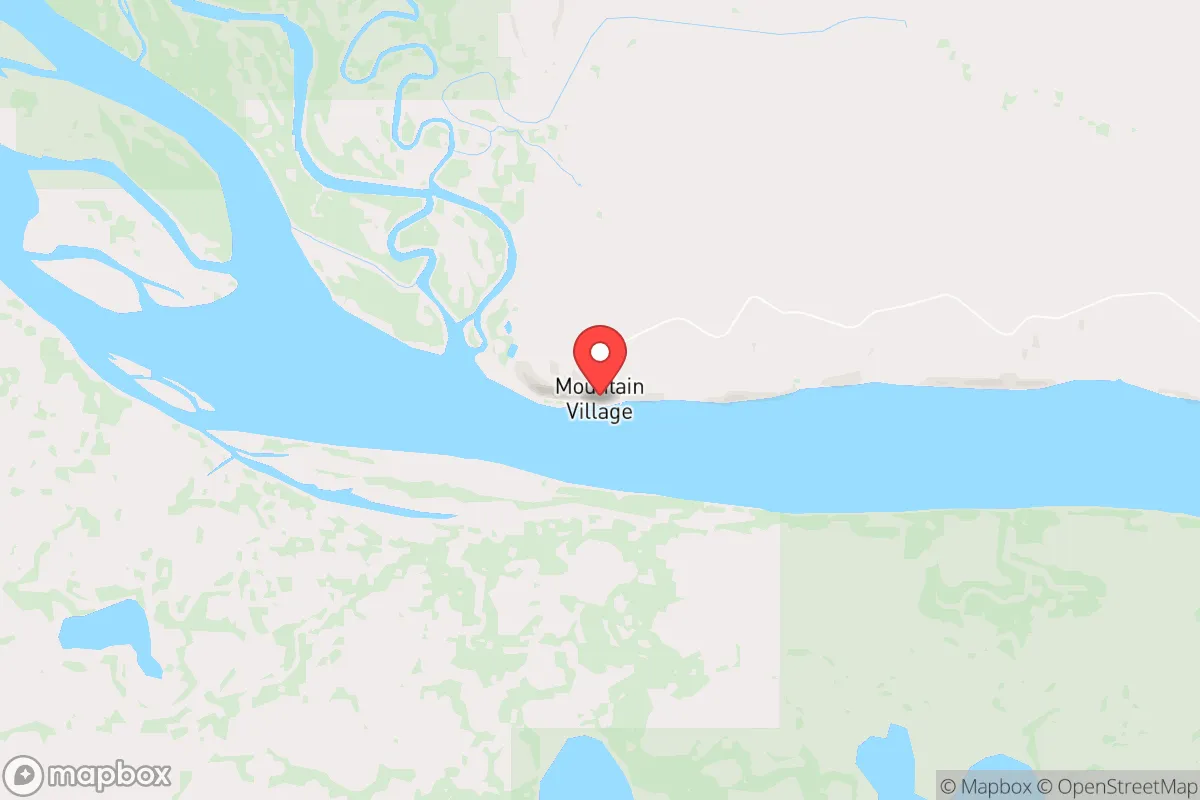
Photo by Drew Dempsey on Unsplash
Political ClimatePolitical Climate in Mountain Village, AK
District shown is the primary district for this city’s centroid. Cities may span multiple districts.
Inherited from parent state — no local data available.
Local Political AnalysisPolitical Analysis of Mountain Village, AK
Mountain Village, Alaska, has long been a place where folks value their independence and don't take kindly to outsiders telling them how to live. The area leans solidly conservative, with a Cook PVI of R+6, meaning it votes about six points more Republican than the national average. That's not just a number—it reflects a deep-seated belief in personal responsibility and a healthy skepticism of government overreach. In recent years, you've seen a slow but steady shift as some progressive ideas try to creep in, especially from folks moving up from places like Bethel or Anchorage, but the core here still holds strong to traditional values.
How it compares
When you look at the political landscape around here, Mountain Village stands out as a conservative anchor in a region that's more mixed than you might think. Compare it to Bethel, about 40 miles to the southeast, which leans more liberal thanks to its larger government and nonprofit sector. Bethel's politics often push for bigger programs and more regulation, while Mountain Village folks tend to ask, "Who's going to pay for that, and who's going to enforce it?" Then there's St. Mary's, a smaller community that's more aligned with Mountain Village but has seen some influence from outside groups pushing environmental and social agendas. The contrast is clear: Mountain Village is a place where people still believe in local control and keeping government out of their daily lives, while nearby towns are more willing to accept top-down mandates.
What this means for residents
For the people living here, the political climate directly affects how much freedom you have to live your life without interference. The R+6 lean means that local leaders are generally more focused on protecting individual rights—like the right to hunt, fish, and use your land as you see fit—rather than imposing new rules. You don't see the same push for strict zoning laws or environmental restrictions that you might in more progressive areas. However, there's a growing concern that as the state government in Juneau and federal agencies push for more oversight on subsistence activities and land use, the conservative voice here needs to stay loud. If progressive trends continue, residents worry about losing the ability to make their own choices about everything from education to healthcare, with outside bureaucrats making decisions that don't fit the reality of life in rural Alaska.
One of the biggest cultural distinctions in Mountain Village is the strong sense of community and self-reliance. People here don't expect the government to solve their problems—they rely on neighbors and family. That's why any shift toward progressive policies, like expanded welfare programs or stricter gun laws, feels like a direct threat to the way of life. The long-term outlook is cautious: if the area can keep its conservative foundation, it'll stay a place where personal freedoms are respected. But if outside influences continue to grow, especially through funding tied to progressive agendas, Mountain Village could lose the very character that makes it a great place to live. For now, it's a solid red spot in a changing state, but staying that way requires vigilance.

State Political ClimatePolitical Climate in Alaska
State Political AnalysisPolitical Environment in the State
Alaska has long been a unique political outlier—a state where a fierce libertarian streak, a deep reliance on resource extraction, and a strong independent identity create a political climate that leans conservative, but in a distinctly Alaskan way. Over the last 10-20 years, the state has shifted from a moderate, pragmatic conservatism (think the old-school Republicanism of Ted Stevens and Frank Murkowski) toward a more populist, freedom-oriented conservatism, driven by a growing distrust of federal overreach and a backlash against progressive cultural trends from the Lower 48. While the state hasn't flipped to deep red in the way some interior Western states have, it has consistently voted Republican in presidential elections since 1968 (except for 1964), and the 2024 election saw Donald Trump win by a comfortable 13-point margin, a shift from the closer 10-point win in 2020. The dominant coalition is a mix of rural conservatives, resource-industry workers, and a growing number of freedom-minded transplants fleeing high-tax states, all united by a shared skepticism of big government.
Urban vs. rural divide
The political map of Alaska is starkly divided between a few urban centers and the vast, sparsely populated rural and suburban areas. The largest city, Anchorage, is the state's political bellwether and is more moderate-to-liberal than the rest of the state, but even here, the city is split. The Anchorage Hillside and Eagle River areas lean heavily Republican, while downtown and midtown Anchorage, along with the University of Alaska area, trend Democratic. Juneau, the state capital, is a Democratic stronghold, driven by state government employees and a more progressive-leaning population. Fairbanks, the interior hub, is reliably conservative, with a strong military and resource-extraction base. The real driver of Alaska's conservative lean, however, is the vast rural expanse—places like Wasilla and Palmer in the Mat-Su Valley, which have become a conservative powerhouse, and the remote communities of the Kenai Peninsula, like Soldotna and Homer (though Homer has a quirky, artsy-liberal enclave). The North Slope Borough and the Aleutian Islands are more mixed, often voting based on local resource issues rather than national party lines. The urban-rural divide is essentially a battle between the concentrated government and service economy of Anchorage/Juneau versus the resource-dependent, freedom-loving ethos of everywhere else.
Policy environment
Alaska's policy environment is a mixed bag for a conservative, but the overall posture is one of limited government and individual liberty. The state has no state income tax and no state sales tax, a massive draw for those fleeing high-tax states. Property taxes are relatively low, though they vary by borough. The regulatory posture is generally business-friendly, especially for oil, gas, mining, and fishing, but the state's heavy reliance on the Permanent Fund Dividend (PFD) creates a unique dynamic—residents get an annual check from the state's oil wealth, which fosters a sense of ownership and skepticism toward government spending. Education policy is a flashpoint: Alaska has a school choice program (the Alaska Correspondence Program) and a growing charter school presence, but the state teachers' union remains powerful. Healthcare is a concern, with rural access being a major issue, but the state has resisted Medicaid expansion in the past (though it was eventually adopted under Governor Bill Walker). Election laws are relatively secure, with voter ID required, but the state's 2020 ranked-choice voting system (passed by ballot initiative) has been a source of controversy among conservatives who see it as a way to dilute conservative votes. The state's gun laws are among the most permissive in the nation—constitutional carry, no permit required, and no waiting periods—a major selling point for freedom-minded relocators.
Trajectory & freedom
Alaska's trajectory on personal freedom is a mixed but generally positive picture for conservatives, though there are warning signs. On the positive side, the state has seen a strengthening of gun rights in recent years, with no major restrictions passed despite national pressure. The state also passed a parental rights in education law in 2024, requiring schools to notify parents of any curriculum involving sexuality or gender identity, a direct response to progressive school board activism in Anchorage and Juneau. On the negative side, the ranked-choice voting system, passed in 2020, has been a persistent irritant, with conservatives arguing it allows moderate Republicans and Democrats to collude against more conservative candidates. There have been ongoing efforts to repeal it, but they have so far failed. The state's medical autonomy is strong—Alaska has no vaccine mandates for adults and resisted federal COVID mandates aggressively, with Governor Mike Dunleavy (a Republican) suing the Biden administration over the federal contractor vaccine mandate. Property rights are generally respected, but the state's vast federal land ownership (over 60% of Alaska is federally owned) creates constant friction, with conservatives pushing for more state control and resource development. The biggest freedom concern is the state's fiscal trajectory: the PFD has been cut or threatened in recent years due to budget shortfalls, and there is a growing debate over whether to implement a state income tax or sales tax, which would be a major blow to the state's freedom-friendly reputation.
Civil unrest & political movements
Alaska has a history of civil unrest that is more about resource conflicts and federal overreach than the culture-war protests seen in the Lower 48. The most visible flashpoint in recent years has been the Pebble Mine controversy, which pitted pro-development conservatives and union workers against environmental activists and some Alaska Native tribes, leading to protests and legal battles. The Arctic National Wildlife Refuge (ANWR) drilling debate has also been a recurring source of tension, with conservatives pushing for energy independence and local jobs, while environmental groups and some Native corporations push back. On the left, there have been small but vocal protests in Anchorage and Juneau over police reform and racial justice, but these have been relatively muted compared to national trends. The election integrity issue has been a hot topic, with conservatives in the Mat-Su Valley and Fairbanks leading efforts to audit the 2020 election and push for a repeal of ranked-choice voting. The state has also seen a rise in secessionist rhetoric, particularly in the more libertarian-leaning areas of the Kenai Peninsula and the Interior, with some groups calling for Alaska to become an independent nation or at least a more autonomous territory. Immigration politics are less of a flashpoint here than in border states, but there is a strong undercurrent of resentment toward federal immigration policy, particularly regarding the influx of seasonal workers in the fishing and tourism industries.
Projection
Over the next 5-10 years, Alaska is likely to become more conservative and more libertarian, driven by two key trends: in-migration from high-tax, high-regulation states (California, New York, Illinois) and a growing backlash against federal overreach. The Mat-Su Valley, already a conservative stronghold, is expected to continue growing rapidly, solidifying its role as the state's political engine. Anchorage will likely become more polarized, with the liberal core shrinking and the conservative suburbs expanding. The biggest wildcard is the state's fiscal situation: if the state is forced to implement an income tax or sales tax to close budget gaps, it could trigger a wave of out-migration and disillusionment among the freedom-minded population. However, if the state can maintain its no-tax status and continue to expand resource development (oil, gas, mining, and possibly a new LNG project), it will remain a beacon for those seeking a low-tax, high-freedom lifestyle. The ranked-choice voting system will likely remain a point of contention, but conservatives may eventually succeed in repealing it or bypassing it through a constitutional amendment. The biggest threat to freedom in Alaska is not a progressive takeover of the state government, but rather the federal government's continued control over vast swaths of land and resources, which will remain a source of tension and a rallying point for conservative activism.
Bottom line for a new resident: If you're moving to Alaska for freedom, you're making a good bet, but don't expect a libertarian utopia. The state is still grappling with its fiscal future, and the urban centers of Anchorage and Juneau will always have a progressive tilt. Focus on the Mat-Su Valley, the Kenai Peninsula, or Fairbanks if you want a community that shares your values. Be prepared for a high cost of living in remote areas, but also for a level of personal autonomy—especially regarding guns, taxes, and medical choices—that is increasingly rare in the Lower 48. The state's trajectory is positive for conservatives, but it will require active engagement to keep it that way, particularly on the issues of election integrity and fiscal responsibility.
* Values derived from national, state, county, city and local statistics and may differ in a specific area. Last updated: 2026-04-19T19:32:30.000Z
Narrative content on this page is AI-generated and may contain mistakes. Verify any details that matter before acting on them.
ReloMaps may earn a commission from affiliate links at no extra cost to you.

