
Photo by Drew Dempsey on Unsplash
Strategic Assessment of Mountain Village, AK
Strong survivability profile. Good buffer from population centers, with manageable environmental and tactical risks.
What does the Strategic Assessment tell us?
Our Strategic Assessment grades tactical survivability of an area. Major population centers, military targets, fallout zones, natural disasters, and border exposure all drive risk — lower exposure means a more defensible position in a crisis.
This is heavily inspired by Joel Skousen's Strategic Relocation book. Highly recommended you checkout the book ($)What does this tell us?
Our Strategic Assessment grades tactical survivability of an area. Major population centers, military targets, fallout zones, natural disasters, and border exposure all drive risk — lower exposure means a more defensible position in a crisis.
This is heavily inspired by Joel Skousen's Strategic Relocation book. Highly recommended you checkout the book ($)Strategic Pillars

Key Distances
Regional Safe Places
Below is our recommended "safe zones" in Alaska and the surrounding area based on our strategic heuristics. For most people, it's unrealistic to live in a “safe zone” full-time due to work, family or other personal reasons. They tend to be more rural. However, many of these areas are perfect for second homes and retreat properties that double as a vacation home or even a short-term rental.
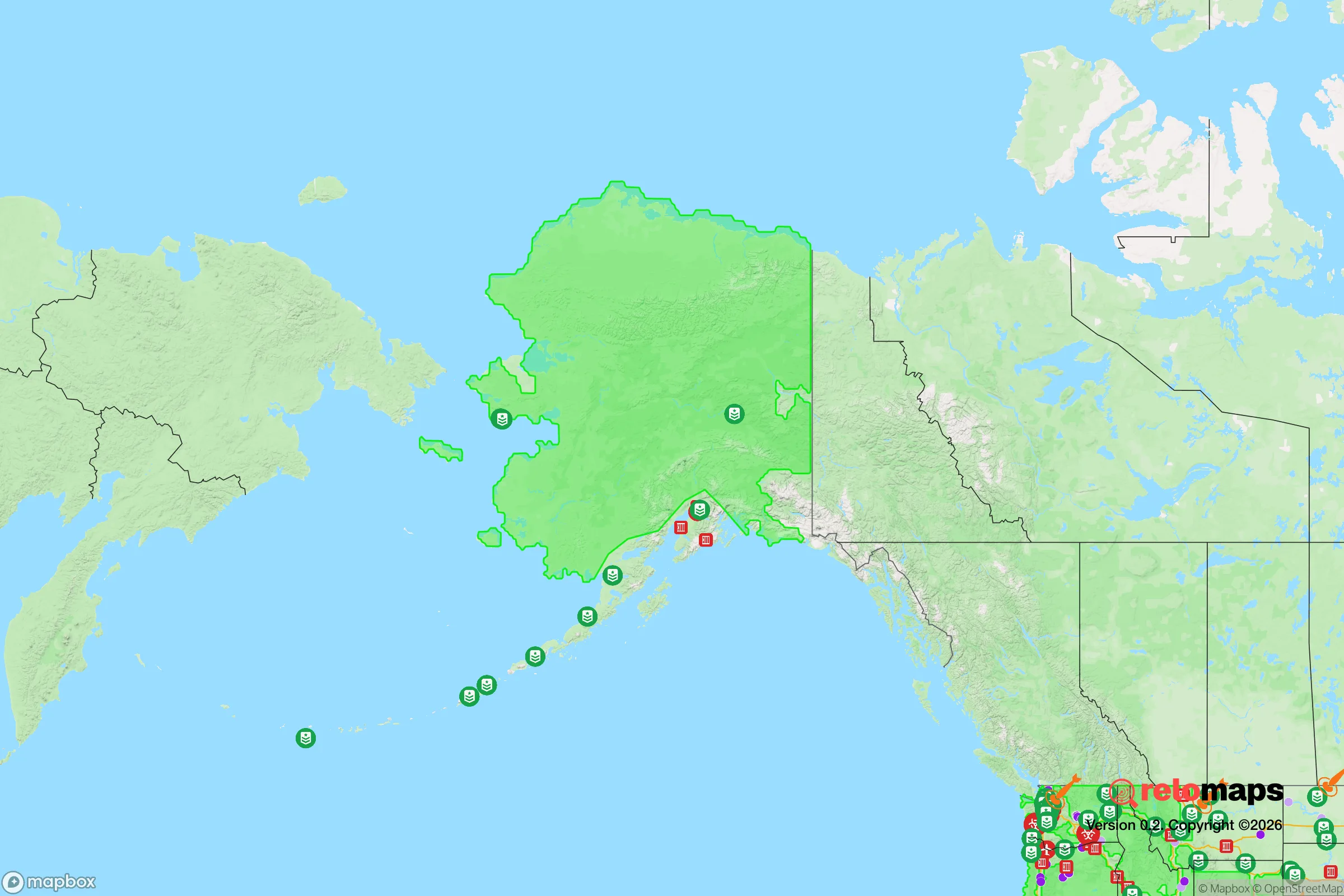


Important Note: For informational purposes only. This does not mean nothing bad ever happens in the green zones. Please use common sense. This is based on public data and modeled with AI. We tried to take a conservative approach but mistakes happen. We update this regularly as new information becomes available.
Solar Generator Recommendations
Backup power matters more here than in safer locations. We've picked three solar generators across budgets and capacity tiers — start with the budget unit if you only need a few essentials, or step up if you want to run a fridge and HVAC for days at a time.

Jackery Portable Power Station Explorer 300
Budget OptionPower on the Go: Weighing only 11 lbs, it's convenient to set up and store with book-sized foldable solar panels

BLUETTI Portable Power Station AC180
Designed for both indoor and outdoor scenarios, AC180 is highly capable as it has a robost capacity and continuous output power.

EF ECOFLOW DELTA Pro Ultra Power Station
Upgraded PickEcoFlow DELTA Pro Ultra is a whole-home energy system designed to grow with your family. Integrated with the Smart Home Panel 2, it scales to meet your evolving energy needs — keeping your home powered, intelligent, and secure through every stage of life.
We earn a commission, at no additional cost to you.
Strategic Assessment Analysis
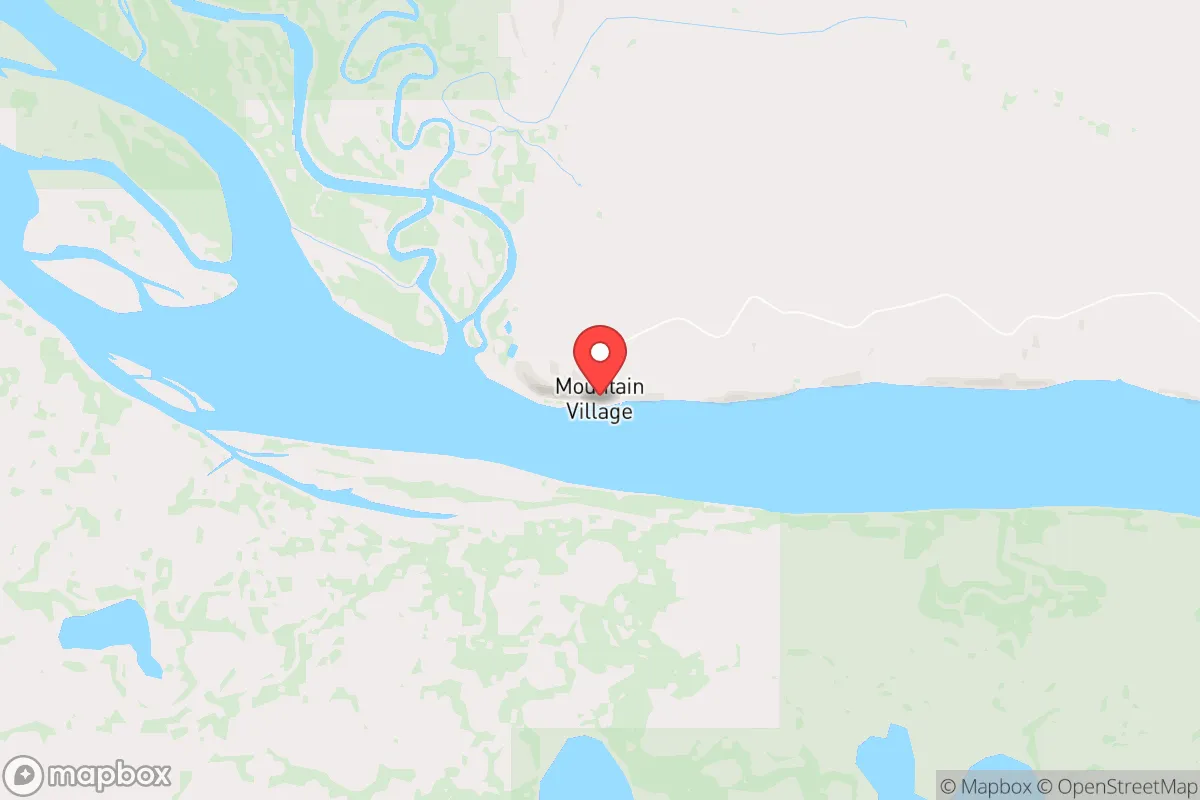
Mountain Village, Alaska, is not a relocation option for the faint of heart, but for the strategic prepper seeking true geographic isolation and a buffer from the cascading failures of the Lower 48, it offers a unique calculus of risk and reward. Located on the north bank of the Yukon River, roughly 450 miles west of Anchorage and 70 miles north of St. Mary's, this Yup'ik community of roughly 800 people sits in a region defined by permafrost, boreal forest, and the immense, slow-moving Yukon. For a survivalist mindset, the primary advantage here is not infrastructure or economy—it is the sheer difficulty of reaching the place, which acts as a natural filter against the chaos of urban collapse. The trade-off is a life of extreme logistical dependence on air and river transport, which must be factored into any long-term resilience plan.
Geographic isolation and natural buffer from Lower 48 instability
Mountain Village's location is its single greatest strategic asset. The community is accessible only by small aircraft (via the Mountain Village Airport, a gravel airstrip) or by boat on the Yukon River during the brief ice-free season (typically June through October). There are no roads connecting it to any other settlement. This means that in the event of a major national crisis—whether economic collapse, civil unrest, or a pandemic—the likelihood of large-scale population movement reaching this area is near zero. The nearest population center of any size is St. Mary's (pop. ~550), and the closest city with significant infrastructure is Bethel (pop. ~6,000), which is 120 miles southwest by air. For a relocator concerned with fallout from nuclear events, Mountain Village is far from any known strategic targets: no military bases, no major ports, no industrial centers, and no missile silos within hundreds of miles. The prevailing winds from the Pacific would carry any fallout from Anchorage or Fairbanks away from this region, though a high-altitude detonation over the continental US could still deposit particulate matter here depending on weather patterns. The Yukon River itself provides a natural barrier to overland approach from the south, and the surrounding tundra and muskeg make foot travel difficult for anyone not intimately familiar with the terrain.
Fallout proximity, environmental risks, and exposure to cascading failures
While Mountain Village is far from direct nuclear targets, it is not immune to the secondary effects of a national or global crisis. The community's entire supply chain depends on air freight and seasonal barge deliveries. In a scenario where fuel supplies are disrupted or air travel is grounded, the village would face acute shortages of food, medicine, and heating fuel within weeks. The permafrost foundation of most buildings makes them vulnerable to thawing if the climate shifts abruptly, though this is a slow-moving risk compared to immediate societal collapse. The Yukon River itself is a double-edged sword: it provides a potential water source and transportation corridor, but it also floods during spring breakup, and ice jams can cause sudden, destructive flooding. The nearest medical facility is a small clinic in St. Mary's; serious emergencies require medevac to Bethel or Anchorage, which could be unavailable during a crisis. For the prepper, the key risk is not a direct blast or fallout cloud, but the fragility of the supply chain that keeps this community alive. If you relocate here, you must assume that resupply will stop for months or years, and plan accordingly.
Practical resilience for a relocator: food, water, energy, and defensibility
For a single individual or family willing to adapt to subsistence living, Mountain Village offers genuine opportunities for self-sufficiency. The Yukon River provides abundant salmon (king, chum, and coho) during the summer run, and the surrounding tundra supports moose, caribou, and small game like ptarmigan and hare. Berry picking (salmonberries, blueberries, crowberries) is productive in late summer. However, the growing season is too short and the soil too poor for any meaningful agriculture; you will not be growing vegetables here without a heated greenhouse, which requires energy. Water is available from the river or from rainwater collection, but must be treated or boiled due to naturally occurring pathogens and sediment. Energy is the critical vulnerability: the village relies on diesel generators for electricity, and heating is primarily by fuel oil or wood. A prepper would need to invest in a high-efficiency wood stove, a large stockpile of fuel, and a backup solar array (though winter daylight is minimal—only about 4 hours of twilight in December). Defensibility is excellent: the village is small, everyone knows everyone, and strangers are immediately noticed. The surrounding terrain offers no cover for a large approaching force, and the river provides a natural moat. However, the community is tight-knit and culturally Yup'ik; an outsider will need to build trust and contribute to the local economy to be accepted. This is not a place to "bug out" to anonymously—you must become part of the community or you will be isolated and vulnerable.
The overall strategic picture for Mountain Village is one of extreme trade-offs. It offers near-total isolation from the collapse of urban America, a defensible position, and access to wild food sources that can sustain a prepared individual or family indefinitely. But it demands a level of self-reliance that few preppers from the Lower 48 possess: you must be able to hunt, fish, process game, navigate by river, maintain a wood stove, and handle subzero temperatures for months on end. The lack of road access means you cannot easily leave if the situation deteriorates elsewhere—you are committed. For the conservative-minded relocator who values freedom from government overreach and the ability to live by their own rules, Mountain Village represents a genuine frontier option. But it is not a retreat for the unprepared; it is a long-term homesteading commitment in one of the most remote places in North America. If you have the skills, the resources, and the mindset, it is one of the few places left where you can truly disappear from the grid. If you don't, it will kill you.

* Values derived from national, state, county, city and local statistics and may differ in a specific area. Last updated: 2026-04-19T19:32:30.000Z
Narrative content on this page is AI-generated and may contain mistakes. Verify any details that matter before acting on them.
ReloMaps may earn a commission from affiliate links at no extra cost to you.

