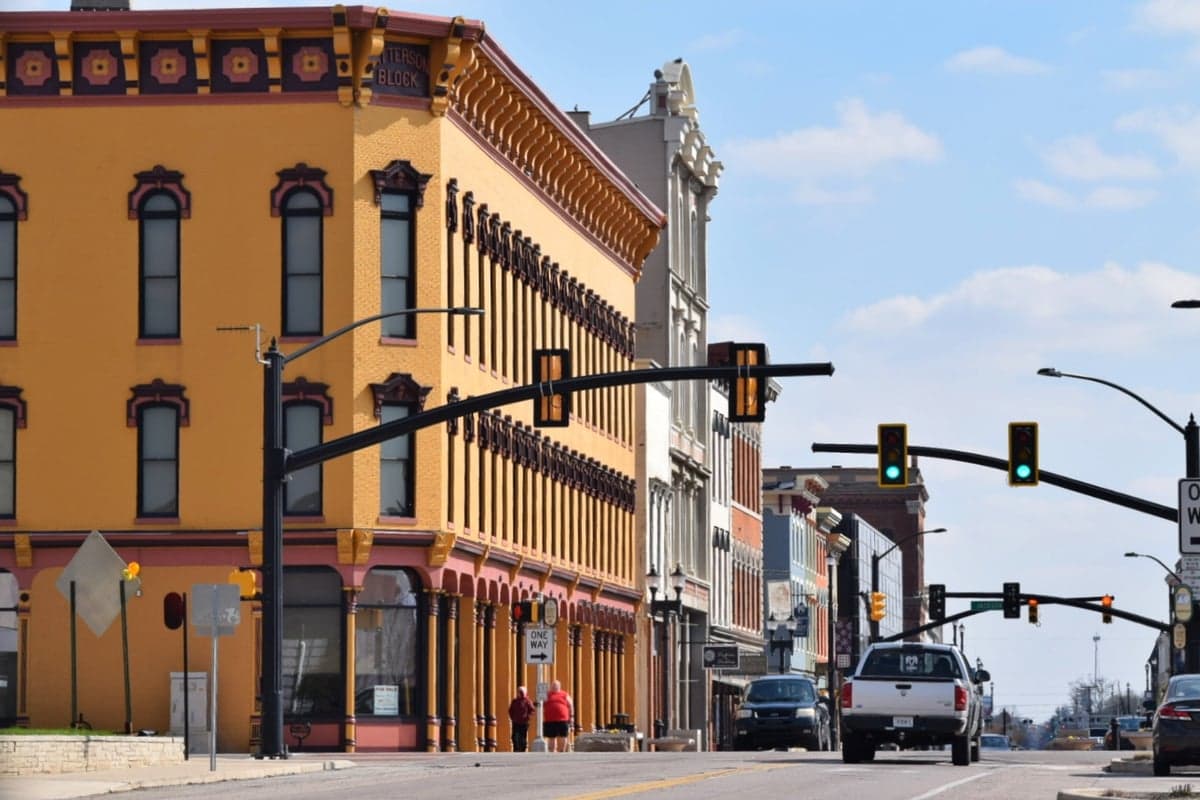
Photo: Wikipedia
Personal Sovereignty in Muncie, IN
Viable for self-reliance. Generally workable, though some barriers may limit total independence.
What does Personal Sovereignty tell us?
Personal Sovereignty measures your capacity for self-reliance and independence with minimal government friction. Higher scores mean fewer barriers between you and the way you want to live... but it assumes you have the space you need and good neighbors.
What does this tell us?
Personal Sovereignty measures your capacity for self-reliance and independence with minimal government friction. Higher scores mean fewer barriers between you and the way you want to live... but it assumes you have the space you need and good neighbors.
State Policy
Energy independence: Importer (35% of energy produced in-state)
Personal Liberty
Homesteading

Personal Liberty Analysis
Muncie, Indiana, offers a mixed bag for those prioritizing personal sovereignty, with the state's generally favorable legal framework tempered by local governance that can feel more restrictive. While Indiana provides a solid foundation for self-reliance—with constitutional carry, low taxes, and limited zoning in unincorporated areas—Muncie itself operates under city ordinances that can nibble at the edges of autonomy. For a conservative-leaning individual or family weighing relocation, the key is understanding where state-level protections end and local control begins, particularly in a city that has seen economic decline and a corresponding uptick in regulatory oversight.
Tax burden and regulatory posture in Muncie compared to the state
Indiana's tax structure is generally favorable for those seeking to keep more of their earnings. The state income tax is a flat 3.15% as of 2026, and property taxes are capped at 1% of assessed value for owner-occupied homes, 2% for rental properties, and 3% for commercial. Muncie's combined city and county tax rate sits around 2.1% for residential property, which is manageable but not the lowest in the state. The real burden comes from the regulatory posture. Muncie has a reputation for aggressive code enforcement, particularly regarding rental properties and older homes. The city's "blight elimination" program, while well-intentioned, has led to forced demolitions and fines for property owners who cannot keep up with maintenance standards. For a prepper or homesteader, this means that owning a fixer-upper on a standard city lot can invite unwanted government attention. The city also imposes a wheel tax on vehicles, currently $25 per year, and has a local food and beverage tax of 1% on prepared meals. These are small but constant reminders that local government is actively extracting revenue. For those willing to live just outside city limits—say, in Delaware County's unincorporated areas—the regulatory burden drops significantly, with no city income tax and far less code enforcement.
Self-defense and gun law specifics in Indiana and Muncie
Indiana is a strong Second Amendment state, and Muncie residents benefit directly from that. Since July 2022, Indiana has been a constitutional carry state, meaning no permit is required to carry a handgun openly or concealed for anyone legally allowed to possess a firearm. This is a major win for personal sovereignty. There is no state-level magazine capacity ban, no "assault weapon" restrictions, and no waiting period for purchases from licensed dealers. Muncie itself has no local gun ordinances that supersede state law, so the city is as free as the state allows. However, there are practical considerations. Muncie's crime rate, particularly property crime and violent crime, is higher than the national average. The Muncie Police Department has been understaffed for years, with response times sometimes exceeding 20 minutes for non-emergency calls. This makes personal firearm ownership not just a right but a practical necessity for self-defense. The state also has a strong "stand your ground" law, with no duty to retreat in any place where you are lawfully present. For parents, Indiana law allows the use of deadly force to protect a third party, including children, if you reasonably believe they are in imminent danger. One caveat: Indiana has a "red flag" law (the Jake Laird Law) that allows law enforcement to petition for the temporary seizure of firearms from individuals deemed a danger to themselves or others. While the law includes due process protections, it is a point of concern for those wary of government overreach. In practice, it is used sparingly in Delaware County, but it remains a tool that could be abused.
Self-reliance and homesteading viability in Muncie and surrounding areas
For the survivalist or prepper, Muncie's appeal lies more in its surrounding rural areas than within city limits. Standard residential lots in Muncie are typically 0.15 to 0.25 acres, which is too small for meaningful food production or livestock. City zoning prohibits chickens, goats, or other farm animals on lots under one acre, and even then, permits are required. Gardening is allowed, but front-yard vegetable gardens are restricted in some historic districts. The real opportunity is in the unincorporated areas of Delaware County, where lot sizes of one to five acres are common and affordable—often under $10,000 per acre. In these areas, zoning is minimal, and you can keep chickens, rabbits, and even a few goats without hassle. Off-grid feasibility is moderate. Indiana has no state law prohibiting rainwater collection, and Muncie's average annual rainfall of 42 inches is sufficient for a cistern system. However, the city requires connection to municipal water and sewer for any habitable structure within its jurisdiction, so true off-grid living is only possible outside city limits. Solar panels are permitted statewide, but Muncie's building code requires permits and inspections, adding bureaucratic friction. For those serious about self-reliance, the best strategy is to buy land in the county—areas near Yorktown or Daleville offer good soil and reasonable proximity to Muncie's amenities—while maintaining a smaller residence in town for work or school access.
Personal liberties in Muncie: parental rights, medical autonomy, speech, and property
Indiana has been a battleground for personal liberties, and Muncie reflects the state's conservative lean in some areas but not all. On parental rights, Indiana law gives parents broad authority over their children's education and medical decisions. The state has a robust school choice program, including vouchers and charter schools, and Muncie has several private and religious schools that offer alternatives to the public system. Homeschooling is legal with minimal regulation—no notification required, no standardized testing mandates. This is a strong point for parents who want to control their children's curriculum and values. Medical autonomy is more complicated. Indiana has some of the strictest abortion laws in the country, with a near-total ban, which aligns with conservative values. However, vaccine mandates are a gray area. Indiana does not have a statewide COVID-19 vaccine mandate, but private employers and some healthcare facilities can require them. Muncie's Ball State University, a major employer, has its own vaccination policies that have shifted over time. For those concerned about medical freedom, this is a factor to monitor. Free speech is protected under the First Amendment, and Muncie has no local ordinances that restrict public protest or expression beyond standard time, place, and manner regulations. Property rights are generally strong, with Indiana having a "right to farm" law that protects agricultural operations from nuisance lawsuits. However, Muncie's historic preservation commission can restrict what you do with older homes, including paint colors and window replacements. This is a direct infringement on property autonomy that frustrates many homeowners.
Overall, Muncie offers a moderate level of personal sovereignty that is better than many blue-state cities but falls short of the libertarian ideal. The state provides a solid foundation—constitutional carry, low taxes, school choice, and minimal homeschooling regulation—but the city's code enforcement, historic district restrictions, and reliance on municipal utilities create friction for those seeking maximum autonomy. For a single individual or family with a prepper mindset, the smart play is to live just outside city limits while working or accessing services in Muncie. This gives you the best of both worlds: the economic and social benefits of a small city with the legal and practical freedom of rural Indiana. Compared to areas like Portland or Denver, Muncie is a fortress of liberty. Compared to rural Wyoming or Idaho, it is still a place where the government has a say in your daily life. The choice depends on how much friction you are willing to tolerate for the convenience of a functioning community.

* Values derived from national, state, county, city and local statistics and may differ in a specific area. Last updated: 2026-04-22T09:08:19.000Z
Narrative content on this page is AI-generated and may contain mistakes. Verify any details that matter before acting on them.
ReloMaps may earn a commission from affiliate links at no extra cost to you.

