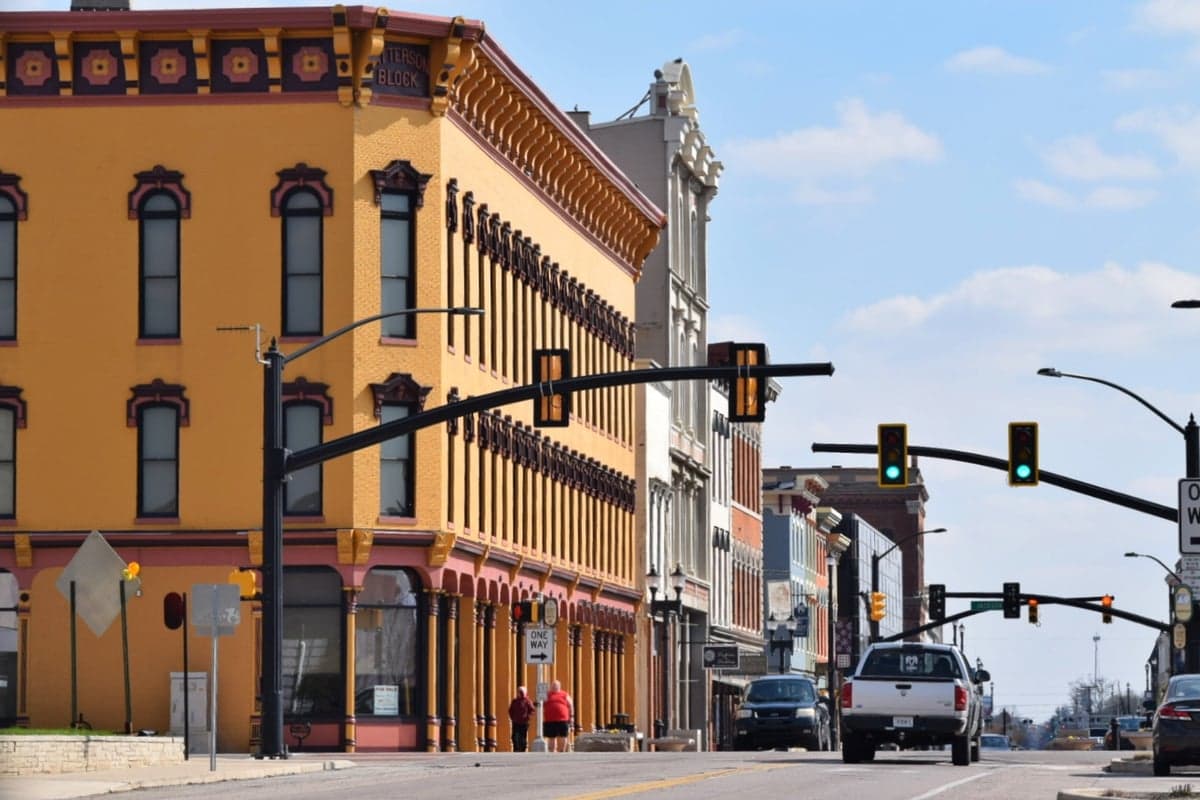
Photo: Wikipedia
Political ClimatePolitical Climate in Muncie, IN
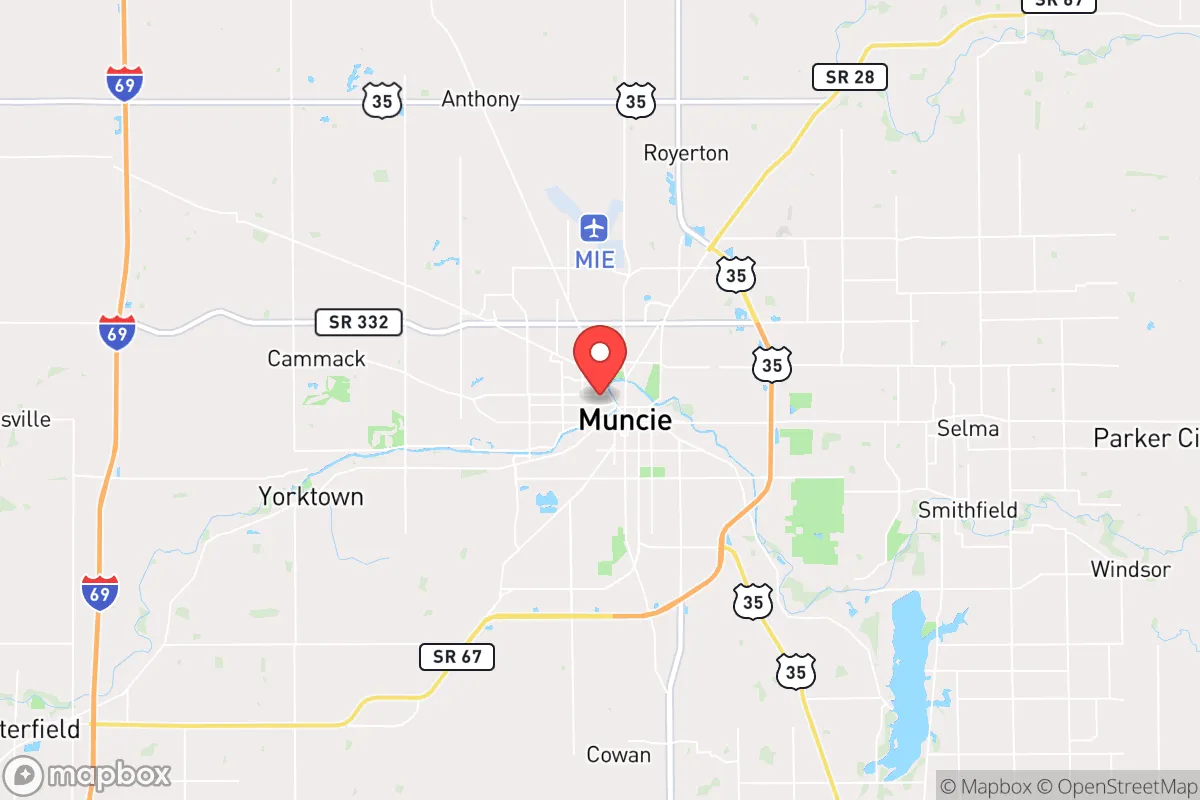
District shown is the primary district for this city’s centroid. Cities may span multiple districts.
Local Political AnalysisPolitical Analysis of Muncie, IN
Look, I’ve lived in Muncie my whole life, and I can tell you straight up: this area leans solidly conservative, but it’s not the kind of place you’d expect to see a Trump rally every weekend. The Cook PVI is R+8, which means the district votes about 8 points more Republican than the national average. That’s a real, measurable tilt to the right, but it’s not a lock—Delaware County has a history of splitting tickets, especially in local races. The real story is how the political winds have shifted here over the past decade. We used to be a union town, with Ball State and the old GM plant keeping things moderate. Now, with the factory long gone and the university’s influence growing, you’re seeing a slow but steady creep of progressive ideas into local government—things like zoning changes that favor developers over homeowners, and a school board that’s more interested in DEI training than reading scores. It’s not a revolution, but it’s a change that has a lot of us watching closely.
How it compares
Drive 20 minutes south to Anderson, and you’ll feel the difference—that town is even more conservative, with a Cook PVI of R+12 and a grittier, blue-collar vibe. Head north to the college town of Bloomington, and you’re in a completely different world: that’s D+8, a progressive stronghold where the city council has passed things like rent control and sanctuary city policies. Muncie sits right in the middle, politically and geographically. We’re not as red as the rural counties to the east, like Randolph or Jay, where you can’t swing a dead cat without hitting a Trump sign. But we’re also not as blue as the suburbs of Indianapolis, which are getting more purple every year. What sets Muncie apart is the tension between the old guard—folks who remember when the downtown was bustling and the factories were humming—and the new arrivals, mostly younger faculty and students from Ball State, who want to turn the city into a mini-Ann Arbor. That clash is real, and it’s playing out in every city council meeting and school board election.
What this means for residents
For those of us who value personal freedom and limited government, the trend is concerning. The city council has been flirting with things like mandatory paid sick leave for small businesses and a “welcoming city” ordinance that could tie the hands of local law enforcement. These are the kinds of policies that sound good on paper but end up as government overreach into your daily life. Property taxes have crept up, too, partly to fund new bike lanes and a splash pad downtown—nice amenities, sure, but not exactly priorities when you’re trying to keep your own budget balanced. The school board has also shifted left, with a focus on social-emotional learning and equity audits that feel more like indoctrination than education. If you’re a parent who wants your kid to learn math and history without a side of activism, you’re starting to look at private schools or homeschooling options. The silver lining is that the county commissioners are still mostly conservative, so there’s a check on the city’s ambitions. But you have to stay engaged—voting in every primary and showing up to those Tuesday night meetings—or you’ll wake up one day and wonder how Muncie became a place you don’t recognize.
Culturally, Muncie still has that small-town, Midwestern feel where neighbors know each other and the Fourth of July parade is a big deal. But the policy distinctions are sharpening. For example, the city has a “fair housing” ordinance that goes beyond state law, adding layers of bureaucracy for landlords and tenants alike. And while the county is still a Second Amendment-friendly area, you can feel the pressure from the university crowd to push for “common-sense” gun laws. The long-term trajectory depends on who shows up to vote. If the conservative base stays home, Muncie will drift further left. If we stay active, we can keep it the kind of place where you’re free to live your life without a government official telling you how to do it. It’s not a lost cause yet, but the clock is ticking.

State Political ClimatePolitical Climate in Indiana
State Political AnalysisPolitical Environment in the State
Indiana has been a reliably Republican state for decades, but the nature of that conservatism has shifted significantly. The state hasn't voted for a Democratic presidential candidate since 2008, when Barack Obama narrowly won it, and since then the GOP margin has widened to double digits. However, the coalition holding that majority has changed: the old-school, union-friendly, culturally conservative Democrats who once dominated places like Lake County and the industrial towns of the north have largely faded, replaced by a more uniformly Republican electorate driven by the fast-growing suburbs of Indianapolis and the solidly red rural counties. The 10-20 year arc shows a state that is becoming more polarized, with the Indianapolis metro area becoming a competitive battleground while the rest of the state hardens its Republican identity.
Urban vs. rural divide
The political map of Indiana is a study in contrasts. Marion County (Indianapolis) is the only reliably blue urban center, and even there, the margins are not as lopsided as in Chicago or Detroit. The city itself votes Democratic, but the surrounding suburban counties—Hamilton, Hendricks, Johnson, and Boone—are among the fastest-growing and most Republican in the state. Hamilton County (Carmel, Fishers, Noblesville) is a powerhouse of affluent, educated conservatives, though it has shown slight shifts toward the center in recent local elections. Meanwhile, the Fort Wayne (Allen County) and Evansville (Vanderburgh County) areas lean Republican but have competitive pockets. The real engine of the GOP majority is the vast rural expanse: counties like Kosciusko (Warsaw), Dubois (Jasper), and Elkhart vote 70-80% Republican. The Lake County (Gary) and St. Joseph County (South Bend) areas in the northwest remain Democratic strongholds, but their influence is waning as population shifts south and east. The divide isn't just urban vs. rural—it's also a cultural and economic split between the declining industrial north and the growing, more suburban and exurban central and southern regions.
Policy environment
Indiana's policy environment is broadly conservative, but with some notable wrinkles. Taxes are a major selling point: the state has a flat income tax rate of 3.15% (down from 3.23% in 2024, with a scheduled phase-down to 2.9% by 2027), and property taxes are capped at 1% of assessed value for owner-occupied homes. There is no inheritance tax. Regulation is light, especially for businesses, and Indiana is a right-to-work state (though that law was repealed in 2025, a significant shift). Education is a mixed bag: the state has a robust school choice program, including vouchers and charter schools, but the public school system in many rural areas is struggling with declining enrollment and funding. Healthcare is a point of concern—Indiana expanded Medicaid under the HIP 2.0 program, but the state has not embraced broader reforms, and rural hospital closures are a real issue. Election laws are strict: voter ID is required, early voting is limited, and there are no same-day registration provisions. The state has also passed laws restricting ballot drop boxes and limiting absentee voting, which conservatives see as protecting election integrity but critics argue suppress turnout.
Trajectory & freedom
On the freedom front, Indiana has been a mixed bag in recent years. Gun rights are strong: the state passed constitutional carry in 2022, meaning no permit is needed to carry a handgun. Parental rights have been a major focus, with the 2023 law requiring schools to notify parents of any changes to a student's health or well-being, effectively banning transgender athletes from girls' sports, and prohibiting instruction on human sexuality in K-3. Medical autonomy took a hit with the near-total abortion ban passed in 2022 (with exceptions for rape, incest, and life of the mother), which went into effect in 2023 after court challenges. Property rights are generally respected, though there have been controversies over eminent domain for infrastructure projects. Taxation is trending in the right direction with the income tax cuts, but the state's gas tax and vehicle registration fees are relatively high. The biggest red flag for freedom-minded residents is the 2025 repeal of right-to-work, which was a major blow to the state's reputation as a pro-business, pro-worker-choice state. That law, pushed through by a coalition of Democrats and a handful of moderate Republicans, signals that the state's trajectory is not uniformly toward more liberty.
Civil unrest & political movements
Indiana has seen its share of political flashpoints, but they tend to be localized and not as intense as in coastal states. Protest history includes the 2020 George Floyd demonstrations in Indianapolis, which saw some property damage but were largely peaceful compared to other cities. The abortion ban sparked protests at the Statehouse in 2022 and 2023, with activists on both sides turning out in force. Immigration politics are less visible here than in border states, but there is a growing concern about illegal immigration in agricultural and industrial areas, particularly in Elkhart County (home to a large Amish and Mennonite population) and Marion County. There is no sanctuary city policy in Indiana—state law actually prohibits such designations. Election integrity controversies have been relatively muted compared to states like Georgia or Arizona, but there was a notable controversy in 2022 when the Secretary of State's office flagged thousands of potentially non-citizen voters on the rolls. Secession or nullification rhetoric is not a major force here, though there is a small but vocal "Indiana First" movement that advocates for greater state sovereignty. The most visible political movement in recent years has been the parents' rights movement, which has been highly effective in school board elections and legislative battles, particularly in suburban counties like Hamilton and Hendricks.
Projection
Over the next 5-10 years, Indiana is likely to become more politically competitive at the state level, but not necessarily more liberal. The Indianapolis metro area will continue to grow and diversify, making statewide races closer—the 2024 governor's race was decided by only 8 points, a sign of tightening margins. However, the rural and exurban areas are not going to flip; they are becoming more conservative as younger, more liberal residents move to the cities. The in-migration from Illinois and California is a wild card—many of these newcomers are conservatives fleeing high taxes and crime, which could actually bolster the GOP. But some are also moderate or liberal professionals who could shift the suburbs. The repeal of right-to-work is a warning sign that the state's pro-business consensus is fraying, and if Democrats can make inroads in the suburbs, they could become competitive again. For a conservative moving in now, expect the state to remain broadly red, but with more internal friction—the fight will be between establishment Republicans and more populist, freedom-oriented conservatives, not between Republicans and Democrats. The biggest threat to personal liberty is not a progressive takeover, but a slow creep of government overreach in the name of "public health" or "economic development."
Bottom line for a new resident: Indiana is a solidly conservative state with low taxes, strong gun rights, and a business-friendly environment, but it's not a libertarian paradise. The state government is active in education, healthcare, and local land use, and the repeal of right-to-work is a real concern for those who value worker freedom. If you're moving here, you'll find a welcoming culture for traditional values, but you'll need to stay engaged in local politics to keep it that way. The best places for a conservative family are the suburban counties around Indianapolis—Hamilton, Hendricks, and Boone—or the smaller cities like Warsaw and Jasper where community values are strong and government overreach is minimal. Avoid the northwest corner unless you're prepared for a more progressive environment.
* Values derived from national, state, county, city and local statistics and may differ in a specific area. Last updated: 2026-04-22T09:08:19.000Z
Narrative content on this page is AI-generated and may contain mistakes. Verify any details that matter before acting on them.
ReloMaps may earn a commission from affiliate links at no extra cost to you.

