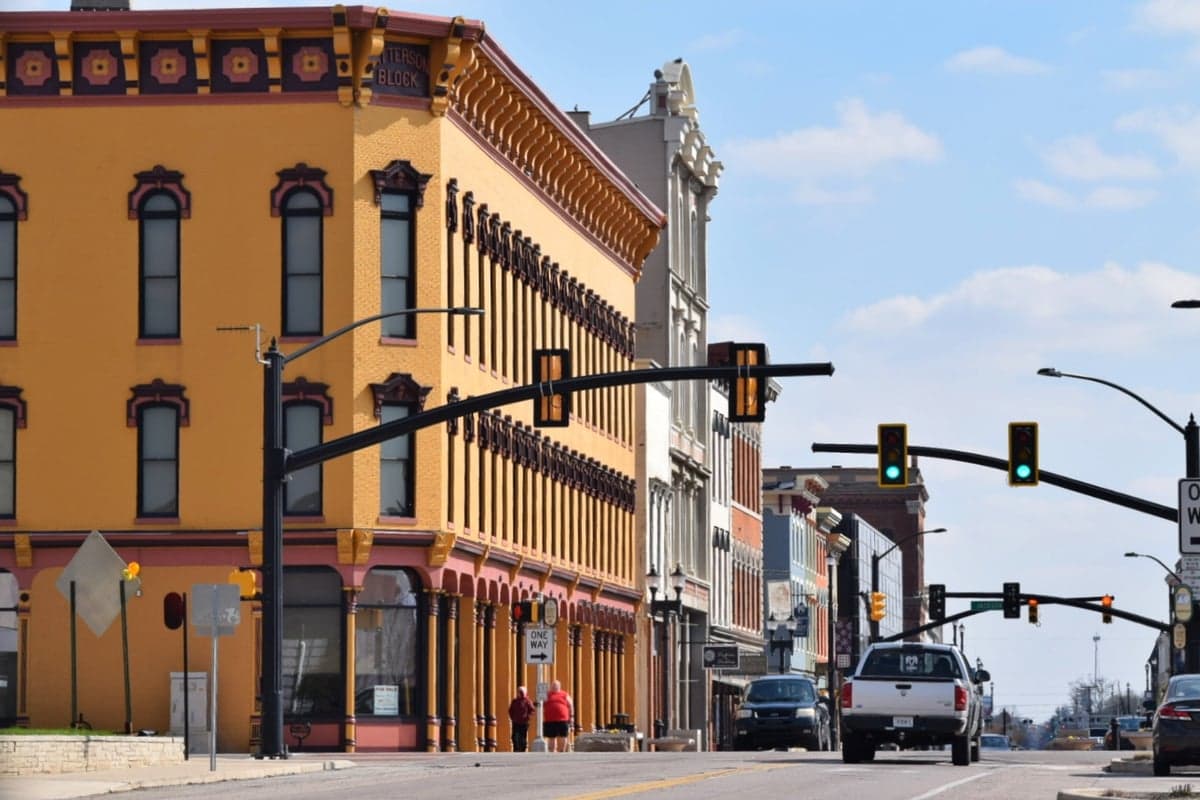
Photo: Wikipedia
Strategic Assessment of Muncie, IN
Meaningful friction. Expect exposure to either population pressure, blast zones, or natural disaster risk. Consider buying a retreat property.
What does the Strategic Assessment tell us?
Our Strategic Assessment grades tactical survivability of an area. Major population centers, military targets, fallout zones, natural disasters, and border exposure all drive risk — lower exposure means a more defensible position in a crisis.
This is heavily inspired by Joel Skousen's Strategic Relocation book. Highly recommended you checkout the book ($)What does this tell us?
Our Strategic Assessment grades tactical survivability of an area. Major population centers, military targets, fallout zones, natural disasters, and border exposure all drive risk — lower exposure means a more defensible position in a crisis.
This is heavily inspired by Joel Skousen's Strategic Relocation book. Highly recommended you checkout the book ($)Strategic Pillars

Key Distances
Regional Safe Places
Below is our recommended "safe zones" in Indiana and the surrounding area based on our strategic heuristics. For most people, it's unrealistic to live in a “safe zone” full-time due to work, family or other personal reasons. They tend to be more rural. However, many of these areas are perfect for second homes and retreat properties that double as a vacation home or even a short-term rental.

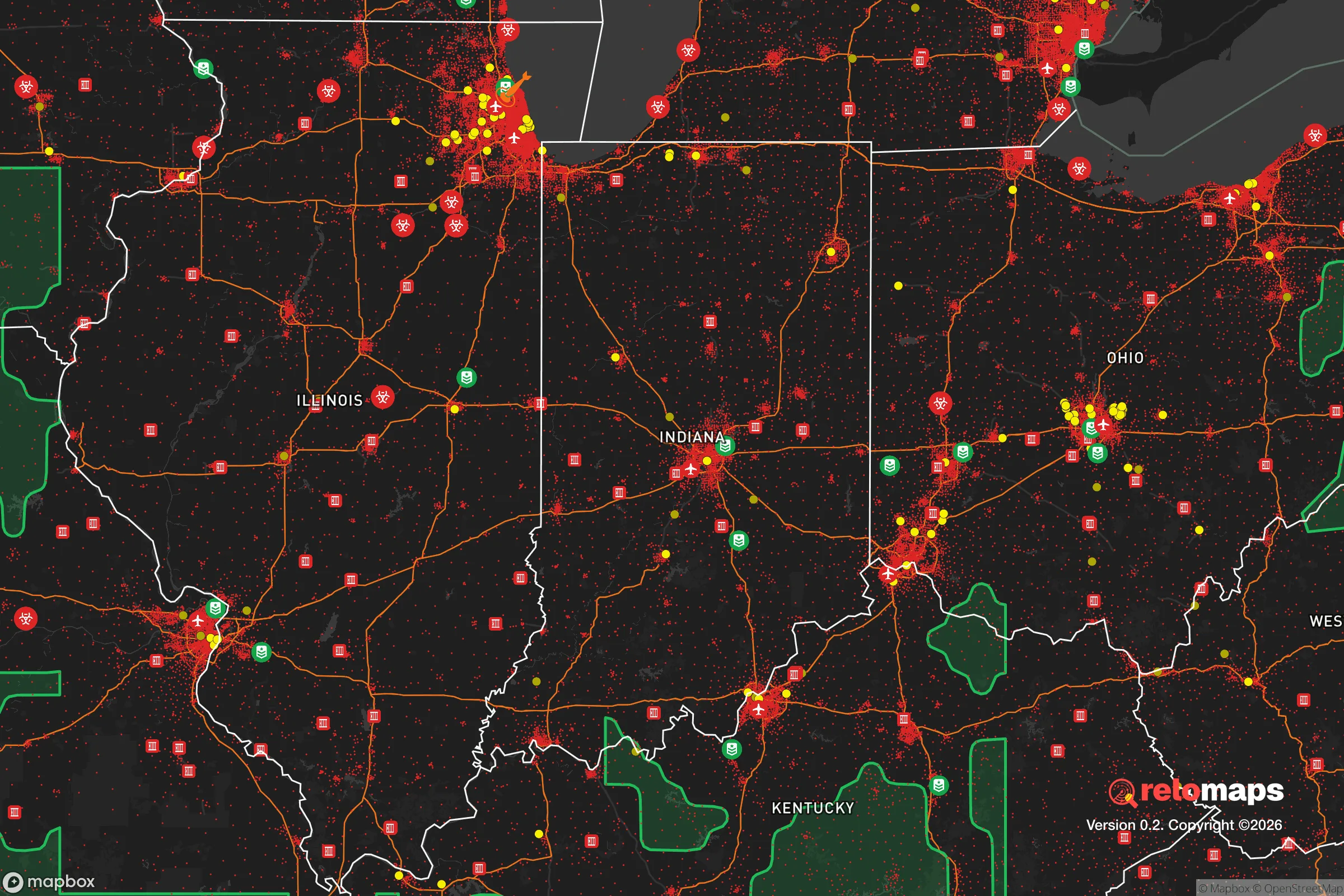


Important Note: For informational purposes only. This does not mean nothing bad ever happens in the green zones. Please use common sense. This is based on public data and modeled with AI. We tried to take a conservative approach but mistakes happen. We update this regularly as new information becomes available.
Solar Generator Recommendations
Backup power matters more here than in safer locations. We've picked three solar generators across budgets and capacity tiers — start with the budget unit if you only need a few essentials, or step up if you want to run a fridge and HVAC for days at a time.

Jackery Portable Power Station Explorer 300
Budget OptionPower on the Go: Weighing only 11 lbs, it's convenient to set up and store with book-sized foldable solar panels

BLUETTI Portable Power Station AC180
Designed for both indoor and outdoor scenarios, AC180 is highly capable as it has a robost capacity and continuous output power.

EF ECOFLOW DELTA Pro Ultra Power Station
Upgraded PickEcoFlow DELTA Pro Ultra is a whole-home energy system designed to grow with your family. Integrated with the Smart Home Panel 2, it scales to meet your evolving energy needs — keeping your home powered, intelligent, and secure through every stage of life.
We earn a commission, at no additional cost to you.
Strategic Assessment Analysis
Muncie, Indiana, presents a mixed bag for the strategic relocator. Its central location in the Midwest offers a degree of insulation from coastal chaos, but its proximity to major industrial and logistical corridors introduces real vulnerabilities. For a conservative-leaning individual or family focused on preparedness, Muncie is not a hardened redoubt, but it could serve as a viable base of operations if you understand its specific risk profile and plan accordingly.
Geographic position and natural advantages for a retreat
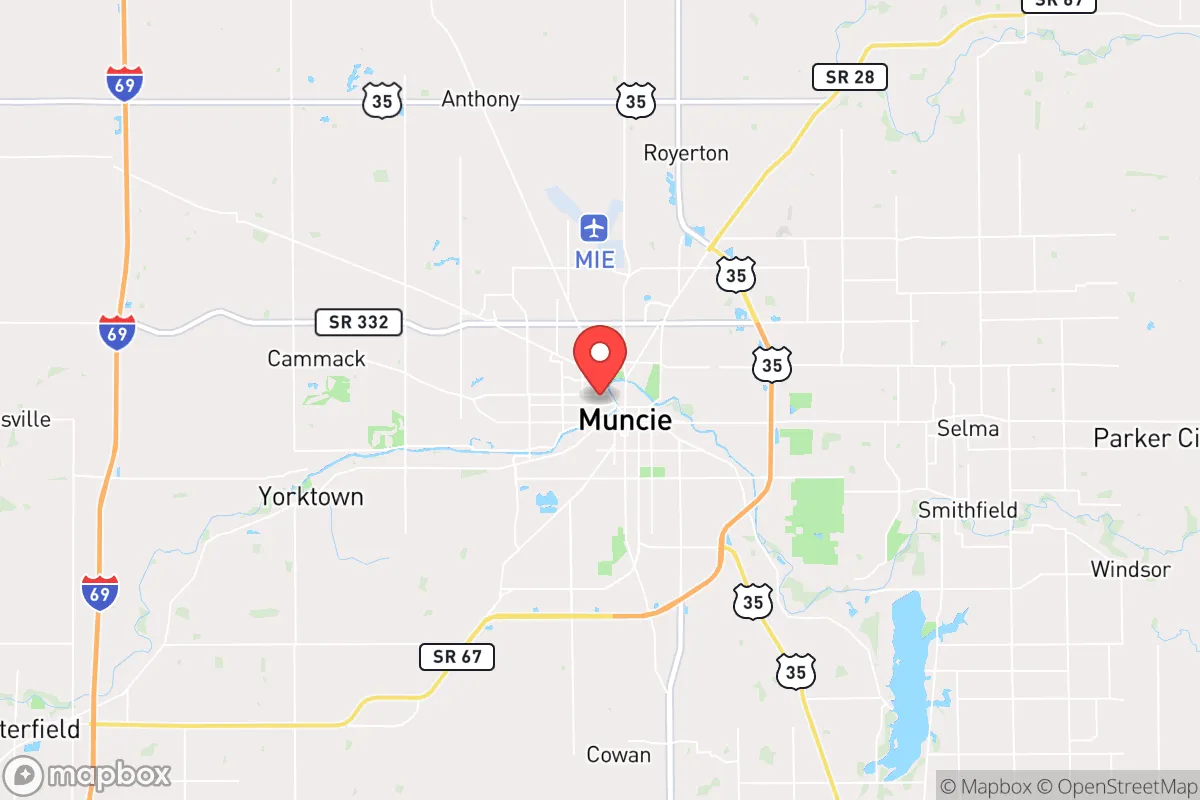
Muncie sits in east-central Indiana, roughly 50 miles northeast of Indianapolis and about 90 miles southwest of Fort Wayne. This places it within a two-hour drive of several major cities, which is both a blessing and a curse. The area is part of the till plains, meaning the terrain is mostly flat to gently rolling, with the White River running through the city. The soil is rich and well-suited for small-scale agriculture, a significant plus for anyone planning to grow food. The region receives about 40 inches of rain annually, with reliable growing seasons from April to October. Groundwater is generally accessible via shallow wells in many rural areas surrounding the city, though you'll want to test for agricultural runoff. The lack of major mountain ranges or coastlines means you're not exposed to earthquakes, hurricanes, or tsunamis. Winter storms are the primary natural hazard, with occasional ice storms that can knock out power for days. The area's flatness also means limited natural defensibility—there are no hills, forests, or chokepoints to slow down a determined group. You'd need to rely on distance from major targets and community cohesion rather than terrain.
Risks, exposures, and proximity to fallout-relevant landmarks
The biggest strategic concern with Muncie is its proximity to high-value targets. Indianapolis is a major logistics hub with I-65, I-70, and I-69 intersecting, plus a large FedEx hub at the airport. In a major conflict or economic collapse, that corridor becomes a funnel for refugees, military movements, or supply chain disruptions. Muncie itself is home to Ball State University, a large employer with about 20,000 students and staff. In a crisis, a university town can become a focal point for unrest, especially if the institution shuts down and thousands of young adults are suddenly displaced. The city also has a history of industrial decline—the closure of the BorgWarner plant and other factories left a legacy of economic fragility. The nearby Muncie-Delaware County Airport is small but could be a target for aerial resupply or evacuation. More critically, the area is within 100 miles of the Newport Chemical Depot in western Indiana, which historically stored nerve agents and other munitions. While the depot is largely decommissioned, the risk of residual contamination or targeted attack on remaining infrastructure is non-zero. The White River flows through the city, and upstream industrial sites in Anderson and Marion could release toxic chemicals into the water supply during a disaster. For a prepper, the key takeaway is that Muncie is not a remote sanctuary—it's a secondary target zone that could see spillover effects from larger events.
Practical resilience for a relocator: food, water, energy, and defensibility
For someone moving to Muncie with a preparedness mindset, the practicalities of daily life need careful evaluation. The local water supply comes from the White River and is treated by the Muncie Water Works. In a grid-down scenario, this system is vulnerable to contamination or pressure loss. A well on rural property outside city limits is a must for long-term resilience. The electrical grid is served by Indiana Michigan Power, with some natural gas backup. The region has seen increasing interest in solar, but net metering policies are less favorable than in states like Ohio or Michigan. A backup generator with a 200-gallon propane tank is a reasonable investment. Food production is feasible: the growing season is long enough for corn, beans, squash, and root vegetables. Local farmers' markets are active, and there are several u-pick orchards within 30 minutes. For meat, deer hunting is popular in surrounding counties, and small-scale poultry or rabbit raising is common. The biggest challenge is defensibility. Muncie's layout is a typical Midwestern grid, with few natural barriers. The city's population is about 65,000, with a declining trend since the 1970s. That means there are many vacant lots and abandoned homes, which can be either a security risk or an opportunity for expansion, depending on your approach. In a collapse scenario, the city's police force would be stretched thin, and the Delaware County Sheriff's Office would likely focus on rural areas. A neighborhood watch or mutual-aid group would be essential. The local gun culture is present but not as strong as in rural Indiana—there are a few gun shops and ranges, but you'll need to drive 30-45 minutes for serious training facilities. Ammo availability is generally good, but you should stock up before any crisis.
Overall, Muncie offers a middle-ground strategic picture. It's not a hardened survivalist retreat like the mountains of West Virginia or the remote plains of the Dakotas. But for someone who wants to stay within a few hours of family in the Midwest, or who needs access to medical care and supply chains while maintaining a low profile, it can work. The key is to buy property outside the city limits—ideally in a small township like Daleville or Yorktown—and build a self-sufficient homestead with a well, solar panels, and a garden. Avoid living near the university or the industrial corridors along I-69. The area's economic struggles mean real estate is affordable, with median home prices around $120,000 as of 2025, but that also means fewer high-paying jobs and a less dynamic local economy. If you can work remotely or have a portable skill, Muncie can be a cost-effective base. Just don't expect it to be a fortress. It's a place to hunker down and wait out the storm, not to make a last stand.

* Values derived from national, state, county, city and local statistics and may differ in a specific area. Last updated: 2026-04-22T09:08:19.000Z
Narrative content on this page is AI-generated and may contain mistakes. Verify any details that matter before acting on them.
ReloMaps may earn a commission from affiliate links at no extra cost to you.

