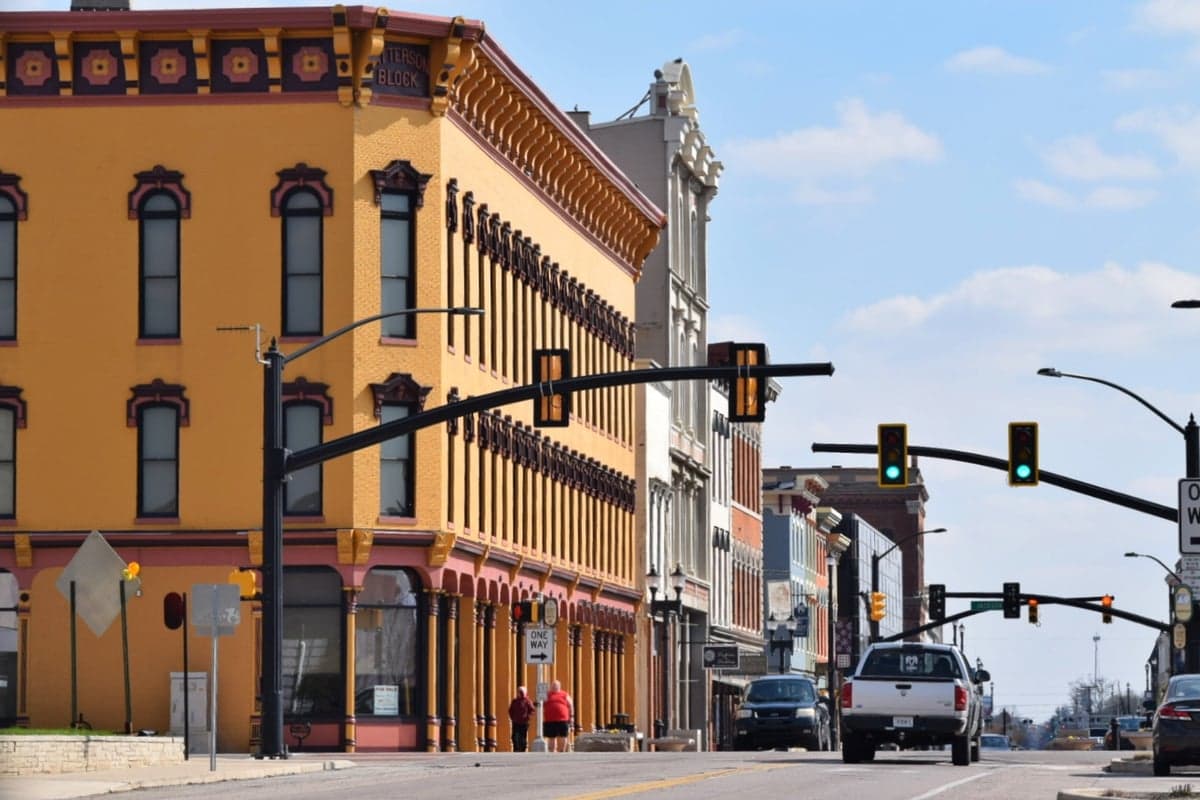
Photo: Wikipedia
Quality of Life in Muncie, IN
Above-average quality of iife. The area offers a reasonable cost of living, decent mobility, and a mix of neighborhood amenities.
What does Quality of Life tell us?
Quality of Life blends cost of living, nearby amenities, socioeconomic signals, and neighborhood character. City-level scores represent the whole municipality; individual neighborhoods can differ.
What does this tell us?
Quality of Life blends cost of living, nearby amenities, socioeconomic signals, and neighborhood character. City-level scores represent the whole municipality; individual neighborhoods can differ.
Cost of Living
42% below national average
The Real Cost of Living in Muncie, IN for 2026
| Tier | Individual | Family (4) |
|---|---|---|
| Survival | $14k | $26k |
| Comfortable | $23k | $33k |
| Luxury | $78k+ | $120k+ |
| Elite (Top 5%) | $91k+ | $141k+ |
131%
The Area Signal
A metric tracking the socioeconomic signals of the area.
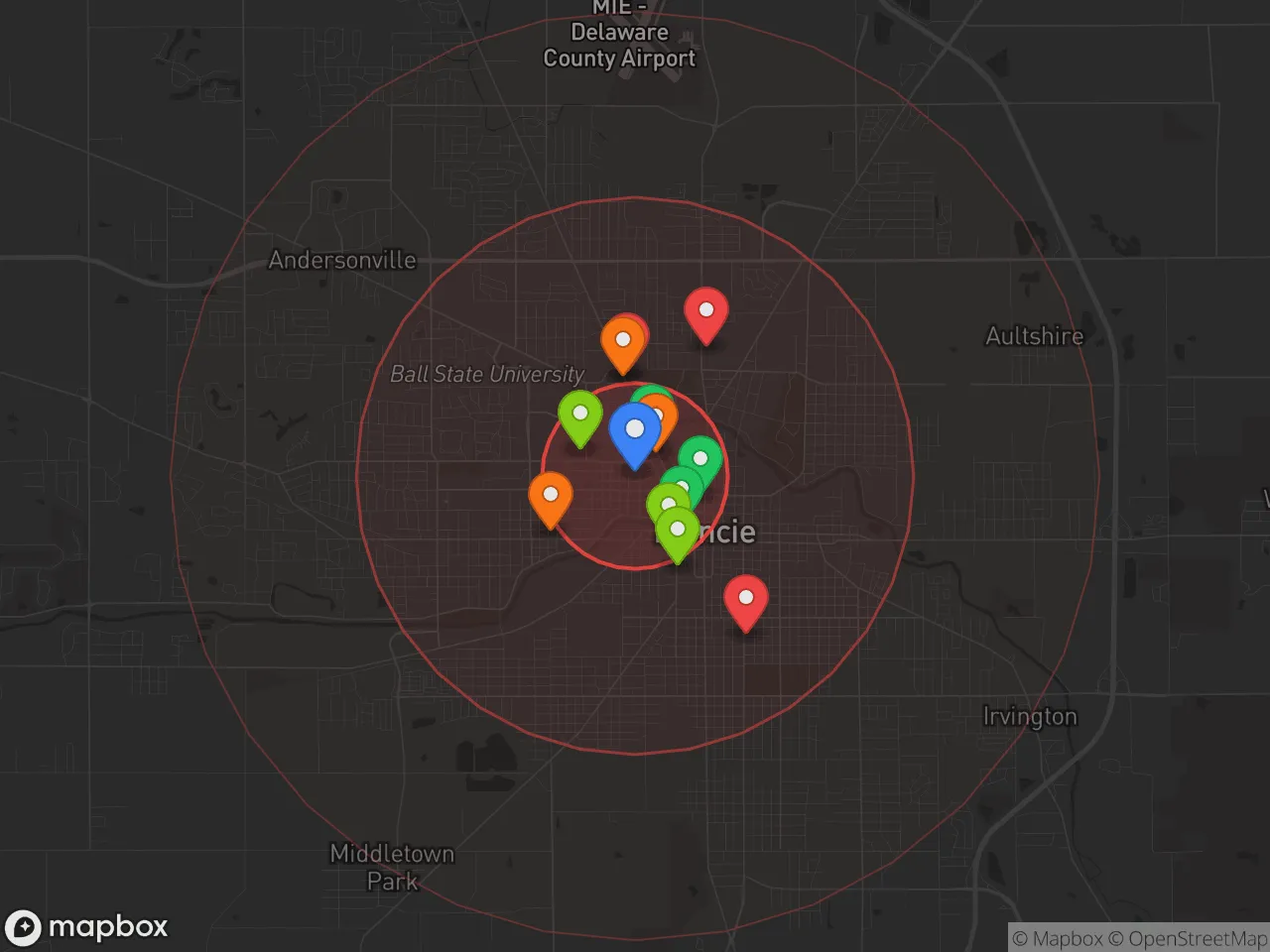
Hobbies
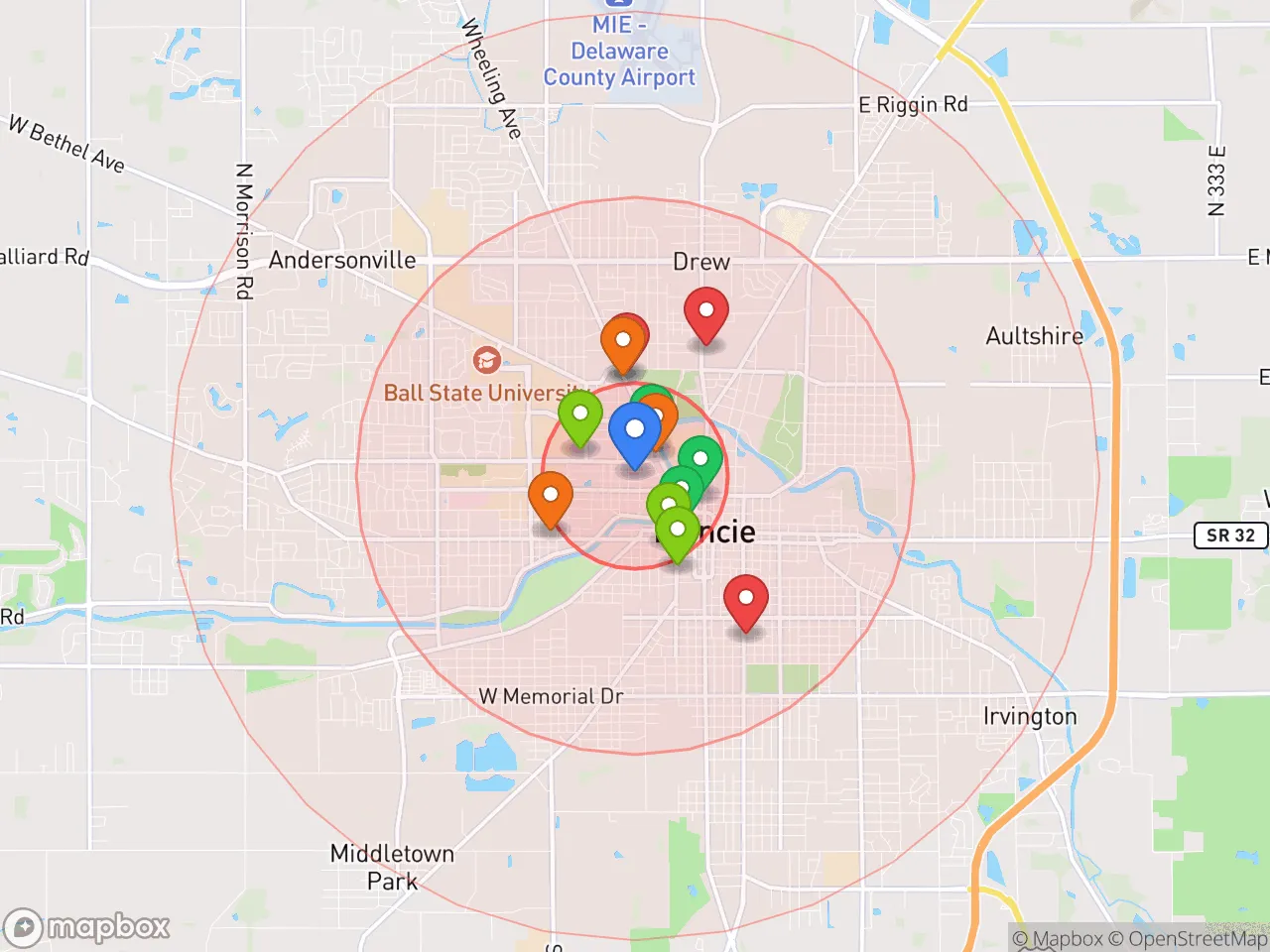
Explore the areaGroceries
5 within 10 miles
Gas
20 within 10 miles
Hospital
5 within 20 miles
Airport
Indianapolis International Airport
Post Office
USPS — Muncie, IN
Critical Amenities
Quality-of-Life Analysis
Muncie, Indiana, offers a quality of life defined by exceptional affordability and a slower, community-focused pace, attracting a mix of college students, working-class families, and retirees seeking low costs. With a cost of living index of 58—42% below the national average—the city provides a financial cushion that is rare in most of the United States. The population skews younger due to Ball State University’s presence, but the broader Delaware County area also includes a significant number of long-term residents and professionals in education, healthcare, and manufacturing.
How housing costs and everyday expenses compare to nearby cities
Muncie’s housing market is among the most affordable in the Midwest, with a median home value of just $92,000 and a median rent of $867 per month. This places homeownership within reach for households earning well below the national median income, and renters can often find two-bedroom apartments for under $900. Compared to nearby cities like Indianapolis (where the median home value exceeds $200,000) or Fishers (over $350,000), Muncie offers a dramatic cost advantage. The average commute of roughly 19 minutes is significantly shorter than the national average of 26 minutes, reducing transportation costs and freeing up time for family or leisure. Utility costs and grocery prices also track below state averages, making the overall monthly budget notably lighter than in larger Indiana metros.
What daily life is like for families, students, and professionals
Daily life in Muncie revolves around Ball State University, which anchors the local economy and cultural calendar with events, sports, and arts programming. The Muncie Community Schools system, which operates under a unique partnership with Ball State, has seen improved graduation rates and offers specialized programs like the Indiana Academy for science and math. For recreation, residents frequent the 40-mile Cardinal Greenway trail system, the Minnetrista cultural center and gardens, and the Muncie Civic Theatre. Dining and shopping are concentrated along McGalliard Road and in the downtown Village area, though options are more limited than in Indianapolis. The city’s rhythm is notably unhurried—weekends often involve farmers markets, high school sports, or quiet evenings on porches—and traffic congestion is virtually nonexistent. Healthcare access is solid, with IU Health Ball Memorial Hospital providing a full range of services, though specialist care may require a 50-minute drive to Indianapolis.
Muncie is best suited for those who prioritize financial breathing room over urban excitement. Retirees on fixed incomes, first-time homebuyers, and Ball State students or faculty will find the low cost of living and short commutes especially appealing. Families seeking a safe, affordable environment with decent schools and outdoor access will also thrive here, though those craving vibrant nightlife, high-end shopping, or diverse career opportunities outside education and healthcare may feel limited. The city’s economic challenges—including a poverty rate above the national average—mean that while life is cheap, upward mobility can be slower than in faster-growing regions. For the right person, however, Muncie offers a stable, low-stress foundation for building a life.

Crime in Muncie, IN
Crime rates similar to the national median for U.S. locations.
Violent CrimeViolent Crime Analysis
Property CrimeProperty Crime Analysis
Crime Analysis
Muncie, Indiana, reports a violent crime rate of 475.7 incidents per 100,000 residents and a property crime rate of 1,462.3 per 100,000, placing it well above national averages for a city of its size. While not the most dangerous city in the state, these figures indicate a community where safety is a genuine concern, particularly when considering the local justice system's ideological leanings. The combination of elevated crime statistics and a progressive judicial philosophy that often prioritizes offender rehabilitation over public protection creates a risk profile that potential residents should weigh carefully.
Crime in context
Muncie’s violent crime rate is roughly 30% higher than the national average and significantly exceeds the Indiana state average of approximately 350 per 100,000. Property crime, while lower than some larger Midwestern metros, still outpaces the national benchmark by about 15%. These numbers place Muncie in a challenging position: it is not a high-crime outlier like Gary or East Chicago, but it consistently underperforms compared to similarly sized Indiana cities such as Columbus or Kokomo. The presence of a large university (Ball State) and a shrinking industrial base has contributed to economic strain, which correlates with property offenses like theft and burglary.
What residents experience
Daily life in Muncie involves navigating a city where property crime is the most common threat—vehicle break-ins, package thefts, and residential burglaries are frequently reported in neighborhood social media groups. Violent crime, though less frequent, is concentrated in specific areas and often tied to drug activity or domestic disputes. A critical factor amplifying these risks is the local judicial environment. Delaware County has seen a shift toward progressive prosecution and sentencing policies, with judges and district attorneys who emphasize diversion programs, reduced cash bail, and shorter sentences for non-violent offenders. While intended to reduce incarceration, this approach has a documented downside: repeat offenders cycle back onto the streets more quickly, undermining deterrence and leaving victims with a sense that the system prioritizes criminal rehabilitation over public safety. Residents report frustration with slow police response times in non-emergency situations and a perception that property crimes are rarely prosecuted to the fullest extent.
Neighborhood-level variation is stark. The areas immediately surrounding Ball State University (the Old West End and Anthony Addition) see higher rates of theft and vandalism, while the Southside and parts of the Northwest side experience more violent incidents. Suburban fringe neighborhoods like those near Yorktown or Daleville offer significantly lower crime rates, often dropping to half the city’s averages. For those considering a move, the safest choice is to live outside Muncie’s city limits while still commuting in for work or school, as the progressive justice policies that weaken deterrence have less impact in surrounding townships.
* Values derived from national, state, county, city and local statistics and may differ in a specific area. Last updated: 2026-04-22T09:08:19.000Z
Narrative content on this page is AI-generated and may contain mistakes. Verify any details that matter before acting on them.
ReloMaps may earn a commission from affiliate links at no extra cost to you.

