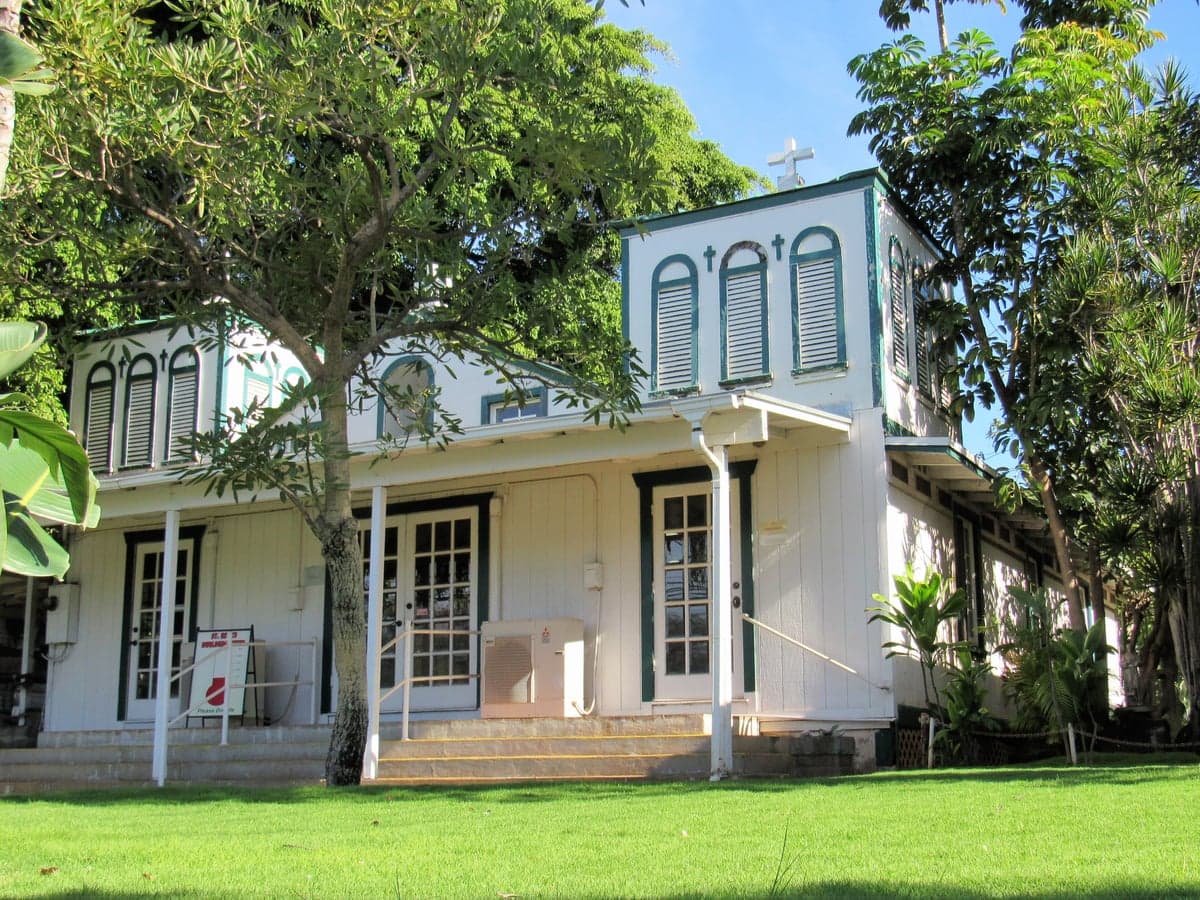
Photo: Wikipedia
Strategic Assessment of Nanakuli, HI
Workable tactical position. Some exposure to population density or targets, but generally defensible in a crisis.
What does the Strategic Assessment tell us?
Our Strategic Assessment grades tactical survivability of an area. Major population centers, military targets, fallout zones, natural disasters, and border exposure all drive risk — lower exposure means a more defensible position in a crisis.
This is heavily inspired by Joel Skousen's Strategic Relocation book. Highly recommended you checkout the book ($)What does this tell us?
Our Strategic Assessment grades tactical survivability of an area. Major population centers, military targets, fallout zones, natural disasters, and border exposure all drive risk — lower exposure means a more defensible position in a crisis.
This is heavily inspired by Joel Skousen's Strategic Relocation book. Highly recommended you checkout the book ($)Strategic Pillars

Key Distances
Regional Safe Places
Below is our recommended "safe zones" in Hawaii and the surrounding area based on our strategic heuristics. For most people, it's unrealistic to live in a “safe zone” full-time due to work, family or other personal reasons. They tend to be more rural. However, many of these areas are perfect for second homes and retreat properties that double as a vacation home or even a short-term rental.

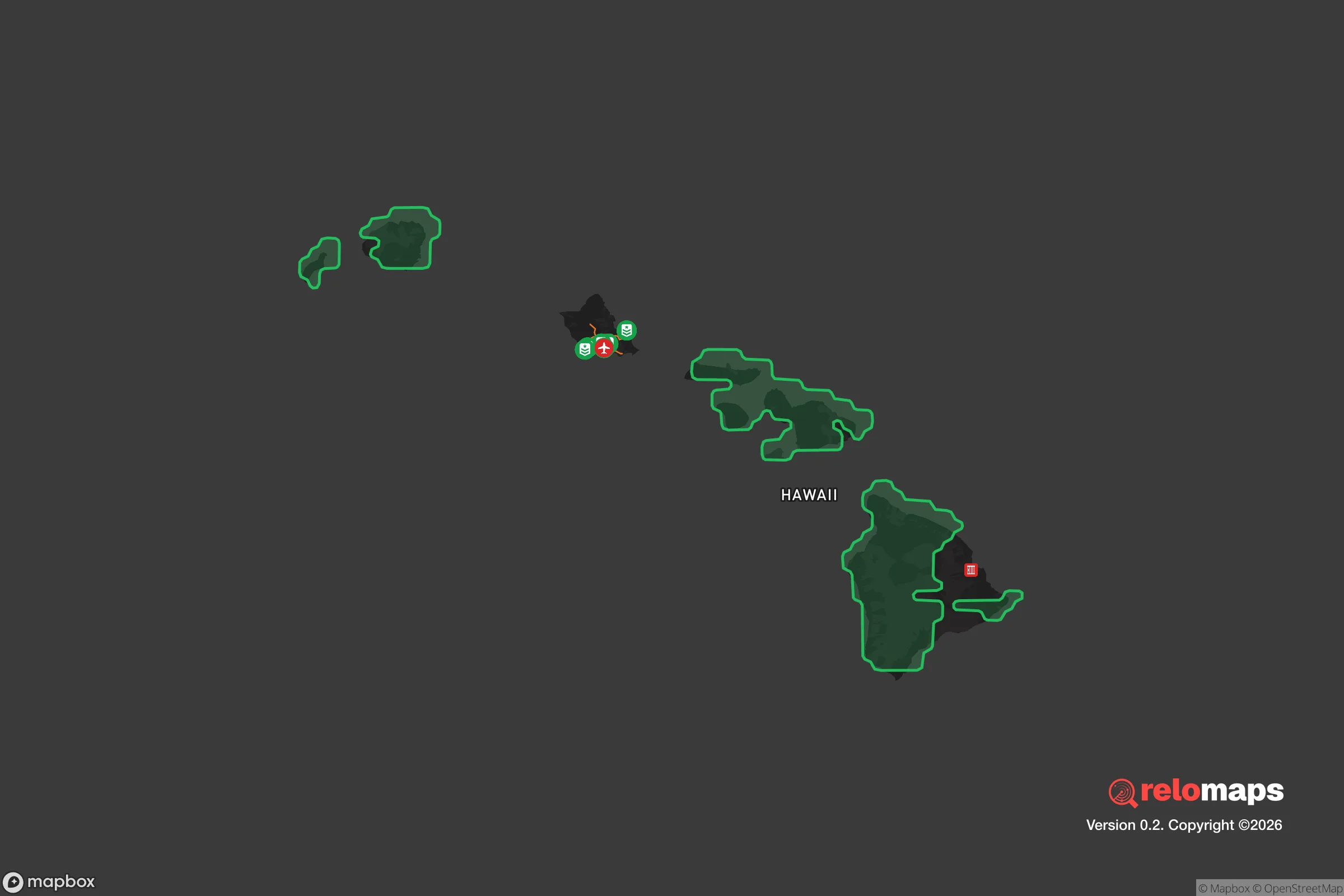


Important Note: For informational purposes only. This does not mean nothing bad ever happens in the green zones. Please use common sense. This is based on public data and modeled with AI. We tried to take a conservative approach but mistakes happen. We update this regularly as new information becomes available.
Solar Generator Recommendations
Backup power matters more here than in safer locations. We've picked three solar generators across budgets and capacity tiers — start with the budget unit if you only need a few essentials, or step up if you want to run a fridge and HVAC for days at a time.

Jackery Portable Power Station Explorer 300
Budget OptionPower on the Go: Weighing only 11 lbs, it's convenient to set up and store with book-sized foldable solar panels

BLUETTI Portable Power Station AC180
Designed for both indoor and outdoor scenarios, AC180 is highly capable as it has a robost capacity and continuous output power.

EF ECOFLOW DELTA Pro Ultra Power Station
Upgraded PickEcoFlow DELTA Pro Ultra is a whole-home energy system designed to grow with your family. Integrated with the Smart Home Panel 2, it scales to meet your evolving energy needs — keeping your home powered, intelligent, and secure through every stage of life.
We earn a commission, at no additional cost to you.
Strategic Assessment Analysis
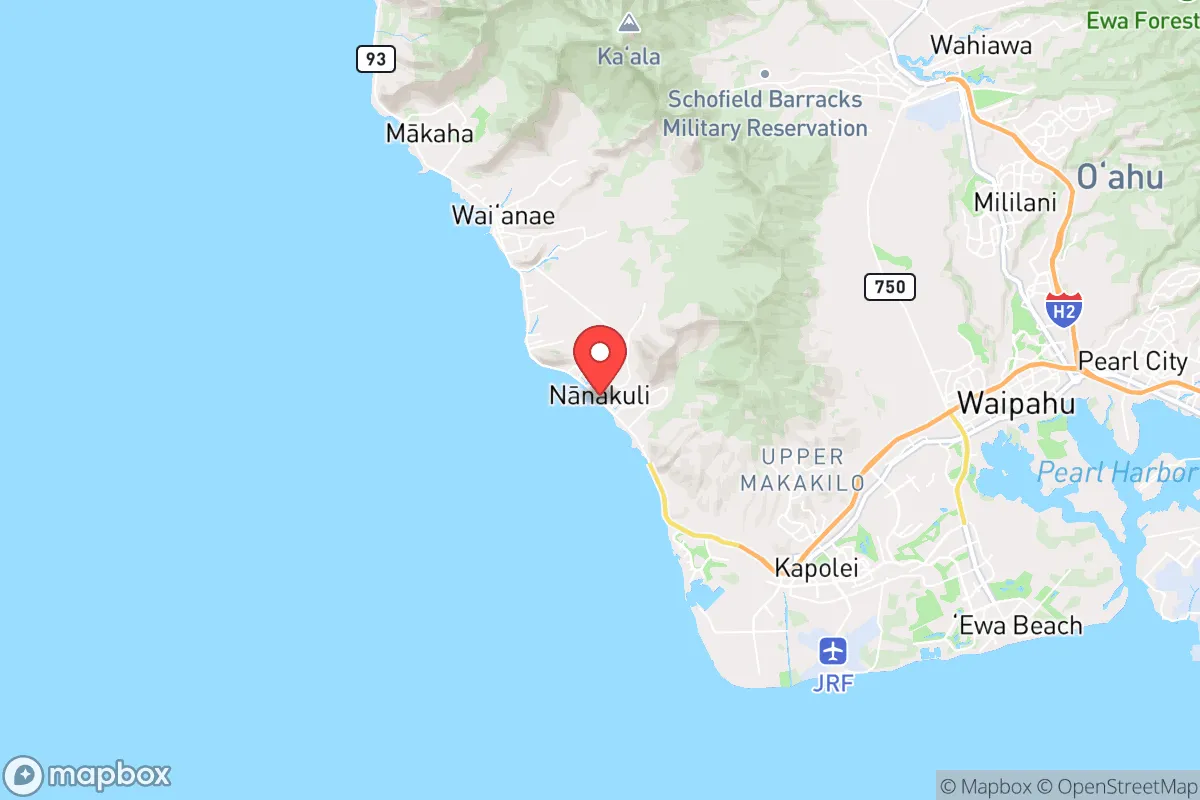
Nanakuli, on Oahu's leeward coast, offers a unique strategic position for those prioritizing resilience and self-sufficiency in an increasingly uncertain world. Its location roughly 25 miles from Honolulu provides a critical buffer from the dense urban core and its associated vulnerabilities—crowd-dependent infrastructure, civil unrest potential, and high-value target status—while still allowing access to essential resources. The community's semi-rural character, with a strong Native Hawaiian cultural foundation and a history of self-reliance, creates a baseline of social cohesion and practical know-how that is increasingly rare in modern America. For a relocator with a prepper mindset, Nanakuli represents a calculated trade-off: proximity to risk, but with natural and social advantages that can be leveraged for long-term survival.
Geographic position and natural defensive advantages on Oahu's leeward coast
Nanakuli sits on the southwest-facing shore of Oahu, shielded from the prevailing trade winds by the Waianae Mountain Range. This geography provides a natural defensive barrier against the most common weather threats, including hurricanes that typically approach from the east or south. The area's elevation rises quickly from the coast, offering multiple defensible positions and escape routes into the Waianae Valley or up toward the Ka'ena Point area. The coastline itself is rugged and less developed than Waikiki or the North Shore, meaning fewer choke points and less tourist traffic that could become a liability during a mass evacuation event. The proximity to the ocean also provides a reliable source of protein and a potential maritime escape route, though this requires boat ownership and navigation skills. For a relocator, the key advantage is the ability to observe approaching threats from the mountains while maintaining a low profile in a community that values privacy and local knowledge.
Risks, exposures, and proximity to fallout-relevant landmarks
The most significant vulnerability for Nanakuli is its proximity to Pearl Harbor and Hickam Air Force Base, located roughly 20 miles to the southeast. These are high-priority military targets in any conflict scenario involving the United States, and a nuclear or conventional strike on those facilities would produce fallout patterns that could affect the leeward coast depending on wind direction. The prevailing trade winds blow from the northeast, which would carry fallout away from Nanakuli in most scenarios, but a shift in wind patterns during an attack could change that calculus. Additionally, the Waianae Coast is home to the Nanakuli Housing area and several public schools, which could become gathering points during a crisis, increasing exposure to disease and civil unrest. The area's reliance on a single major road—Farrington Highway—is a critical weakness; any blockage at the Waianae end or near the Kapolei junction would effectively trap residents. For a prepper, this means having a secondary evacuation plan via the mountains or the coast is non-negotiable.
Practical resilience for a relocator: food, water, energy, and defensibility
Nanakuli's practical resilience hinges on its access to natural resources and the community's existing infrastructure. The Waianae Mountain Range contains several perennial streams and springs, though many are on private or conservation land; securing legal access to a water source is a top priority. Rainwater catchment is feasible given the area's annual rainfall of roughly 20-30 inches, but storage capacity must be substantial to cover dry summer months. The ocean provides an abundant food source—fishing, crabbing, and limu (seaweed) harvesting are traditional practices still in use—but requires knowledge of local regulations and seasonal patterns. Solar energy is viable due to the high number of sunny days on the leeward coast, though battery storage is essential for nighttime and cloudy periods. Defensibility is mixed: the community is tight-knit, which can deter outsiders, but also means that unfamiliar faces are quickly noticed. A relocator should plan to integrate slowly, building relationships with neighbors before any crisis. The area's lack of large-scale agriculture means food security depends on personal gardening, hunting (feral pigs and goats in the mountains), and trade networks with farmers in central Oahu. For a single individual or family, the key is to establish a self-sufficient homestead with redundant systems for water, power, and food storage, while maintaining a low profile and a network of trusted local contacts.
The overall strategic picture for Nanakuli is one of calculated risk with significant upside for the prepared relocator. The area's distance from Honolulu's urban chaos and its natural defensive features provide a solid foundation for resilience, but the proximity to military targets and the single-road vulnerability demand serious contingency planning. The community's cultural emphasis on 'ohana (family) and kuleana (responsibility) aligns well with conservative values of self-reliance and mutual aid, making integration easier for those who approach with respect and humility. For a survivalist or prepper, Nanakuli is not a bug-out location—it is a live-in location that requires ongoing investment in skills, relationships, and infrastructure. The trade-offs are real, but for those willing to put in the work, it offers a rare combination of isolation, resource access, and community cohesion that is increasingly hard to find in the modern United States.

* Values derived from national, state, county, city and local statistics and may differ in a specific area. Last updated: 2026-05-01T11:40:00.000Z
Narrative content on this page is AI-generated and may contain mistakes. Verify any details that matter before acting on them.
ReloMaps may earn a commission from affiliate links at no extra cost to you.

