Photo: Wikipedia
Political ClimatePolitical Climate in Nanakuli, HI
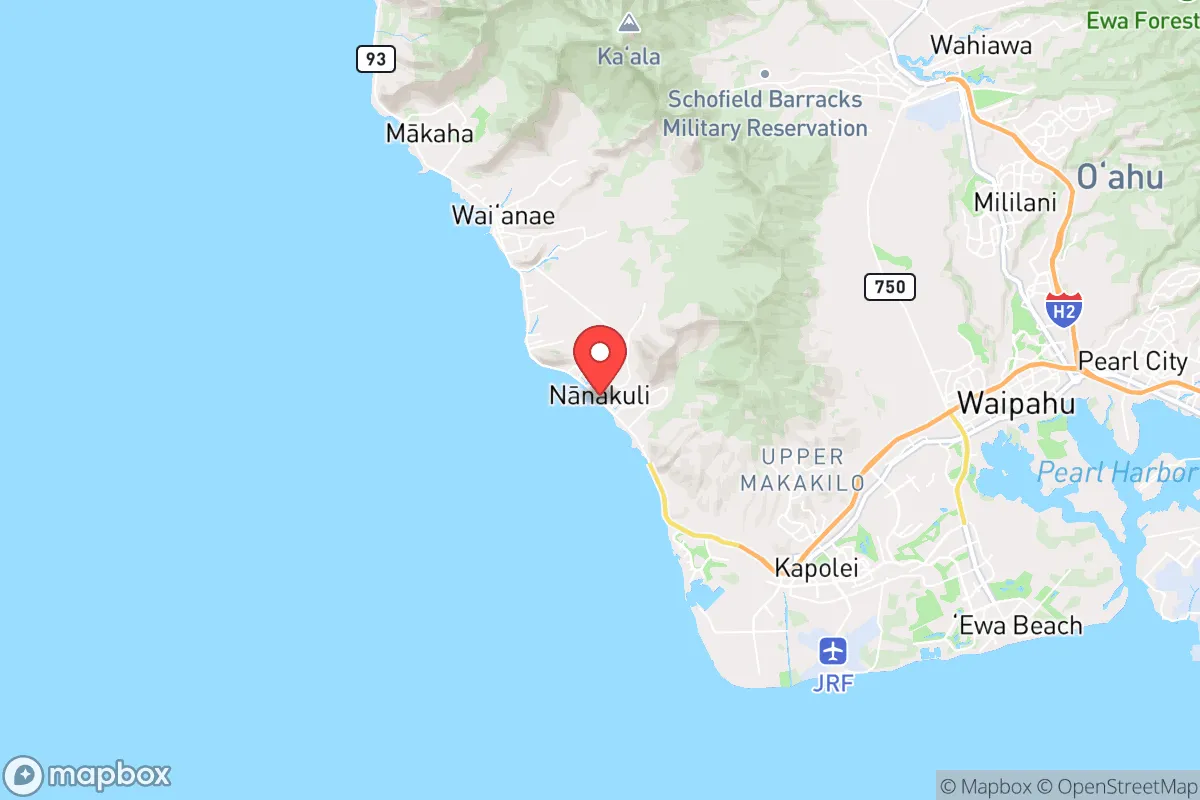
District shown is the primary district for this city’s centroid. Cities may span multiple districts.
Local Political AnalysisPolitical Analysis of Nanakuli, HI
Nanakuli leans heavily Democratic, with a Cook PVI of D+12, and that number has been creeping further left over the past decade. When I was a kid growing up here in the 90s, you’d still hear folks openly talking about property rights and keeping government out of your business. Now, it feels like every other conversation is about new county ordinances or state mandates that chip away at that old-school independence. The trajectory is clear: Nanakuli is moving deeper into progressive territory, and for those of us who value personal freedoms, that’s a real concern.
How it compares
Drive ten minutes up the coast to Mākaha, and you’ll find a slightly more mixed political vibe—still blue, but with a stronger libertarian streak among the surf and ranching crowd. Head inland to Mililani or Kapolei, and you’re in solidly Democratic suburbs where voting blue is just part of the culture. The real contrast is with the North Shore towns like Haleʻiwa or Lāʻie, where you get more conservative voices, especially around land use and local control. Nanakuli sits in the middle of this spectrum, but it’s tilting left faster than most. The D+12 PVI doesn’t capture how quickly the local school board and neighborhood board meetings have shifted toward progressive priorities—things like equity language in every resolution and new permitting rules that make it harder to build a simple ohana unit on your own land.
What this means for residents
For the average person living here, the political climate translates directly into daily hassles and lost freedoms. Property rights are getting squeezed—the county has tightened short-term rental rules and added red tape for home renovations, even for longtime families who just want to fix up their place. There’s also a growing push for higher minimum wages and paid leave mandates that sound good on paper but hit small local businesses hard, especially the family-run plate lunch spots and fishing charters that can’t absorb those costs. Taxes are creeping up too, with property assessments rising faster than incomes, and the county council keeps floating new fees for things like stormwater and trash collection. If you value the ability to live your life without a permit for every little thing, Nanakuli is becoming a tougher place to call home.
One cultural distinction that stands out is how the local Hawaiian homestead community—which has deep roots here—often finds itself at odds with the progressive agenda. Many homestead families want to maintain traditional land-use practices, like fishing rights and gathering, but they also push back against outside regulations that feel like government overreach. There’s a quiet but real tension between the old-school “leave us alone” attitude and the newer wave of activism that wants more government involvement in everything from housing to food systems. If you’re considering moving here, understand that the political climate is shifting fast, and the days of Nanakuli being a laid-back, hands-off community are fading. The next few years will likely bring more mandates, more fees, and less room for personal choice.

State Political ClimatePolitical Climate in Hawaii
State Political AnalysisPolitical Environment in the State
Hawaii has been a one-party Democratic stronghold for decades, with the state consistently voting for Democratic presidential candidates by margins of 20 to 30 points or more since the 1990s. The dominant coalition is a mix of unionized government workers, Native Hawaiian advocacy groups, and progressive activists in Honolulu, while the rural neighbor islands and parts of Oahu’s windward side lean more conservative. Over the last 10-20 years, the state has shifted further left on social issues, but a growing libertarian streak and frustration with high taxes and housing costs have created small but vocal pockets of resistance, particularly in places like Kailua-Kona on the Big Island and Kahului on Maui.
Urban vs. rural divide
The political map of Hawaii is dominated by Honolulu on Oahu, which accounts for nearly 70% of the state’s population and drives the state’s deep blue lean. The city’s core and its suburbs like Waikiki and Pearl City are reliably Democratic, powered by union households and government employees. In contrast, the rural neighbor islands tell a different story. Hilo on the Big Island is a progressive stronghold, but the rest of the island—especially Kailua-Kona and Waimea—has a noticeable conservative minority, often tied to ranching, fishing, and small business owners. Maui’s Kihei and Lahaina are liberal, but Upcountry Maui (around Kula) has a libertarian-leaning ranching community. Kauai’s Hanalei is deeply progressive, while Lihue is more moderate. The rural-urban divide here isn’t as stark as on the mainland, but it’s real: the neighbor islands consistently vote for more moderate Democrats and occasionally elect Republicans to county councils.
Policy environment
Hawaii’s policy environment is a mixed bag for conservatives. The state has the highest combined state and local tax burden in the nation, with a general excise tax of 4% that applies to nearly everything, including groceries and rent, and property taxes that are relatively low but can spike in high-demand areas like Honolulu. The regulatory posture is heavy: building permits can take years, and the state’s land use commission tightly controls development, driving up housing costs. Education policy is dominated by a single statewide school district, the Hawaii Department of Education, which has a reputation for bureaucracy and low test scores compared to mainland states. School choice is limited, though charter schools exist. Healthcare is heavily regulated, with the state’s Prepaid Health Care Act mandating employer-provided coverage, which adds to business costs. Election laws are relatively open—same-day registration and no-excuse absentee voting are allowed—but the state’s mail-in voting system, implemented in 2020, has drawn criticism from conservatives over ballot security concerns.
Trajectory & freedom
Hawaii is becoming less free by most measures, especially for conservatives. Recent legislation has expanded government control in several areas. In 2023, the state passed Act 2, which strengthened gun control by banning the carry of firearms in many public places, including beaches and parks, despite a Supreme Court ruling that affirmed the right to carry. Parental rights took a hit with Act 57, which requires public schools to adopt curricula that include “culturally responsive” and “gender-affirming” practices, often overriding parental input. Medical autonomy has been curtailed by strict vaccine mandates for healthcare workers and schoolchildren, with no religious exemptions allowed. Property rights are under pressure from the state’s aggressive land use policies and a 2024 law that allows counties to impose rent control on certain units. On the plus side, the state has resisted some federal overreach, like the 2023 attempt to impose a statewide mask mandate, which was blocked by a coalition of county mayors. But overall, the trajectory is toward more regulation and less personal liberty.
Civil unrest & political movements
Hawaii has a history of civil unrest, often centered on land rights and Native Hawaiian sovereignty. The Mauna Kea protests in 2019 against the Thirty Meter Telescope drew thousands of activists from across the political spectrum, uniting Native Hawaiian groups with environmentalists and some libertarians who opposed government land seizures. The state’s sanctuary policies are strong: Hawaii was one of the first states to adopt a “Trust Act” in 2017, limiting local cooperation with federal immigration enforcement. This has created tension with conservative residents, especially in rural areas like Waianae on Oahu, where illegal immigration is a visible issue. Election integrity has been a flashpoint since the 2020 switch to universal mail-in voting, with conservative groups like the Hawaii Republican Party filing lawsuits over ballot drop box security. Organized activist movements on the right are small but growing, with groups like the Hawaii Firearms Coalition and the Hawaii Parents for Educational Choice gaining traction. Secession rhetoric is rare but not unheard of, with some Native Hawaiian sovereignty groups calling for independence from the U.S., though this remains a fringe position.
Projection
Over the next 5-10 years, Hawaii is likely to become more progressive due to demographic shifts. The state’s population is aging, with a declining birth rate and an outflow of young families to the mainland, while in-migration from California and other blue states brings new residents who support higher taxes and stricter regulations. The Native Hawaiian population, which tends to vote more moderate, is shrinking as a share of the total. The Democratic Party’s dominance will likely continue, but internal fractures are emerging between the progressive wing (backed by unions and environmentalists) and the more moderate faction (tied to tourism and construction). A new resident moving in now should expect to see more rent control, tighter gun laws, and expanded government healthcare, but also a growing pushback from libertarian-leaning residents in places like Kailua-Kona and Upcountry Maui. The state’s high cost of living and regulatory burden will continue to drive out conservatives, making the political landscape even more lopsided.
For a conservative considering a move to Hawaii, the bottom line is this: you’ll find a beautiful place with a strong sense of community, but you’ll be living under a government that is increasingly hostile to your values. The high taxes, heavy regulations, and progressive social policies are not going away. If you’re looking for a place where your personal freedoms are respected and your vote counts, Hawaii is a tough sell. But if you’re willing to fight for your beliefs and can afford the cost of living, the neighbor islands—especially Kailua-Kona and Waimea—offer a small but resilient conservative community that’s worth joining.
* Values derived from national, state, county, city and local statistics and may differ in a specific area. Last updated: 2026-05-01T11:40:00.000Z
Narrative content on this page is AI-generated and may contain mistakes. Verify any details that matter before acting on them.
ReloMaps may earn a commission from affiliate links at no extra cost to you.

