Photo: Wikipedia
Strategic Assessment of Nashville, TN
Multiple tactical vulnerabilities. Population density, target proximity, or disaster risk are likely compounding. A retreat property and exit planning is required.
What does the Strategic Assessment tell us?
Our Strategic Assessment grades tactical survivability of an area. Major population centers, military targets, fallout zones, natural disasters, and border exposure all drive risk — lower exposure means a more defensible position in a crisis.
This is heavily inspired by Joel Skousen's Strategic Relocation book. Highly recommended you checkout the book ($)What does this tell us?
Our Strategic Assessment grades tactical survivability of an area. Major population centers, military targets, fallout zones, natural disasters, and border exposure all drive risk — lower exposure means a more defensible position in a crisis.
This is heavily inspired by Joel Skousen's Strategic Relocation book. Highly recommended you checkout the book ($)Strategic Pillars

Key Distances
Regional Safe Places
Below is our recommended "safe zones" in Tennessee and the surrounding area based on our strategic heuristics. For most people, it's unrealistic to live in a “safe zone” full-time due to work, family or other personal reasons. They tend to be more rural. However, many of these areas are perfect for second homes and retreat properties that double as a vacation home or even a short-term rental.
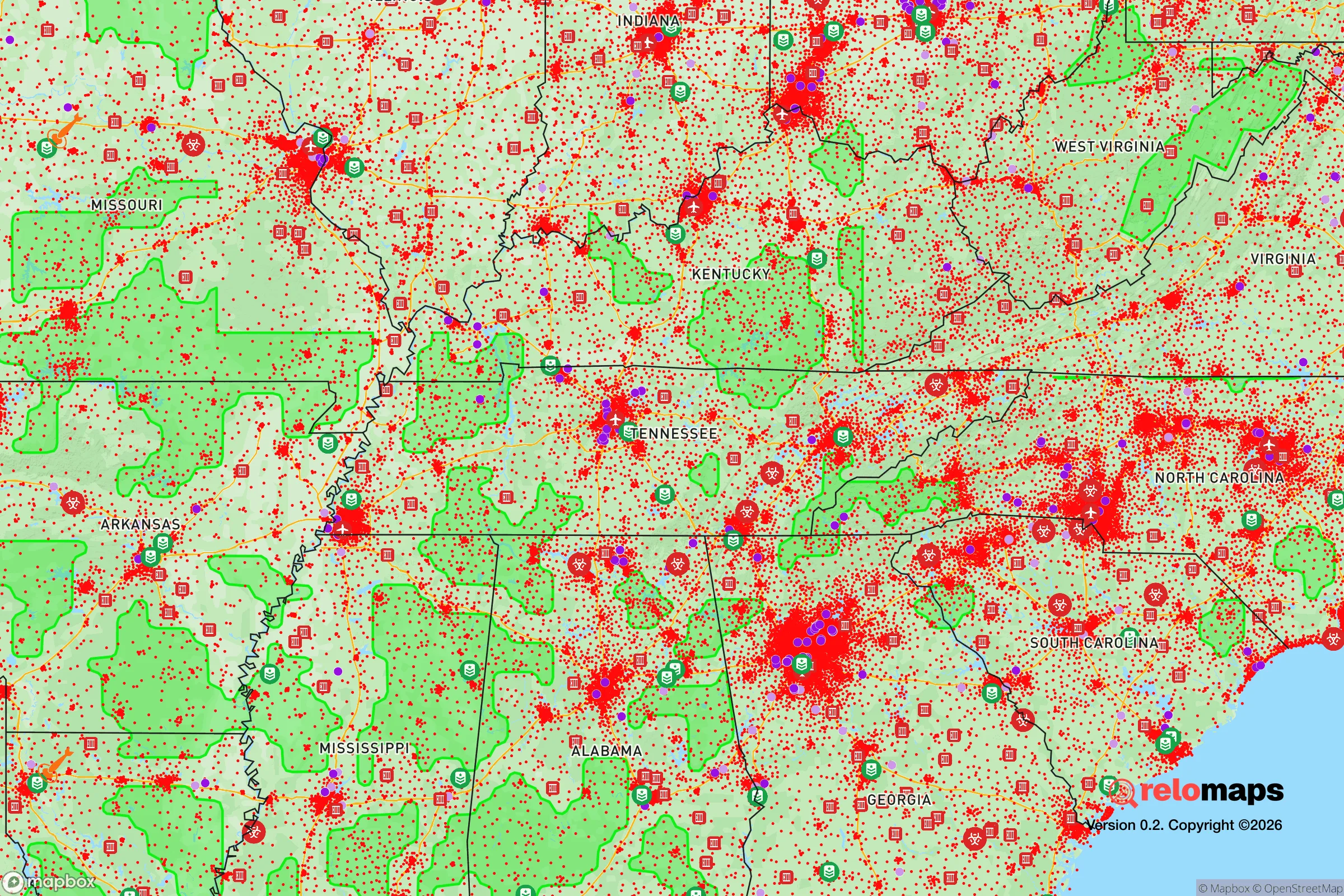
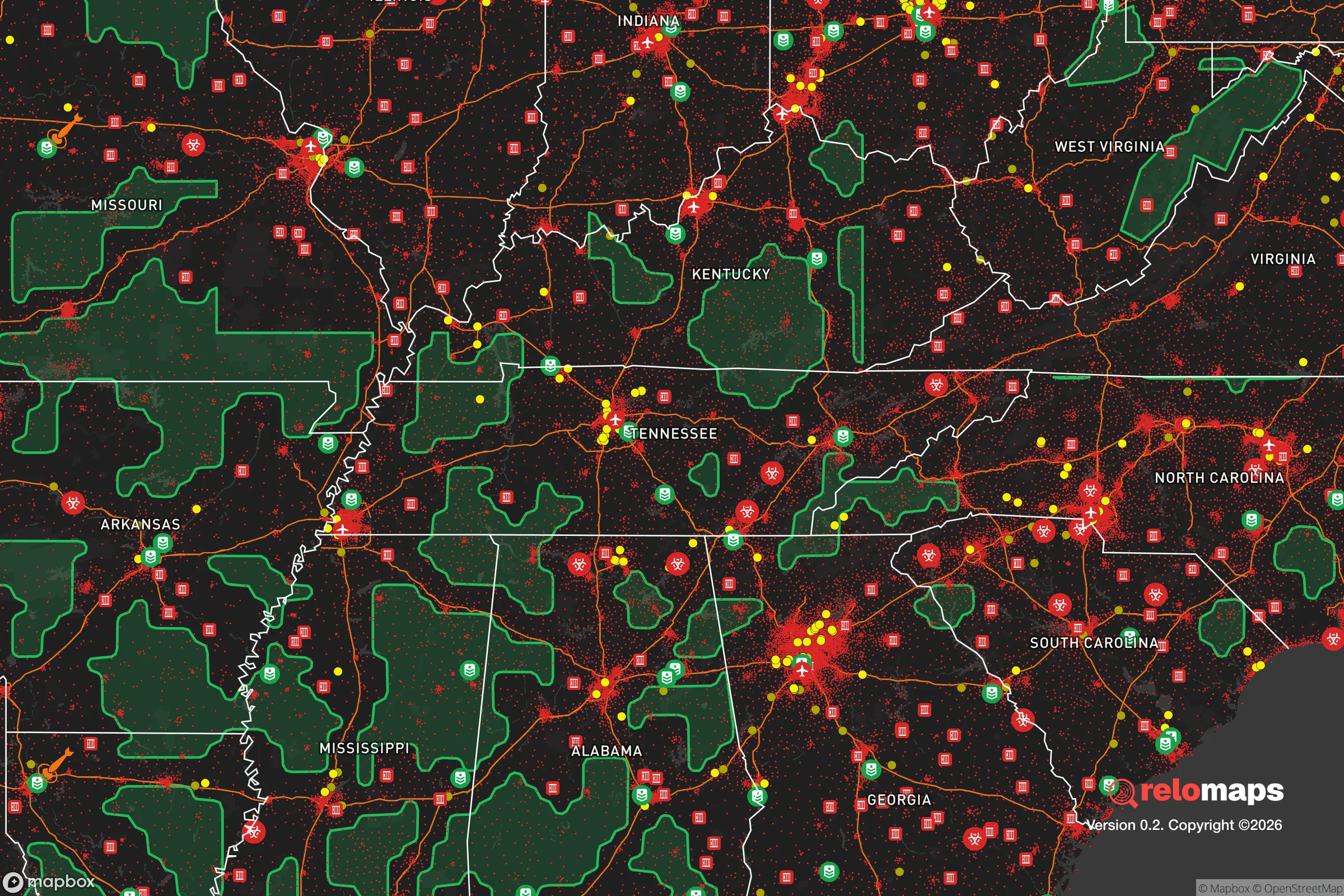


Important Note: For informational purposes only. This does not mean nothing bad ever happens in the green zones. Please use common sense. This is based on public data and modeled with AI. We tried to take a conservative approach but mistakes happen. We update this regularly as new information becomes available.
Solar Generator Recommendations
Backup power matters more here than in safer locations. We've picked three solar generators across budgets and capacity tiers — start with the budget unit if you only need a few essentials, or step up if you want to run a fridge and HVAC for days at a time.

Jackery Portable Power Station Explorer 300
Budget OptionPower on the Go: Weighing only 11 lbs, it's convenient to set up and store with book-sized foldable solar panels

BLUETTI Portable Power Station AC180
Designed for both indoor and outdoor scenarios, AC180 is highly capable as it has a robost capacity and continuous output power.

EF ECOFLOW DELTA Pro Ultra Power Station
Upgraded PickEcoFlow DELTA Pro Ultra is a whole-home energy system designed to grow with your family. Integrated with the Smart Home Panel 2, it scales to meet your evolving energy needs — keeping your home powered, intelligent, and secure through every stage of life.
We earn a commission, at no additional cost to you.
Strategic Assessment Analysis
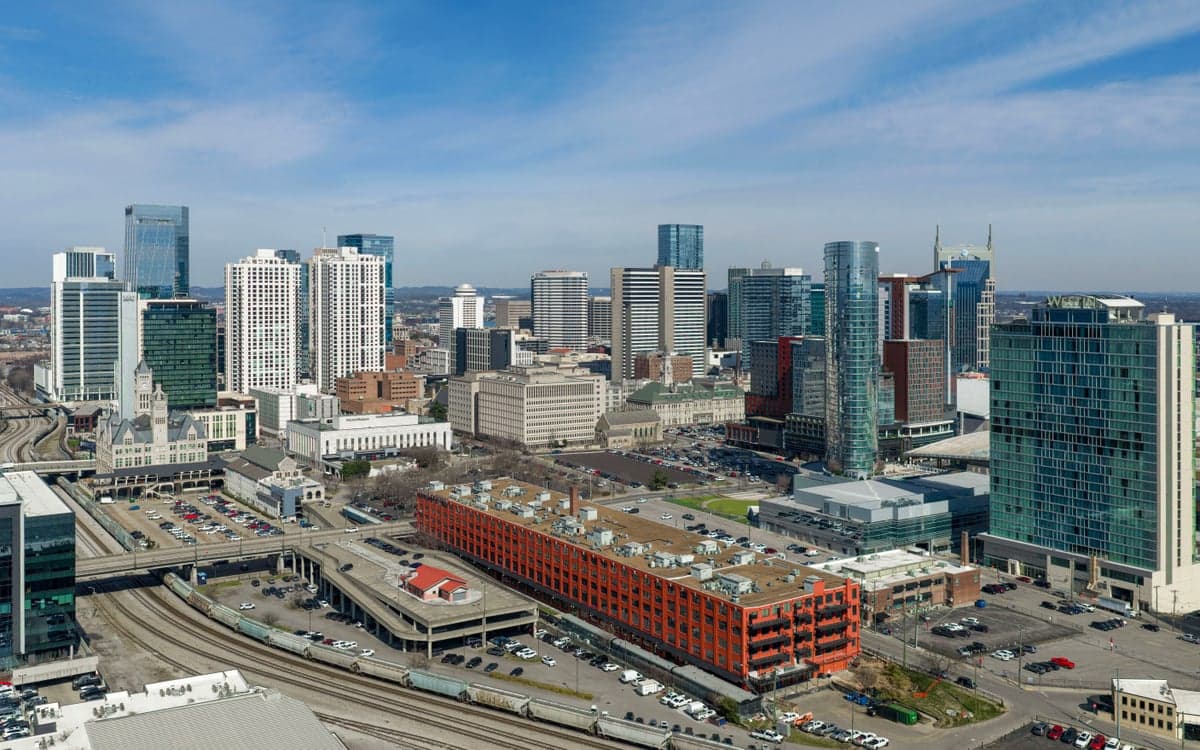
Nashville, Tennessee, presents a complex strategic picture for the conservative prepper or survivalist. On one hand, its central location in the U.S. offers logistical advantages and a degree of geographic insulation from coastal threats; on the other, its explosive growth, dense urban core, and status as a major transportation and infrastructure hub create significant vulnerabilities that a serious relocator must weigh. The city’s resilience is a double-edged sword: it has the economic and logistical muscle to weather many storms, but that same concentration of people, resources, and critical infrastructure makes it a high-priority target for both natural disasters and man-made disruptions. For a single individual or family looking to hunker down, the key question isn’t whether Nashville is survivable—it’s whether you can get out and stay out when things go sideways.
Geographic position and natural advantages for long-term security
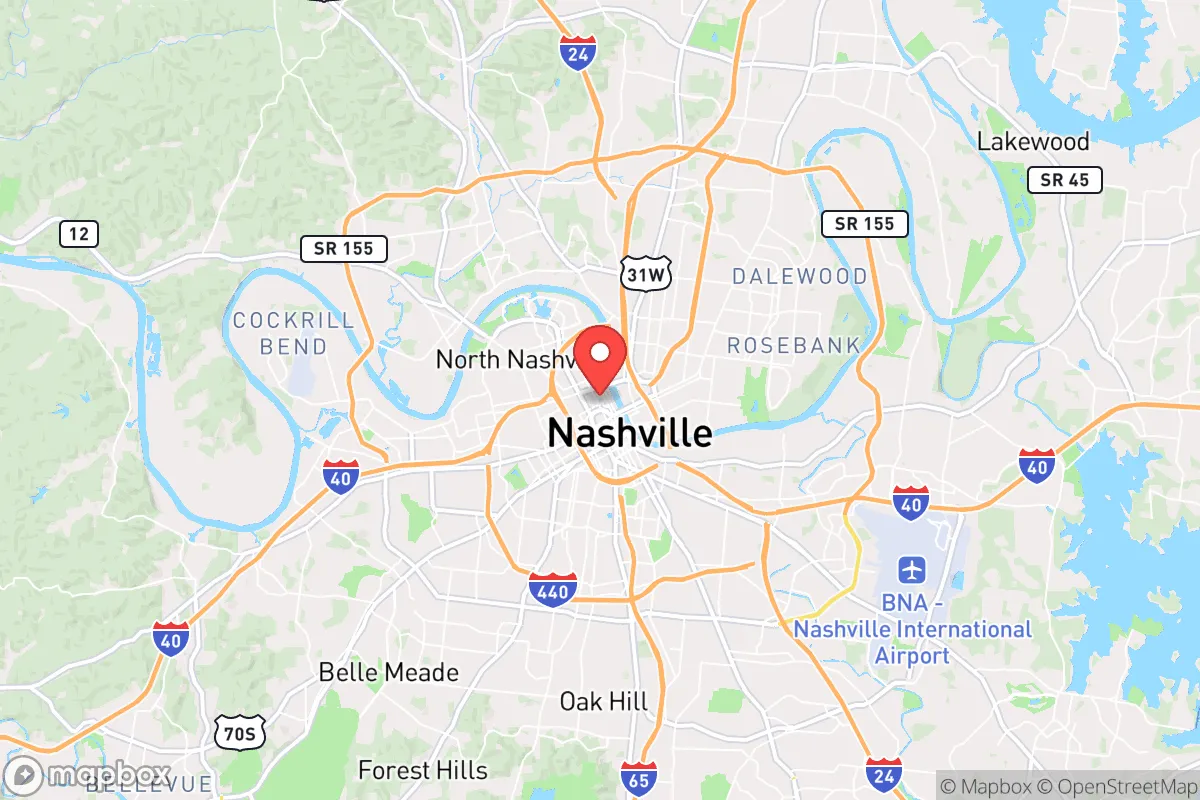
Nashville sits in the heart of the Mid-South, roughly equidistant from the Gulf Coast, the Great Lakes, and the Eastern Seaboard. This central location provides a buffer against hurricane storm surges, sea-level rise, and the worst of coastal flooding—a genuine advantage for anyone thinking about climate-driven displacement or infrastructure failures. The Cumberland River runs through the city, offering a water source, but it’s also a flood risk; the 2010 flood that swamped downtown and killed 26 people is a stark reminder that even inland cities aren’t immune. The surrounding terrain is rolling hills and limestone bedrock, which provides decent drainage and some natural defensibility, though nothing like the mountainous refuges of East Tennessee. The region’s moderate climate means you won’t freeze to death in a winter power outage, but summer heat and humidity can be brutal without air conditioning—a factor if you’re planning off-grid living. The area’s agricultural potential is real: Middle Tennessee has fertile soil, a long growing season, and ample rainfall, making it viable for small-scale farming or gardening. For a prepper, the natural advantages are real but modest—this is not a remote, self-sufficient fortress, but a fertile, accessible region that can support a retreat if you’re positioned outside the urban sprawl.
Risks, exposures, and proximity to fallout-relevant landmarks
Here’s where the analysis gets sobering. Nashville is a major transportation hub—Interstates 40, 24, and 65 converge here, and the city hosts a busy international airport and a massive rail yard. In a crisis—whether a pandemic, civil unrest, or a supply chain collapse—these choke points become liabilities. The city’s population has surged past 700,000, with the metro area approaching 2 million, meaning any disruption to food, fuel, or water distribution will cascade quickly. More concerning for the survivalist: Nashville is home to the Tennessee Valley Authority’s (TVA) Cumberland Fossil Plant and the nearby Bellefonte Nuclear Plant (though dormant), and it sits within 200 miles of the Oak Ridge National Laboratory, a key nuclear research and weapons-related facility. A major accident or attack at any of these sites could produce fallout patterns that affect the region. Additionally, the city’s role as a state capital and a cultural symbol (think: the 2020 Christmas Day bombing) makes it a potential target for symbolic attacks. The 2020 bombing, which targeted an AT&T building and crippled regional communications for days, is a textbook example of how a single, low-tech event can disrupt a modern city. For the prepper, the takeaway is clear: Nashville’s centrality and prominence make it a high-risk area for both natural and man-made disasters, and the fallout—literal and figurative—could reach well into the suburbs and exurbs.
Practical resilience for a relocator: food, water, energy, and defensibility
If you’re moving to the Nashville area with a prepper mindset, your strategy must be to get outside the urban core—ideally 30 to 60 miles out into the surrounding counties like Williamson, Wilson, or Rutherford. Inside the city, you’re dependent on a fragile grid: the power infrastructure is aging, and the 2020 tornado that cut power to 50,000 homes showed how quickly things can unravel. Water comes from the Cumberland River, treated by the city’s water utility; a major contamination event or pump failure would leave residents scrambling. Food access is good in normal times—Nashville has a strong local food scene and farmers’ markets—but grocery store shelves emptied within days during the early pandemic, and a prolonged disruption would hit hard. For energy, natural gas is common for heating, but solar potential is decent (about 4.5 peak sun hours per day), and many rural properties have space for a backup generator or small wind turbine. Defensibility is poor inside the city—dense neighborhoods, limited escape routes, and a police force that could be overwhelmed in a major event. The exurbs offer more: larger lots, rural roads, and a community culture that still values self-reliance and neighborly mutual aid. Williamson County, for example, has a strong conservative ethos, low crime, and a population that skews toward preparedness-minded professionals. But even there, you’re not remote—you’re a 30-minute drive from a city of 2 million, meaning you’ll feel the ripple effects of any urban crisis. The practical advice: buy land with a well, a septic system, and a defensible perimeter; stock at least 90 days of supplies; and have a bug-out route that avoids the interstates.
The overall strategic picture for Nashville is one of calculated risk. It offers genuine advantages—central location, fertile land, a strong economy, and a like-minded conservative community in the surrounding counties—but it also carries the weight of being a major urban, transportation, and infrastructure hub in an unstable world. For a single person or family willing to live on the rural fringe and invest in self-sufficiency, the area can work as a base of operations. But if you’re looking for a true retreat—a place where you can ride out a decade of disruption without depending on fragile systems—you’d be better served by the mountains of East Tennessee or the remote plains of the Dakotas. Nashville is a city for those who want to stay engaged with the world while preparing for its worst moments, not for those seeking to disappear from it entirely.

* Values derived from national, state, county, city and local statistics and may differ in a specific area. Last updated: 2026-04-22T01:24:46.000Z
Narrative content on this page is AI-generated and may contain mistakes. Verify any details that matter before acting on them.
ReloMaps may earn a commission from affiliate links at no extra cost to you.

