Photo: Wikipedia
Political ClimatePolitical Climate in Nashville, TN
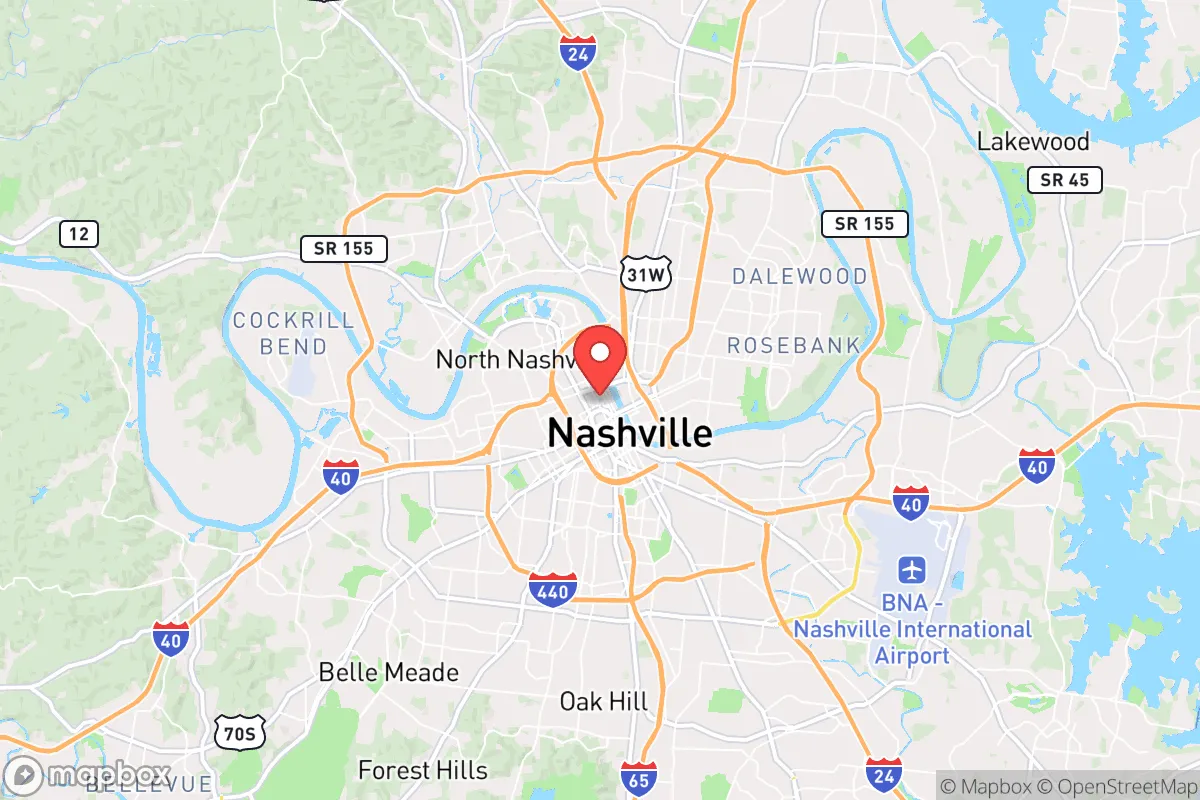
District shown is the primary district for this city’s centroid. Cities may span multiple districts.
Local Political AnalysisPolitical Analysis of Nashville, TN
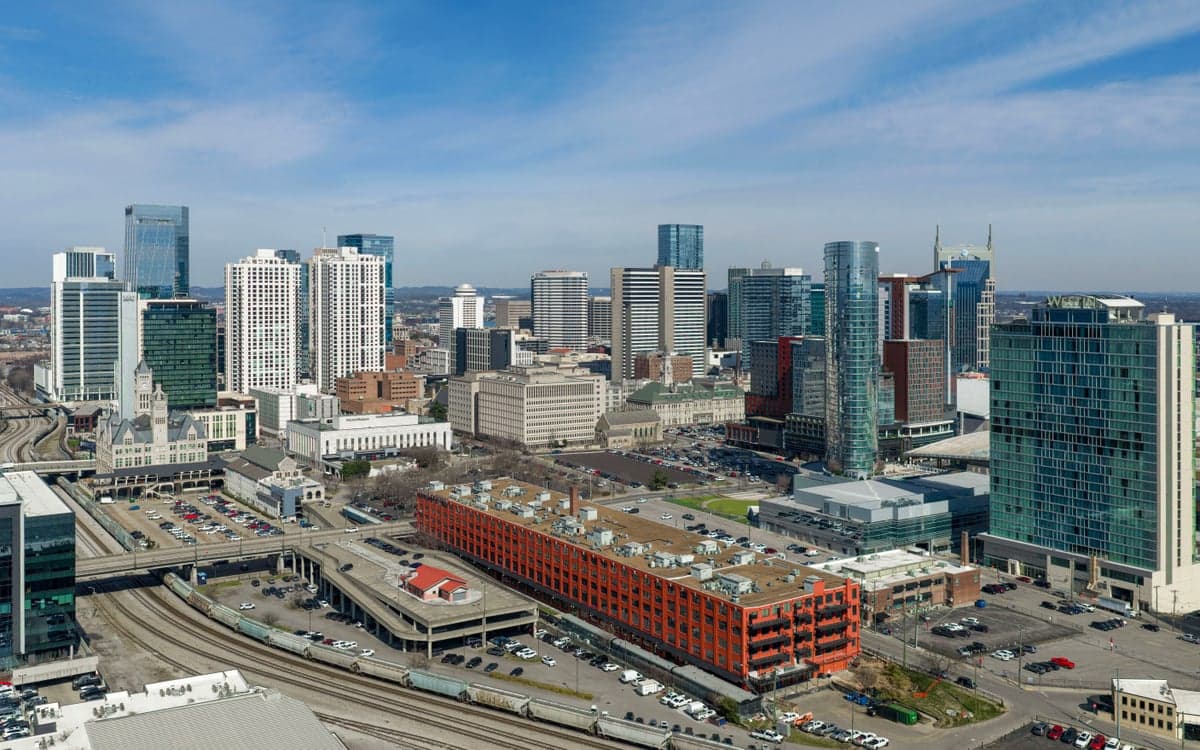
Nashville’s political climate has shifted dramatically over the past decade, and if you’re a conservative looking at the numbers, the trend is concerning. The Cook Partisan Voting Index (PVI) for the Nashville metro area sits at R+10, meaning the region as a whole still leans Republican by a solid 10 points compared to the national average. But that’s a bit misleading—the city proper, Davidson County, has been trending blue fast. In 2020, Joe Biden won Davidson County by a 30-point margin, while surrounding counties like Williamson (R+15) and Wilson (R+18) remain deeply red. The real story is the urban-rural split: Nashville’s core is becoming a progressive stronghold, while the suburbs and exurbs are holding the line. If you’re looking for a place where conservative values still dominate the local culture, you’ll want to look at the bedroom communities like Franklin, Brentwood, or Mt. Juliet—not the city itself.
How it compares
Compared to other Southern cities, Nashville’s political trajectory is a cautionary tale. Atlanta and Charlotte have already flipped solidly blue in their urban cores, and Nashville is following that same path, just a few years behind. The contrast with nearby cities is stark: Murfreesboro (Rutherford County) voted +12 for Trump in 2020, while Gallatin (Sumner County) went +15. Even smaller towns like Lebanon (Wilson County) and Dickson (Dickson County) are reliably conservative. The problem is that Nashville’s city government has been pushing progressive policies—like sanctuary city status, defunding police initiatives (though largely symbolic), and zoning changes that prioritize high-density development over single-family neighborhoods. Meanwhile, the state legislature in Nashville is Republican-controlled and has pushed back with preemption laws on everything from gun rights to vaccine mandates. So you’ve got a tug-of-war: the city tries to go left, the state pulls it back right. For a conservative, it feels like a constant battle against government overreach at the local level.
What this means for residents
For a conservative living in Nashville proper, daily life means navigating a city government that often seems hostile to traditional values. Property taxes have risen 30% since 2020 to fund expanded social programs and transit projects that many residents didn’t ask for. The school board has pushed critical race theory-inspired curriculum, and the mayor’s office has been vocal about “equity” initiatives that prioritize group identity over individual merit. Gun rights are still protected by state law, but you’ll see more “no guns allowed” signs on private businesses in the city core. Traffic is a nightmare because the city prioritized bike lanes and pedestrian plazas over road widening. If you value personal freedom—like the right to keep your tax dollars, send your kids to a school that teaches basics, or carry a firearm without hassle—you’ll feel the squeeze. The silver lining is that the suburbs are thriving: Williamson County schools are top-ranked nationally, and property taxes there are about half of Davidson County’s. Many conservatives I know have simply moved 20 minutes south and commute in for work.
Culturally, Nashville still has a strong conservative undercurrent, especially among the long-time residents who remember when it was a small, family-oriented town. The music industry is still a draw, but the “It City” hype has brought in a wave of transplants from California and New York who vote blue. The local policy distinctions that matter most: Tennessee has no state income tax, which is a huge win for conservatives, and the state government has passed some of the strongest Second Amendment protections in the country. But the city council keeps trying to chip away at those freedoms with local ordinances. Looking ahead, I’d expect the state to continue preempting Nashville’s progressive experiments, but the cultural shift in the city itself is probably irreversible. If you’re a conservative considering a move, I’d recommend the suburbs—you get the job opportunities and entertainment without the political headache.

State Political ClimatePolitical Climate in Tennessee
State Political AnalysisPolitical Environment in the State
Tennessee has long been a reliably red state, but its political character is more complex than a simple partisan label suggests. The state leans solidly Republican at the statewide level, with Donald Trump winning by 30 points in 2024, and Republicans holding supermajorities in both chambers of the General Assembly. Over the past 15 years, the state has shifted rightward, driven by a combination of rural cultural conservatism, suburban flight from blue states, and a growing exurban population around Nashville and Knoxville. However, the state’s political trajectory is not uniform—pockets of blue in the major cities and a growing libertarian streak in the eastern part of the state create a dynamic, sometimes contentious, political landscape.
Urban vs. rural divide
The political map of Tennessee is a study in contrasts. The major metropolitan areas—Nashville (Davidson County), Memphis (Shelby County), and to a lesser extent Chattanooga (Hamilton County) and Knoxville (Knox County)—are the state’s blue islands. Nashville has become increasingly progressive, with a city council that has pushed for sanctuary city policies and defunding police initiatives, though those efforts have been largely blocked by the state legislature. Memphis remains a Democratic stronghold, driven by a large African American population and union influence. In contrast, the vast rural and exurban areas—places like Franklin (Williamson County), Murfreesboro (Rutherford County), and Johnson City (Washington County)—are deeply red. Williamson County, for instance, voted +35 for Trump in 2024, despite being one of the wealthiest and most educated counties in the state. The divide is stark: the three major metros account for roughly 40% of the state’s population but produce nearly all of its Democratic votes. The rest of the state is overwhelmingly Republican, with many counties voting 70-80% for Trump. This urban-rural split is the defining feature of Tennessee politics, and it’s only deepening as more conservatives move to the suburbs and exurbs.
Policy environment
Tennessee’s policy environment is among the most conservative in the nation, and it’s been deliberately engineered to attract families and businesses from high-tax, high-regulation states. The state has no income tax on wages (only a Hall tax on investment income, which is being phased out), a flat 7% sales tax, and relatively low property taxes. The regulatory climate is business-friendly, with right-to-work laws and minimal zoning restrictions outside of major cities. Education policy has been a flashpoint: the state passed a universal school voucher program in 2023 (the Education Freedom Scholarship Act), allowing families to use public funds for private or homeschool expenses. This was a major win for school choice advocates. On healthcare, Tennessee has not expanded Medicaid under the Affordable Care Act, and the state has some of the most restrictive abortion laws in the country, with a near-total ban after six weeks (the “Heartbeat Bill”) and no exceptions for rape or incest. Election laws have been tightened: voter ID requirements are strict, and the state purged over 100,000 inactive voters from the rolls in 2023. The state also passed a law in 2024 banning ranked-choice voting and limiting ballot drop boxes. For a conservative family, the policy environment is largely welcoming, though the lack of Medicaid expansion and high uninsured rate (around 10%) are notable concerns.
Trajectory & freedom
Tennessee is on a clear trajectory toward more personal freedom in most areas, though the definition of “freedom” depends on the issue. On gun rights, the state has become a national leader: permitless carry (constitutional carry) was signed into law in 2021, and in 2023 the legislature passed a law prohibiting local governments from enforcing federal gun laws that conflict with state law. On parental rights, the state passed the “Parental Bill of Rights” in 2022, requiring schools to notify parents of any changes to a student’s health or well-being, and banning instruction on sexual orientation or gender identity in K-3 classrooms (the “Don’t Say Gay” law). Medical autonomy has been a mixed bag: the state banned gender-affirming care for minors in 2023, but also expanded telehealth access and allowed pharmacists to prescribe birth control. Property rights have been strengthened with a 2024 law limiting eminent domain for private development. Taxation has become more favorable: the Hall tax on investment income is being phased out entirely by 2029. However, there are concerning trends: the state has increased its reliance on sales tax, which is regressive, and property taxes have risen in fast-growing areas like Williamson and Rutherford counties. Overall, the state is moving in a libertarian-conservative direction, but the heavy hand of the state is still felt in areas like drug policy (marijuana remains fully illegal) and alcohol sales (still heavily regulated).
Civil unrest & political movements
Tennessee has seen its share of political turbulence, but it’s been relatively muted compared to states like Oregon or Washington. The most visible flashpoint was the 2023 Nashville Covenant School shooting, which sparked massive protests at the state capitol, with thousands demanding gun control. The legislature responded by passing a law allowing teachers to carry firearms on school grounds, which only deepened the divide. The “Tennessee Three” (Democratic state representatives Justin Jones, Justin Pearson, and Gloria Johnson) were expelled for leading a gun control protest on the House floor, though Jones and Pearson were later reinstated. This episode galvanized progressive activists, but it also solidified conservative support for the Second Amendment. Immigration politics have been relatively quiet, though the state passed a law in 2024 requiring local law enforcement to cooperate with ICE and banning sanctuary cities. There’s been no serious secession or nullification rhetoric, though the state’s attorney general has joined multi-state lawsuits against federal vaccine mandates and environmental regulations. Election integrity controversies have been minimal, though the 2020 election saw some localized disputes over absentee ballot procedures. For a new resident, the political climate is generally stable, but the urban-rural divide means you’ll see starkly different attitudes depending on where you live—especially in Nashville, where progressive activism is more visible.
Projection
Over the next 5-10 years, Tennessee is likely to become more conservative, not less. The primary driver is in-migration: the state is gaining roughly 80,000 new residents per year, and the vast majority are coming from blue states like California, Illinois, and New York. These newcomers are disproportionately conservative-leaning families and retirees seeking lower taxes and less government overreach. The exurban counties around Nashville—Williamson, Rutherford, Wilson, and Sumner—are growing at 2-3% annually, and they’re voting even more Republican than the state average. Meanwhile, the urban cores of Nashville and Memphis are losing population or growing slowly, which means their political influence is shrinking. The state legislature is likely to become even more conservative, with potential moves toward a flat income tax (though unlikely), further school choice expansion, and more restrictions on local government autonomy (preemption laws). The biggest wildcard is the growing libertarian and independent vote in East Tennessee, particularly around Knoxville and Johnson City, which could push the state toward more moderate positions on marijuana legalization and criminal justice reform. For a conservative family moving to Tennessee, the projection is clear: the state will remain a red haven, but the culture wars will intensify, especially in the suburbs where new arrivals from blue states bring their political baggage.
Bottom line for a new resident: If you’re a conservative looking for a state that respects your values on taxes, guns, and education, Tennessee is one of the best bets in the country. The policy environment is actively being shaped to attract you, and the demographic trends are on your side. But don’t expect a political utopia—the urban-rural divide is real, and you’ll see progressive activism in Nashville and Memphis that can feel jarring. Choose your county wisely: Williamson, Rutherford, or Washington counties are safe bets for a conservative lifestyle, while Davidson or Shelby counties will require more vigilance. The state is trending in the right direction, but it’s not immune to the national culture wars.
* Values derived from national, state, county, city and local statistics and may differ in a specific area. Last updated: 2026-04-22T01:24:46.000Z
Narrative content on this page is AI-generated and may contain mistakes. Verify any details that matter before acting on them.
ReloMaps may earn a commission from affiliate links at no extra cost to you.

