Photo: Wikipedia
Demographics of Cherry County
Affluence Level in Cherry County
A middle-class area roughly in line with national averages across income, home values, education, and employment.
People of Cherry County
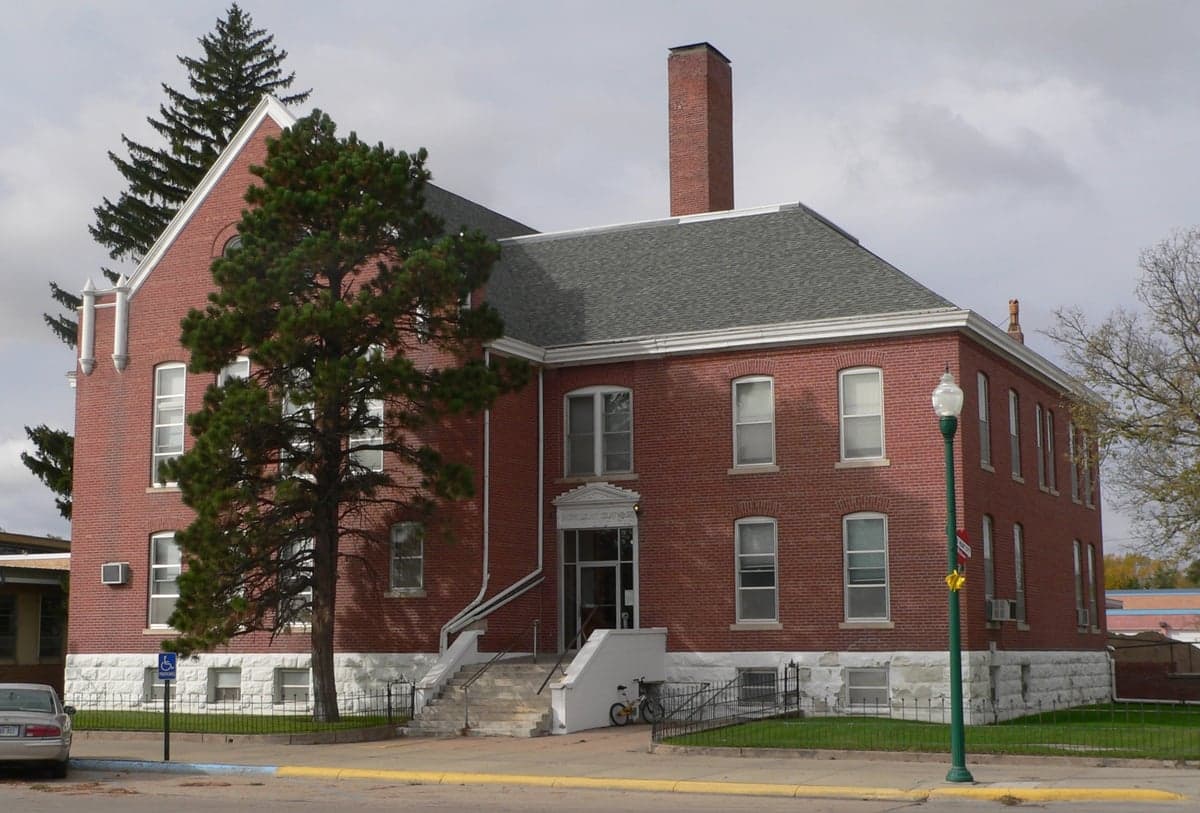
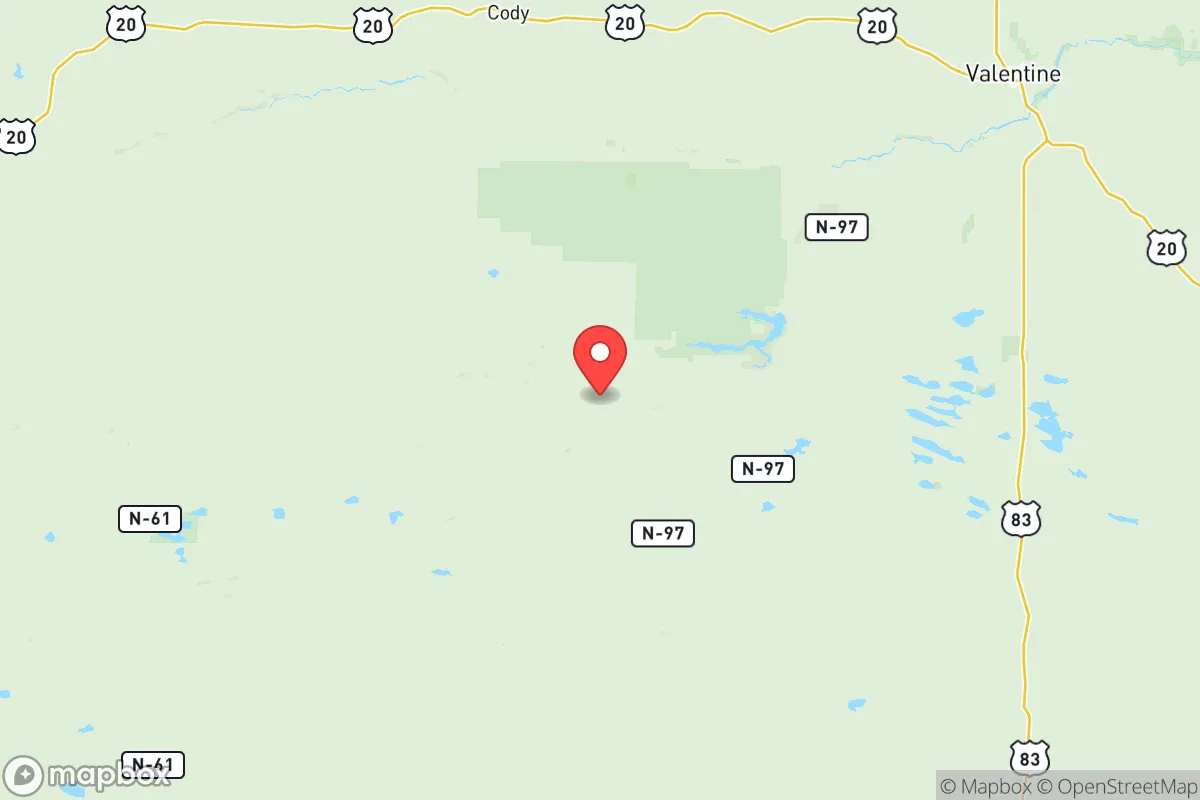
Cherry County, Nebraska, is one of the most sparsely populated counties in the state, with just 5,468 residents spread across nearly 6,000 square miles—a density of less than one person per square mile. The population is overwhelmingly white (85.1%) and native-born (99.0% U.S.-born), with a distinctive ranching and Lakota heritage that sets it apart from the rest of Nebraska. The county seat, Valentine, serves as the primary hub, while the small towns of Cody, Kilgore, and Wood Lake anchor the rural, agricultural character of the region. Today, Cherry County’s identity is defined by its vast open spaces, strong family ranching traditions, and the presence of the Rosebud Sioux Tribe’s historical lands along its northern border.
Settlement & growth (pre-1960)
Before American settlement, the area now known as Cherry County was part of the traditional territory of the Lakota people, particularly the Sicangu (Brulé) and Oglala bands. The Lakota followed the vast bison herds across the Sandhills, and the Niobrara River valley provided a critical water source and winter shelter. The first non-Native presence came with French fur trappers in the early 1800s, but no permanent European settlements were established until after the U.S. government forcibly removed the Lakota to the Rosebud and Pine Ridge reservations in the 1870s and 1880s.
The county was formally organized in 1883, named after a U.S. Army officer, and the first wave of American settlers arrived in the 1880s and 1890s. These were primarily homesteaders of German, Irish, and English descent, drawn by the promise of 160-acre parcels under the Homestead Act. The harsh, semi-arid Sandhills proved difficult for traditional farming, so most settlers turned to cattle ranching—an industry that still defines the county today. The town of Valentine was platted in 1882 as a railroad town on the Fremont, Elkhorn & Missouri Valley Railroad, quickly becoming the county’s commercial and governmental center. Smaller settlements like Cody (founded 1885) and Kilgore (founded 1900) grew as service points for surrounding ranches.
A second, smaller wave of settlement came during the 1910s and 1920s, when the Kinkaid Act of 1904 allowed homesteaders to claim up to 640 acres in the Sandhills. This brought a few more families, mostly of Scandinavian (Swedish and Danish) and Czech descent, who established ranches around Wood Lake and Merriman. The Dust Bowl of the 1930s hit the Sandhills hard, but the region’s deep-rooted grass held better than plowed farmland elsewhere, preventing a mass exodus. By 1960, Cherry County’s population had peaked at roughly 8,000, supported by a robust cattle industry and the construction of the Fort Niobrara National Wildlife Refuge in 1912, which brought federal jobs to Valentine.
Modern era (post-1965)
The 1965 Hart-Cellar Act had minimal direct impact on Cherry County, as the foreign-born population today stands at just 1.0%—far below the national average. Unlike urban Nebraska, which saw significant immigration from Mexico and Central America, Cherry County’s remote location and lack of manufacturing or service-sector jobs limited new arrivals. The Hispanic population is only 3.0%, concentrated primarily in Valentine, where a small number of families work in the meatpacking and hospitality industries. The East/Southeast Asian population (1.2%) is even smaller, mostly consisting of medical professionals at the Cherry County Hospital or educators at the local schools.
The major demographic shift since 1965 has been domestic out-migration. As ranch consolidation reduced the number of family operations, young adults left for college and jobs in larger Nebraska cities like Lincoln, Omaha, and Scottsbluff. The population declined from 8,000 in 1960 to 5,468 in 2020, a loss of roughly 30%. This trend has been most acute in the smaller towns: Cody now has fewer than 150 residents, Kilgore about 50, and Wood Lake around 60. Valentine, however, has held relatively steady at around 2,800, buoyed by its role as a regional trade center, the county seat, and a tourist gateway to the Niobrara River and the refuge. The Black population (1.0%) is almost entirely tied to the U.S. Army Corps of Engineers and National Park Service personnel stationed at the Fort Niobrara area.
Suburbanization, as understood in metropolitan areas, does not exist in Cherry County. Instead, the pattern has been one of rural depopulation with a slight concentration in Valentine. The county’s cultural identity remains deeply rooted in ranching, hunting, and outdoor recreation, with a strong conservative political leaning—the county voted +68 for Donald Trump in 2020. The Lakota presence, while small in the county itself, is felt through the nearby Rosebud Reservation in South Dakota, and some tribal members live in or commute to Valentine for work and services.
The future
Cherry County’s population is projected to continue a slow decline, with the state of Nebraska forecasting a drop to roughly 5,000 by 2040. The county is becoming less diverse, not more, as the small Hispanic and Asian populations are not growing fast enough to offset the out-migration of white residents. The median age is rising—currently around 45—as younger generations leave and older ranchers age in place. The college-educated share (24.2%) is below the national average, reflecting the limited demand for white-collar jobs outside of Valentine’s schools and hospital.
New residents are rare and tend to fall into two categories: retirees drawn by the low cost of living and outdoor lifestyle, and remote workers seeking isolation and space, a trend that accelerated slightly after 2020. These newcomers are almost exclusively white and native-born, reinforcing the county’s existing demographic profile. The Lakota population on the reservation border may grow modestly, but Cherry County itself is unlikely to see significant ethnic or cultural change. The towns of Merriman and Nenzel are at risk of becoming ghost towns as their populations dip below 50.
What this means for someone moving in now: Cherry County offers a stable, safe, and deeply traditional rural lifestyle, but it is not a place of demographic dynamism or growth. The community is tight-knit, overwhelmingly white, and politically conservative, with a strong ranching ethos. New arrivals will find a welcoming but insular culture, where fitting in requires respect for local customs and the land. The county’s future is one of quiet continuity, not transformation—a place where the people are few, the horizons are wide, and the pace of life remains tied to the seasons and the cattle.

* Values derived from national, state, county, city and local statistics and may differ in a specific area. Last updated: 2026-07-29T00:34:41.000Z
Narrative content on this page is AI-generated and may contain mistakes. Verify any details that matter before acting on them.
ReloMaps may earn a commission from affiliate links at no extra cost to you.

