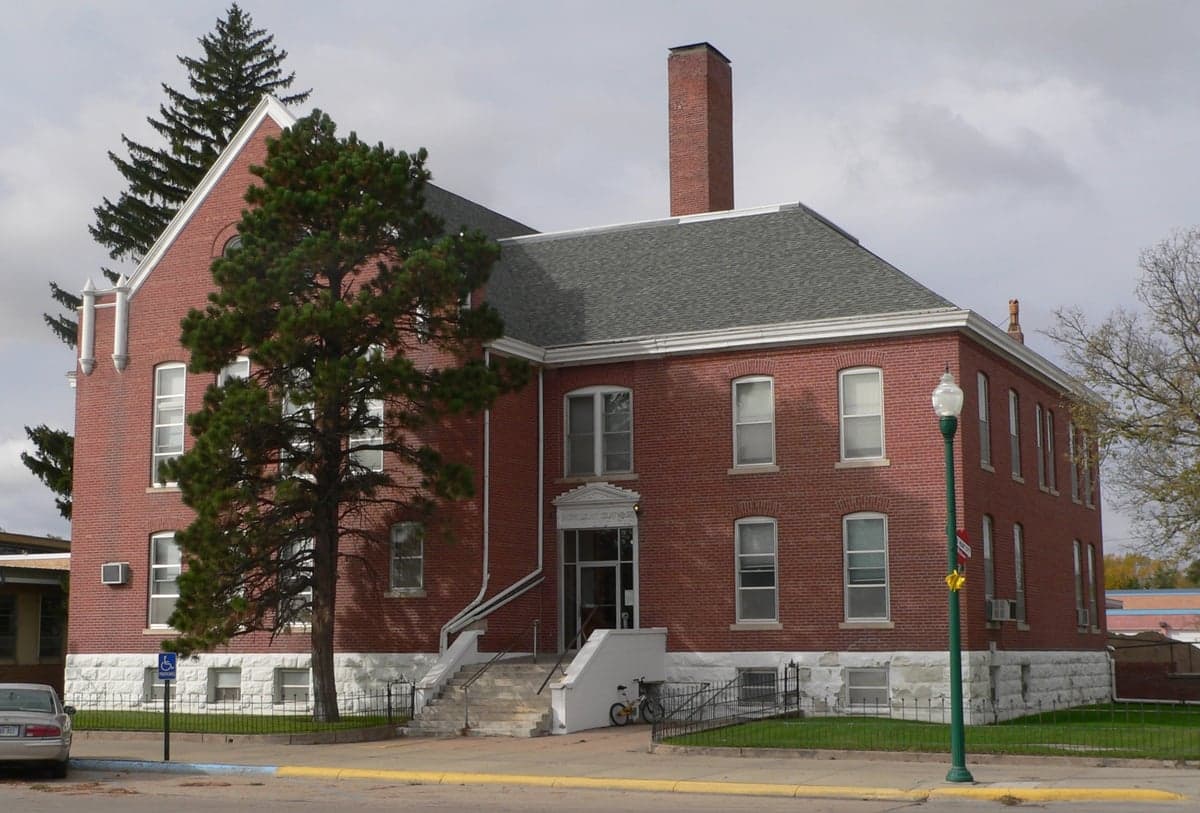
Photo: Wikipedia
Personal Sovereignty in Cherry County
Viable for self-reliance. Generally workable, though some barriers may limit total independence.
What does Personal Sovereignty tell us?
Personal Sovereignty measures your capacity for self-reliance and independence with minimal government friction. Higher scores mean fewer barriers between you and the way you want to live... but it assumes you have the space you need and good neighbors.
What does this tell us?
Personal Sovereignty measures your capacity for self-reliance and independence with minimal government friction. Higher scores mean fewer barriers between you and the way you want to live... but it assumes you have the space you need and good neighbors.
State Policy
Energy independence: Importer (35% of energy produced in-state)
Personal Liberty
Homesteading

Personal Liberty Analysis
Cherry County, Nebraska, offers one of the most hands-off personal sovereignty environments in the Great Plains, where state preemption laws and a deeply rural character create a regulatory atmosphere that prioritizes individual choice over government oversight. The county’s 6,000 residents spread across 6,000 square miles—a density of roughly one person per square mile—means that in practice, local governance is minimal, and personal autonomy is the default. For a relocation reader seeking maximum freedom from zoning boards, tax collectors, and restrictive ordinances, Cherry County stands out as a place where the state’s constitutional carry law, low property taxes, and limited county-level regulation combine to create a genuinely self-directed lifestyle.
Tax burden and regulatory posture: How Cherry County compares to Nebraska’s urban centers
Cherry County’s tax burden is among the lowest in Nebraska, with a 2025 effective property tax rate of roughly 1.2% of assessed value, significantly below the state average of 1.6% and far under Douglas County’s (Omaha) 2.1%. The county’s sales tax rate is 6.5%—the state minimum—with no local option sales tax added, unlike Lincoln or Omaha which tack on an extra 1.5% to 2%. The regulatory posture is equally light: the county has no building codes outside the tiny incorporated towns of Valentine, Cody, and Kilgore, and no county-wide zoning ordinance. In Valentine, the county seat and largest town (pop. 2,800), the city enforces basic setback and utility hookup rules, but even there, the permitting process for a new home or shed is a single-page form. In unincorporated areas like Sparks, Wood Lake, or the vast Sandhills ranches, there is effectively no regulatory oversight for residential construction, home businesses, or land use. The state’s right-to-farm law (Neb. Rev. Stat. § 2-4401) further shields agricultural and rural property owners from nuisance lawsuits, reinforcing a hands-off environment for anyone running a small farm, workshop, or hunting operation on their land.
Self-defense and gun law specifics: Constitutional carry and no local restrictions
Nebraska became a constitutional carry state in 2023, and Cherry County fully reflects that shift. No permit is required to carry a concealed firearm for anyone 21 or older who can legally possess a gun. The county has no local ordinances restricting open or concealed carry, and the sheriff’s office in Valentine is known for a pro-Second Amendment stance—deputies routinely issue concealed carry permits (still available for reciprocity with other states) within days, not weeks. Stand-your-ground law applies statewide (Neb. Rev. Stat. § 28-1409), meaning no duty to retreat in any place where a person is lawfully present. Cherry County’s gun culture is deeply embedded: the Valentine Gun Club hosts monthly matches, and the county’s rural character means that target shooting on private land is common and unregulated. In contrast to Lincoln or Omaha, where city parks and public buildings have firearm restrictions, Cherry County’s only gun-free zones are federal buildings (post office, courthouse) and K-12 schools. For a relocation reader who prioritizes self-defense autonomy, Cherry County offers one of the most permissive environments in the Midwest, with no local interference and a sheriff’s office that treats firearm ownership as a baseline right.
Self-reliance and homesteading viability: Lot sizes, zoning, and off-grid feasibility
Cherry County is a homesteader’s dream, with no county-wide zoning and minimal restrictions on off-grid living. Minimum lot sizes in unincorporated areas are effectively zero—you can buy a 40-acre parcel in the Sandhills near Brownlee or a 160-acre ranch near Nenzel and build whatever you want, as long as it meets state septic and well requirements. The county health department requires a permit for a septic system (cost: $150, inspection included) and a well permit from the Nebraska Department of Natural Resources (free, but requires a licensed driller), but there are no hookup mandates for municipal water or sewer. Solar panels, wind turbines, and composting toilets are all legal and common; the county has no building code that would require grid-tied electrical or specific roofing materials. In Valentine, the city does require a building permit for structures over 200 square feet ($50 flat fee) and mandates connection to city water and sewer within the town limits, but outside the city limits—in places like Merriman, Cody, or the unincorporated community of Elsmere—you can live entirely off-grid with no permits beyond the septic and well. The county’s agricultural zoning exemption (Neb. Rev. Stat. § 23-114) allows unlimited accessory structures on farm or ranch land, so a 10-acre parcel can host a house, barn, workshop, and guest cabin without any county review. For a family seeking self-reliance, Cherry County’s regulatory vacuum is a major asset: you can raise livestock, grow food, and generate your own power without asking permission from anyone.
Personal liberties: Parental rights, medical autonomy, speech, and property
Cherry County’s personal liberties environment is shaped by Nebraska’s conservative state laws and the county’s own low-intervention culture. Parental rights are strongly protected: Nebraska’s Parental Bill of Rights (LB 1083, 2024) gives parents explicit authority over their children’s education, healthcare, and religious upbringing, and Cherry County’s school districts—Valentine Community Schools, Cody-Kilgore Public Schools, and the rural Gordon-Rushville district—all have policies that defer to parental decisions on curriculum objections and medical consent. Medical autonomy is less clear-cut: Nebraska has no state-level vaccine mandate for adults, and the county’s only hospital, Cherry County Hospital in Valentine, does not require COVID-19 or flu vaccines for patients or visitors. However, the state does require certain vaccines for school attendance (with a religious exemption available), and telehealth abortion services are restricted under Nebraska’s 12-week ban (LB 574, 2023). Free speech is robust: the county has no noise ordinances, no sign restrictions outside Valentine’s historic district, and no local hate speech codes. Property rights are the strongest in the state: Nebraska’s eminent domain law (Neb. Rev. Stat. § 76-704) requires a public hearing and just compensation, and Cherry County has not initiated a single eminent domain action in the past decade. The county’s right-to-repair culture is informal but real—farmers and ranchers routinely repair their own equipment without dealer interference, and the county has no local ordinances that would restrict home-based businesses or cottage food operations. For a relocation reader who values personal sovereignty, Cherry County’s combination of state-level protections and county-level non-interference creates a rare environment where individual choice is the default, not the exception.
Overall, Cherry County offers a level of personal sovereignty that is increasingly rare in the United States, rivaling the most libertarian-leaning counties in the Mountain West. Compared to Nebraska’s urban counties—Douglas, Lancaster, Sarpy—where zoning, building codes, and local ordinances are dense, Cherry County’s regulatory vacuum is a deliberate feature of its rural character. The county’s tax burden is among the lowest in the state, its gun laws are the most permissive allowed by state statute, and its off-grid and homesteading viability is essentially unlimited outside the town limits of Valentine. For a single individual or family seeking maximum autonomy over their life, property, and self-defense, Cherry County is a top-tier choice in the Great Plains, offering a genuine hands-off environment that few other places can match.

* Values derived from national, state, county, city and local statistics and may differ in a specific area. Last updated: 2026-07-29T00:34:41.000Z
Narrative content on this page is AI-generated and may contain mistakes. Verify any details that matter before acting on them.
ReloMaps may earn a commission from affiliate links at no extra cost to you.

