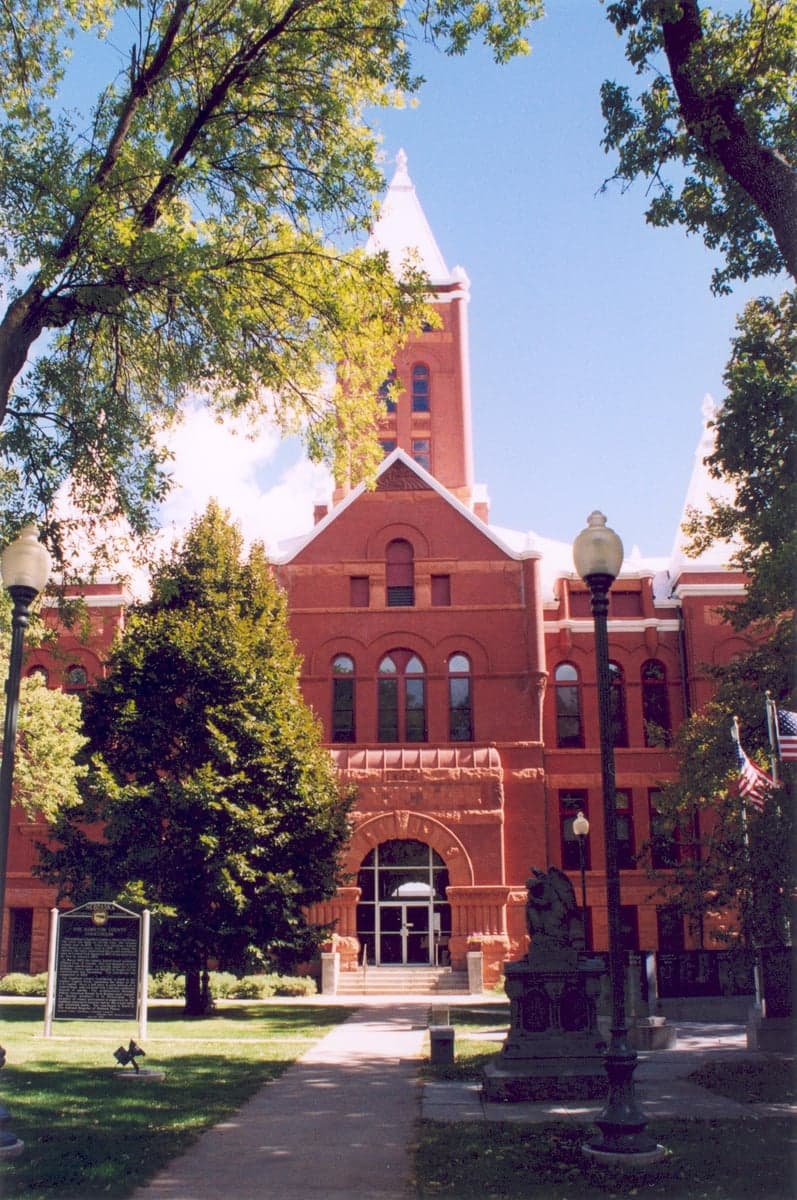
Photo: Wikipedia
Personal Sovereignty in Hamilton County
Viable for self-reliance. Generally workable, though some barriers may limit total independence.
What does Personal Sovereignty tell us?
Personal Sovereignty measures your capacity for self-reliance and independence with minimal government friction. Higher scores mean fewer barriers between you and the way you want to live... but it assumes you have the space you need and good neighbors.
What does this tell us?
Personal Sovereignty measures your capacity for self-reliance and independence with minimal government friction. Higher scores mean fewer barriers between you and the way you want to live... but it assumes you have the space you need and good neighbors.
State Policy
Energy independence: Importer (35% of energy produced in-state)
Personal Liberty
Homesteading

Personal Liberty Analysis
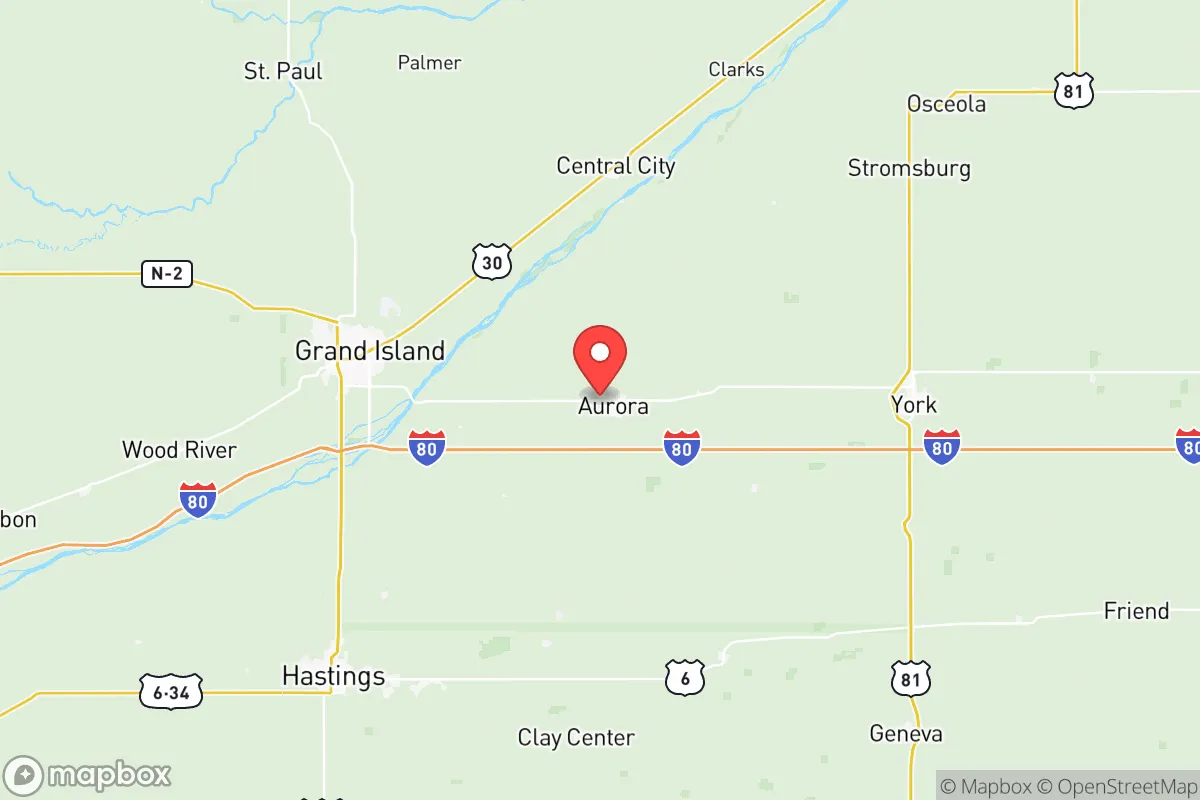
Hamilton County, Nebraska offers a personal sovereignty environment that stands in stark contrast to the coastal and urban jurisdictions many readers are looking to leave behind. The county’s small-town character, anchored by the county seat of Aurora and the communities of Hampton, Marquette, and Giltner, fosters a culture where government presence is minimal and individual autonomy is the default. For those prioritizing freedom from overreach—whether in taxation, self-defense, family decisions, or the ability to live off the land—this area presents a compelling option, though the specifics vary by town and require a close look at local ordinances.
Tax burden and regulatory posture in Hamilton County
Nebraska’s state-level tax structure is a mixed bag for sovereignty-minded individuals. The state imposes a progressive income tax with a top marginal rate of 6.84% as of 2026, and a state sales tax of 5.5% (with local options adding up to 1.5% more). Property taxes in Hamilton County are the heavier burden, with effective rates typically ranging from 1.5% to 2.0% of assessed value—higher than some neighboring states like South Dakota or Wyoming, but significantly lower than high-tax states like California, New York, or Illinois. The regulatory posture at the county level is notably light. Hamilton County has no county-wide zoning ordinance for unincorporated areas, meaning that outside the town limits of Aurora, Hampton, Marquette, and Giltner, land use is governed primarily by state health and building codes. This lack of zoning is a major advantage for those seeking to build a homestead, operate a small business, or keep livestock without bureaucratic hurdles. However, each incorporated town has its own zoning and permit requirements. Aurora, the largest town with roughly 4,500 residents, has a planning commission and enforces building permits, but the process is straightforward and inexpensive compared to urban areas. Hampton and Marquette are even more hands-off, with minimal code enforcement. For those wanting maximum regulatory freedom, unincorporated land in the county—especially along the rural roads between these towns—is the clear choice.
Self-defense and gun law specifics in Hamilton County
Nebraska is a constitutional carry state as of 2023, meaning that any law-abiding adult 21 or older can carry a concealed firearm without a permit. This is a foundational liberty for the prepper mindset. Hamilton County’s sheriff’s office, based in Aurora, is known for a pro-Second Amendment stance and does not impose any additional local restrictions beyond state law. There are no county-level waiting periods, magazine capacity bans, or firearm registration requirements. The state preempts local gun ordinances, so Aurora, Hampton, Marquette, and Giltner cannot pass their own restrictions—a critical protection against the kind of patchwork regulation seen in states like Colorado or Washington. For those who want to stockpile ammunition or build a private shooting range on their own property, the county’s rural character makes this feasible. The nearest indoor gun range is in Grand Island, about 20 minutes north of Aurora, but many residents simply shoot on their own land. Stand-your-ground laws apply statewide, and Nebraska’s castle doctrine is strong, with no duty to retreat in one’s home or vehicle. For the survivalist, this legal environment is a solid foundation, though it’s worth noting that Nebraska does have a state-level red flag law (enacted in 2020) that allows for temporary firearm seizure via court order. This law is rarely used in Hamilton County, but it exists—a point of caution for those deeply concerned about future overreach.
Self-reliance and homesteading viability in Hamilton County
Hamilton County’s agricultural character makes it a strong candidate for homesteading and off-grid living. The county is flat, fertile, and crisscrossed by the Platte River and its tributaries, providing ample groundwater access. Lot sizes in unincorporated areas are typically 40 acres or larger, with many parcels available for $3,000 to $5,000 per acre as of 2026. In the towns, residential lots are smaller—typically a quarter-acre to half-acre in Aurora, and slightly larger in Hampton and Marquette—but still allow for substantial gardens, chicken coops, and even small livestock under local ordinances. Off-grid feasibility is high. Nebraska has no state-level ban on rainwater collection, and solar panels are unrestricted in unincorporated areas. However, Aurora does require grid connection for new residential construction within town limits, so those wanting full independence should look to rural parcels near Giltner or along Highway 14 south of Aurora. Composting toilets and alternative waste systems are allowed in unincorporated areas with a health department permit, which is generally a rubber-stamp process. The county’s building code is based on the 2018 International Residential Code, but enforcement is lax in rural areas—many residents build without permits and face no consequences unless a complaint is filed. For the prepper, the ability to drill a well (costing $10,000–$15,000 for a 200-foot domestic well), install solar, and raise food without interference is a major draw. The biggest practical challenge is the climate: harsh winters with occasional blizzards and summer droughts require robust planning for heating, water storage, and crop resilience.
Personal liberties in Hamilton County: parental rights, medical autonomy, speech, and property
Parental rights in Nebraska are strong, with state law affirming parents’ authority to direct their children’s education, healthcare, and upbringing. Hamilton County is served by the Aurora Public Schools district, which has a conservative school board that has resisted controversial curriculum mandates. Homeschooling is straightforward: parents must file a simple notification with the state and provide 1,032 hours of instruction per year, with no standardized testing requirements or curriculum approval. The county also has several private and parochial options, including Heartland Lutheran School in Aurora. Medical autonomy is a mixed picture. Nebraska does not have a state-level vaccine mandate for adults, and COVID-era restrictions were minimal in Hamilton County compared to urban areas. However, the state does require certain vaccinations for school attendance (with medical and religious exemptions available). For those seeking alternative medicine or holistic care, options are limited—the nearest naturopath is in Grand Island, and functional medicine practitioners are scarce. Freedom of speech is robust, with no local hate speech ordinances or content-based restrictions beyond state and federal law. Property rights are well-protected; eminent domain is rarely used in Hamilton County, and the county’s comprehensive plan (updated in 2020) emphasizes preserving agricultural land and rural character. The one area of concern for some is the state’s inheritance tax, which applies to estates over $100,000 for non-spouse heirs—a factor for those planning multigenerational homesteads.
Overall, Hamilton County ranks as a strong contender for personal sovereignty relative to most of the United States. It lacks the extreme low-tax environment of states like Wyoming or South Dakota, and the red flag law is a legitimate concern for the most liberty-minded. But compared to the regulatory overreach, high taxes, and cultural hostility to self-reliance found in states like California, Oregon, New York, or Illinois, this county offers a breath of fresh air. The combination of constitutional carry, minimal zoning, affordable land, and a culture that values independence makes it a practical destination for those serious about building a self-sufficient life. For the prepper or survivalist, the key is to choose unincorporated land near Hampton or Giltner rather than Aurora proper, to maximize freedom from local ordinances. With careful planning, Hamilton County can serve as a solid base for a life of genuine autonomy.

* Values derived from national, state, county, city and local statistics and may differ in a specific area. Last updated: 2026-05-14T04:49:23.000Z
Narrative content on this page is AI-generated and may contain mistakes. Verify any details that matter before acting on them.
ReloMaps may earn a commission from affiliate links at no extra cost to you.

