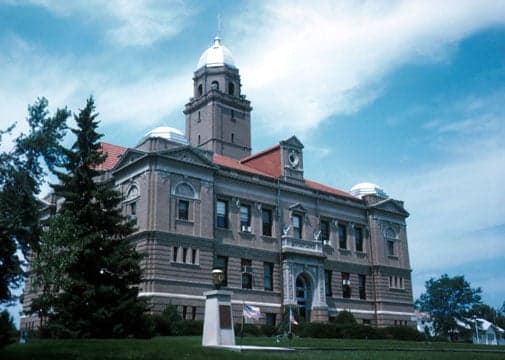
Photo: Wikipedia
Demographics of Saunders County
Affluence Level in Saunders County
An upper-middle-class area. Household wealth, education levels, and homeownership run ahead of national benchmarks.
People of Saunders County
Saunders County, Nebraska, is a predominantly white, rural community of 22,761 residents, characterized by its deep agricultural roots and a population density of just 20 people per square mile. The county’s identity is shaped by a strong Czech and German heritage, visible in its towns like Wahoo, Prague, and Weston, and a political and social conservatism that aligns with the broader Nebraska Plains. With a foreign-born population of only 0.6% and a 93% white demographic, Saunders County remains one of the most ethnically homogeneous counties in the state, a direct legacy of its 19th-century settlement patterns.
Settlement & growth (pre-1960)
Before American settlement, the area that is now Saunders County was part of the traditional territory of the Pawnee and Omaha nations, who used the Platte River valley for hunting and seasonal camps. The U.S. government extinguished Native land claims through a series of treaties in the 1830s and 1850s, opening the region to Euro-American settlers under the Homestead Act of 1862. The county was formally organized in 1867, named after Alvin Saunders, the territorial governor of Nebraska.
The first wave of settlers were primarily Anglo-American farmers from the Upper Midwest and the Ohio Valley, arriving in the 1860s and 1870s. They established the county seat of Wahoo in 1870, along with early towns like Ashland and Mead. These initial settlers were drawn by the promise of cheap, fertile land along the Platte River and the construction of the Union Pacific Railroad, which reached the area in the 1860s and spurred rapid agricultural development.
The defining demographic wave came between 1870 and 1900, when large numbers of Czech (Bohemian) and German immigrants arrived, recruited by railroad companies and land agents who advertised in European newspapers. The Czechs were particularly concentrated, founding towns like Prague (named after the Czech capital), Weston, Morse Bluff, and Malmo. By 1900, Saunders County had one of the highest concentrations of Czech-Americans in the United States, a heritage still celebrated today at the annual Czech Festival in Wilber (just south of the county line) and in the local cuisine and architecture. German immigrants settled more broadly across the county, particularly in Cedar Bluffs and Valparaiso, often working as tenant farmers before buying their own land.
These European immigrants were overwhelmingly Catholic or Lutheran, and they built a network of rural churches and one-room schoolhouses that anchored community life for generations. The population peaked at around 24,000 in 1900, then slowly declined as agricultural mechanization reduced the need for farm labor and younger generations moved to cities. The Dust Bowl and Great Depression of the 1930s hit the county hard, but unlike the Great Plains farther west, Saunders County’s proximity to the Platte River and more reliable rainfall prevented a mass exodus. By 1960, the population had stabilized at roughly 22,000, where it has remained largely unchanged for over 60 years.
Modern era (post-1965)
The 1965 Hart-Cellar Act, which dramatically expanded non-European immigration, had virtually no impact on Saunders County. The county’s foreign-born population remains at 0.6%, and its white population at 93.0%—figures that have barely budged since the 1970s. The small Hispanic population (2.7%) is the only notable post-1965 change, consisting primarily of Mexican-American families who moved to the area for agricultural work in the 1990s and 2000s, settling mainly in Wahoo and Ashland. These families work in meatpacking, dairy farming, and crop harvesting, but they have not formed a distinct ethnic enclave; rather, they are dispersed across the county’s small towns.
The East/Southeast Asian population (0.2%) and Black population (0.7%) are negligible, consisting of a handful of professionals and academics at the University of Nebraska-Lincoln’s nearby research farms and a few families who moved in for manufacturing jobs at the 3M plant in Ashland or the Valmont Industries facility in Valparaiso. There is no Indian-subcontinent population (0.0%) to speak of. Domestic migration has been minimal: the county has not attracted significant Rust Belt or coastal flight, as it lacks major employment centers or urban amenities. Instead, the population is aging, with a median age of 43, and many young adults leave for college or jobs in Omaha and Lincoln, 30–40 miles away.
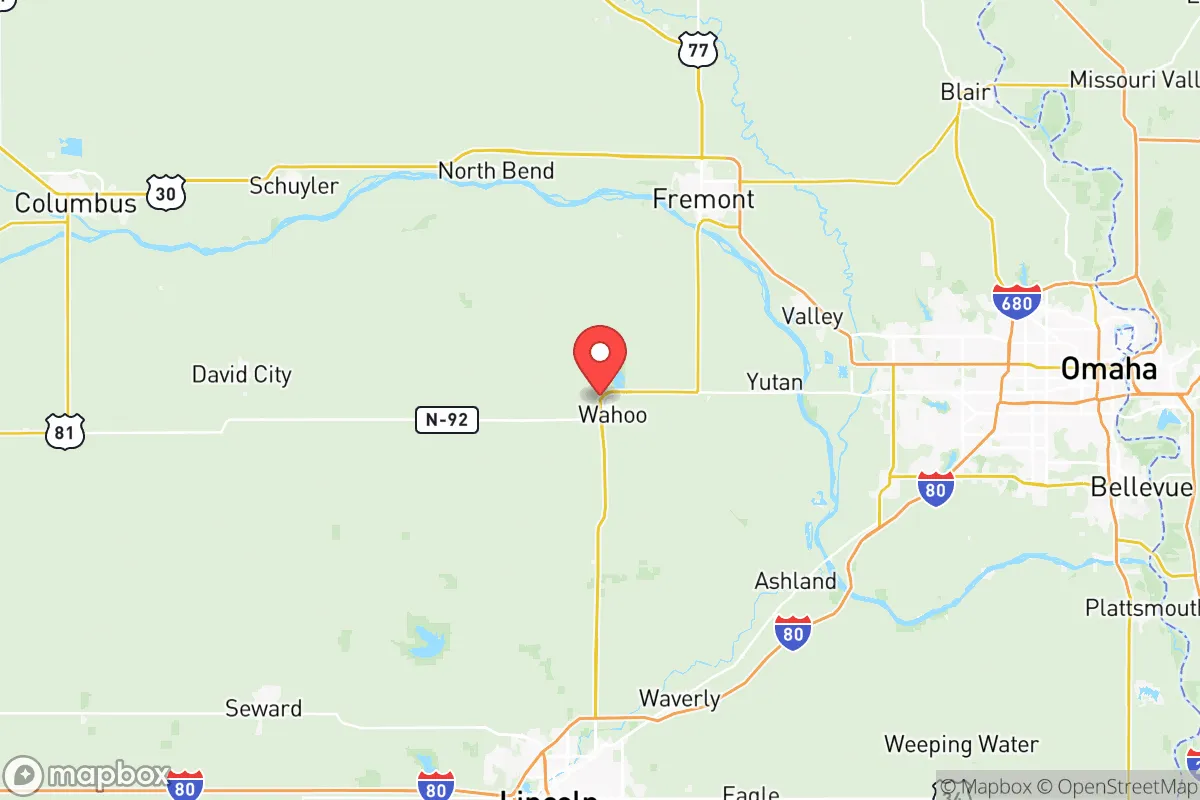
Suburbanization has been limited to the eastern edge of the county, near the Omaha metro area. Ashland and Mead have seen modest growth as bedroom communities for commuters working in Omaha’s western suburbs, but this has not fundamentally altered the county’s rural character. The 2020 census showed a population of 22,761, up only 2% from 2010, indicating a slow, steady decline in natural increase offset by small-scale in-migration.
The future
Saunders County’s demographic future is one of slow homogenization and gradual aging. The white population will remain dominant, likely above 90% for the next two decades, as the county lacks the economic pull to attract significant international or domestic migration. The Hispanic population may grow modestly, perhaps reaching 5–6% by 2040, as agricultural labor demand persists and some families settle permanently, but this growth will be absorbed into the existing rural fabric rather than creating distinct enclaves. The county’s small towns—Wahoo, Prague, Weston, Cedar Bluffs—will continue to shrink as younger residents leave, while Ashland and Mead may see slight growth from Omaha commuters.
Culturally, the county is likely to remain conservative and tradition-bound, with Czech and German heritage festivals, Lutheran and Catholic churches, and a strong agricultural identity persisting as the core of local life. The lack of diversity and low in-migration means the county will not experience the tribalization or ethnic enclave formation seen in urban areas. Instead, it will become more homogeneous over time, as the small non-white populations either assimilate or leave.
For someone moving in now, Saunders County offers a stable, predictable, and deeply rooted community where the population is not changing rapidly. The trade-off is clear: you gain safety, low taxes, and a strong sense of place, but you accept a shrinking, aging population and limited economic opportunity. The county is becoming a quieter, more insular version of its 20th-century self—a place where the past is preserved, but the future is slow to arrive.

* Values derived from national, state, county, city and local statistics and may differ in a specific area. Last updated: 2026-05-13T14:18:34.000Z
Narrative content on this page is AI-generated and may contain mistakes. Verify any details that matter before acting on them.
ReloMaps may earn a commission from affiliate links at no extra cost to you.

