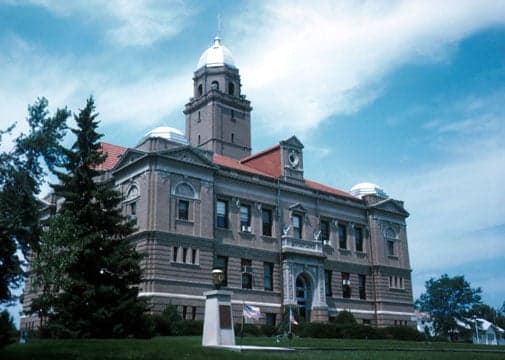
Photo: Wikipedia
Political ClimatePolitical Climate in Saunders County
Showing district-level results — no local-only data available.
Local Political AnalysisPolitical Analysis of Saunders County
Saunders County, Nebraska, has historically been a reliably conservative area, but it's starting to show some cracks in that foundation. While the county itself doesn't have a Cook PVI rating, the surrounding state of Nebraska is rated R+10, meaning it leans heavily Republican. However, Saunders County sits just west of the Omaha metro area, and that proximity is slowly shifting the political winds. The county is still red, but it's not the deep, unshakable red it was twenty years ago, and you can see that tension play out in local elections and community debates.
How it compares
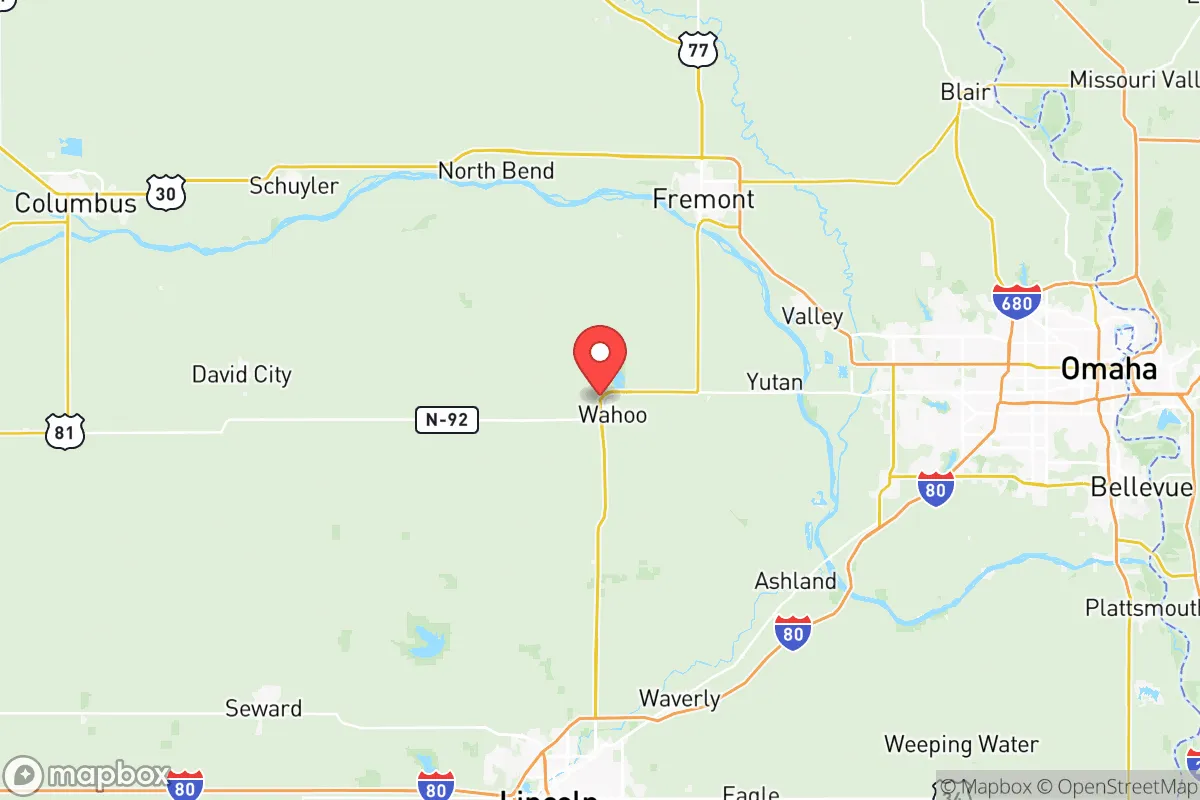
The biggest difference between Saunders County and the rest of Nebraska is the influence of the Omaha metro. The state as a whole is solidly R+10, but Saunders County is a bit more of a mixed bag. The rural parts of the county—places like Morse Bluff, Prague, and Weston—are still deeply conservative, voting for Republican candidates by wide margins. But the towns closer to the metro, especially Wahoo and Ashland, are where you see the real shift. Wahoo, the county seat, has a growing number of commuters who work in Lincoln or Omaha, and that's brought in a more moderate, and in some cases, a more progressive-leaning crowd. Ashland, with its easy access to I-80, has seen a similar influx. The Cook PVI for the state is R+10, but if you looked at just the eastern edge of Saunders County, you'd probably find a PVI closer to D+3 or even a lean blue in some precincts. It's a real contrast to the rest of the state, where you can drive for an hour and not see a single Democratic yard sign.
What this means for residents
For folks who've lived here their whole lives, like me, the biggest concern is how this slow shift is changing the local culture. It's not just about who wins elections anymore; it's about the kind of policies that start getting pushed. You see it in school board meetings, where there's more debate about curriculum and parental rights than there used to be. You see it in county commission meetings, where there's pressure to adopt zoning rules that feel like they're imported from Lincoln or Omaha. The real worry is that this creeping progressivism will lead to government overreach into our personal freedoms—things like property rights, how we run our farms, and even how we raise our kids. The old way of doing things, where the county pretty much left you alone, is starting to feel like it's under threat. It's a slow burn, but it's real.
There are also some cultural distinctions that stand out. Saunders County still has a strong agricultural base, and that keeps a lot of the traditional values intact. But the new residents from the metro don't always understand that. They want more services, more regulations, and more "community planning," which is just a nice way of saying they want to tell you what you can do with your own land. The divide isn't just political; it's cultural. The old-timers in Valparaiso or Ceresco are a different breed from the newcomers in the subdivisions outside of Wahoo. Looking ahead, I think the county will stay Republican for a while, but the margin will keep shrinking. The real fight will be over local control—keeping the county's business in the county's hands, and not letting outside influences dictate how we live our lives. That's the battle that matters most to me.

State Political ClimatePolitical Climate in Nebraska
State Political AnalysisPolitical Environment in the State
Nebraska is a solidly Republican state with a Cook PVI of R+10, but that number hides a more complicated reality than you might expect. The state has been reliably red for decades, but the 2020 and 2024 cycles showed a slow, steady drift rightward in rural areas while the two major metro counties—Douglas (Omaha) and Lancaster (Lincoln)—have become increasingly competitive, with Omaha’s Douglas County actually flipping to Biden in 2020 before swinging back to Trump in 2024. Over the last 10-20 years, the dominant coalition has been a mix of rural conservatives, agricultural interests, and business-friendly Republicans, but a growing libertarian streak and a populist, anti-establishment wing have been pulling the state’s politics in a more freedom-oriented direction.
Urban vs. rural divide
The political map of Nebraska is a textbook example of the urban-rural split. The eastern third of the state, anchored by Omaha (Douglas County) and Lincoln (Lancaster County), is where the blue votes live. Omaha’s Douglas County is the state’s population center and has been trending left for years—it voted for Biden in 2020 by a slim margin and for Trump in 2024 by a similarly narrow one, making it a true swing county. Lincoln’s Lancaster County is more reliably Democratic in state races but still votes Republican in presidential elections, though by shrinking margins. Outside those two metros, the rest of the state is deeply red. Scottsbluff in the Panhandle, Grand Island in the central Platte Valley, and Norfolk in the northeast all vote Republican by wide margins. The truly rural counties—like Cherry County in the Sandhills or Chase County in the southwest—routinely deliver 80-85% of their votes to the GOP candidate. The divide isn’t just about population density; it’s cultural. Omaha and Lincoln have growing professional and academic classes, while the rest of the state is dominated by agriculture, ranching, and small-town values. One notable exception is Bellevue, a suburb of Omaha that leans conservative due to its large military and veteran population from Offutt Air Force Base.
Policy environment
Nebraska’s policy environment is generally favorable for conservatives, but with some notable wrinkles. The state has a unicameral, nonpartisan legislature, which sounds good in theory but in practice means that party labels are officially absent, making it harder to hold individual lawmakers accountable. Tax policy is a mixed bag: there is no state income tax on Social Security benefits, and the state has been slowly phasing down its corporate and individual income tax rates—the top rate dropped from 6.84% to 5.84% in 2024, with further cuts scheduled. Property taxes, however, are a persistent pain point, especially for rural landowners, and the legislature has struggled to deliver meaningful relief despite years of debate. On education, Nebraska has a robust school choice movement—the state passed a tax-credit scholarship program in 2023 that allows businesses to donate to scholarship-granting organizations, effectively funding private school options. The state also has a strong homeschooling community and relatively low regulation for parents who choose that path. Healthcare policy is more mixed: Nebraska expanded Medicaid under the Affordable Care Act via a 2018 ballot initiative, which was a win for the left, but the state has resisted further expansion of government-run healthcare. Election laws are solidly conservative: Nebraska requires voter ID, has no same-day registration, and conducts all-mail voting only in certain counties. The state also has a unique system for allocating its Electoral College votes—two go to the statewide winner, and one goes to the winner of each congressional district—which means the 2nd Congressional District (Omaha) can be a swing district in presidential elections.
Trajectory & freedom
Nebraska is moving in a decidedly more freedom-oriented direction, especially on issues of personal liberty. The most significant recent development is the passage of LB 77 in 2023, which eliminated the requirement for a permit to carry a concealed handgun—constitutional carry is now the law of the land. This was a major win for gun rights advocates and a clear signal that the state is trending toward less government interference in self-defense. On parental rights, the legislature passed LB 1084 in 2023, which prohibits public schools from teaching “divisive concepts” related to race and sex, and requires schools to notify parents about curriculum changes. This law has been challenged in court but remains in effect, and it reflects a broader push to keep government out of family decisions. Medical freedom has seen both wins and losses: the state banned gender-affirming care for minors in 2023 (LB 574), which is a positive for those who believe in protecting children from irreversible procedures, but the same bill also restricted abortion access, which some see as a government overreach into personal medical decisions. Property rights are generally strong, with no statewide rent control and relatively low regulatory barriers for home builders. The biggest freedom concern remains property taxes—the state’s reliance on local property taxes to fund schools means that homeowners and farmers are effectively forced to pay for a government service they may not use, which is a form of compelled subsidy that many conservatives find objectionable.
Civil unrest & political movements
Nebraska has not seen the kind of widespread civil unrest that has plagued coastal states, but there have been notable flashpoints. The most visible was the 2020 George Floyd protests in Omaha, which turned violent on May 30-31, 2020, with looting and fires in the downtown area. The response from local law enforcement was criticized by both sides—some said it was too aggressive, others said it was too slow. Since then, Omaha has seen a rise in organized activist groups on both the left (such as the local chapter of Black Lives Matter) and the right (including the Nebraska Freedom Coalition and various Second Amendment advocacy groups). Immigration politics are relatively quiet compared to border states, but there have been tensions in Grand Island and Lexington, where meatpacking plants have attracted significant immigrant populations. These communities have seen debates over sanctuary policies—Nebraska has no sanctuary cities, and the legislature has passed laws prohibiting them. Election integrity has been a hot topic since 2020, with the state’s Republican Secretary of State Bob Evnen conducting a review of the 2020 election that found no evidence of widespread fraud, but the issue remains alive among grassroots conservatives. There is no serious secession or nullification movement in Nebraska, though some rural counties have floated the idea of joining neighboring states like Wyoming or South Dakota in protest of Omaha and Lincoln’s political influence.
Projection
Over the next 5-10 years, Nebraska is likely to become more, not less, conservative, but the nature of that conservatism may shift. The rural population is aging and shrinking, while Omaha and Lincoln are growing—but the growth in Omaha is coming from both left-leaning professionals and right-leaning families fleeing high-tax states like California and Illinois. The net effect is that the state’s overall partisan lean is likely to remain R+10 or even strengthen slightly, as the new arrivals tend to be more conservative than the native urban population. The unicameral legislature will continue to be a battleground between the business-friendly, establishment wing of the GOP and the more populist, freedom-oriented wing. Expect more action on property tax reform, school choice expansion, and further restrictions on government overreach in healthcare and education. The biggest wild card is the 2nd Congressional District—if Omaha continues to trend left, it could become a permanent swing district, which would give Nebraska a unique role in presidential elections. For someone moving in now, the state will likely feel more free and less regulated in a decade, especially if the current trajectory on gun rights, parental rights, and tax cuts continues.
For a new resident, the bottom line is this: Nebraska offers a high degree of personal freedom, low crime in most areas, and a government that is generally on your side if you value self-reliance and limited interference. The property tax burden is real, but the state is actively working on it. The urban-rural cultural divide means you’ll want to choose your location carefully—Omaha and Lincoln have more progressive pockets, while towns like Fremont, Columbus, and Kearney offer a more reliably conservative environment. If you’re looking for a place where your rights are respected and the government stays out of your life, Nebraska is a solid bet—just keep an eye on the property tax situation and the ongoing fight over school funding.
* Values derived from national, state, county, city and local statistics and may differ in a specific area. Last updated: 2026-05-13T14:18:34.000Z
Narrative content on this page is AI-generated and may contain mistakes. Verify any details that matter before acting on them.
ReloMaps may earn a commission from affiliate links at no extra cost to you.

