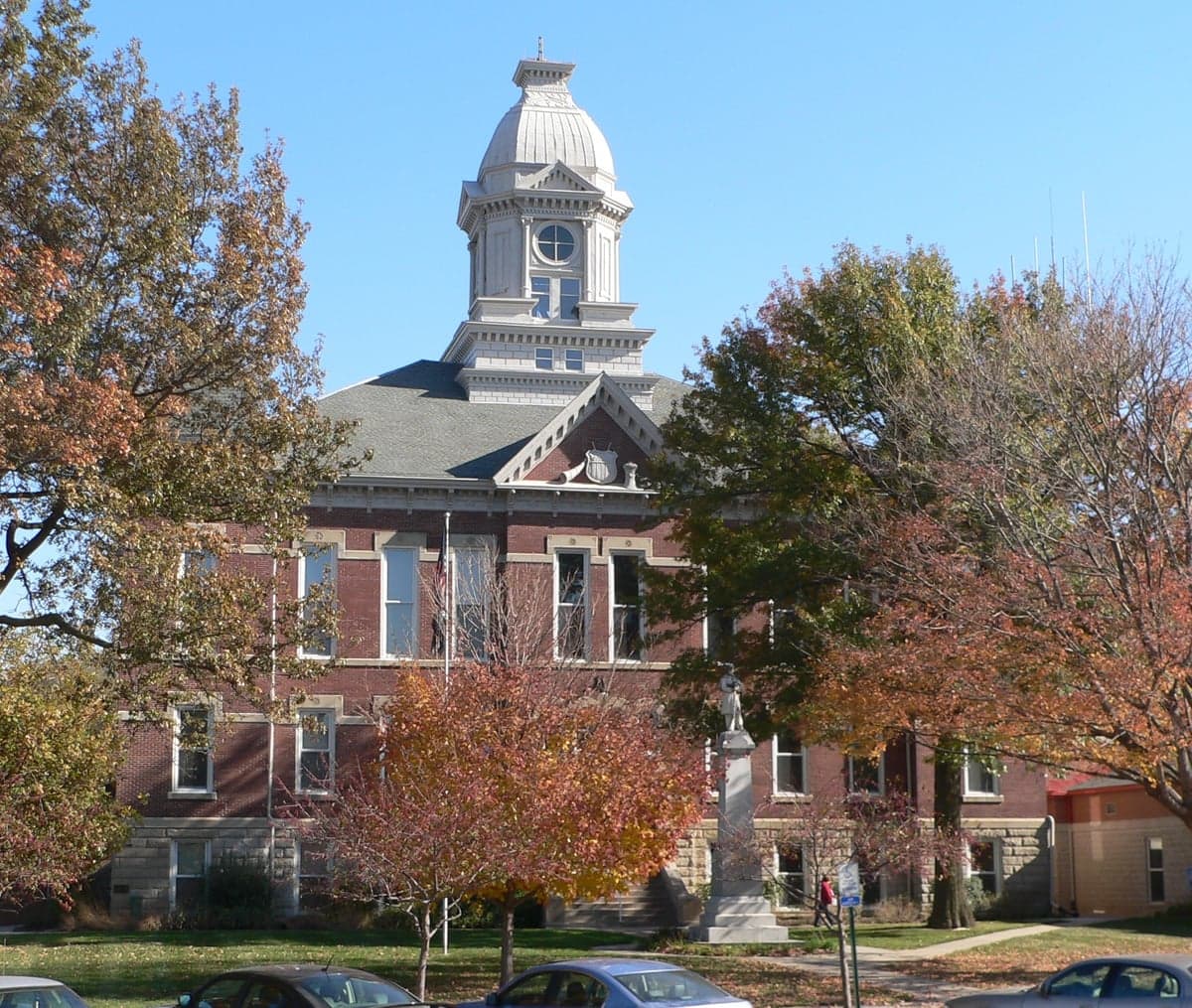
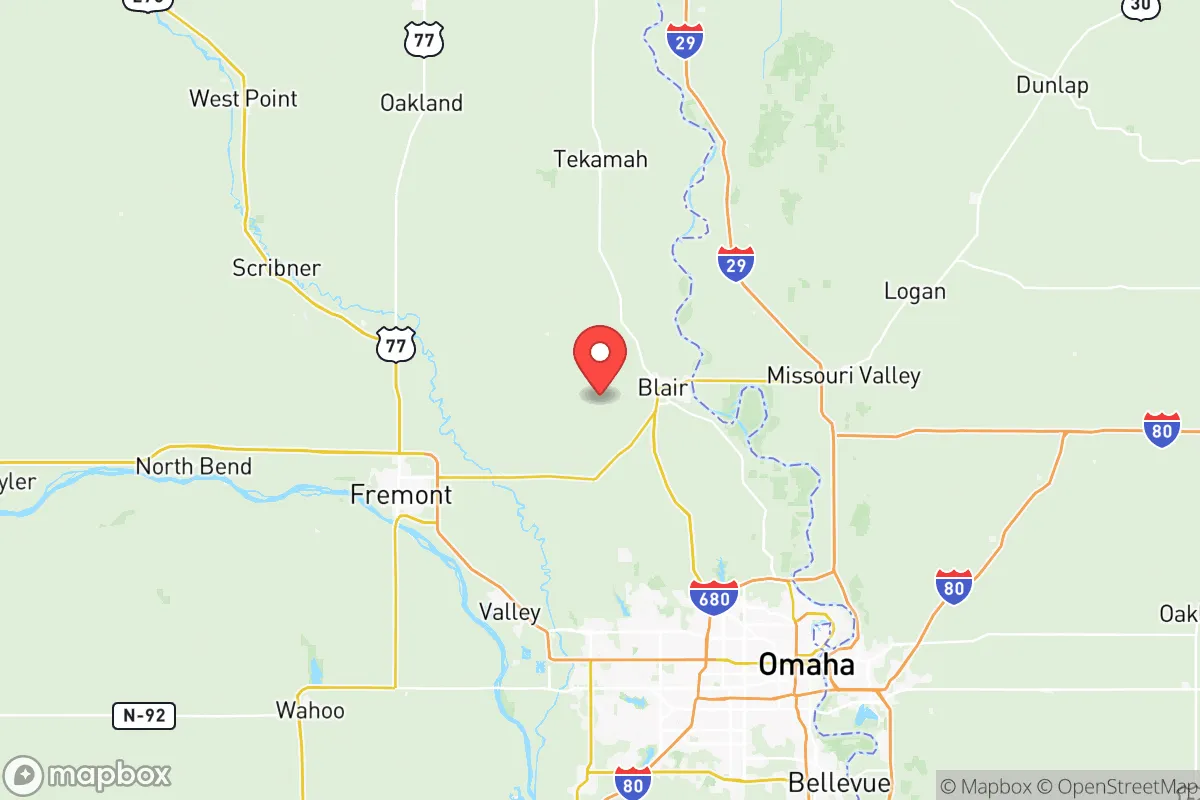
Photo: Wikipedia
Demographics of Washington County
Affluence Level in Washington County
A middle-class area roughly in line with national averages across income, home values, education, and employment.
People of Washington County
Washington County, Nebraska, today is a predominantly white, rural county of 20,989 residents that blends agricultural heritage with suburban commuter access to Omaha. With a foreign-born population of just 0.7% and a white share of 93.3%, it remains one of Nebraska's most ethnically homogeneous counties, shaped by its 19th-century European settlement patterns and limited subsequent immigration. The county's distinctive identity is rooted in its Czech and German farming communities, its role as the birthplace of the Nebraska State Historical Society, and its position as a quiet, family-oriented alternative to the metropolitan corridor along Interstate 80.
Settlement & growth (pre-1960)
Before American settlement, the area that became Washington County was part of the traditional territory of the Omaha and Pawnee nations, who used the region for hunting and seasonal camps along the Missouri River. The first recorded European contact came with French fur traders in the late 1600s, but no permanent European settlement occurred until the 1850s. The U.S. government extinguished Native title through a series of treaties in the 1830s and 1850s, opening the land for organized American settlement under the Kansas-Nebraska Act of 1854.
The first permanent American settlers arrived in the mid-1850s, primarily from the Upper Midwest and New England. Fort Calhoun, platted in 1855, became the county's first organized town and briefly served as the county seat. The town's name honors John C. Calhoun, the former U.S. vice president and senator, reflecting the pro-slavery Democratic leanings of some early settlers. Blair, founded in 1869 by John I. Blair, a New Jersey railroad financier, quickly eclipsed Fort Calhoun after the Sioux City and Pacific Railroad arrived. Blair became the county seat in 1870 and remains the largest town in the county today.
The defining demographic wave came with the Homestead Act of 1862, which drew large numbers of German and Czech immigrants to Washington County in the 1860s and 1870s. German settlers concentrated in the northern and central parts of the county, founding farming communities such as Herman (named for the German chieftain Hermann the Cheruscan) and Kennard. Czech immigrants, primarily from Bohemia and Moravia, established themselves in the southern portion of the county, particularly around Prague (named directly for the Czech capital) and Sprague. These groups brought distinct religious traditions: Germans were largely Lutheran and Catholic, while Czechs were predominantly Catholic with a strong freethinker minority. The county's religious landscape today still reflects these foundations, with Catholic and Lutheran churches remaining prominent in every small town.
By 1900, Washington County's population had reached 13,086, and the agricultural economy was firmly established. Corn, oats, and livestock dominated, with the Missouri River bluffs providing excellent pastureland. The county's population remained remarkably stable through the first half of the 20th century, hovering between 12,000 and 13,000 residents. The Great Depression and Dust Bowl had less impact here than in the Great Plains counties to the west, as Washington County's eastern location and reliable rainfall insulated it from the worst of the agricultural collapse. World War II brought a modest population bump as the Blair Naval Ammunition Depot operated from 1942 to 1945, employing thousands of workers temporarily. After the war, most of those workers departed, and the county resumed its slow, steady agricultural rhythm.
Modern era (post-1965)
The 1965 Hart-Cellar Act, which dramatically reshaped American immigration patterns, had virtually no effect on Washington County. The county's foreign-born population today stands at just 0.7%, compared to the national average of 13.7%. No significant immigrant enclave formed in any Washington County community during the post-1965 period. The county's small Hispanic population (3.2%) is the only notable minority presence, and it is dispersed rather than concentrated in any single town. Blair, the largest community with roughly 8,000 residents, has a small Hispanic population working in agriculture and food processing, but no distinct ethnic neighborhood has emerged.
The major demographic shift in the modern era has been suburbanization from Omaha. Beginning in the 1980s and accelerating after 2000, Washington County became a bedroom community for Omaha commuters, particularly in the southern part of the county. Fort Calhoun and Blair have seen the most growth, with new subdivisions catering to families seeking larger lots and lower property taxes than Douglas County (Omaha) offers. The completion of Nebraska Highway 133 and U.S. Highway 30 improvements reduced commute times to downtown Omaha to under 30 minutes from southern Washington County. This domestic migration has been overwhelmingly white and middle-class, reinforcing the county's existing demographic profile rather than diversifying it.
The county's racial composition has shifted only marginally since 1965. The white share has declined from approximately 98% in 1970 to 93.3% today, almost entirely due to the growth of the Hispanic population. The Black population remains negligible at 0.2%, and East/Southeast Asian communities account for just 0.2%. There is no measurable Indian-subcontinent population. The county's college-educated share of 36.5% is above the Nebraska state average of 33.1%, reflecting the influx of professional commuters from Omaha. The small towns of Arlington and Washington have seen modest growth as affordable alternatives to Blair and Fort Calhoun, while Herman and Prague have experienced population decline as younger residents leave for urban job markets.
The future
Washington County is likely to become slightly more diverse over the next 10-20 years, but the change will be gradual and modest. The Hispanic population, currently 3.2%, may grow to 5-7% by 2040, driven by agricultural labor demand and natural increase. The foreign-born share may rise to 1.5-2% as some immigrant families move from Omaha for lower housing costs. However, the county is unlikely to experience the rapid diversification seen in Douglas County or Sarpy County, as its housing stock, job base, and cultural infrastructure remain oriented toward white, English-speaking, middle-class families.
The most significant demographic trend is continued suburban expansion from Omaha. The southern half of the county, particularly along the Highway 133 corridor through Fort Calhoun and into Blair, will see the most growth. New subdivisions are already being planned in the Blair school district, which is the county's largest employer after agriculture. The northern towns — Herman, Kennard, and Prague — will likely continue to lose population as their aging residents pass away and younger generations relocate. The county's cultural identity is evolving from purely agricultural to a hybrid of farming and suburban commuter, which may create tensions over land use, school funding, and development policy in the coming decades.
For someone moving in now, Washington County offers a stable, safe, and predominantly white community with strong schools and low crime rates. The county's demographic trajectory suggests it will remain one of Nebraska's least diverse counties for the foreseeable future, with a culture shaped by its Czech and German heritage, its agricultural roots, and its growing role as a quiet outpost of the Omaha metropolitan area. New residents should expect a community that values self-reliance, neighborliness, and continuity — a place where change comes slowly and deliberately.

* Values derived from national, state, county, city and local statistics and may differ in a specific area. Last updated: 2026-08-04T13:31:33.000Z
Narrative content on this page is AI-generated and may contain mistakes. Verify any details that matter before acting on them.
ReloMaps may earn a commission from affiliate links at no extra cost to you.

