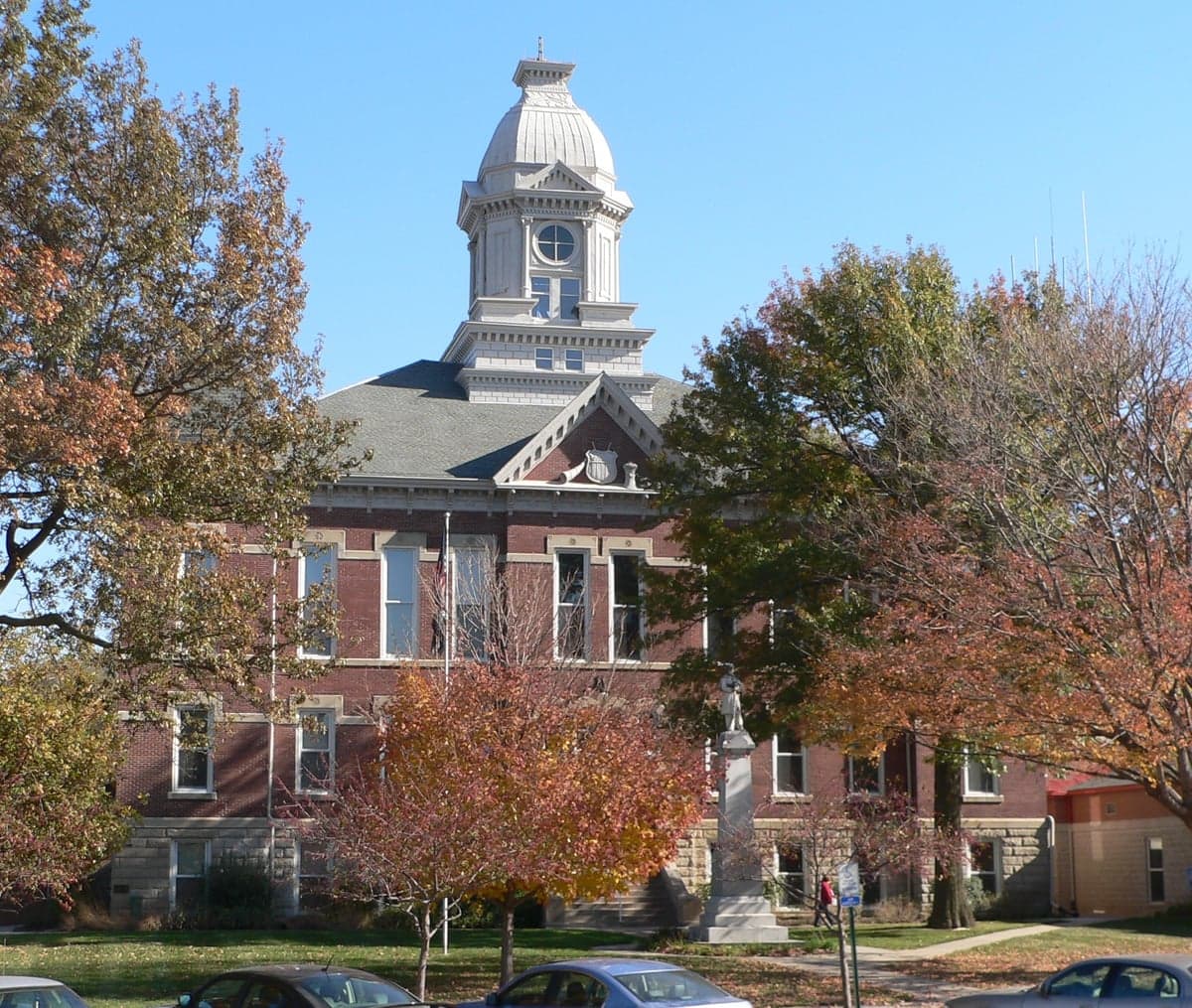
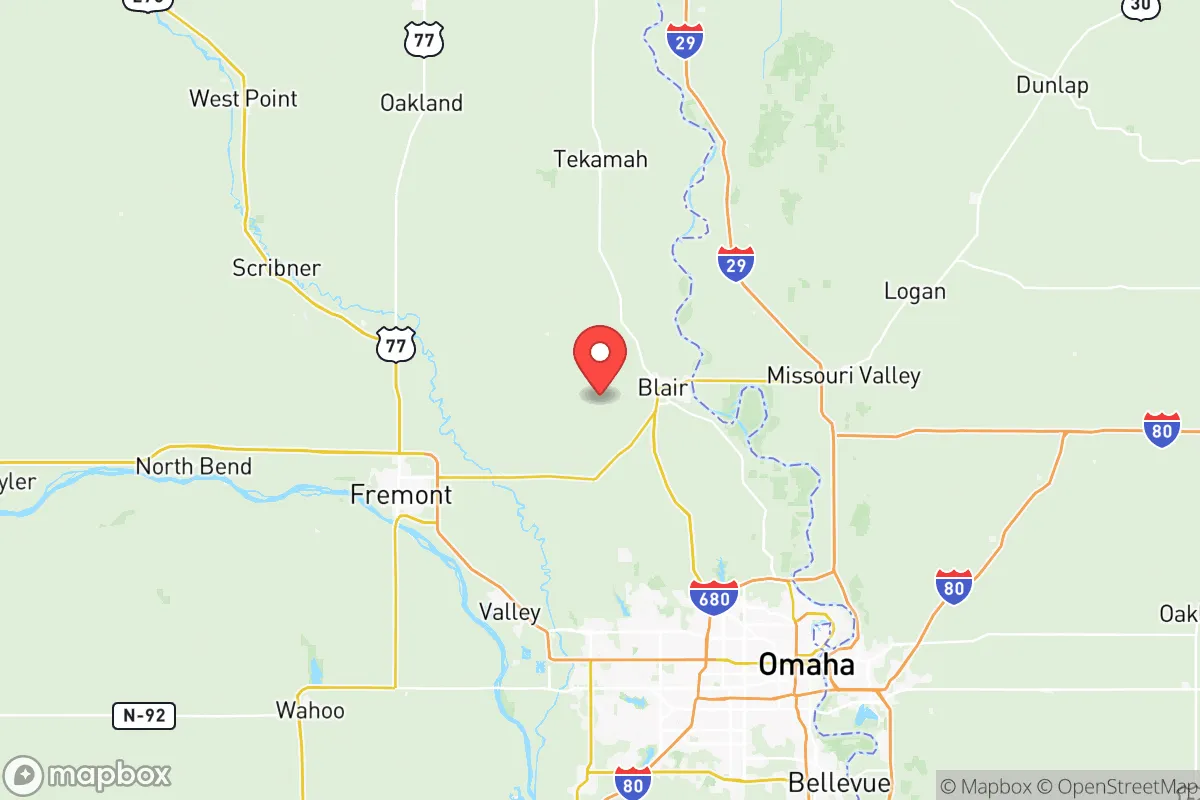
Photo: Wikipedia
Political ClimatePolitical Climate in Washington County
Showing district-level results — no local-only data available.
Local Political AnalysisPolitical Analysis of Washington County
Washington County, Nebraska, is one of the most reliably Republican areas in the entire state, carrying a Cook Partisan Voting Index (PVI) of R+27. That’s a full 17 points more conservative than Nebraska’s statewide PVI of R+10, meaning the county is not just red, but deep crimson. In practice, this means a Republican presidential candidate can expect to win the county by roughly 27 points in a typical election, and local offices from county commissioner to school board are almost entirely held by Republicans. The political culture here is stable, traditional, and heavily influenced by the agricultural and small-town values that define the region, with very little of the suburban swing-voter energy you see in places like Douglas County to the south.
How it compares
To understand just how conservative Washington County is, compare it to the rest of Nebraska. The state as a whole is reliably red at R+10, but that number is pulled down by the blue-leaning precincts in Lincoln and Omaha. Washington County, by contrast, has no major urban center to moderate its politics. The county seat, Blair, is the largest town and votes heavily Republican, though it does show a slight moderating trend compared to the rural townships. For example, in the 2024 presidential election, Blair’s precincts still went Republican by about 20 points, while the small farming communities of Fort Calhoun and Arlington routinely push margins closer to 35-40 points. There are no towns in Washington County that lean blue; the closest thing to a swing precinct might be a few blocks near Dana College’s old campus in Blair, where younger renters and faculty once created a small pocket of Democratic votes, but that effect has faded since the college closed in 2010. The county’s trajectory is stable—there is no sign of a leftward shift, and if anything, the continued exodus of younger residents to Omaha for work has made the remaining electorate older and more conservative.
What this means for residents
For conservative residents, Washington County is a comfortable place to live politically. Local government is efficient and aligned with their values, taxes are low, and there is little friction over cultural issues like gun rights or abortion restrictions. A Republican primary is often the de facto general election, so the real political action happens in the spring. For liberal residents, the reality is different. They are a distinct minority, and while no one is hostile, they will find few like-minded neighbors and virtually no elected officials who share their views. National political conversations can feel one-sided, and local Democratic Party activity is minimal—there is no county party office, and candidates for statewide office often skip the county entirely. That said, most residents, regardless of party, get along fine day-to-day; politics is not a constant topic of conversation, and the shared identity of living in a small, safe, rural county tends to override partisan differences in personal relationships.
The cultural and policy distinctions in Washington County are subtle but real. The county is more socially traditional than even the Nebraska average—for instance, it was one of the first in the state to pass a resolution opposing mask mandates during the pandemic, and it has consistently supported state-level efforts to restrict abortion access. Property taxes are a perennial local issue, as they are across rural Nebraska, but the county’s relatively strong agricultural tax base keeps rates manageable. There is also a noticeable strain of libertarian independence here; residents value local control and are skeptical of both federal overreach and Omaha’s influence. If you’re moving to the area, the political climate is best described as stable, traditional, and deeply conservative—but with a live-and-let-live attitude that makes it easy to find your place regardless of your personal politics.

State Political ClimatePolitical Climate in Nebraska
State Political AnalysisPolitical Environment in the State
Urban vs. rural divide
The political map of Nebraska is a textbook example of the American urban-rural divide. The state’s 2nd Congressional District, which covers most of the Omaha metro area including the city itself and its western suburbs like Elkhorn and Papillion, is the only competitive district in the state. It has voted for the Democratic presidential candidate in three of the last four elections, and it’s the reason Nebraska awards a single electoral vote by congressional district. Lincoln, home to the University of Nebraska, is also a Democratic stronghold, though its surrounding Lancaster County is less reliably blue than Douglas County. In contrast, the rest of the state is deeply red. The vast, sparsely populated Sandhills region, the Panhandle towns like Scottsbluff and Gering, and the Platte River valley communities like Grand Island and Kearney all vote Republican by overwhelming margins. A key example of the rural shift is Dawson County (Lexington), which has moved from a competitive swing county to a solidly Republican one over the past two decades, driven by cultural and economic concerns. The divide isn't just about population density; it's about economic base, with the urban economies tied to insurance, finance, and tech, while the rural economy is dominated by agriculture, ranching, and manufacturing.
Policy environment
Nebraska’s policy environment is a reflection of its Republican trifecta control of the governorship and the legislature. The state has a unicameral, nonpartisan legislature, which is unique in the U.S. and often tempers the most extreme partisan impulses, though party affiliation is well-known. The tax structure is relatively low, with no state tax on Social Security benefits and a flat state income tax rate that has been cut in recent years, currently at 5.58% and scheduled to drop further. The state’s regulatory posture is generally business-friendly, with a right-to-work law and limited environmental regulations. Education policy is a major battleground; the state has seen a significant push for school choice, including the passage of a controversial school voucher program (LB 753) in 2023, which was later repealed by a voter referendum in 2024, only to be replaced by a new, more limited program. Healthcare policy is conservative, with the state rejecting Medicaid expansion for years before finally adopting it via a 2018 ballot initiative. Election laws are moderately restrictive; the state requires a photo ID to vote, a law passed in 2021 and implemented in 2024, and has strict voter registration deadlines.
Recent policy direction
The last few years have seen Nebraska’s legislature move decisively to the right on a range of issues, though the unicameral’s filibuster rules have occasionally slowed the most aggressive proposals. On gun and self-defense law, Nebraska became a constitutional carry state in 2023, allowing permitless concealed carry for anyone 21 or older. On parental and education rights, the state passed the "Parents' Bill of Rights" (LB 1084) in 2023, which requires schools to notify parents of curriculum changes and prohibits instruction on sexual orientation and gender identity in grades K-3. On speech and privacy, the state has not passed any major digital privacy laws, but it has seen debates over library content and book bans in districts like Norfolk and Fremont. On medical and bodily autonomy, Nebraska passed a 12-week abortion ban in 2023 (LB 574), which also banned gender-affirming care for minors, making it one of the most restrictive states on both issues. On property rights, the state has a strong tradition of private property rights, with limited eminent domain use. On taxation, the trend is toward lower rates, with the legislature passing a series of income tax cuts in 2023 and 2024. On voting and ballot access, the new voter ID law is the most significant recent change, and it has been implemented without major controversy so far.
Civil unrest & political movements
Nebraska is not a state known for widespread civil unrest, but it has seen its share of organized political movements. The most visible flashpoint in recent years has been the 2023 abortion and transgender rights protests at the state capitol in Lincoln, which drew thousands of demonstrators on both sides and resulted in a brief lockdown. The state has also seen significant activism around immigration politics, particularly in towns like Schuyler and Lexington, which have large Latino populations working in meatpacking plants. There have been local debates over sanctuary policies, though no city in Nebraska has adopted one. The election integrity movement has been active, with some rural counties like Banner County and Kimball County passing resolutions calling for hand-counting of ballots, though these have not been implemented. The secession or nullification rhetoric is minimal, but there is a strong strain of local control sentiment, particularly in the Panhandle, where residents often feel ignored by the Lincoln and Omaha power centers. A new resident would notice the strong presence of conservative Christian activism in the state, particularly around school board meetings and library boards, as well as a quieter but persistent progressive movement centered in Omaha and Lincoln.
Projection
Over the next 5-10 years, Nebraska’s political trajectory is likely to continue its slow, steady march rightward, but with important caveats. The Omaha metro area is growing faster than the rest of the state, and its increasing diversity and urbanization could make the 2nd Congressional District more reliably Democratic, potentially flipping the state’s electoral vote allocation. However, the rural and exurban areas are also growing more conservative, and the state’s overall population is aging and becoming more white, which benefits the GOP. The in-migration pattern is mixed; people moving to Nebraska from blue states like California and Colorado tend to settle in the urban areas, while those moving to rural areas are often seeking a more conservative lifestyle. The biggest wildcard is the unicameral legislature; if the nonpartisan tradition erodes further, the state could see more aggressive conservative legislation on issues like school vouchers and tax cuts. A new resident moving in now should expect a state that remains solidly Republican at the statewide level, but with a growing, vocal Democratic minority in the cities, and a political culture that is increasingly polarized but still capable of occasional compromise.
For a new resident, the bottom line is that Nebraska offers a stable, conservative policy environment with low taxes, strong gun rights, and a business-friendly regulatory climate. If you are a conservative, you will find your values reflected in state law and local governance, particularly outside of Omaha and Lincoln. If you are a liberal, you will find a vibrant, if outnumbered, community in the cities, but you should expect to live under a conservative state government that is actively restricting abortion, limiting transgender rights, and cutting taxes. The state’s political culture is generally polite and civil, but the underlying divisions are real and growing. The key practical takeaway is that your experience will be heavily shaped by where you choose to live; the difference between living in Omaha and living in Alliance is the difference between a purple city and a deep red town, and that distinction matters for everything from school board politics to the tenor of local government.
* Values derived from national, state, county, city and local statistics and may differ in a specific area. Last updated: 2026-08-04T13:31:33.000Z
Narrative content on this page is AI-generated and may contain mistakes. Verify any details that matter before acting on them.
ReloMaps may earn a commission from affiliate links at no extra cost to you.

