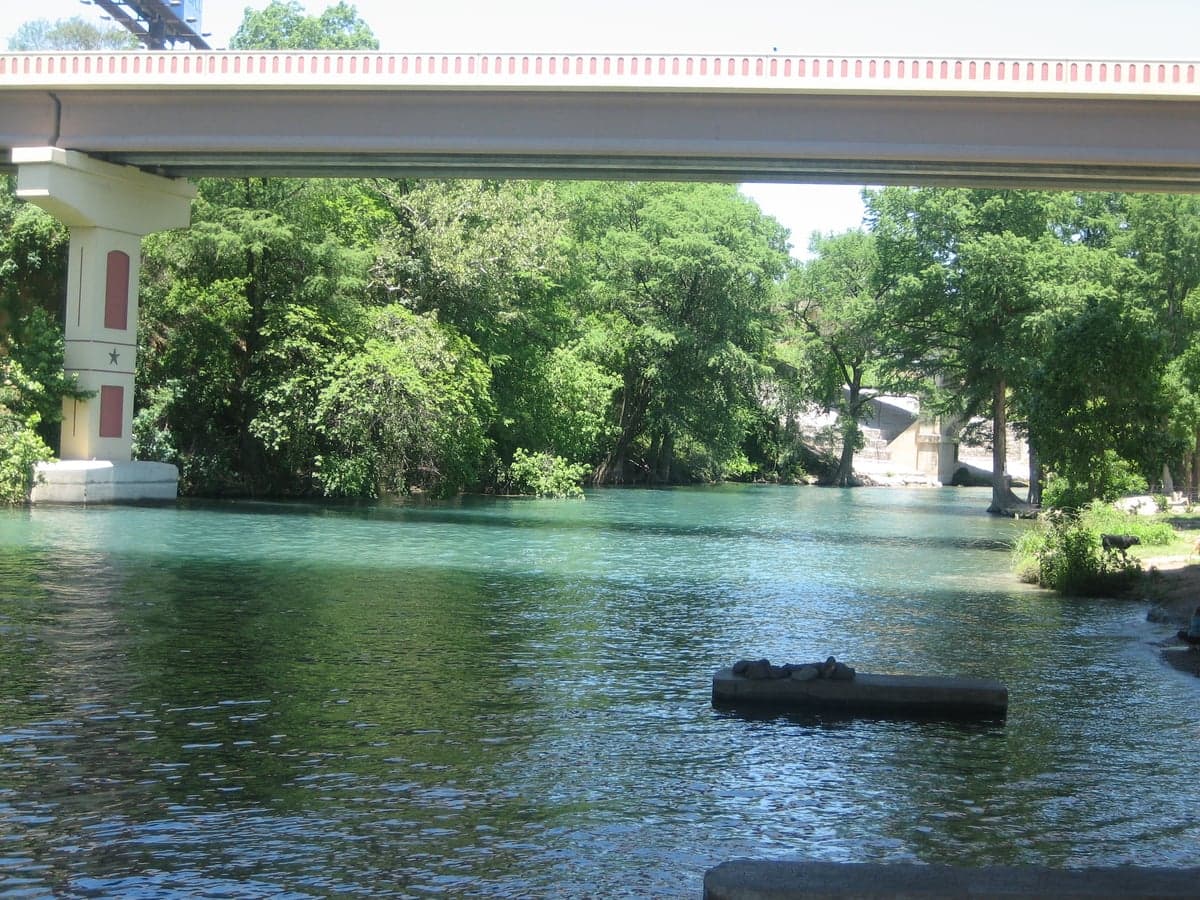
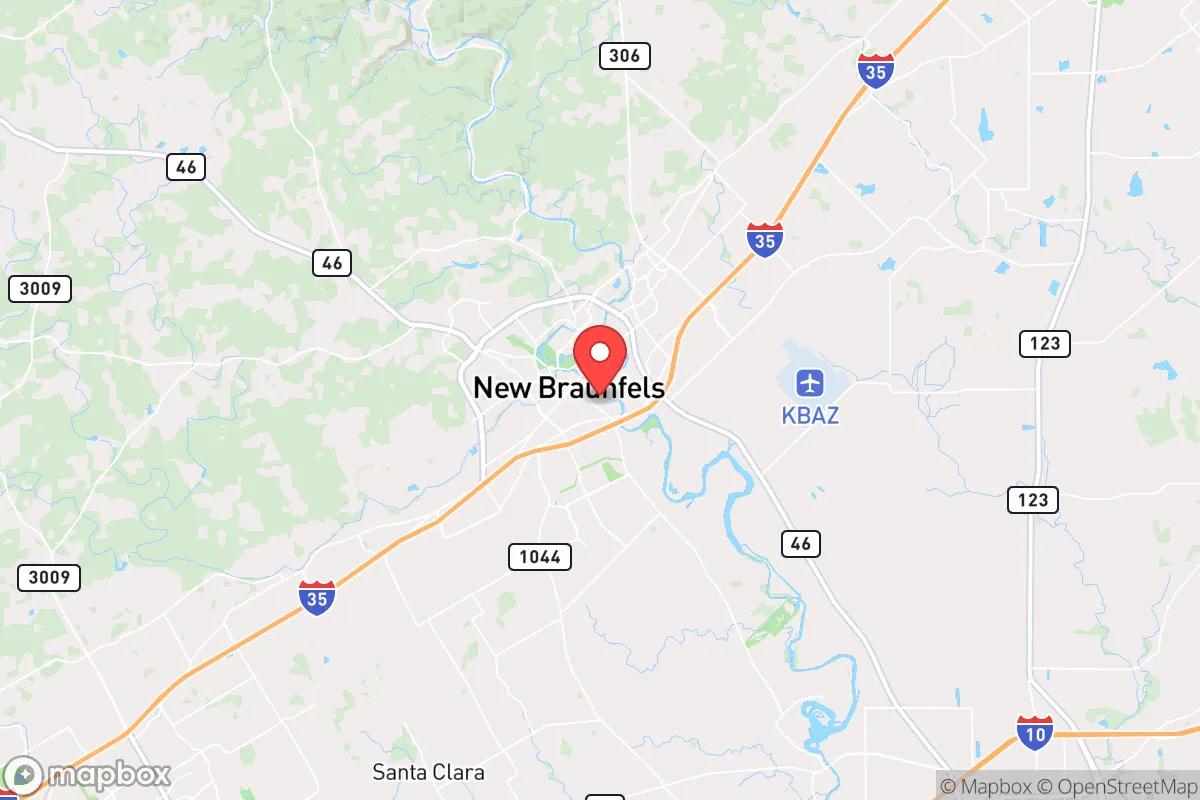
Photo: Wikipedia
Demographics of New Braunfels, TX
Affluence Level in New Braunfels, TX
A middle-class area roughly in line with national averages across income, home values, education, and employment.
People of New Braunfels, TX
New Braunfels, Texas, today is a city of roughly 98,700 residents defined by a strong German-Texan cultural foundation overlaid with rapid Sun Belt growth. The population is predominantly White (60.2%) with a substantial Hispanic minority (33.9%), a small Black community (2.1%), and very limited foreign-born presence (3.3%). The city retains a distinctly conservative, family-oriented character, with a higher-than-average college attainment rate (38.6%) and a palpable tension between preservation of its historic identity and the pressures of suburban expansion from the San Antonio-Austin corridor.
How the city was settled and grew
New Braunfels was founded in 1845 by Prince Carl of Solms-Braunfels on behalf of the Adelsverein, a German noble society promoting emigration to Texas. The original settlers were German immigrants who arrived via the Texas coast and traveled inland to the Comal Springs area. These founding families established the downtown historic district around the Main Plaza and the Comal River, building the limestone homes and commercial structures that still define the city's core. The German population was overwhelmingly Lutheran and Catholic, and they created a tight-knit, agrarian community centered on farming, milling, and the Guadalupe River trade. By the late 19th century, a smaller wave of Czech and Polish families arrived, settling in the Gruene district (originally a separate cotton-farming community) and the West End neighborhoods near the railroad. These groups maintained their own churches and social clubs, but the German cultural imprint remained dominant through the mid-20th century. The city grew slowly, reaching only about 12,000 residents by 1960, as its economy relied on agriculture, light manufacturing, and regional trade.
Modern era (post-1965)
The post-1965 period brought transformative change. The 1965 Hart-Cellar Act had minimal direct effect on New Braunfels—the foreign-born share remains low at 3.3%—but the completion of Interstate 35 and the expansion of San Antonio and Austin triggered massive domestic in-migration. Beginning in the 1970s, Anglo families from the Midwest and California moved into new subdivisions like Mission Hills and Vintage Oaks, drawn by affordable housing, low taxes, and the region's conservative politics. The Hispanic population grew steadily during this period, rising from roughly 15% in 1980 to 33.9% today, driven by both natural increase and migration from South Texas and Mexico. Hispanic families concentrated in the West Side neighborhoods near Loop 337 and in the Lakeview area, where they established Spanish-language churches and small businesses. The Black population, historically very small (under 2% through most of the 20th century), remains at 2.1% and is dispersed across the city without a distinct ethnic enclave. East/Southeast Asian residents (0.6%) and Indian-subcontinent residents (0.4%) are recent arrivals, mostly professionals working in San Antonio or Austin who have settled in newer subdivisions like Veramendi. The city's character shifted from a sleepy German-Texan town to a fast-growing exurb, with the population more than doubling between 1990 and 2020.
The future
The population trajectory points toward continued rapid growth, with projections reaching 130,000-150,000 by 2040. The city is not homogenizing into a single identity; rather, it is tribalizing into distinct enclaves. The historic German-Texan core in downtown and Gruene remains culturally dominant but is aging and shrinking as a share of the total. The Hispanic population is growing faster than any other group and is likely to approach 40-45% by 2040, concentrated in the West Side and newer developments along the I-35 corridor. The White non-Hispanic share will continue to decline but will remain the majority for at least another decade. The small Asian and Indian communities are growing slowly through professional migration but will remain below 2% combined. The foreign-born share is unlikely to rise significantly given the city's limited industrial base and housing costs that are rising faster than wages. The next 10-20 years will see New Braunfels become more Hispanic, more suburban, and more politically contested between preservationists and developers, but its fundamental conservative character is likely to persist.
For someone moving in now, New Braunfels offers a stable, family-oriented community with strong schools and a low-crime reputation, but it is no longer the quiet German town of the 1960s. The city is becoming a diverse, fast-growing exurb where the historic German-Texan identity coexists with a rising Hispanic majority and a steady stream of Anglo transplants. The key question for newcomers is whether they value the city's traditional character enough to accept the traffic, rising home prices, and cultural change that come with being one of the fastest-growing cities in Texas.

* Values derived from national, state, county, city and local statistics and may differ in a specific area. Last updated: 2026-04-29T12:59:19.000Z
Narrative content on this page is AI-generated and may contain mistakes. Verify any details that matter before acting on them.
ReloMaps may earn a commission from affiliate links at no extra cost to you.

