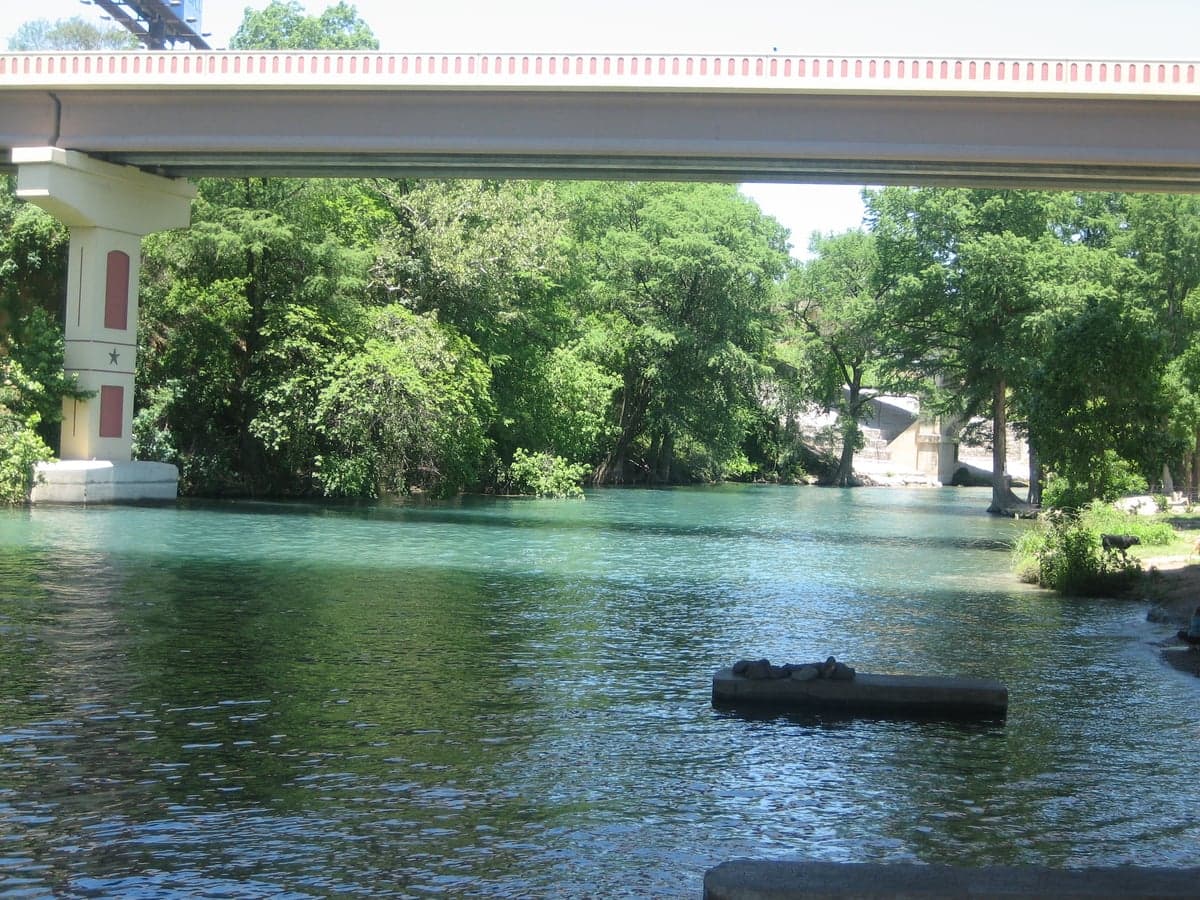
Photo: Wikipedia
Political ClimatePolitical Climate in New Braunfels, TX
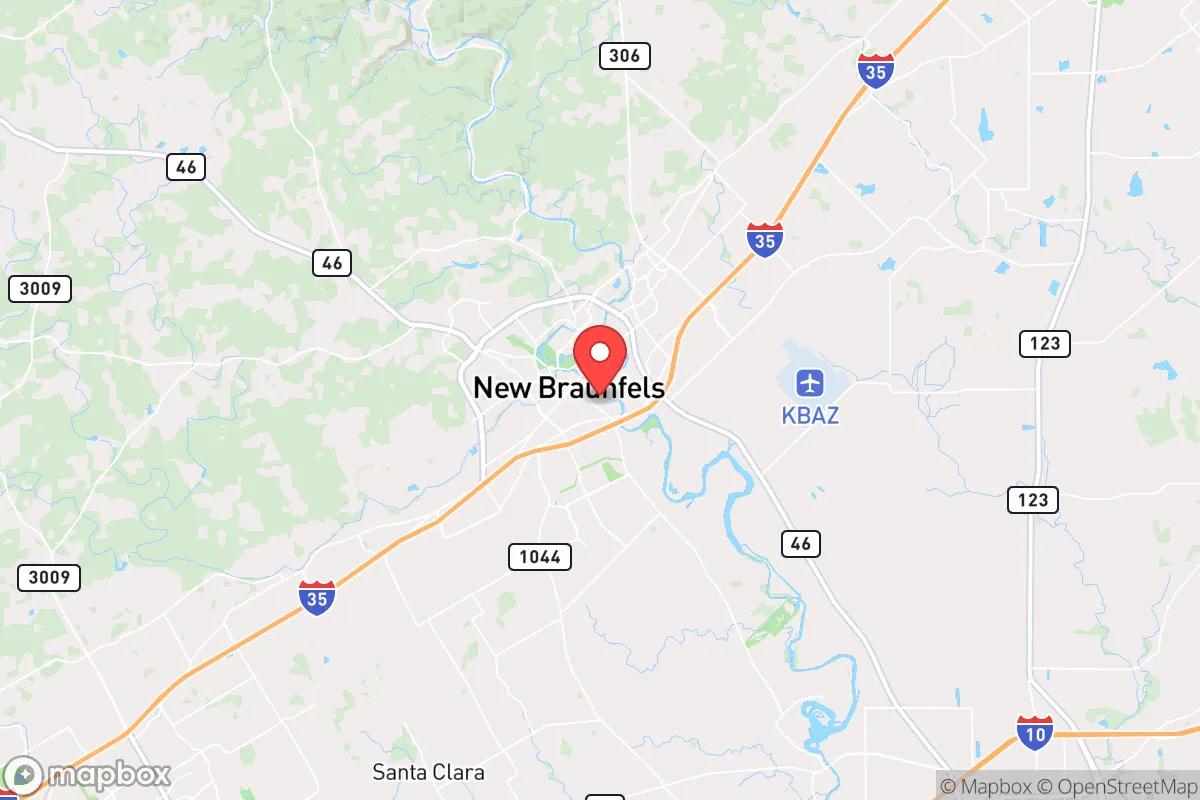
District shown is the primary district for this city’s centroid. Cities may span multiple districts.
Local Political AnalysisPolitical Analysis of New Braunfels, TX
New Braunfels has long been a rock-ribbed conservative stronghold, and that hasn't changed much even as the city has exploded in population. The Cook Partisan Voting Index gives the area a solid R+11 rating, meaning it votes about 11 points more Republican than the national average. That’s not just a number on a map—it reflects a deep, lived-in culture where folks still believe in minding their own business and keeping the government out of their lives. You can feel it at the local coffee shops, at the Comal County courthouse, and in the way people talk about property rights and school choices. It’s a place where the old Texas values of self-reliance and personal liberty aren’t just slogans; they’re the default setting.
How it compares
If you drive just 30 miles south to San Antonio, you’ll hit a very different political climate—a blue-leaning city where progressive policies on taxes, zoning, and policing have taken hold. The contrast is stark. New Braunfels, by contrast, has held the line. Neighboring towns like San Marcos and Austin to the north are even further left, with Austin’s city council pushing everything from mandatory paid sick leave to strict housing regulations that feel like government overreach to anyone who values freedom. Even nearby Seguin, while still conservative, has seen more of a purple tint creep in as San Antonio’s influence spreads. New Braunfels remains a bulwark, but you can see the pressure building as new arrivals from California and the Northeast bring their ideas with them. The local elections are where you really see the fight—school board races and city council seats have become battlegrounds over things like mask mandates and library policies. So far, the conservative majority has held, but it takes constant vigilance.
What this means for residents
For the people who live here, the political climate means a lighter touch from the government in daily life. Property taxes are a perennial headache, sure, but there’s no city income tax, no onerous business licensing schemes, and the local cops aren’t acting like social workers. The schools, while not perfect, still emphasize traditional values and parental input—you won’t see critical race theory shoved into the curriculum here like you might in Austin. The downside is that as the city grows, you’re seeing more pressure for “smart growth” policies that sound good but often mean more red tape for homeowners and small builders. If you value being left alone to raise your family, run your business, and keep your guns, New Braunfels is still one of the best bets in Central Texas. But you’ve got to stay engaged—the progressive wave is real, and it’s lapping at the edges of Comal County.
Culturally, New Braunfels wears its German heritage proudly, and that tradition of independence and community self-governance runs deep. You see it in the Wurstfest celebrations, the volunteer fire departments, and the way neighbors still help each other without a government program. The biggest policy distinction you’ll notice is the city’s approach to growth: it’s pro-business, pro-development, but with a strong emphasis on keeping the rural character intact. There’s no light rail, no plastic bag bans, no sanctuary city nonsense. The biggest threat I see on the horizon is the slow creep of suburbanization that brings with it a demand for more government services and regulations. If you’re thinking of moving here, come with your eyes open: it’s a great place for freedom-loving folks, but you’ll need to be part of the fight to keep it that way. The alternative is watching New Braunfels turn into another San Antonio, and nobody who’s been here long wants that.

State Political ClimatePolitical Climate in Texas
State Political AnalysisPolitical Environment in the State
Texas remains a solidly Republican state, but the margin has tightened noticeably over the past decade. In 2024, Donald Trump carried the state by roughly 9 points, down from 11 points in 2020 and 16 points in 2016. The dominant coalition is still a mix of rural conservatives, suburban moderates, and business-minded fiscal hawks, but explosive growth in the blue-leaning metros of Austin, Dallas, and Houston is slowly reshaping the map. If you’re looking at Texas as a relocation option, you need to understand that the political climate is not monolithic — it’s a patchwork of deeply red rural counties, purple suburban battlegrounds, and deep-blue urban islands.
Urban vs. rural divide
The political geography of Texas is stark. The vast rural expanse — places like the Panhandle around Lubbock, East Texas timber country, and the Hill Country west of San Antonio — votes Republican by margins of 60 to 80 points. Meanwhile, the major metros are increasingly Democratic strongholds. Harris County (Houston) went for Biden by 13 points in 2020, and Dallas County by 16 points. Bexar County (San Antonio) and Travis County (Austin) are even bluer. The real battleground is the suburban ring around these cities. Collin County (north of Dallas) was once a GOP fortress but has shifted from +30 points Republican in 2012 to just +10 in 2024. Fort Bend County (southwest of Houston) flipped to Biden in 2020 and stayed blue in 2024. Tarrant County (Fort Worth) is now a true swing county, going for Trump by only 2 points in 2024 after being reliably red for decades. If you’re moving to Texas, your immediate political environment will depend heavily on whether you choose a rural county like Gillespie or a fast-growing suburb like Frisco or Kyle.
Policy environment
Texas has no state income tax, which remains a massive draw for conservatives and businesses alike. Property taxes are high to compensate — averaging around 1.6% of assessed value — but there is no state-level property tax; it’s all local. The regulatory posture is famously business-friendly, with minimal zoning in many cities and a right-to-work law that limits union power. On education, the state has leaned into school choice, with the 2023 passage of a universal Education Savings Account program that lets parents use state funds for private or homeschool expenses. Healthcare policy is more mixed: Texas did not expand Medicaid under the ACA, keeping the uninsured rate high (around 18%), but the state has also passed laws protecting medical freedom, including a 2021 ban on vaccine passports and a 2023 law prohibiting employer mandates for COVID-19 shots. Election laws tightened in 2021 with Senate Bill 1, which banned drive-through voting, added ID requirements for mail ballots, and restricted early voting hours — a move that drew national attention but has held up in court. For a conservative, the policy environment is generally favorable, though the property tax burden and lack of Medicaid expansion are real trade-offs.
Trajectory & freedom
On balance, Texas has been moving toward more personal freedom in several key areas, but with some worrying countertrends. The 2021 permitless carry law (HB 1927) allows any law-abiding adult to carry a handgun without a license — a clear expansion of Second Amendment rights. Parental rights were strengthened in 2023 with the passage of the "Parental Bill of Rights" (HB 900), which requires school libraries to get parental consent before students can access sexually explicit material. Medical autonomy got a boost with the 2023 ban on COVID-19 vaccine mandates for private employers. However, the state has also clamped down on medical freedom in other ways: the 2021 abortion ban (SB 8) and the near-total trigger ban in 2023 removed virtually all reproductive choice, which some see as a government overreach into personal medical decisions. Property rights remain strong — Texas has no state-level zoning, and the 2017 "property rights" law (HB 2910) limits local governments' ability to restrict land use. The trajectory is mixed: more freedom on guns, education, and business, but less on healthcare decisions and reproductive autonomy. A new resident should expect the state to continue expanding school choice and gun rights while tightening restrictions on abortion and transgender medical procedures for minors.
Civil unrest & political movements
Texas has seen its share of political flashpoints. The 2020 Black Lives Matter protests in Austin, Dallas, and Houston were large and sometimes violent, leading to property damage and a lasting police reform debate. On the right, the "Trump Train" convoys and border militia movements have been active, particularly in rural areas and along the Rio Grande. Immigration politics are front and center: Governor Abbott’s Operation Lone Star has bused over 100,000 migrants to sanctuary cities like New York and Chicago, and the state has sued the Biden administration repeatedly over border policy. The "sanctuary city" debate is real — cities like Austin and El Paso have declared themselves sanctuary jurisdictions, while the state has banned such policies (SB 4 in 2017). Secession rhetoric, while not mainstream, has a vocal fringe — the Texas Nationalist Movement has pushed for a 2024 referendum on independence, though it has no real political power. Election integrity remains a hot-button issue: the 2020 audit of four counties (including Dallas and Harris) found no widespread fraud, but the controversy has fueled ongoing distrust. A new resident will notice the political energy is high — bumper stickers, yard signs, and local activism are common, especially in the suburbs.
Projection
Over the next 5-10 years, Texas is likely to become more politically competitive, but not necessarily more liberal. The in-migration from California and other blue states is real — roughly 1,000 people move to Texas per day — but many of them are conservatives or moderates fleeing high taxes and regulation. The suburbs will continue to shift left, but rural and exurban areas are growing too, and the state legislature is gerrymandered to protect Republican majorities. The demographic trends favor the GOP in the long run: the Hispanic vote, once reliably Democratic, has been trending right, with Trump winning 45-50% of Hispanic men in Texas in 2024. The biggest wildcard is the urban core: if Austin and Houston continue to grow and turn out young, progressive voters, the state could become a true swing state by 2032. For now, expect more of the same: Republican control of the legislature and governor’s mansion, with occasional Democratic wins in statewide races (like Beto O’Rourke’s close 2018 Senate race). A conservative moving to Texas today should feel confident that the state will remain broadly red for the next decade, but the margins will keep tightening, and the political battles will be fought in the suburbs.
Bottom line: Texas offers a policy environment that is generally friendly to conservative values — low taxes, strong gun rights, school choice, and limited regulation — but it’s not a libertarian paradise. Property taxes are high, the state has a heavy hand in healthcare and education, and the urban-rural divide means your day-to-day political experience will vary dramatically depending on where you land. If you choose a red suburb like Keller or a rural county like Comal, you’ll find a community that matches your values. If you land in Austin or Dallas proper, you’ll be in a blue bubble. The state is trending more competitive, but not yet trending left — and for a conservative, that’s a decent bet for the next decade.
* Values derived from national, state, county, city and local statistics and may differ in a specific area. Last updated: 2026-04-29T12:59:19.000Z
Narrative content on this page is AI-generated and may contain mistakes. Verify any details that matter before acting on them.
ReloMaps may earn a commission from affiliate links at no extra cost to you.

