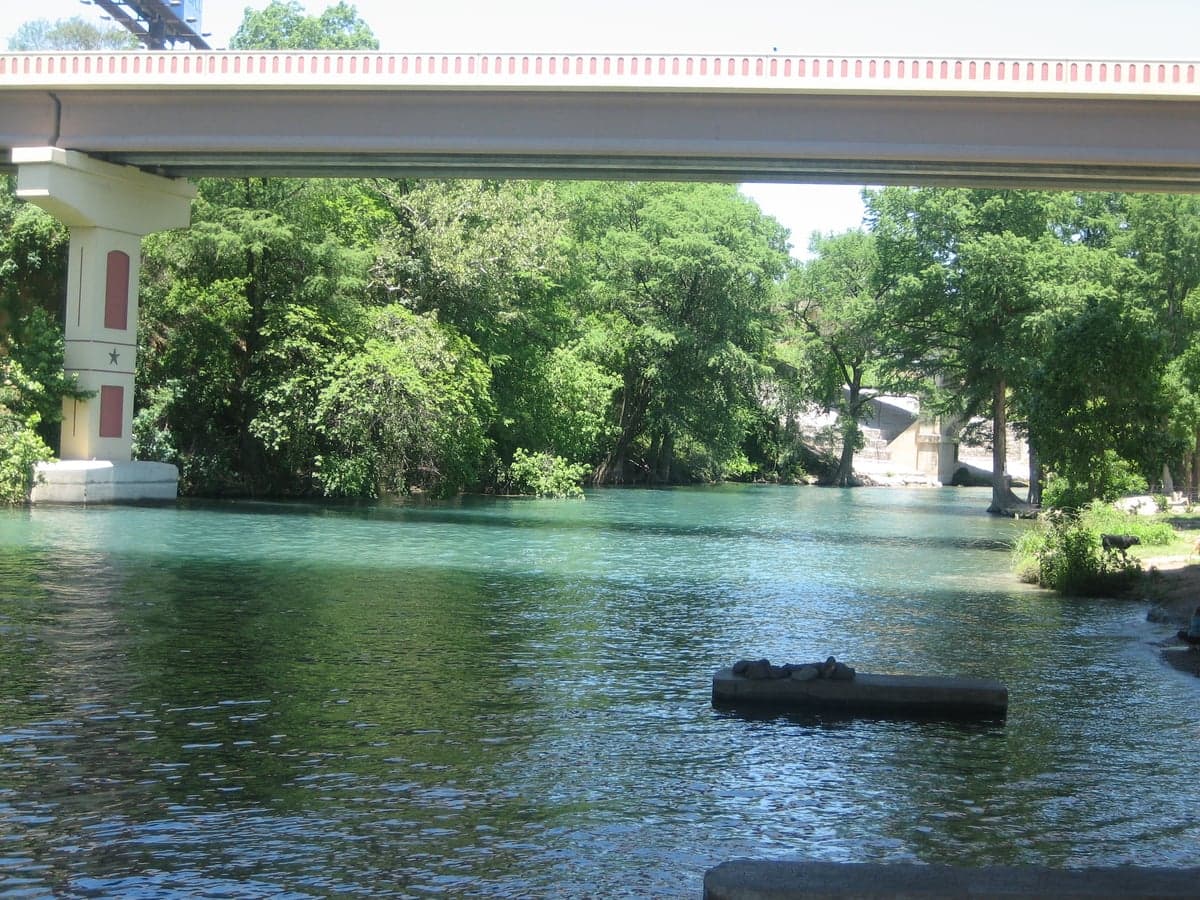
Photo: Wikipedia
Strategic Assessment of New Braunfels, TX
Multiple tactical vulnerabilities. Population density, target proximity, or disaster risk are likely compounding. A retreat property and exit planning is required.
What does the Strategic Assessment tell us?
Our Strategic Assessment grades tactical survivability of an area. Major population centers, military targets, fallout zones, natural disasters, and border exposure all drive risk — lower exposure means a more defensible position in a crisis.
This is heavily inspired by Joel Skousen's Strategic Relocation book. Highly recommended you checkout the book ($)What does this tell us?
Our Strategic Assessment grades tactical survivability of an area. Major population centers, military targets, fallout zones, natural disasters, and border exposure all drive risk — lower exposure means a more defensible position in a crisis.
This is heavily inspired by Joel Skousen's Strategic Relocation book. Highly recommended you checkout the book ($)Strategic Pillars

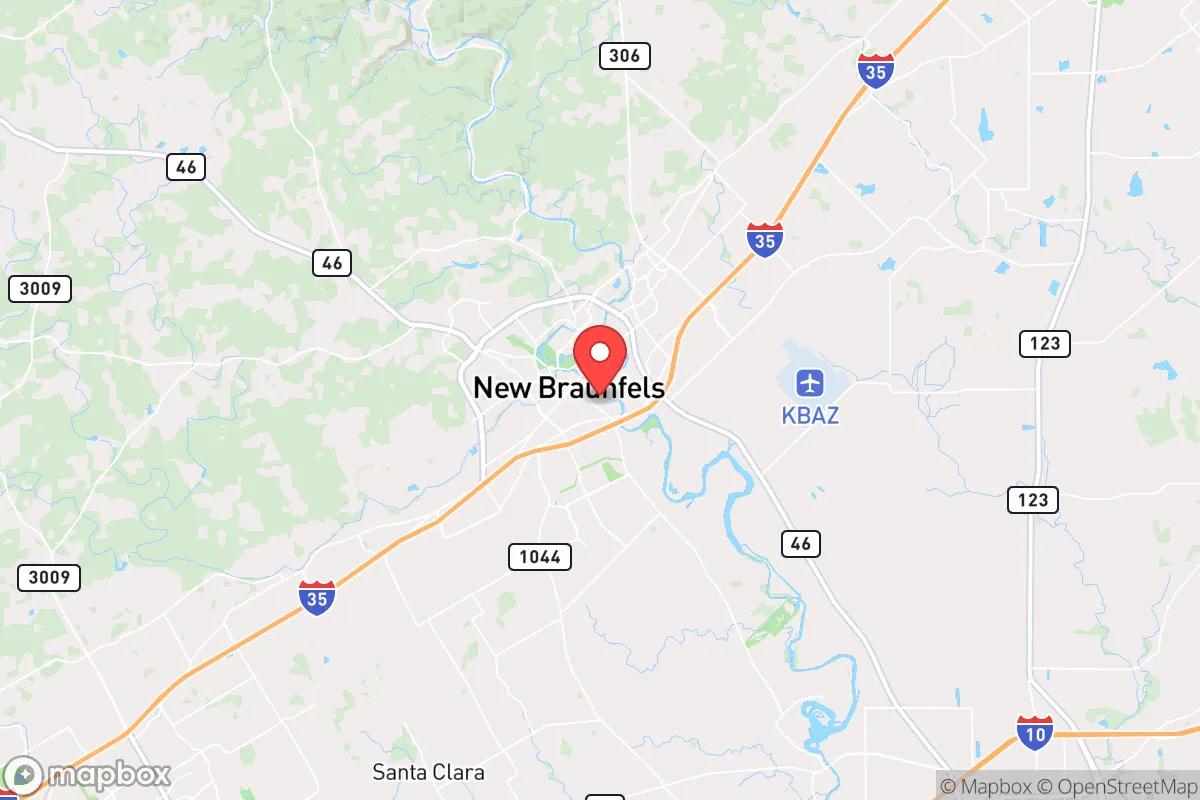
Key Distances
Regional Safe Places
Below is our recommended "safe zones" in Texas and the surrounding area based on our strategic heuristics. For most people, it's unrealistic to live in a “safe zone” full-time due to work, family or other personal reasons. They tend to be more rural. However, many of these areas are perfect for second homes and retreat properties that double as a vacation home or even a short-term rental.

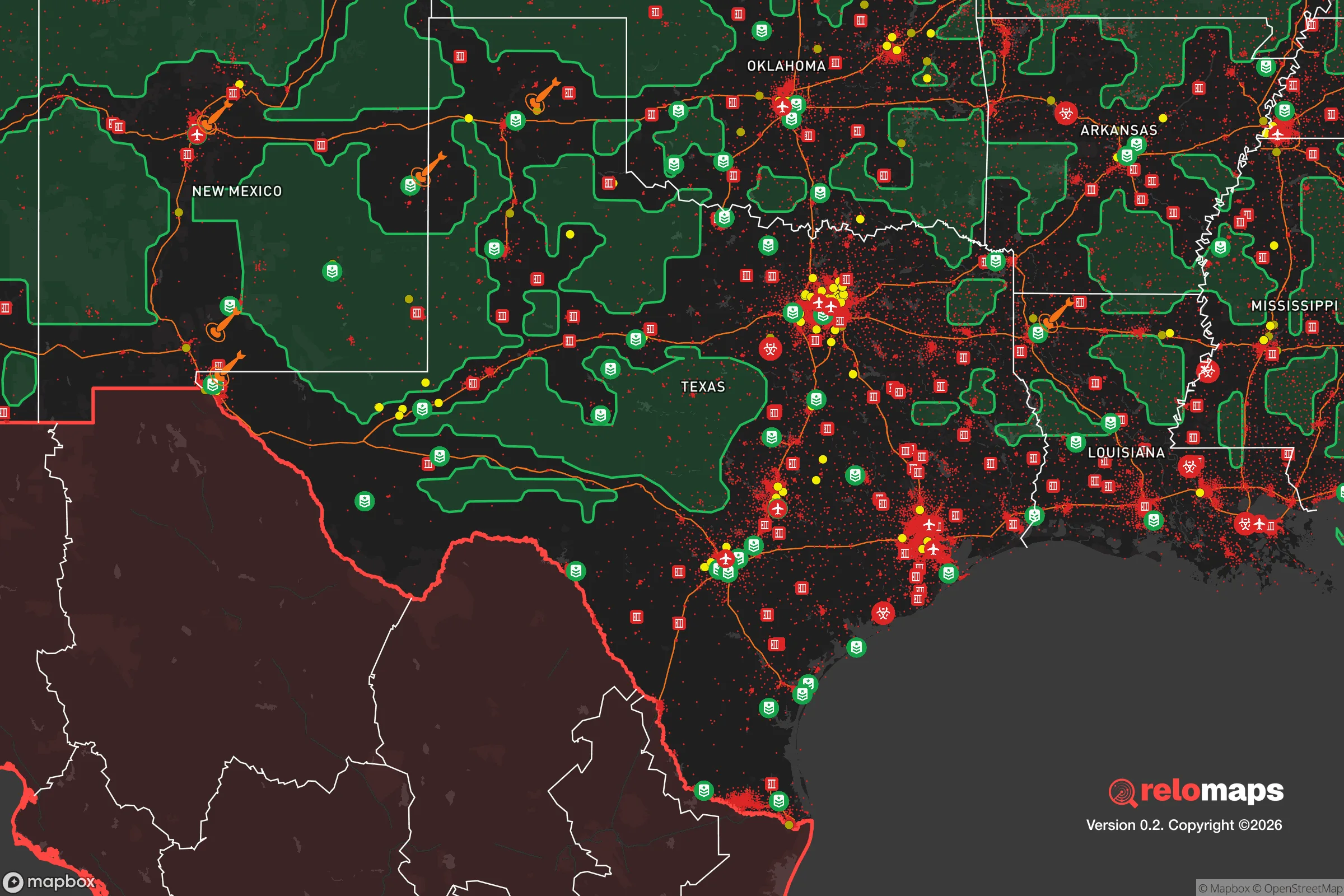


Important Note: For informational purposes only. This does not mean nothing bad ever happens in the green zones. Please use common sense. This is based on public data and modeled with AI. We tried to take a conservative approach but mistakes happen. We update this regularly as new information becomes available.
Solar Generator Recommendations
Backup power matters more here than in safer locations. We've picked three solar generators across budgets and capacity tiers — start with the budget unit if you only need a few essentials, or step up if you want to run a fridge and HVAC for days at a time.

Jackery Portable Power Station Explorer 300
Budget OptionPower on the Go: Weighing only 11 lbs, it's convenient to set up and store with book-sized foldable solar panels

BLUETTI Portable Power Station AC180
Designed for both indoor and outdoor scenarios, AC180 is highly capable as it has a robost capacity and continuous output power.

EF ECOFLOW DELTA Pro Ultra Power Station
Upgraded PickEcoFlow DELTA Pro Ultra is a whole-home energy system designed to grow with your family. Integrated with the Smart Home Panel 2, it scales to meet your evolving energy needs — keeping your home powered, intelligent, and secure through every stage of life.
We earn a commission, at no additional cost to you.
Strategic Assessment Analysis
New Braunfels, Texas, sits in a strategic sweet spot that resilience-minded relocators should study closely. It offers genuine geographic advantages—proximity to the I-35 corridor, the Edwards Aquifer, and the Texas Hill Country—while remaining far enough from major metro centers to avoid the worst of urban collapse scenarios. For a conservative-leaning individual or family concerned with civic unrest, supply chain disruptions, or mass casualty events, this town presents a mixed but workable picture: strong natural resources and community cohesion, offset by real exposure to fallout from San Antonio and Austin, both within 45 minutes.
Geographic position and natural advantages for long-term stability
New Braunfels anchors the I-35 corridor roughly halfway between Austin and San Antonio, which gives it economic vitality but also strategic risk. The area sits atop the Edwards Aquifer, one of the most prolific groundwater sources in Texas, meaning water scarcity—a growing concern across the Southwest—is less acute here than in many other parts of the state. The Guadalupe and Comal Rivers run through town, providing surface water and recreational access that could support small-scale agriculture or emergency supply. The surrounding Hill Country terrain offers natural defensibility: limestone hills, dense cedar breaks, and winding ranch roads that slow movement and create chokepoints. For a relocator thinking about retreat or long-term sustainability, the land itself is a net positive. The climate is humid subtropical, with hot summers and mild winters, which supports year-round gardening and livestock grazing. The local economy is diversified enough—tourism, manufacturing, healthcare, and a growing logistics sector—that a total economic collapse would not hit as hard as in a single-industry town. That said, the town’s population has exploded from roughly 57,000 in 2010 to over 100,000 today, and that growth brings infrastructure strain, increased traffic, and a dilution of the small-town character that initially attracted many preppers.
Risks, exposures, and proximity to fallout-relevant landmarks
The biggest vulnerability for New Braunfels is its location between two major population centers. Austin is 30 miles north, San Antonio 30 miles south. In a mass evacuation scenario—whether from a natural disaster, a terrorist attack, or civil unrest—I-35 becomes a parking lot. The 2021 winter storm (Uri) demonstrated this: roads were impassable for days, fuel was scarce, and grocery shelves emptied within hours. New Braunfels would be a choke point for evacuees fleeing both cities, which could bring looting, resource competition, and violence. Additionally, the area is within the 50-mile fallout zone of Joint Base San Antonio (JBSA), which includes Lackland, Randolph, and Fort Sam Houston. In a nuclear exchange or major terrorist strike, those military installations are high-value targets. The prevailing winds in central Texas blow from the south-southeast, meaning fallout from a strike on JBSA would likely drift north toward New Braunfels. The South Texas Nuclear Generating Station near Bay City is roughly 150 miles away—outside immediate blast radius but within a plausible contamination zone if a catastrophic failure occurred. Flooding is a recurring natural hazard: the Guadalupe River has a history of flash flooding, and the 2015 Memorial Day flood killed several people in the area. For a prepper, floodplain maps are essential reading before buying property. Finally, the rapid growth has created a housing shortage and rising property taxes, which can strain a fixed budget or a prepper’s cash reserves.
Practical resilience for a relocator: food, water, energy, and defensibility
For a relocator focused on self-sufficiency, New Braunfels offers a solid foundation with some caveats. Water is the strongest asset: the Edwards Aquifer provides reliable groundwater, and many rural properties have private wells. The Comal and Guadalupe Rivers are perennial, so surface water collection is viable. However, the aquifer is under increasing pressure from development, and water rights are a legal minefield—anyone buying land should verify well permits and senior water rights. Food production is feasible: the growing season runs from March to November, and the local soil (clay-loam with limestone) supports vegetables, fruit trees, and small livestock. The Comal County Extension Office offers resources for backyard gardening and rainwater harvesting. For energy, the Texas grid (ERCOT) is notoriously unreliable—Winter Storm Uri left thousands without power for days. Solar panels with battery storage are a wise investment, and many homes in the Hill Country already have them. Propane tanks and wood-burning stoves are common backup options. Defensibility varies by location: properties in the hills west of town (near Canyon Lake or along River Road) offer better terrain for security than subdivisions in the flatlands east of I-35. The local culture is heavily conservative, with a strong church presence, a high rate of gun ownership, and a general distrust of federal overreach. That cultural alignment means a prepper family is less likely to be viewed as an outlier and more likely to find like-minded neighbors for mutual aid. The Comal County Sheriff’s Office is well-funded and responsive, but response times in rural areas can exceed 20 minutes—so personal security is a must.
The overall strategic picture for New Braunfels is one of calculated trade-offs. It is not a remote bug-out location—it is a growing suburb with real exposure to urban collapse, military target risks, and infrastructure strain. But for a relocator who wants to stay within striking distance of jobs, healthcare, and supply chains while maintaining a credible self-sufficiency setup, it is one of the better options in central Texas. The key is to buy land with water access, build a defensible perimeter, and maintain a low profile. Avoid the subdivisions near I-35; look instead at properties west of the river or north toward Canyon Lake. Stockpile supplies for at least 30 days, invest in off-grid power, and get to know your neighbors before the crisis hits. New Braunfels will not save you from a direct hit on San Antonio or a full-scale grid collapse, but it gives you a fighting chance—and in the current climate, that is more than most places can offer.

* Values derived from national, state, county, city and local statistics and may differ in a specific area. Last updated: 2026-04-29T12:59:19.000Z
Narrative content on this page is AI-generated and may contain mistakes. Verify any details that matter before acting on them.
ReloMaps may earn a commission from affiliate links at no extra cost to you.

