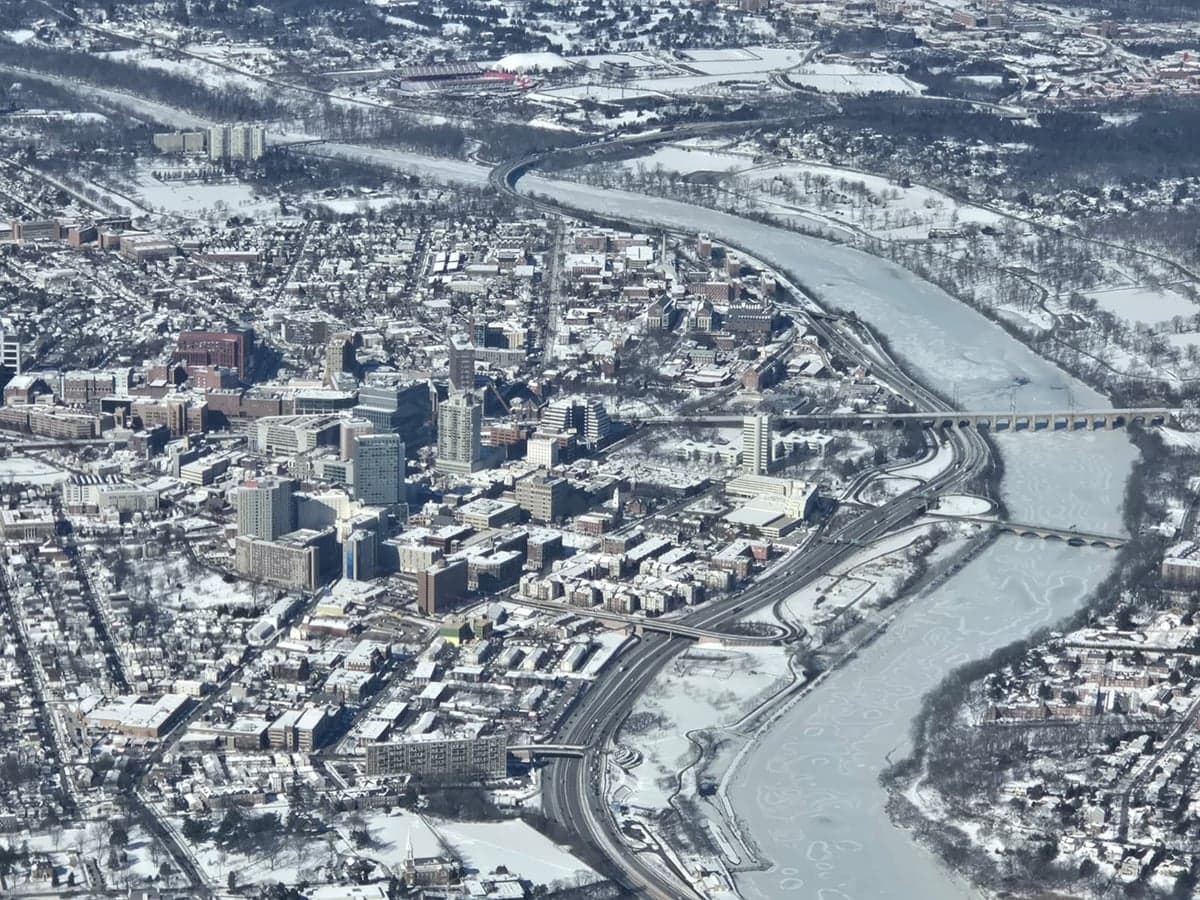
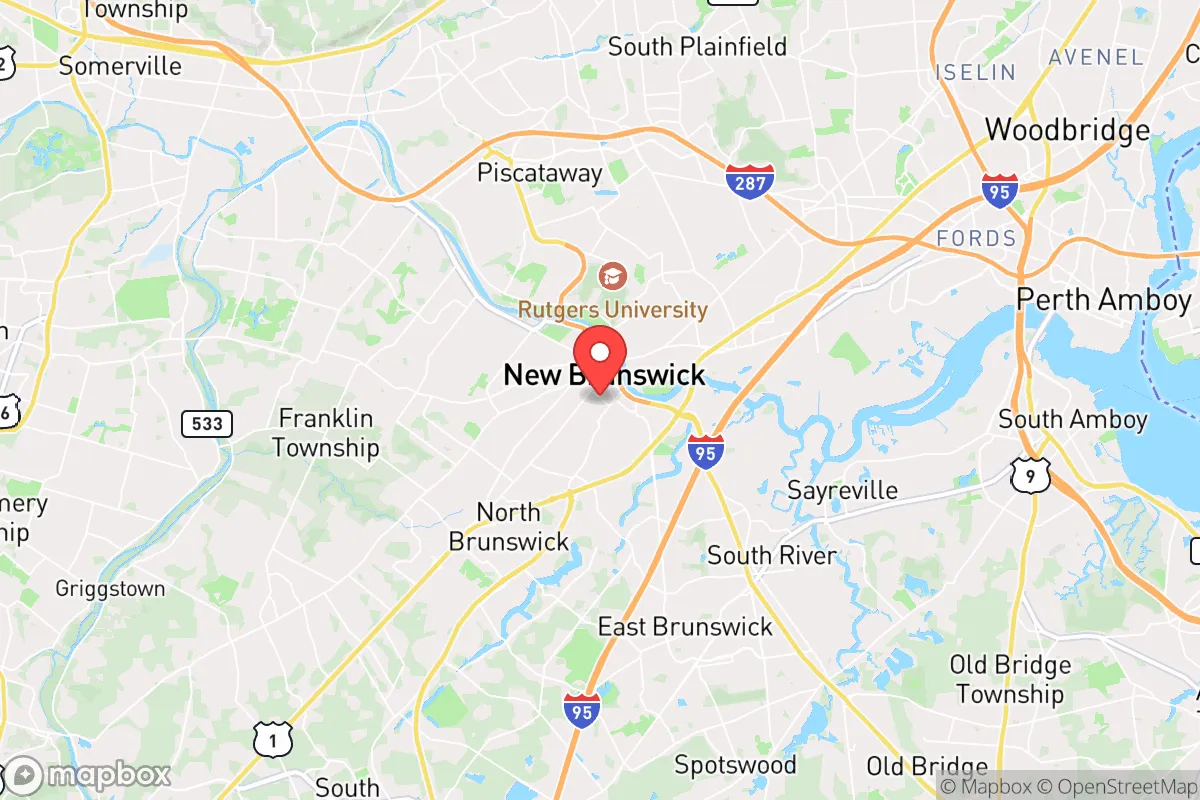
Photo: Wikipedia
Demographics of New Brunswick, NJ
Affluence Level in New Brunswick, NJ
A below-average socioeconomic profile. Incomes, home values, and educational attainment trail the U.S., with higher poverty and unemployment.
People of New Brunswick, NJ
New Brunswick, New Jersey, is a dense, majority-Hispanic city of 55,744 residents where nearly one in four people is foreign-born, creating a vibrant but economically stratified community. The city’s identity is shaped by a long history of immigrant waves—from German and Hungarian industrial workers to Puerto Rican and Dominican arrivals—and today it is a majority-minority city with a significant Indian and East/Southeast Asian presence alongside a shrinking white population. With a college-educated rate of just 24.0%, New Brunswick is a working-class hub anchored by Rutgers University and major hospitals, where distinct neighborhoods reflect the layered settlement patterns of the past 150 years.
How the city was settled and grew
New Brunswick’s population history begins with the Lenape people, but its modern character was forged by European settlers after the 1681 founding by Dutch and English colonists. The city’s strategic location on the Raritan River made it a transportation and manufacturing center by the 19th century. The first major immigrant wave came from Germany and Ireland in the 1840s–1860s, settling in what is now the Feaster Park and Fifth Ward neighborhoods, building the city’s early brick factories and churches. By the 1880s, Hungarian and Polish laborers arrived for jobs in the city’s rubber, paint, and textile mills, clustering in the Hungarian Village area around Somerset Street. Italian immigrants followed in the early 1900s, establishing a strong presence in the Third Ward near the railroad yards. These groups built the city’s dense rowhouse stock and Catholic parishes, creating a white ethnic working-class city that peaked at around 38,000 residents in the 1930s. The Great Depression and post-war suburbanization began a slow decline, but the city’s industrial base—led by Johnson & Johnson, which was founded here in 1886—kept the population stable through the 1950s.
Modern era (post-1965)
The 1965 Hart-Cellar Immigration Act and the collapse of manufacturing reshaped New Brunswick’s population dramatically. Puerto Rican migrants, who had been arriving since the 1950s, became the dominant group by the 1970s, settling in the Fourth Ward and Downtown areas near the train station. They were joined by Dominican and Mexican immigrants in the 1980s and 1990s, drawn by low-cost housing and service jobs at Rutgers and Robert Wood Johnson University Hospital. By 2000, the city was over 50% Hispanic, a share that has held steady since. The white population, which was over 70% in 1970, collapsed to 25.1% by 2024, with most white residents moving to suburbs like Franklin Township or Hillsborough. The black population, historically centered in the Remsen Avenue corridor, peaked at around 20% in the 1990s but has declined to 11.9% as some families left for cheaper housing in Middlesex County. The most recent shift is the growth of Indian and East/Southeast Asian communities. Indian residents (3.6% of the population) are concentrated near the French Street area and along George Street, many working in healthcare and tech at the hospital and Rutgers. East/Southeast Asian residents (4.8%)—primarily Chinese and Filipino—are more dispersed but visible in the College Avenue corridor near the university. The foreign-born share of 24.9% is among the highest in New Jersey, reflecting continuous immigration from Latin America and Asia.
The future
New Brunswick’s population is likely to remain majority-Hispanic for the foreseeable future, but the city is slowly becoming more diverse within that framework. The Hispanic population is not monolithic: newer arrivals from Guatemala and Honduras are settling in the Fifth Ward, while longer-established Puerto Rican and Dominican families are moving to the Buena Vista area near the city’s southern edge. The Indian and East/Southeast Asian populations are growing steadily, driven by Rutgers’ international student programs and hospital employment, but they remain small relative to the Hispanic majority. The white population is stabilizing after decades of decline, with some young professionals and empty-nesters moving into new luxury apartments near the train station, but this is a thin layer atop a deeply working-class city. The biggest demographic trend is the aging of the Hispanic population: the median age is 31.5, and second-generation families are increasingly bilingual and upwardly mobile, though many still leave for suburbs when they can afford to. The city is not homogenizing—it is tribalizing into distinct enclaves by origin and income, with the Downtown area becoming more mixed while the Fourth Ward remains heavily Dominican and the Hungarian Village retains a small white ethnic remnant.
For someone moving to New Brunswick now, the city offers a dense, walkable, and affordable urban environment with strong institutional anchors, but it is not a melting pot in the traditional sense. It is a city of distinct neighborhoods where language, income, and origin still shape daily life. The population is stable in size but shifting in composition, with Hispanic dominance solidifying and Asian communities growing slowly. The bottom line: New Brunswick is a working-class immigrant city that is becoming more diverse within its majority-Hispanic framework, offering opportunity for those who value urban density and cultural variety over suburban homogeneity.

* Values derived from national, state, county, city and local statistics and may differ in a specific area. Last updated: 2026-04-29T20:58:07.000Z
Narrative content on this page is AI-generated and may contain mistakes. Verify any details that matter before acting on them.
ReloMaps may earn a commission from affiliate links at no extra cost to you.

