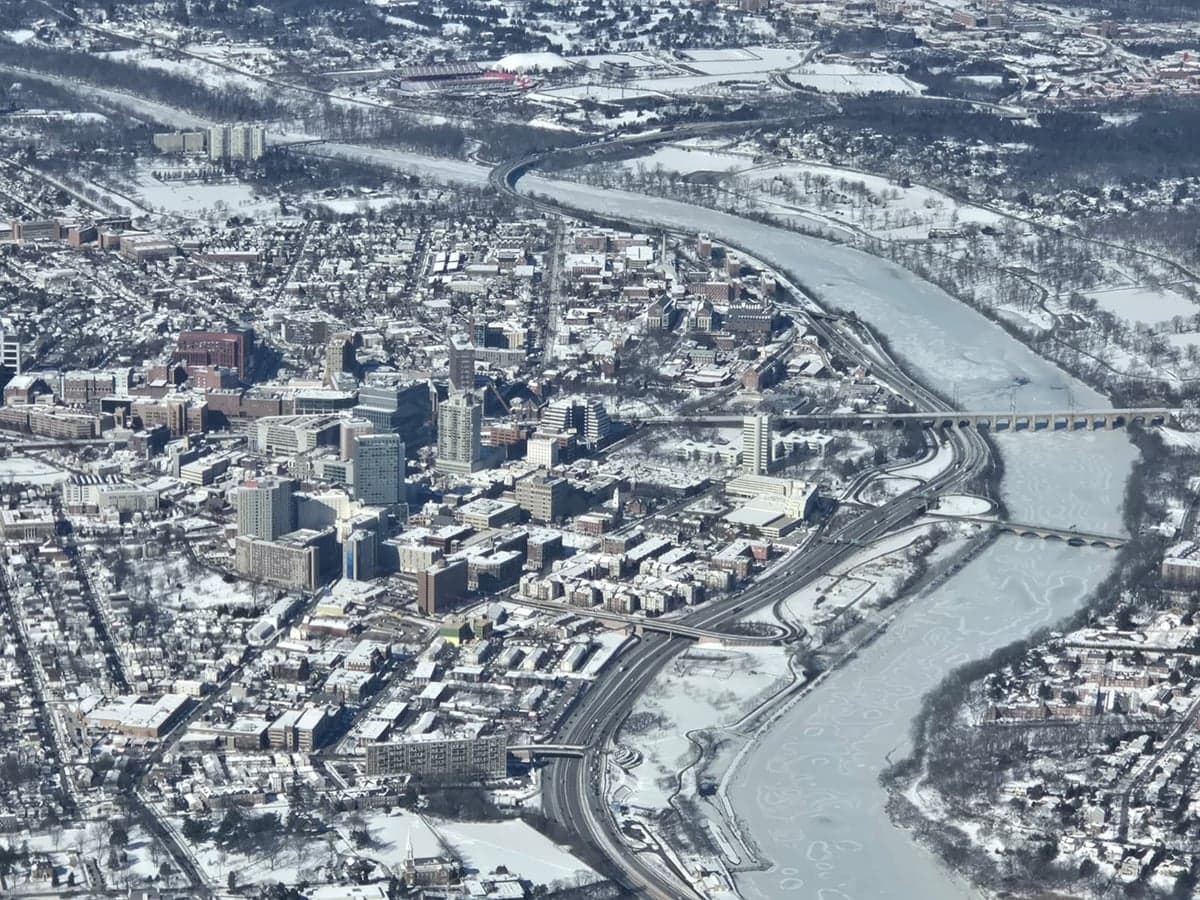
Photo: Wikipedia
Quality of Life in New Brunswick, NJ
A high quality of life with strong walkability, manageable living costs, healthy neighborhood signals, and solid amenity access.
What does Quality of Life tell us?
Quality of Life blends cost of living, nearby amenities, socioeconomic signals, and neighborhood character. City-level scores represent the whole municipality; individual neighborhoods can differ.
What does this tell us?
Quality of Life blends cost of living, nearby amenities, socioeconomic signals, and neighborhood character. City-level scores represent the whole municipality; individual neighborhoods can differ.
Cost of Living
37% above national average
The Real Cost of Living in New Brunswick, NJ for 2026
| Tier | Individual | Family (4) |
|---|---|---|
| Survival | $29k | $54k |
| Comfortable | $62k | $90k |
| Luxury | $109k+ | $169k+ |
| Elite (Top 5%) | $146k+ | $226k+ |
67%
The Area Signal
A metric tracking the socioeconomic signals of the area.
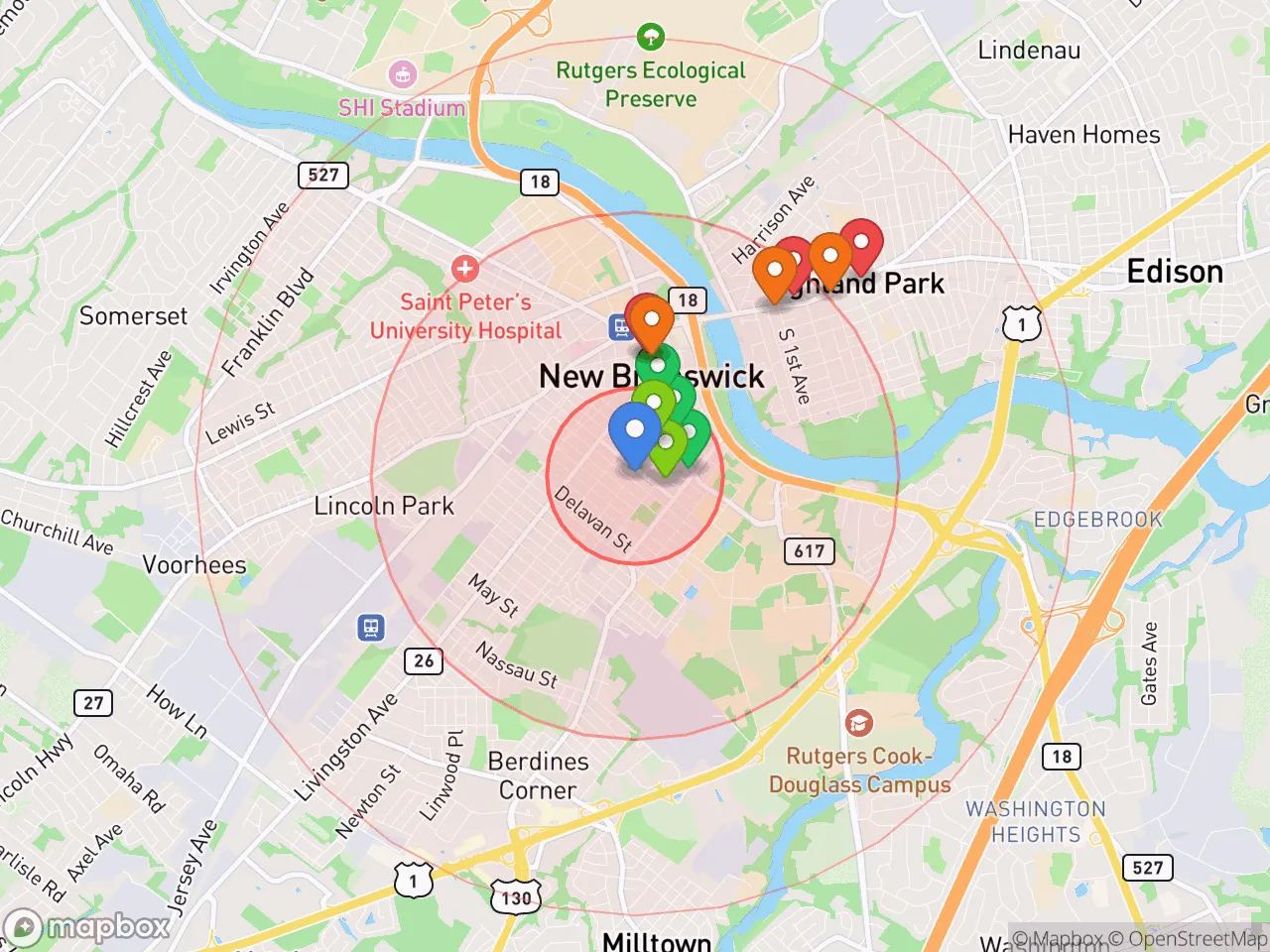
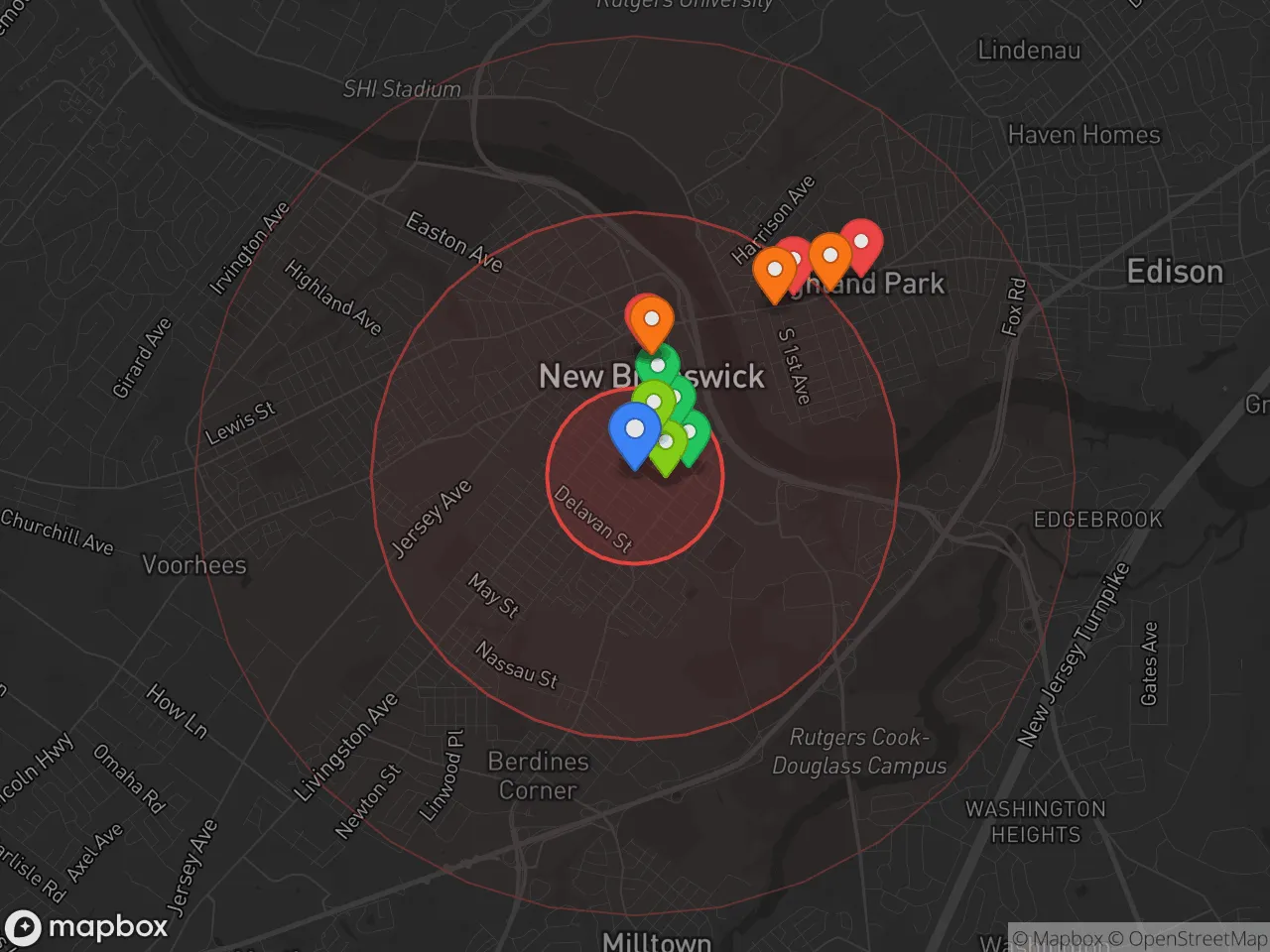
Hobbies
Explore the areaGroceries
9 within 10 miles
Gas
20 within 10 miles
Hospital
20 within 20 miles
Airport
EWR — Newark Liberty International
Post Office
USPS — New Brunswick, NJ
Critical Amenities
Quality-of-Life Analysis
New Brunswick, New Jersey, presents a quality-of-life profile that is distinctly shaped by its role as a major medical and educational hub, drawing a population that is younger, more transient, and more diverse than the national average. With a cost of living index of 137 (37% above the U.S. average), the city is not affluent in the traditional suburban sense but rather commands a premium driven by its proximity to high-paying jobs at Rutgers University and Robert Wood Johnson University Hospitalcars. The median household income of roughly $60,000 is significantly lower than the state average, reflecting a large student and early-career professional base, while a substantial portion of residents rent rather than own.
Cost of living, housing, and affordability compared to nearby areas
New Brunswick’s cost of living is 37% above the national average, but it remains a relative bargain compared to other Hudson River-adjacent cities in New Jersey. The median home value of $316,800 is roughly half that of nearby Princeton or Hoboken, making it one of the more attainable markets in central New Jersey for first-time buyers willing to accept a denser, more urban environment. Median rent sits at $1,790, which is below the state median of $2,100 but still strains a typical household budget given the local income levels. The average commute of 24.5 minutes is shorter than the New Jersey average of 31 minutes, a direct benefit of the city’s dense job base and its position as a NJ Transit rail hub with direct one-seat rides to Newark (30 min) and New York Penn Station (55 min). For renters, the trade-off is clear: you pay a premium for walkability and transit access, but you avoid the car-dependent sprawl and longer commutes of outer Middlesex County towns like Edison or East Brunswick.
What daily life is like for families, students, and professionals
Daily life in New Brunswick revolves around two dominant institutions: Rutgers University and the Robert Wood Johnson medical complex. The city’s downtown, centered on George Street and Easton Avenue, is packed with student-oriented bars, ethnic restaurants (especially Korean and Latin American), and live music venues like the State Theatre and the Heldrich Hotel. For families, the public school system is a mixed bag—the district is underperforming relative to state averages, with a graduation rate of 79% compared to the New Jersey average of 91%, leading many professional households to opt for private or charter options such as the New Brunswick Middle School or the Greater Brunswick Charter School. Parks are limited but functional: Boyd Park along the Raritan River offers walking paths and soccer fields, while the Rutgers Gardens provide a quiet escape. The city’s walk score of 82 and bike score of 63 mean errands are often done on foot, but car ownership is still common for grocery runs to the nearby Wegmans in Woodbridge or the ShopRite on Route 1. The rhythm is distinctly 24/7—classes, hospital shifts, and nightlife create a constant hum that appeals to those who want energy over quiet.
New Brunswick is best suited for people who prioritize career opportunity and urban convenience over suburban space and top-tier schools. Young professionals in healthcare, academia, and tech will find the short commute and transit access a major draw, as will graduate students who want to live within walking distance of campus. Families should weigh the school trade-offs carefully—those who can afford private education or are willing to commute to higher-performing districts in Highland Park or Edison will find the city’s cultural diversity and walkability a rewarding trade. Retirees and those seeking quiet, low-cost living will likely be better served by smaller towns in Hunterdon or Somerset counties. For the right person, New Brunswick offers a dense, affordable (by New Jersey standards) urban base camp with direct access to both the Jersey Shore and Manhattan.

Crime in New Brunswick, NJ
Crime rates similar to the national median for U.S. locations.
Violent CrimeViolent Crime Analysis
Property CrimeProperty Crime Analysis
Crime Analysis
New Brunswick, New Jersey, presents a mixed safety picture for potential residents. The city’s violent crime rate of 381.2 incidents per 100,000 residents is notably higher than the national average, while its property crime rate of 1,598.8 per 100,000 also exceeds typical benchmarks. These figures place New Brunswick in a higher-risk category compared to many New Jersey suburbs, a reality shaped by its dense urban environment and the broader criminal justice policies of Middlesex County.
Crime in context
New Brunswick’s violent crime rate is roughly 9% higher than the national average and significantly above the New Jersey state average, which is typically lower due to the state’s many affluent, low-crime suburbs. Property crime in the city runs about 15% above the national rate. These statistics reflect a community where theft, burglary, and assault are more common than in surrounding areas like Highland Park or Franklin Township. The presence of a large student population from Rutgers University and a high density of bars and nightlife contribute to spikes in certain offenses, particularly larceny and simple assault.
What residents experience
Daily life for New Brunswick residents involves navigating a city where property crime is the most frequent concern. Car break-ins, package thefts, and bicycle thefts are common complaints, especially in neighborhoods near the train station and the college campus. Violent crime, while less frequent, is concentrated in specific areas and often tied to disputes or drug-related activity. A significant factor affecting public safety is the criminal justice approach in Middlesex County, which has been shaped by progressive prosecutors and judges. This ideology, while focused on rehabilitation and reducing incarceration, has practical consequences: repeat offenders face lower bail amounts and shorter sentences, leading to a higher likelihood of recidivism. For residents, this means individuals arrested for theft or assault may return to the streets quickly, undermining the deterrent effect of law enforcement and leaving victims feeling that the justice system prioritizes offender leniency over public protection.
Neighborhood-level variation
Safety in New Brunswick is not uniform. The area around the Rutgers College Avenue campus and the George Street corridor sees high foot traffic and a visible police presence, which can deter some crime but also attracts opportunistic theft. In contrast, the Feaster Park and Fifth Ward neighborhoods experience higher rates of violent incidents, including shootings and aggravated assaults. The New Brunswick Housing Authority properties and areas near Route 18 also report elevated crime levels. Residents in these parts of the city are more likely to encounter the effects of lenient prosecutorial policies, as property and drug offenders cycle through the system with minimal consequences. For those considering a move, choosing a block with strong neighborhood watch programs and proximity to the university’s campus police footprint can improve day-to-day security, but the city’s overall crime environment remains a serious concern.
* Values derived from national, state, county, city and local statistics and may differ in a specific area. Last updated: 2026-04-29T20:58:07.000Z
Narrative content on this page is AI-generated and may contain mistakes. Verify any details that matter before acting on them.
ReloMaps may earn a commission from affiliate links at no extra cost to you.

