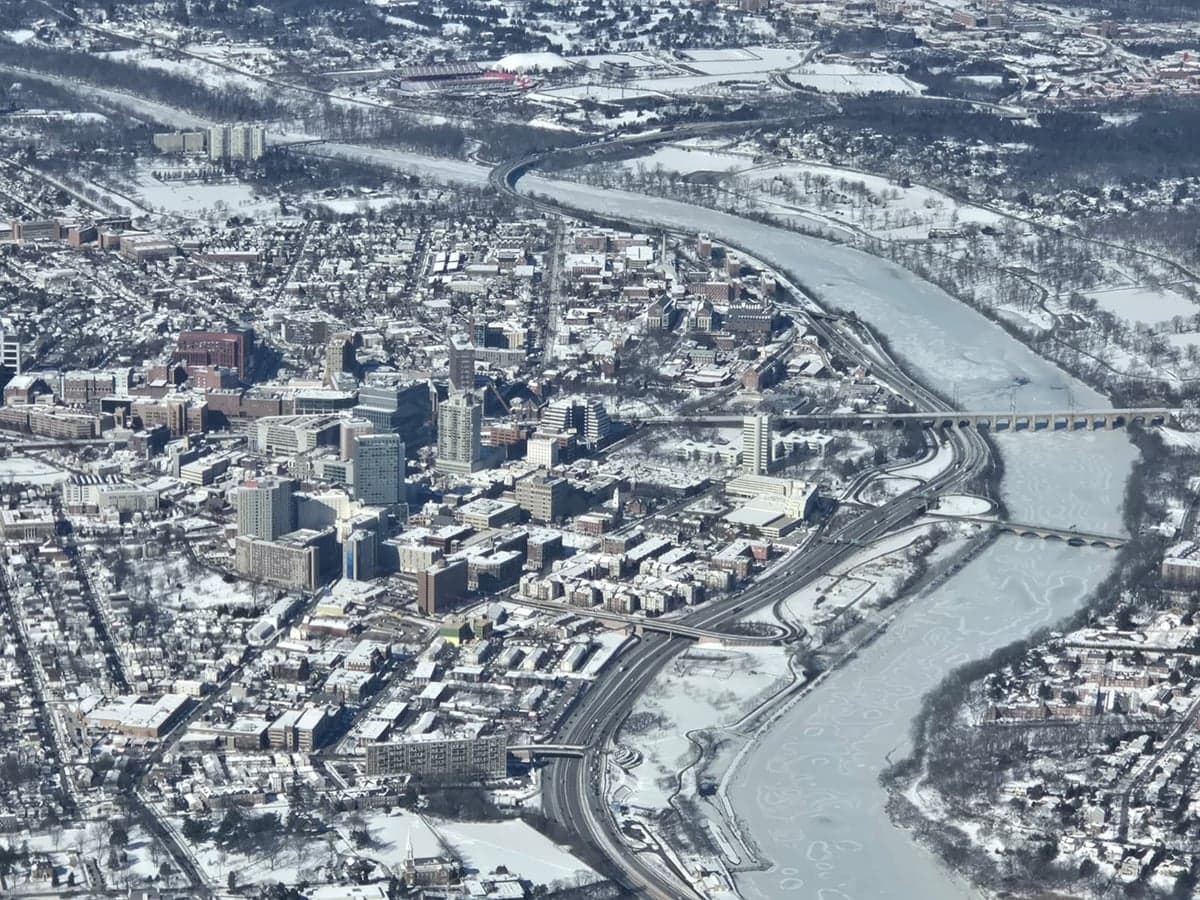
Photo: Wikipedia
Political ClimatePolitical Climate in New Brunswick, NJ
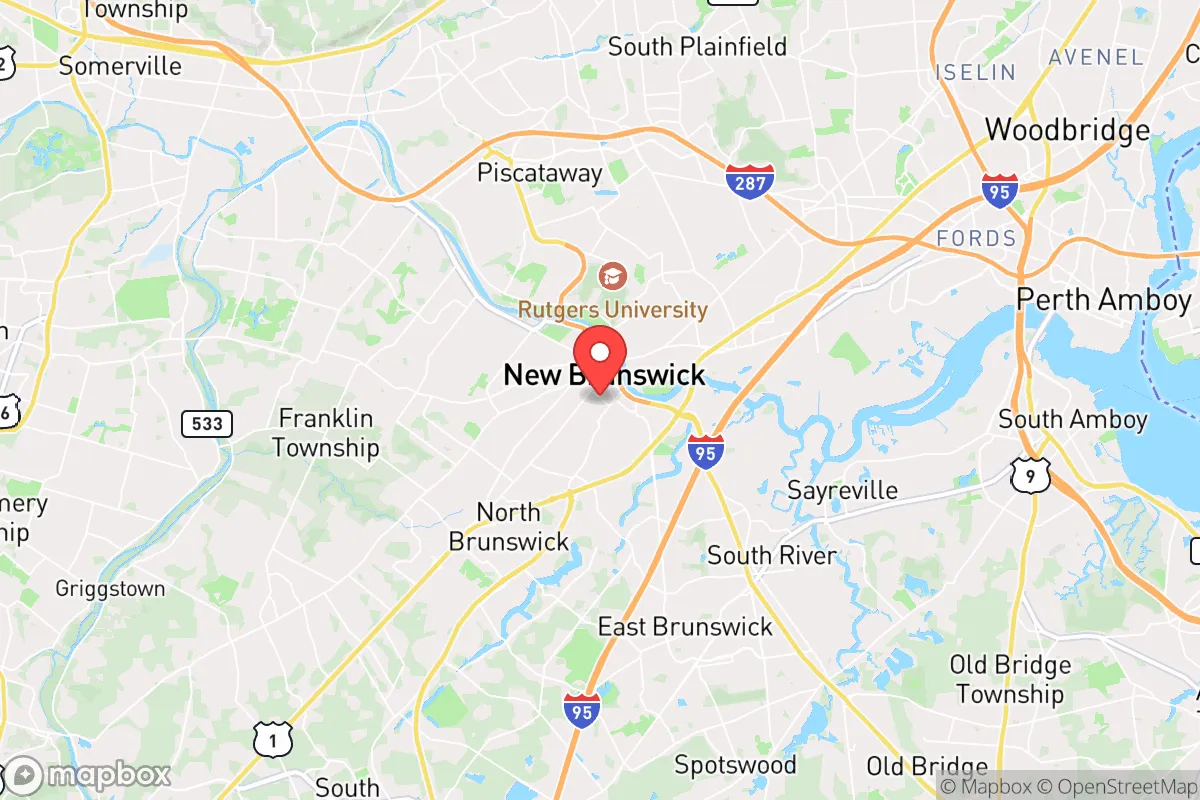
District shown is the primary district for this city’s centroid. Cities may span multiple districts.
Local Political AnalysisPolitical Analysis of New Brunswick, NJ
New Brunswick’s political climate has shifted hard to the left over the past decade, and if you’ve lived here as long as I have, you’ve felt it in everything from local ordinances to how the city spends your tax dollars. The Cook PVI sits at D+5, which sounds moderate on paper, but that number masks a city that’s become a reliable Democratic stronghold—think 65-70% of the vote going blue in presidential years. The real story is the trajectory: what was once a working-class, union-heavy town with a mix of conservative and moderate Democrats has morphed into a progressive hub, driven by Rutgers University’s expansion and an influx of out-of-state transplants who bring big-city politics with them. I’ve watched the city council go from debating potholes to pushing rent control, sanctuary city policies, and a local minimum wage that’s now $15 an hour—well above the state floor. The long-term trend? I’d bet on more of the same, with the city’s growing student and young professional population pulling it further left every election cycle.
How it compares
If you drive ten minutes west to Franklin Township or fifteen minutes north to Piscataway, you’ll find a different political animal entirely. Those suburbs lean more purple—Franklin’s PVI is D+3, but its local government is still split between old-school moderates and newer progressives, with a lot more pushback on tax hikes and zoning changes. Head east to Highland Park, and you’re in a D+8 bubble that makes New Brunswick look centrist. The real contrast is with the rural townships south of the city, like South Brunswick or Monroe—places where property taxes are lower, gun rights are respected, and the local school boards aren’t fighting over critical race theory or gender ideology. New Brunswick’s politics feel like a college campus that swallowed a city, while those surrounding towns still operate like normal American communities where the government stays out of your business. The state legislature’s recent push for statewide rent control and energy mandates? That’s New Brunswick’s influence bleeding outward.
What this means for residents
For the average homeowner or small business owner, the practical effect is a government that’s increasingly comfortable telling you how to live. The city’s rent control ordinance caps annual increases at 4%, which sounds nice until you realize landlords are selling off properties or converting to luxury units to bypass it—driving up prices for everyone else. The sanctuary city status means local police can’t cooperate with ICE, which has led to a noticeable uptick in street-level crime in the lower-income wards, though the city’s official stats are notoriously opaque. If you own a gun, forget it—New Brunswick’s local ordinances are stricter than state law, with a de facto ban on carrying in most public parks and municipal buildings. The school board has embraced DEI training and gender-neutral bathrooms, and if you raise concerns at a meeting, you’re likely to get labeled a bigot. For families, the trade-off is clear: you get a vibrant downtown and Rutgers amenities, but you’re paying for it with your freedoms and your wallet.
One cultural distinction that sums up the shift: the city’s annual Puerto Rican Day Parade used to be a family-friendly celebration of heritage, but in recent years it’s been co-opted by activist groups pushing defund-the-police messaging and anti-gentrification rhetoric. The old-timers—the Italian and Hungarian families who built this town—have mostly moved to East Brunswick or Old Bridge, replaced by a transient population of students and young renters who don’t have roots here. The long-term outlook? Unless the state’s political map gets redrawn or the city’s tax base collapses under its own weight, New Brunswick is on a one-way track to becoming a smaller version of Newark or Jersey City. If that doesn’t sit right with you, I’d start looking at houses in the surrounding towns while they’re still affordable.

State Political ClimatePolitical Climate in New Jersey
State Political AnalysisPolitical Environment in the State
New Jersey has shifted from a reliably moderate-blue state to a deeply entrenched one-party Democratic stronghold over the past 20 years, with Democrats now holding every statewide office, both U.S. Senate seats, and commanding supermajorities in the State Legislature. The state hasn't voted Republican for president since 1988, and in 2024, Joe Biden carried it by roughly 16 points, though that margin has narrowed slightly from 2020's 16-point win. The dominant coalition is a mix of urban progressives from the Northeast Corridor, powerful public-sector unions, and suburban voters who have increasingly aligned with Democratic cultural and fiscal positions, while the GOP has been reduced to a rump party holding only a handful of rural and exurban counties.
Urban vs. rural divide
The political map of New Jersey is a textbook case of the urban-rural chasm, but with a twist: the state's suburbs are just as blue as its cities. The Democratic engine is the densely populated Northeast Corridor, running from Bergen County through Newark, Jersey City, and Elizabeth, then down to Trenton and Camden. Essex County (Newark) and Hudson County (Jersey City) routinely deliver 75-80% Democratic margins, effectively deciding statewide elections before the rest of the state is counted. The suburbs of Montclair, Maplewood, and South Orange are now among the most progressive enclaves in the nation, with local school boards and town councils pushing policies like sanctuary city designations and diversity-equity-inclusion mandates. Meanwhile, the rural and exurban counties of Sussex, Warren, and Hunterdon in the northwest, along with Ocean County on the shore, remain reliably Republican, but their populations are too small to counterbalance the corridor. Ocean County is the GOP's strongest bastion, voting +20 points for Trump in 2024, but it's a single county in a state of 21. The divide isn't just geographic—it's cultural: the rural areas feel increasingly ignored by Trenton, while the urban-suburban axis sees the state's direction as a model for the nation.
Policy environment
New Jersey's policy environment is aggressively progressive, with a tax-and-regulate posture that makes it one of the most expensive and least business-friendly states in the country. The state has the highest property taxes in the nation (median effective rate around 2.23%), a progressive income tax that tops out at 10.75% for income over $1 million, and a sales tax of 6.625%. Education policy is dominated by the teachers' union (NJEA), which has effectively blocked school choice and charter school expansion for decades; the state spends over $25,000 per pupil annually, yet reading and math proficiency remain middling. Healthcare is heavily regulated, with a state-based Obamacare exchange and a recent law mandating that all health insurance plans cover abortion and gender-transition procedures. Election laws are among the most liberal in the nation: no-excuse mail-in voting was made permanent in 2021, same-day registration is available, and felons on parole or probation can vote. The state also has some of the strictest gun laws in the country, including a 2022 law that bans carrying firearms in "sensitive places" like parks, libraries, and private businesses unless the owner explicitly posts a sign allowing it—a law that has been challenged in court but remains in effect.
Trajectory & freedom
New Jersey is becoming less free by almost any measure, with a steady expansion of state power into personal and economic life. The most significant recent contraction of liberty came with the 2022 gun law (S-3216), which effectively creates a patchwork of no-carry zones across the state, forcing law-abiding citizens to guess where they can legally defend themselves. On parental rights, the state has moved aggressively in the opposite direction of Florida and other red states: in 2024, Governor Phil Murphy signed a law prohibiting school districts from notifying parents if a child changes their gender identity or pronouns, overriding local control. Medical autonomy took a hit with the 2023 "Reproductive Freedom Act," which codified abortion up to viability and removed parental notification requirements for minors. Property rights are under constant pressure from the state's powerful eminent domain authority and a rent control regime that has spread to dozens of municipalities. On the economic freedom front, the state's minimum wage hit $15.13 in 2024, and a new "junk fee" law targets small businesses with additional disclosure requirements. The only area where freedom has expanded is marijuana: recreational use was legalized in 2021, and the state has built a regulated market that is now generating significant tax revenue.
Civil unrest & political movements
New Jersey has seen its share of political flashpoints, though they tend to be more bureaucratic than violent. The 2020 Black Lives Matter protests in Newark and Jersey City were large but mostly peaceful, leading to police reform measures like a statewide ban on chokeholds and a new use-of-force database. The state's sanctuary policy is among the strongest in the nation: a 2018 executive order (later codified into law) prohibits state and local law enforcement from cooperating with federal immigration authorities, and "ICE holds" are effectively illegal. This has created tension in towns like Freehold and Perth Amboy, where large immigrant populations have clashed with long-time residents over resources and cultural change. On the right, the "NJ 2nd Amendment" movement has been active but largely ineffective, with pro-gun rallies in Trenton drawing a few hundred people at most. The 2021 election integrity controversy over mail-in voting led to a brief but intense debate, with Republicans alleging irregularities in the 2020 election, but no major scandals were proven. More recently, the 2023 parental rights protests in Montclair and Maplewood saw parents clashing with school boards over LGBTQ curriculum and library books, but these efforts have been largely unsuccessful in changing policy at the state level.
Projection
Over the next 5-10 years, New Jersey will likely become even more progressive, driven by demographic trends and in-migration patterns. The state's population is aging and slowly declining, but the people moving in are disproportionately from New York City and other blue areas, while those leaving tend to be conservative-leaning families heading to Florida, Texas, or the Carolinas. The 2025 gubernatorial election will be a key test: the Democratic primary will likely feature a battle between the progressive wing (backed by the NJEA and public unions) and a more moderate faction, but either outcome will produce a governor who continues the Murphy-era trajectory. Expect further expansion of rent control, a push for single-payer healthcare (already being studied by the state), and a potential wealth tax on high-income earners. The GOP's only realistic path back to relevance is through a major scandal or a national realignment that makes the suburbs competitive again, but neither seems likely in the near term. For a conservative-leaning resident, the state will feel increasingly like an island of blue policy in a region that's already deep blue.
For a new resident considering New Jersey, the bottom line is this: if you value low taxes, gun rights, school choice, or local control over your children's education, this is probably not the state for you. The political climate is hostile to those priorities, and the trend lines are only moving further in that direction. However, if your career or family ties require you to be here, you can find like-minded communities in Ocean County, Sussex County, or the rural northwest—but you'll be fighting an uphill battle against a state government that has little interest in your values. The best advice from a long-time resident: know what you're signing up for, and plan accordingly.
* Values derived from national, state, county, city and local statistics and may differ in a specific area. Last updated: 2026-04-29T20:58:07.000Z
Narrative content on this page is AI-generated and may contain mistakes. Verify any details that matter before acting on them.
ReloMaps may earn a commission from affiliate links at no extra cost to you.

