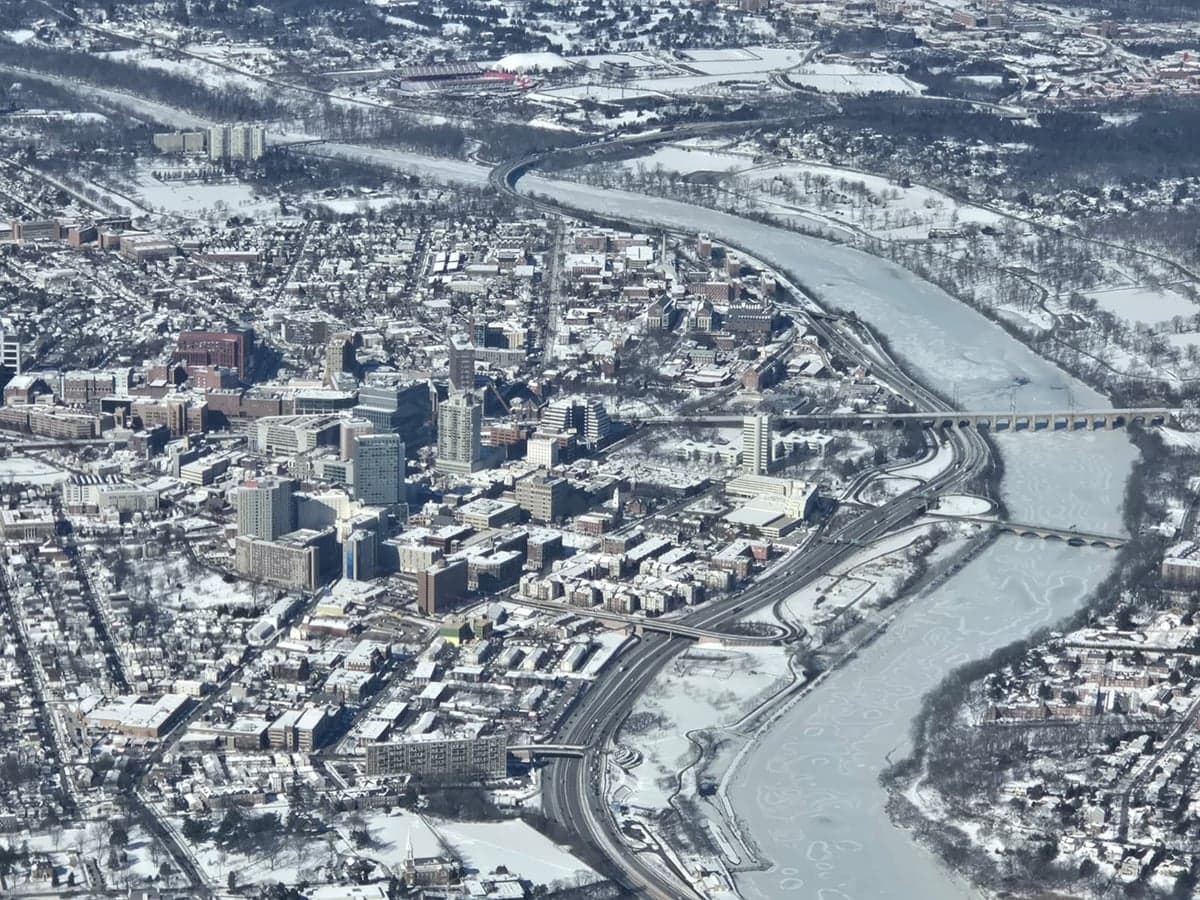
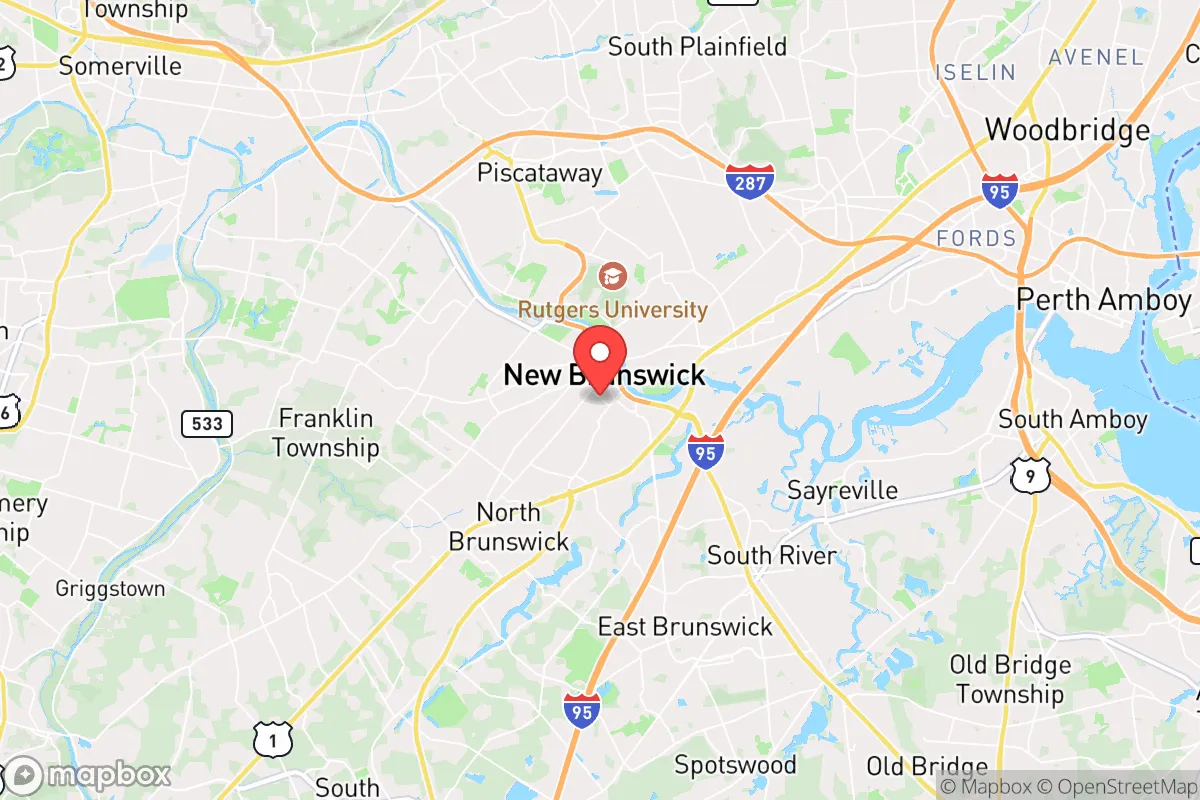
Photo: Wikipedia
Personal Sovereignty in New Brunswick, NJ
Viable for self-reliance. Generally workable, though some barriers may limit total independence.
What does Personal Sovereignty tell us?
Personal Sovereignty measures your capacity for self-reliance and independence with minimal government friction. Higher scores mean fewer barriers between you and the way you want to live... but it assumes you have the space you need and good neighbors.
What does this tell us?
Personal Sovereignty measures your capacity for self-reliance and independence with minimal government friction. Higher scores mean fewer barriers between you and the way you want to live... but it assumes you have the space you need and good neighbors.
State Policy
Energy independence: Importer (8% of energy produced in-state)
Personal Liberty
Homesteading

Personal Liberty Analysis
New Brunswick, New Jersey, presents a challenging environment for personal sovereignty, where state-level policies significantly constrain individual autonomy. As the home of Rutgers University and a major medical hub, the city operates under a dense web of regulations that prioritize collective outcomes over individual rights, making it a difficult location for those seeking maximum personal freedom. For a conservative-leaning individual or family with a survivalist mindset, the calculus here is heavily weighted toward the negative, as the state's posture on taxes, self-defense, and personal liberties creates a system where the government is a constant, intrusive presence in daily life.
Tax burden and regulatory posture in New Brunswick
New Jersey carries one of the heaviest tax burdens in the United States, and New Brunswick is no exception. The state's income tax rates are progressive, topping out at 10.75% for high earners, and property taxes in Middlesex County are among the highest in the nation, often exceeding 2.5% of assessed home value annually. For a prepper or self-reliant individual, this means a significant portion of income is diverted to state coffers before you can allocate it to your own preparedness goals—whether that's food storage, land acquisition, or equipment. The regulatory posture is equally aggressive: New Brunswick has strict rent control ordinances, burdensome business licensing requirements, and a state-level environmental review process that can delay any construction or property modification for months. The state's COAH (Council on Affordable Housing) mandates force municipalities to zone for high-density development, which limits the ability to own larger lots or pursue rural-style living within city limits. For anyone valuing economic sovereignty, the message is clear: the state takes a large cut and imposes tight rules on how you can use your property.
Self-defense and gun law specifics in New Brunswick
New Jersey has some of the most restrictive gun laws in the country, and New Brunswick residents must navigate a system that treats firearm ownership as a privilege rather than a right. The state requires a Firearms Purchaser Identification Card (FPID) for long guns and a separate permit for each handgun purchase, with a mandatory 30-day waiting period between handgun purchases. Concealed carry was historically nearly impossible to obtain, and even after the Bruen decision, the state's "justifiable need" requirement was replaced with a "sensitive places" law that bans firearms in a vast array of locations—including parks, public transit, and private businesses that don't explicitly allow them. In New Brunswick, a city with a significant urban core and a crime rate above the national average, this means you are effectively disarmed in many public spaces. Magazine capacity is limited to 10 rounds, and "assault weapons" (a broadly defined category) are banned entirely. For a survivalist, this creates a scenario where self-defense is heavily dependent on the state's approval, and the legal landscape can shift rapidly with a change in administration. Stand-your-ground laws do not exist; New Jersey imposes a duty to retreat if possible, which can complicate defensive scenarios in a dense urban environment.
Self-reliance and homesteading viability in New Brunswick
Homesteading and self-reliance are nearly impossible to achieve within New Brunswick's city limits. The typical residential lot size in the city is less than 5,000 square feet, with many homes on small, narrow plots that leave little room for gardening or livestock. Zoning ordinances prohibit keeping chickens, goats, or bees in most residential zones, and any attempt to install a rainwater collection system or solar panels must navigate a thicket of building codes and historic preservation rules (the city has several historic districts). Off-grid living is effectively illegal: the state requires connection to municipal water and sewer systems, and building codes mandate grid-tied electrical systems for new construction. For a prepper looking to establish a self-sufficient homestead, New Brunswick is a non-starter. The best option within commuting distance would be to look at rural areas in Hunterdon or Warren counties, where lot sizes increase to 1-5 acres and zoning is more permissive, but even there, state-level restrictions on water rights and land use remain. Within the city, the focus must be on urban preparedness—stockpiling supplies, building community networks, and securing a defensible living space—rather than true self-reliance.
Personal liberties in New Brunswick: parental rights, medical autonomy, speech, and property
Personal liberties in New Brunswick are heavily circumscribed by state law and local governance. On parental rights, New Jersey has some of the most progressive education policies in the country, including a mandatory sex education curriculum that covers LGBTQ+ topics from elementary school onward, and a law that allows students as young as 12 to consent to mental health counseling without parental notification. For parents who want to opt their children out of certain lessons, the process is cumbersome and often denied. Medical autonomy was severely tested during the COVID-19 pandemic, when New Jersey imposed some of the strictest vaccine mandates and mask requirements in the nation, including for school attendance and healthcare employment. The state's public health emergency powers remain broad, and there is little legal recourse for individuals who refuse mandates. Free speech is protected under the First Amendment, but New Brunswick's status as a college town means that campus speech codes and "bias incident" reporting systems can chill expression on controversial topics. Property rights are weak: the state's eminent domain authority is broad, and the city has used it aggressively for redevelopment projects, including the Gateway Project and the New Brunswick Performing Arts Center. For a property owner, this creates a constant risk that the government could condemn your land for a "public purpose" that benefits private developers. Overall, the state's posture is one of active intervention in family, medical, and property decisions, leaving little room for individual discretion.
In the broader context of the United States, New Brunswick ranks very low for personal sovereignty. Compared to states like Texas, New Hampshire, or Idaho, where tax burdens are lower, gun laws are permissive, and property rights are stronger, New Jersey represents the opposite end of the spectrum. For a survivalist or prepper, the city's dense urban environment, high taxes, restrictive gun laws, and aggressive regulatory state create a situation where you are constantly dependent on government systems for basic security and resources. The only strategic advantage is proximity to major medical facilities and supply chains, but that comes at the cost of being a target in any widespread disruption. If personal sovereignty is your priority, New Brunswick is a place to pass through, not to plant roots.

* Values derived from national, state, county, city and local statistics and may differ in a specific area. Last updated: 2026-04-29T20:58:07.000Z
Narrative content on this page is AI-generated and may contain mistakes. Verify any details that matter before acting on them.
ReloMaps may earn a commission from affiliate links at no extra cost to you.

