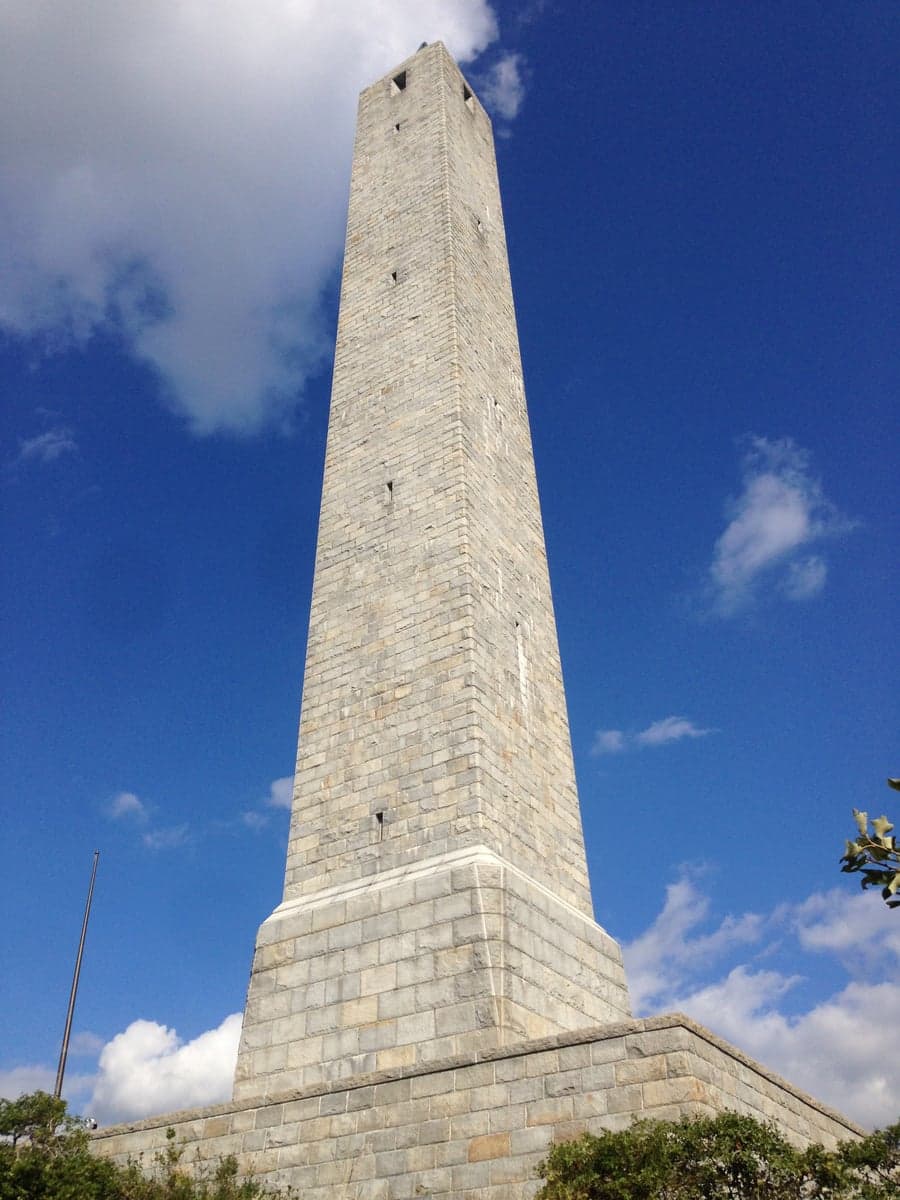
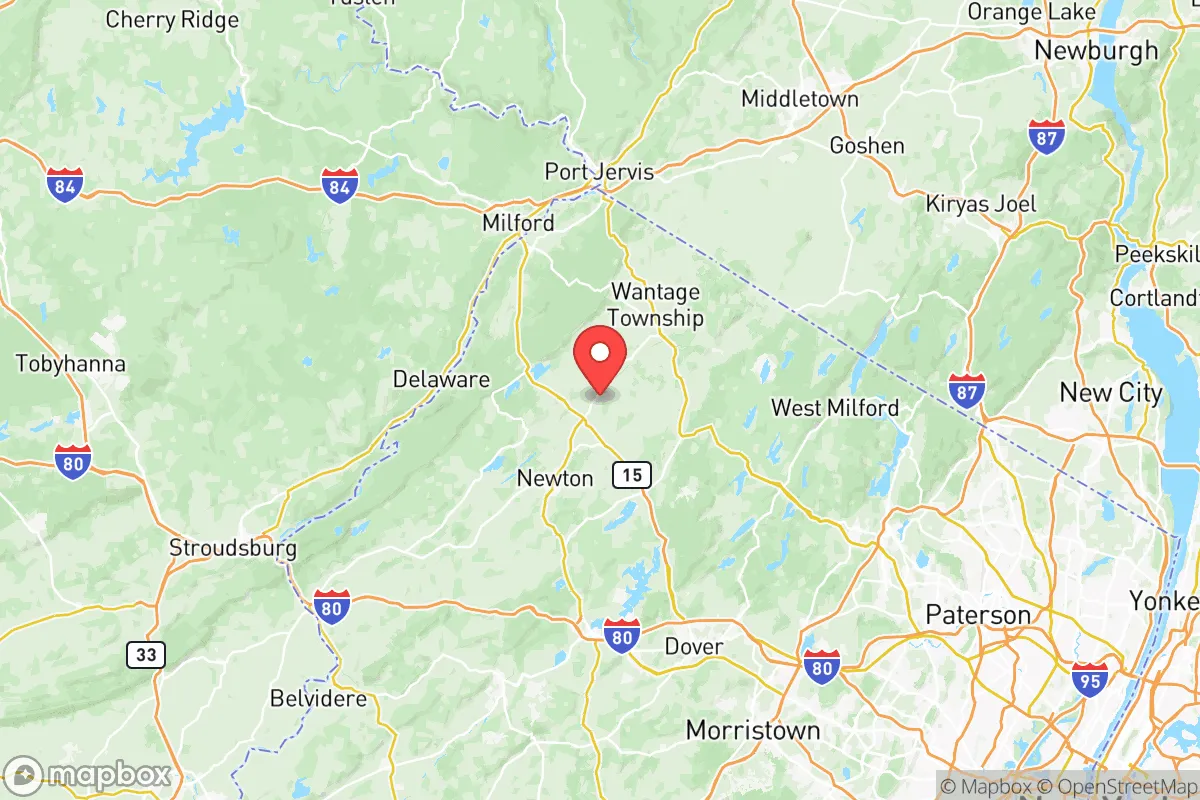
Photo: Wikipedia
Demographics of Sussex County
Affluence Level in Sussex County
An upper-middle-class area. Household wealth, education levels, and homeownership run ahead of national benchmarks.
People of Sussex County
The people of Sussex County, New Jersey today number 145,117, forming one of the state's most rural and predominantly white populations, with 81.0% identifying as white alone. The county's character is defined by its low population density, its location along the Appalachian foothills, and a cultural identity rooted in small-town agriculture, outdoor recreation, and a strong sense of local independence. With only 2.4% foreign-born residents, Sussex County is markedly less diverse than New Jersey as a whole, though its Hispanic population has grown to 11.1% in recent decades, signaling a slow but notable demographic shift.
Settlement & growth (pre-1960)
The earliest inhabitants of what is now Sussex County were the Lenape people, particularly the Munsee-speaking bands who lived in seasonal villages along the Wallkill River and the headwaters of the Delaware River. European contact began in the early 1600s with Dutch and Swedish fur traders, but permanent settlement by Europeans did not begin in earnest until the 1730s, when English and Scots-Irish farmers pushed north from the more settled parts of New Jersey. The county was formally created in 1753 from parts of Morris County, and its early economy was built on iron mining, lumber, and subsistence farming.
The first major wave of settlers were English and Scots-Irish Protestants, who arrived between 1730 and 1775, clearing land for farms in the valleys around Newton, the county seat, and Hamburg. These families, many of whom were Presbyterian or Quaker, established the county's foundational culture of self-reliance and local governance. A smaller but significant group of German Lutherans and Reformed settlers arrived in the 1740s and 1750s, concentrating in the fertile areas near Frankford and Wantage, where they built stone farmhouses and churches that still stand today.
The 19th century brought two transformative developments: the Morris Canal (completed 1831) and the arrival of the railroad in the 1850s. The canal and rail lines connected Sussex County to the iron furnaces of Andover and Stanhope, and to the growing markets of Newark and New York City. This period saw an influx of Irish immigrants in the 1840s and 1850s, who worked as laborers on the canal and railroad projects, settling in small enclaves in Hamburg and Franklin. Later, in the 1880s and 1890s, Italian and Polish immigrants arrived to work in the zinc mines of Franklin and the iron mines of Ogdensburg, establishing ethnic neighborhoods that persisted for generations. By 1900, Sussex County's population was overwhelmingly white, native-born, and Protestant, with small Catholic and Jewish minorities in the mining towns.
The post-World War II period, from 1945 to 1960, brought the first wave of suburbanization, as returning veterans and their families sought affordable land within commuting distance of northern New Jersey's industrial centers. Towns like Sparta and Vernon saw new housing developments, but the county remained largely rural, with a population of just over 49,000 in 1950. The construction of Interstate 80 in the 1960s would soon change that trajectory.
Modern era (post-1965)
The 1965 Hart-Cellar Act had a limited direct impact on Sussex County, as the county's small industrial base and rural character did not attract the large immigrant flows seen in urban New Jersey. Instead, the county's modern demographic story is one of domestic migration from the more densely populated parts of the state and from the New York metropolitan area. Between 1970 and 2000, Sussex County's population more than doubled, from 77,000 to 144,000, driven by families seeking larger lots, lower taxes, and a perceived safer environment than suburban Bergen or Essex counties.
This growth was concentrated in the southeastern townships of Sparta, Hopatcong, and Byram, which became bedroom communities for commuters working in Morris County and northern New Jersey. The development of Lake Hopatcong, the state's largest lake, also attracted second-home buyers and retirees, adding to the seasonal population. The Hispanic population, which was negligible in 1970, grew slowly through the 1980s and 1990s, primarily through migration from other parts of New Jersey and from Puerto Rico, settling in Newton and Franklin, where lower housing costs and agricultural jobs provided a foothold.
Since 2000, the county's population has remained relatively flat, growing only slightly to 145,117 by the 2020 census. The white share has declined from 94% in 2000 to 81.0% today, while the Hispanic share has risen to 11.1%. The Black population remains small at 2.3%, and East/Southeast Asian communities make up 1.1%, with Indian-subcontinent residents at 0.7%. These minority populations are dispersed rather than concentrated in ethnic enclaves, though Newton and Franklin have seen the most visible diversification. The county's foreign-born population of 2.4% is among the lowest in New Jersey, reflecting its limited appeal to new immigrants compared to urban centers.
The future
Sussex County is likely to continue its slow demographic evolution, becoming slightly more diverse but remaining predominantly white and native-born for the foreseeable future. The Hispanic population is projected to grow gradually, potentially reaching 15-18% by 2040, driven by natural increase and continued domestic migration from other parts of New Jersey. The county's relatively affordable housing compared to areas closer to New York City may attract more young families and remote workers, particularly in towns like Vernon and Wantage, which offer lower property taxes and larger lots.
However, the county faces headwinds: an aging population, with a median age of 46.3 (among the highest in New Jersey), and a declining school-age population in many districts. The closure of the Sussex County Community College's satellite campus and the loss of retail anchors in Newton and Sparta suggest economic stagnation that may limit in-migration. The county's cultural identity—rooted in hunting, fishing, and small-town conservatism—is likely to persist, even as new residents from more liberal areas of the state bring gradual political and social shifts. The next decade will likely see a modest increase in diversity, but Sussex County will remain one of New Jersey's most homogeneous and rural counties.
For someone moving in now, Sussex County offers a quiet, low-density lifestyle with strong community ties and access to outdoor recreation, but with limited job growth, an aging infrastructure, and a population that is changing only slowly. It is a place where the past still shapes the present, and where the future will arrive more gradually than in most of New Jersey.

* Values derived from national, state, county, city and local statistics and may differ in a specific area. Last updated: 2026-09-27T23:08:40.000Z
Narrative content on this page is AI-generated and may contain mistakes. Verify any details that matter before acting on them.
ReloMaps may earn a commission from affiliate links at no extra cost to you.

