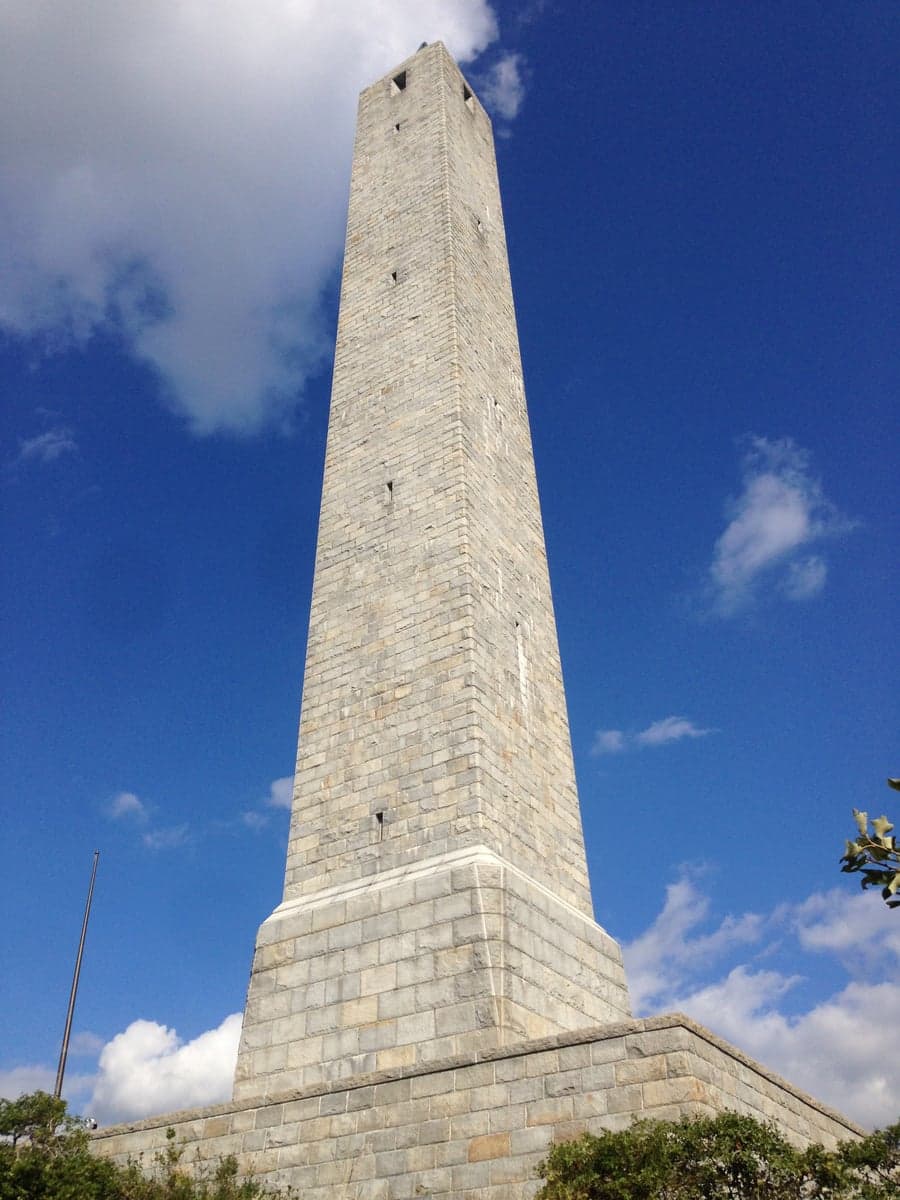
Photo: Wikipedia
Political ClimatePolitical Climate in Sussex County
Showing district-level results — no local-only data available.
Local Political AnalysisPolitical Analysis of Sussex County
Sussex County, New Jersey, is a fascinating political outlier in a deeply blue state. While New Jersey as a whole carries a Cook PVI of D+5, Sussex County sits at D+2, making it one of the most conservative-leaning counties in the state. This isn't a recent shift; the county has been trending red for years, and in the 2024 presidential election, it voted for Donald Trump by a margin of roughly 12 points, a stark contrast to the state's overall preference for Joe Biden. The trajectory is clear: Sussex County is becoming more Republican, even as the rest of New Jersey holds steady or shifts left.
How it compares
The difference between Sussex County and the rest of New Jersey isn't just a number on a chart—it's a lived reality. In the northern part of the county, towns like Vernon and Wantage are reliably red, with Republican candidates often winning by double digits. Meanwhile, the county seat, Newton, and the more suburban Sparta are the swing precincts. Sparta, in particular, is a bellwether: it voted for Obama in 2008 and 2012, then flipped to Trump in 2016 and 2020. The southern towns, like Hopatcong and Byram, lean more moderate, but still tend to favor Republicans in local races. This internal variation means that a Democrat in Newton might feel politically isolated, while a Republican in Vernon feels right at home. The county's D+2 rating masks a deeply polarized landscape where the local GOP is dominant, but not monolithic.
What this means for residents
For conservative residents, Sussex County offers a rare pocket of political comfort in a blue state. Local government, school boards, and county commissions are overwhelmingly Republican, meaning conservative policy preferences—like lower taxes and Second Amendment rights—are generally reflected in local governance. For liberal residents, it can feel like swimming upstream. Progressive candidates rarely win countywide races, and social issues like gun control or environmental regulations often face an uphill battle. However, the presence of swing towns like Sparta means that elections are competitive enough to keep both sides engaged. The practical effect is a community where political conversations are common, but rarely hostile—most people here are used to disagreeing and still grabbing a beer afterward.
Culturally, Sussex County stands apart from the rest of New Jersey in ways that go beyond voting. The county is more rural, with a strong hunting and outdoor recreation culture that aligns with its conservative lean. You won't find the same density of progressive activism you'd see in Montclair or Jersey City. Instead, the local identity is rooted in self-reliance and a slower pace of life. Policy-wise, this means a greater emphasis on property tax relief and less enthusiasm for statewide initiatives like the gas tax hike or renewable energy mandates. For anyone moving here, the key takeaway is simple: if you're conservative, you'll find your people; if you're liberal, you'll find your niche—but you'll also find a community that values independence over ideology, and that's a rare thing in New Jersey.

State Political ClimatePolitical Climate in New Jersey
State Political AnalysisPolitical Environment in the State
New Jersey is a solidly Democratic state with a Cook PVI of D+5, but that number doesn't tell the whole story. The state has been reliably blue in presidential elections since 1992, but the margin has tightened slightly in recent cycles—Biden won by about 16 points in 2020, down from Hillary Clinton's 14-point win in 2016 and Obama's 17-point win in 2012. The real story is the growing urban-suburban divide, with the northern and central metros driving the Democratic coalition while the southern and western exurbs have become increasingly Republican strongholds. For a conservative-leaning relocator, the state offers a mixed bag: high taxes and progressive policies in the core, but surprisingly red pockets in places like Hunterdon County and Ocean County where you can find lower taxes, strong schools, and a more traditional lifestyle.
Urban vs. rural divide
The political map of New Jersey is a study in contrasts. The Democratic stronghold is the Newark-Jersey City corridor, where dense urban populations, union households, and diverse immigrant communities deliver massive margins. Essex County (Newark) and Hudson County (Jersey City) alone account for nearly a third of the state's Democratic votes. Bergen County, the state's most populous, has flipped from a Republican-leaning suburb in the 1990s to a solidly Democratic county today, driven by Asian-American and Hispanic growth in towns like Fort Lee and Paramus. Meanwhile, the rural and exurban areas tell a different story. Ocean County (Toms River, Lakewood) is the state's most Republican county, voting +22 points for Trump in 2020, fueled by a large Orthodox Jewish community and a strong retiree base. Hunterdon County (Flemington, Clinton) and Sussex County (Newton, Sparta) are also deeply red, with Trump winning by 15-20 points. The Philadelphia suburbs in Burlington County and Camden County are more competitive, with Burlington flipping from red to blue in the Trump era. The divide is stark: drive 30 minutes west from Newark into Morris County and you go from a 70% Democratic precinct to a 60% Republican one.
Policy environment
New Jersey's policy environment is defined by its tax structure and regulatory posture. The state has the highest property taxes in the nation, averaging $9,500 per year, and a progressive income tax that tops out at 10.75% for income over $1 million. The sales tax is 6.625%, but many municipalities add local taxes. The regulatory environment is dense—permitting for new construction can take 18-24 months, and environmental rules are among the strictest in the country, particularly around coastal development and wetlands. Education policy is a major battleground: the state spends over $20,000 per pupil, among the highest in the nation, but the funding formula heavily favors urban districts like Newark and Paterson, leaving suburban districts in Middlesex County and Monmouth County feeling squeezed. Healthcare is heavily regulated, with a state-run insurance exchange and strict certificate-of-need laws that limit hospital expansion. Election laws are relatively liberal: no-excuse mail-in voting, automatic voter registration, and same-day registration are all in place. The state has a Democratic trifecta (governor and both legislative chambers), but the legislature is often split between moderate and progressive factions, with Governor Phil Murphy (D) pushing a progressive agenda while facing resistance from more moderate Democrats in the Senate.
Recent policy direction
Recent legislation points in a clear progressive direction, but with notable exceptions. On gun policy, New Jersey has some of the strictest laws in the nation: a 2018 "red flag" law, a 2022 ban on .50 caliber rifles, and a 2023 law requiring gun owners to carry liability insurance. The state also passed a 2022 law eliminating the "justifiable need" requirement for concealed carry, but a 2024 Supreme Court ruling (Bruen) forced the state to loosen its permitting process. On parental rights and education, the state has been a flashpoint: the 2021 "Don't Say Gay" bill (actually a bill requiring parental notification for LGBTQ+ curriculum) failed, but the state did pass a 2023 law requiring schools to notify parents if a student changes their gender identity or name. On abortion and bodily autonomy, New Jersey is a safe haven: the 2022 Freedom of Reproductive Choice Act codified abortion rights, and the state has a 2023 law protecting out-of-state patients from prosecution. On property rights, the state's rent control laws in cities like Jersey City and Newark are among the strongest in the nation, but suburban homeowners face few restrictions. On taxation, the 2023 "millionaire's tax" increase (from 8.97% to 10.75%) was a major progressive win, but the state also passed a 2024 property tax relief program for seniors. On voting access, the 2020 "Vote by Mail" expansion was made permanent in 2022, and the state has automatic voter registration at DMVs. The overall direction is toward more regulation and higher taxes, but the pace is slower than in New York or California.
Civil unrest & political movements
New Jersey has seen its share of political flashpoints. The Black Lives Matter protests in 2020 were large and sometimes violent, particularly in Newark and Trenton, where property damage occurred. The state's sanctuary policies are a major issue: the 2018 "Immigrant Trust Directive" limits local police cooperation with ICE, and in 2023, the state passed a law prohibiting local jails from holding immigrants for ICE without a warrant. This has created tension in suburban towns like Woodbridge and Edison, where immigrant populations are growing. On the right, the New Jersey Second Amendment Society has been active in lawsuits against gun laws, and the Tea Party movement remains strong in Ocean County and Hunterdon County. The 2020 election integrity controversy was less intense here than in other states, but the 2021 gubernatorial race (Murphy vs. Ciattarelli) was close enough that some Republicans questioned mail-in ballot procedures. The state also has a history of corruption scandals—the 2013 "Bridgegate" scandal and the 2023 bribery arrest of Senator Bob Menendez have fueled cynicism about both parties. A new resident would notice the political activism is more localized than in neighboring New York or Pennsylvania, with town council meetings and school board elections being the main battlegrounds.
Projection
Over the next 5-10 years, New Jersey's political trajectory is likely to remain blue but with increasing internal tension. The demographic shifts are clear: the state is becoming more diverse, with Hispanic and Asian populations growing fastest in Bergen County and Middlesex County, which will reinforce Democratic margins. However, the out-migration of higher-income residents to Florida and Texas (the state lost 100,000 residents between 2020 and 2023) is disproportionately Republican-leaning, which could actually make the state more Democratic. The in-migration from New York City is mostly younger, more liberal professionals settling in Jersey City and Hoboken. The property tax crisis is the wild card: if the state can't control costs, more middle-class families will leave, potentially flipping some suburban districts in Monmouth County and Morris County to the right. The 2025 gubernatorial election will be a key test—if a moderate Republican like Jack Ciattarelli wins, it could signal a shift toward fiscal conservatism. But the structural advantages for Democrats (union support, urban population, media market) are likely to keep the state D+5 to D+7 for the foreseeable future. A conservative moving in now should expect the policy environment to remain progressive on social issues and taxes, but with more room for local resistance in red counties.
For a conservative-leaning relocator, New Jersey offers a trade-off: you get excellent schools, strong infrastructure, and proximity to New York and Philadelphia, but you pay for it with high taxes and a progressive state government. The practical takeaway is to choose your county carefully—Hunterdon County or Ocean County will feel much more like a red state than Essex County or Hudson County. You'll have more local control over schools and zoning in those areas, but you'll still be subject to state-level policies on guns, taxes, and immigration. If you're willing to pay the premium for a high-quality suburban lifestyle and can tolerate a blue state government, New Jersey can work. But if low taxes and a conservative cultural environment are non-negotiable, you're better off looking at Pennsylvania or Delaware.
* Values derived from national, state, county, city and local statistics and may differ in a specific area. Last updated: 2026-09-27T23:08:40.000Z
Narrative content on this page is AI-generated and may contain mistakes. Verify any details that matter before acting on them.
ReloMaps may earn a commission from affiliate links at no extra cost to you.

