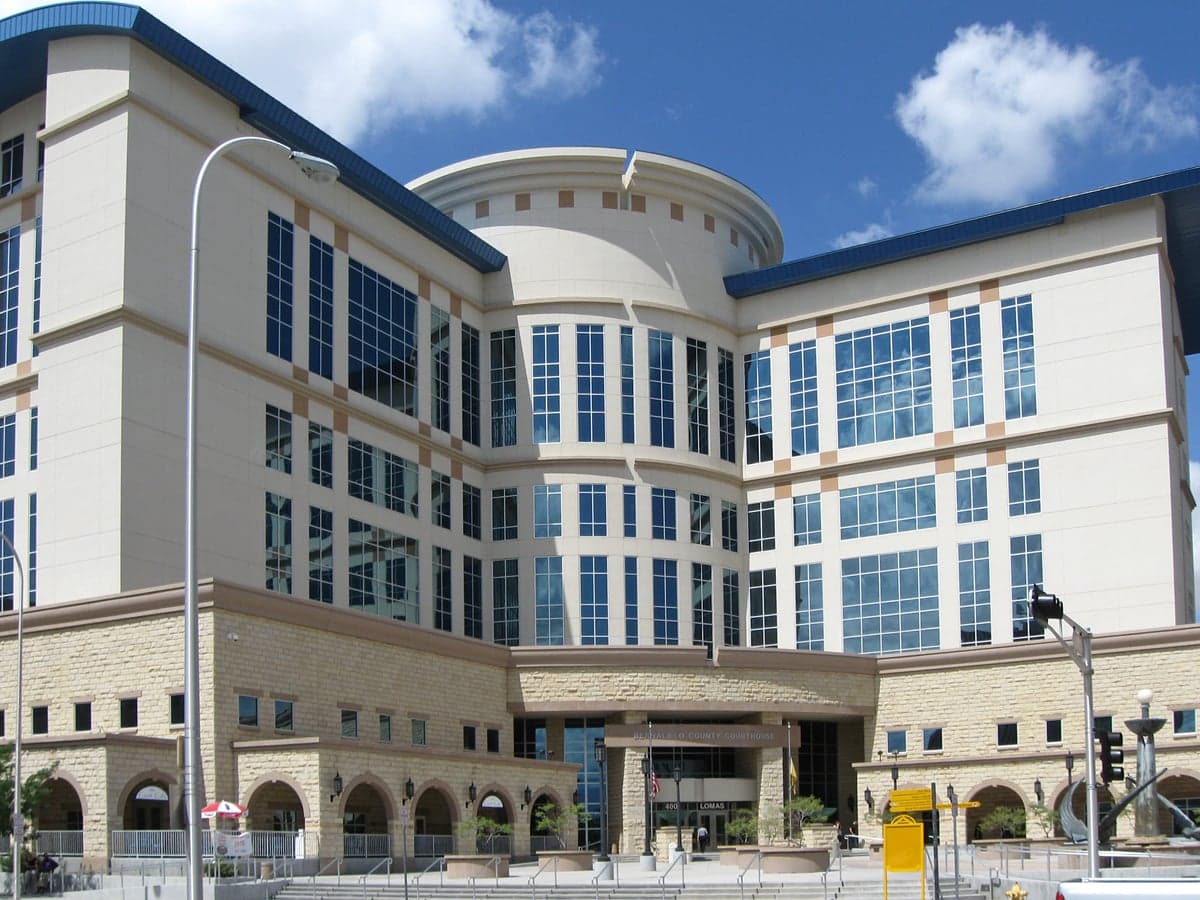
Photo: Wikipedia
Political ClimatePolitical Climate in Bernalillo County
Showing district-level results — no local-only data available.
Local Political AnalysisPolitical Analysis of Bernalillo County
Bernalillo County is the blue heart of New Mexico, but it’s not a deep-blue monolith. With a Cook PVI of EVEN, the county is a true battleground, swinging more Republican than the state as a whole (which sits at D+3). This means that while Democrats reliably win countywide races, the margins are often tight, and the county’s vote can determine the outcome of statewide elections. The political energy here is less about ideological purity and more about practical coalition-building, especially as the county’s growing population shifts the balance between its urban core and suburban fringe.
How it compares
New Mexico’s D+3 PVI reflects a state where Democrats hold a consistent but not overwhelming advantage, driven by strong support in Santa Fe, Las Cruces, and the tribal lands. Bernalillo County, at EVEN, is the swingiest large county in the state. The difference comes down to internal geography. Albuquerque’s urban core—areas like the North Valley, Downtown, and the University of New Mexico neighborhood—vote heavily Democratic, often by 20-30 points. But the county’s eastern and southern edges tell a different story. Towns like Edgewood, Tijeras, and the South Valley precincts lean Republican, sometimes by double digits. The swing precincts are in the Northeast Heights and parts of the West Side, where moderate voters decide elections. In 2024, for example, the county went for the Democratic presidential candidate by about 8 points, while the state overall gave a 10-point margin—a narrower gap than in previous cycles, reflecting a slight rightward drift in the county’s suburbs.
What this means for residents
For conservative residents, Bernalillo County isn’t a hostile environment, but it does mean their votes carry less weight in local races. They’ll find their strongest representation on the County Commission from districts covering the East Mountains and South Valley, and in state legislative seats from those areas. Politically active conservatives often focus on school board races and zoning issues, where local turnout can flip outcomes. For liberal residents, the county is a reliable base, but they can’t take it for granted. The EVEN PVI means that a low-turnout primary or a strong third-party candidate can shift the balance. In practice, this creates a political culture where both sides feel they have a shot—and where candidates must actually campaign in the suburbs, not just the city. The county’s nonpartisan municipal elections in Albuquerque often see cross-party endorsements, reflecting a pragmatic streak.
Culturally, Bernalillo County stands apart from the rest of New Mexico in its pace and diversity. Albuquerque’s status as the state’s economic and cultural hub means policy debates here are more urban-focused: housing density, public transit, and water rights dominate local politics, whereas rural counties prioritize agriculture and federal land management. The county’s large Hispanic and Native American populations create a distinct political dynamic, with strong support for progressive policies on immigration and tribal sovereignty, but also a more moderate stance on economic development than in Santa Fe. The result is a county that feels like a microcosm of the nation—competitive, diverse, and constantly negotiating its identity between its blue city and its red outskirts.

State Political ClimatePolitical Climate in New Mexico
State Political AnalysisPolitical Environment in the State
New Mexico is a genuine swing state in the sense that its statewide lean is competitive, but it has voted Democratic in every presidential election since 2004, with a Cook PVI of D+3. The dominant coalition is a mix of Hispanic and Native American voters, union households, and urban progressives in Albuquerque and Santa Fe, but the state also has deep conservative roots in the eastern plains and southern oil patch. Over the last 10-20 years, the state has shifted leftward on social issues and gun policy, but it remains fiscally moderate by Western standards — no income tax on Social Security, a relatively low property tax burden, and a heavy reliance on oil and gas revenue that keeps the budget in check. The real story is the urban-rural chasm: the state’s political identity is shaped by a few dense corridors, while vast stretches of the state feel culturally and economically closer to West Texas.
Urban vs. rural divide
The political map of New Mexico is a textbook case of the urban-rural split. Bernalillo County (Albuquerque) and Santa Fe County together cast about 40% of the state’s vote and lean heavily Democratic — Santa Fe County went +35 for Biden in 2020. The Albuquerque metro, anchored by Sandia National Labs, the University of New Mexico, and a growing tech sector, drives the state’s progressive energy. Meanwhile, the eastern plains — Lea County (Hobbs), Eddy County (Carlsbad), and Chaves County (Roswell) — are reliably Republican, often voting +40 to +50 points red. These are oil-and-gas counties with strong gun culture, low taxes, and a libertarian streak. The southern bootheel, including Doña Ana County (Las Cruces), is a swing area with a large Hispanic population that leans Democratic but is more moderate on social issues. The northwest corner, home to the Navajo Nation and the Pueblo tribes, votes heavily Democratic but with low turnout. The rural north, including Taos and Mora, is a mix of Hispanic traditionalists and Anglo transplants, producing a quirky independent streak. A new resident moving to Albuquerque or Santa Fe will experience a blue bubble; moving to Hobbs or Carlsbad will feel like being in West Texas.
Policy environment
New Mexico’s policy environment is a mixed bag that reflects its D+3 lean but also its Western pragmatism. Taxes: The state has a progressive income tax (top rate 5.9%), no tax on Social Security, and a low effective property tax rate (around 0.55% of home value). The gross receipts tax (a sales tax on services and goods) is high — often 8-9% in cities — which hits lower-income residents harder. Regulation: The state is generally business-friendly for oil and gas, but has stricter environmental rules than Texas, especially on methane emissions and water use. Education: New Mexico ranks near the bottom nationally in K-12 outcomes, but the state has poured money into early childhood education and universal free school meals. School choice is limited — no voucher program, but charter schools are allowed. Healthcare: The state expanded Medicaid under the ACA and has a strong public health infrastructure, but rural hospital closures are a chronic problem. Election laws: New Mexico has same-day voter registration, no-excuse absentee voting, and automatic voter registration at the DMV. It is considered a moderately easy state to vote in, but not as streamlined as Colorado or Oregon.
Recent policy direction
Over the last five years, New Mexico has moved decisively left on several fronts. Gun policy: In 2021, the state passed a red-flag law (extreme risk protection orders) and a law requiring background checks on private firearm sales. In 2023, it banned carrying firearms at polling places and government buildings. The state also passed a 7-day waiting period for firearm purchases in 2025. Parental and education rights: The state has a strong anti-bullying law that includes sexual orientation and gender identity, and it mandates inclusive curriculum in public schools. There is no parental notification requirement for a child’s gender identity or pronoun changes at school. Medical and bodily autonomy: Abortion is legal up to viability, and the state has a shield law protecting providers who serve out-of-state patients. In 2023, the state passed a law requiring insurance coverage for fertility treatments, including IVF. Property rights: The state has a strong water rights system (prior appropriation doctrine), but recent groundwater regulations in the oil patch have caused friction with landowners. Taxation: The state has not cut income taxes significantly, but it did pass a modest tax rebate for low-income families in 2024. Voting and ballot access: In 2023, the state expanded early voting and made Election Day a state holiday. The overall direction is toward more regulation on guns, more protections for LGBTQ+ rights, and a cautious expansion of social services — but the state remains fiscally conservative enough to avoid a debt spiral.
Civil unrest & political movements
New Mexico has a history of low-boil political tension rather than explosive protests. The most visible flashpoint in recent years has been the immigration debate. The state is a major transit corridor for migrants, and the city of Las Cruces has a sanctuary city policy that limits local police cooperation with ICE. In 2024, the state legislature passed a law prohibiting local law enforcement from asking about immigration status during routine stops, which drew sharp criticism from rural counties. Election integrity has been a minor issue — the 2020 election saw no major fraud cases, but some rural counties (especially Otero County) pushed for hand-count audits, leading to a brief standoff with the secretary of state. Secession rhetoric is virtually nonexistent, but there is a persistent “New Mexico should be two states” sentiment among conservatives in the eastern plains, who feel dominated by Santa Fe and Albuquerque. Protest activity has been modest: a 2020 BLM protest in Albuquerque turned violent, but the state has not seen the sustained unrest of Portland or Seattle. The most organized political movements are the oil-and-gas industry lobby (very powerful in the statehouse) and the environmental justice groups pushing for a transition away from fossil fuels. A new resident in the eastern plains will hear constant complaints about Santa Fe overreach; a new resident in Santa Fe will hear about the need to hold the oil industry accountable.
Projection
Over the next 5-10 years, New Mexico is likely to remain a D+3 to D+5 state, but the margin could narrow if in-migration from Texas and California shifts the balance. The eastern plains are growing slowly, while the Albuquerque metro and Santa Fe are attracting remote workers and retirees, which tends to reinforce the Democratic lean. The wild card is the oil and gas industry: if global demand for fossil fuels declines, the state’s budget (which relies heavily on oil revenue) could take a hit, forcing tax increases or spending cuts that could alienate both parties. The state’s demographic trends — an aging Hispanic population, a growing Native American electorate, and a small but growing Asian and Black population — suggest the Democratic coalition will hold, but turnout among younger voters is low. The biggest practical change a new resident will see is continued expansion of social services (pre-K, healthcare) paired with tighter gun laws and more environmental regulation. The state will not become a blue stronghold like California, but it will not flip red either — it will remain a purple state with a blue tint, where local politics vary wildly from county to county.
For a conservative relocator, the bottom line is that New Mexico offers low property taxes, a strong oil-and-gas economy in the southeast, and a gun-friendly culture in rural areas — but you will have to accept a Democratic state government that passes red-flag laws, restricts open carry, and mandates progressive education policies. For a liberal relocator, the state offers a relatively affordable blue bubble in Santa Fe and Albuquerque, with strong abortion protections and a growing progressive infrastructure — but you will have to accept that much of the state is culturally conservative and that the economy is tied to fossil fuels. The best advice is to pick your county carefully: Hobbs and Carlsbad feel like Texas, Santa Fe feels like a small Berkeley, and Albuquerque is a messy, vibrant purple city where the politics are as mixed as the green chile.
* Values derived from national, state, county, city and local statistics and may differ in a specific area. Last updated: 2026-08-24T19:26:37.000Z
Narrative content on this page is AI-generated and may contain mistakes. Verify any details that matter before acting on them.
ReloMaps may earn a commission from affiliate links at no extra cost to you.

