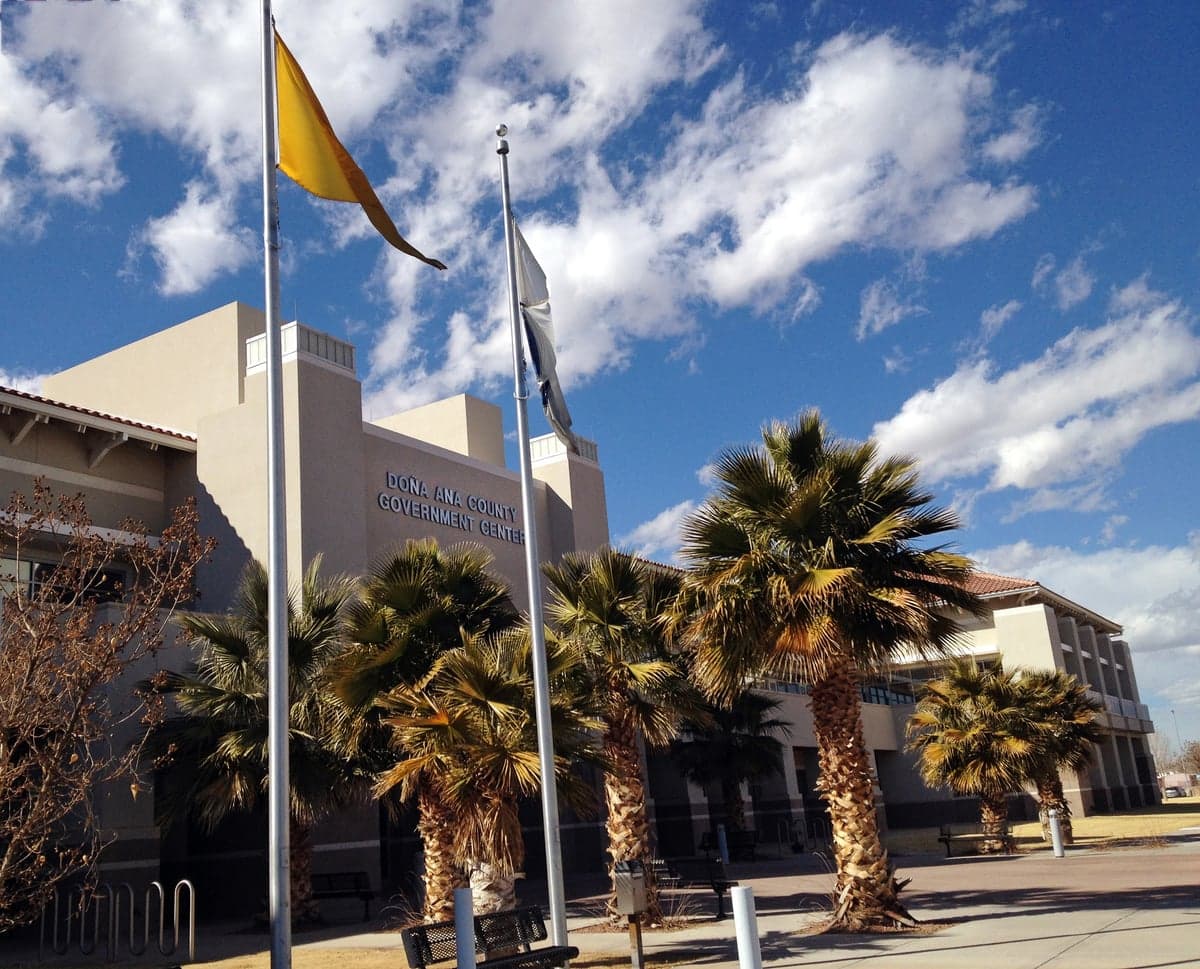
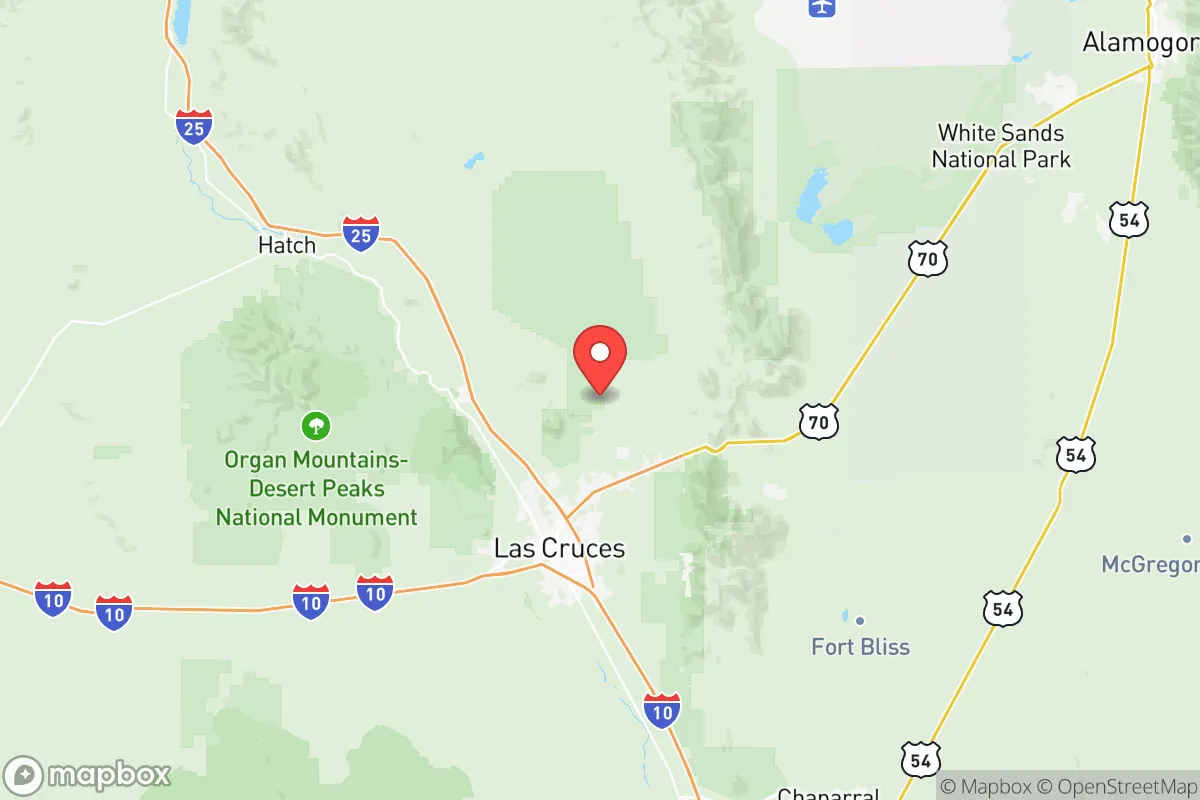
Photo: Wikipedia
Demographics of Dona Ana County
Affluence Level in Dona Ana County
A below-average socioeconomic profile. Incomes, home values, and educational attainment trail the U.S., with higher poverty and unemployment.
People of Dona Ana County
Dona Ana County, New Mexico is home to 221,665 residents, a predominantly Hispanic population (67.6%) with a significant White minority (27.1%) and small Black (1.4%), East/Southeast Asian (0.7%), and Indian subcontinent (0.4%) communities. The county’s identity is rooted in centuries of Spanish and Mexican settlement, later overlaid by Anglo-American migration and modern Sun Belt growth, creating a distinctive borderland culture centered on Las Cruces, the county seat. With 7.5% foreign-born and 31.4% college-educated, the population is both deeply traditional and increasingly diverse, shaped by its location along the Rio Grande and the U.S.-Mexico border.
Settlement & growth (pre-1960)
The human history of Dona Ana County begins with Indigenous peoples, primarily the Manso, Piros, and Tiwa tribes, who lived along the Rio Grande for centuries before European contact. Spanish colonization arrived in the late 16th century, but permanent settlement did not take hold until the 1840s, when the Mexican government granted land to settlers in the Mesilla Valley. The town of Mesilla, founded in 1848, became the region’s first major Hispanic settlement, a trading hub and cultural center that remained part of Mexico until the 1854 Gadsden Purchase transferred it to the United States. This Spanish-Mexican heritage remains the demographic bedrock: the majority of today’s Hispanic population traces its roots to these early settlers, not to later immigration waves.
After the Gadsden Purchase, Anglo-American settlers began arriving in the 1850s and 1860s, drawn by the fertile Rio Grande floodplain and the promise of agriculture. The town of Las Cruces, founded in 1849, grew as a farming and ranching center, attracting migrants from Texas, the Midwest, and the South. These early Anglo settlers were largely of English, Scots-Irish, and German descent, and they established the county’s non-Hispanic White population. The arrival of the Atchison, Topeka and Santa Fe Railway in the 1880s spurred further growth, connecting Las Cruces and Hatch (founded 1885) to national markets and bringing a wave of railroad workers, merchants, and homesteaders. By 1900, the county’s population was roughly 12,000, split between Hispanic and Anglo communities that remained largely separate socially and economically.
The early 20th century saw modest diversification. Mexican refugees fleeing the 1910-1920 Mexican Revolution crossed the border, settling in Las Cruces and Sunland Park (then a small farming community), reinforcing the Hispanic majority. The Dust Bowl of the 1930s pushed a small number of displaced farmers from Oklahoma and Texas into the county, but Dona Ana County was not a major destination for that migration. World War II brought a military presence with the establishment of White Sands Missile Range in 1945, which drew engineers, scientists, and support staff to the region, many settling in Las Cruces. The post-war period saw the founding of New Mexico State University (then New Mexico College of Agriculture and Mechanic Arts) as a growing employer, attracting faculty and students from across the country. By 1960, the county’s population had reached 59,948, still overwhelmingly Hispanic and Anglo, with small Black and Native American communities.
Modern era (post-1965)
The 1965 Hart-Cellar Act fundamentally reshaped Dona Ana County’s demographics, though less dramatically than in coastal regions. The primary effect was a surge in legal immigration from Mexico, as family reunification provisions allowed earlier settlers to sponsor relatives. This wave concentrated in Las Cruces and the border town of Santa Teresa, where maquiladora factories and cross-border commerce created jobs. The Hispanic share of the population rose from roughly 55% in 1970 to 67.6% today, driven by both immigration and higher birth rates among Hispanic families. The foreign-born population, now 7.5%, is overwhelmingly Mexican-born, with smaller numbers from Central America.
Domestic migration also accelerated after 1965, as the Sun Belt boom drew retirees, military personnel, and professionals to the region. The establishment of the Spaceport America project in the 2000s and the expansion of White Sands Missile Range brought a wave of engineers and technicians, many of them non-Hispanic Whites from other states. This group concentrated in newer subdivisions in Las Cruces’ east side and the master-planned community of Mesilla Valley, creating a more suburban, college-educated enclave. The county’s college-educated share, now 31.4%, reflects this influx, as does the growth of the East/Southeast Asian community (0.7%) and Indian subcontinent population (0.4%), both small but concentrated among university faculty and medical professionals at New Mexico State University and Memorial Medical Center.
Suburbanization reshaped settlement patterns. Las Cruces expanded from a compact downtown to a sprawling city of over 110,000, with bedroom communities like Doña Ana (a historic Hispanic village) and Radium Springs absorbing growth. The Black population, at 1.4%, remains small and dispersed, largely tied to military and university employment. The county’s overall character remains Hispanic-majority and culturally traditional, but the Anglo and Asian enclaves in east Las Cruces and Santa Teresa represent a growing, more secular and professional demographic that sometimes sits at odds with the older, Catholic, Spanish-speaking population in the rural colonias and south county.
The future
Dona Ana County’s population is projected to continue growing, driven by natural increase among Hispanic families and continued in-migration from other states. The Hispanic share is likely to remain stable or increase slightly, as immigration from Mexico has plateaued but birth rates remain above replacement. The non-Hispanic White population is aging and declining in share, as younger Anglos move to larger cities for education and careers. The East/Southeast Asian and Indian subcontinent communities are small but growing, likely to double in share over the next decade as university and tech sectors expand.
The county is not homogenizing but rather tribalizing into distinct enclaves: the rural south and west remain heavily Hispanic, Spanish-dominant, and working-class, while east Las Cruces and Santa Teresa are becoming more Anglo, professional, and English-dominant. The colonias—unincorporated settlements like Chaparral and La Mesa—continue to house a poor, largely immigrant population, while gated communities and new subdivisions attract retirees and remote workers from California and Texas. This bifurcation may intensify cultural and political tensions, as the county’s conservative-leaning Anglo population (Dona Ana County voted +5 Democratic in 2024, but the rural precincts lean Republican) contends with a more Democratic Hispanic majority.
For someone moving in now, Dona Ana County offers a choice: the traditional, family-oriented Hispanic culture of the Mesilla Valley, or the newer, more diverse and professional lifestyle of east Las Cruces. The county’s identity is not fixed—it is a borderland in transition, where centuries of Spanish heritage meet 21st-century Sun Belt growth. The population will likely become more educated, more suburban, and slightly more diverse, but the Hispanic majority and its cultural imprint will remain the defining character for the foreseeable future.

* Values derived from national, state, county, city and local statistics and may differ in a specific area. Last updated: 2026-06-01T16:30:33.000Z
Narrative content on this page is AI-generated and may contain mistakes. Verify any details that matter before acting on them.
ReloMaps may earn a commission from affiliate links at no extra cost to you.

