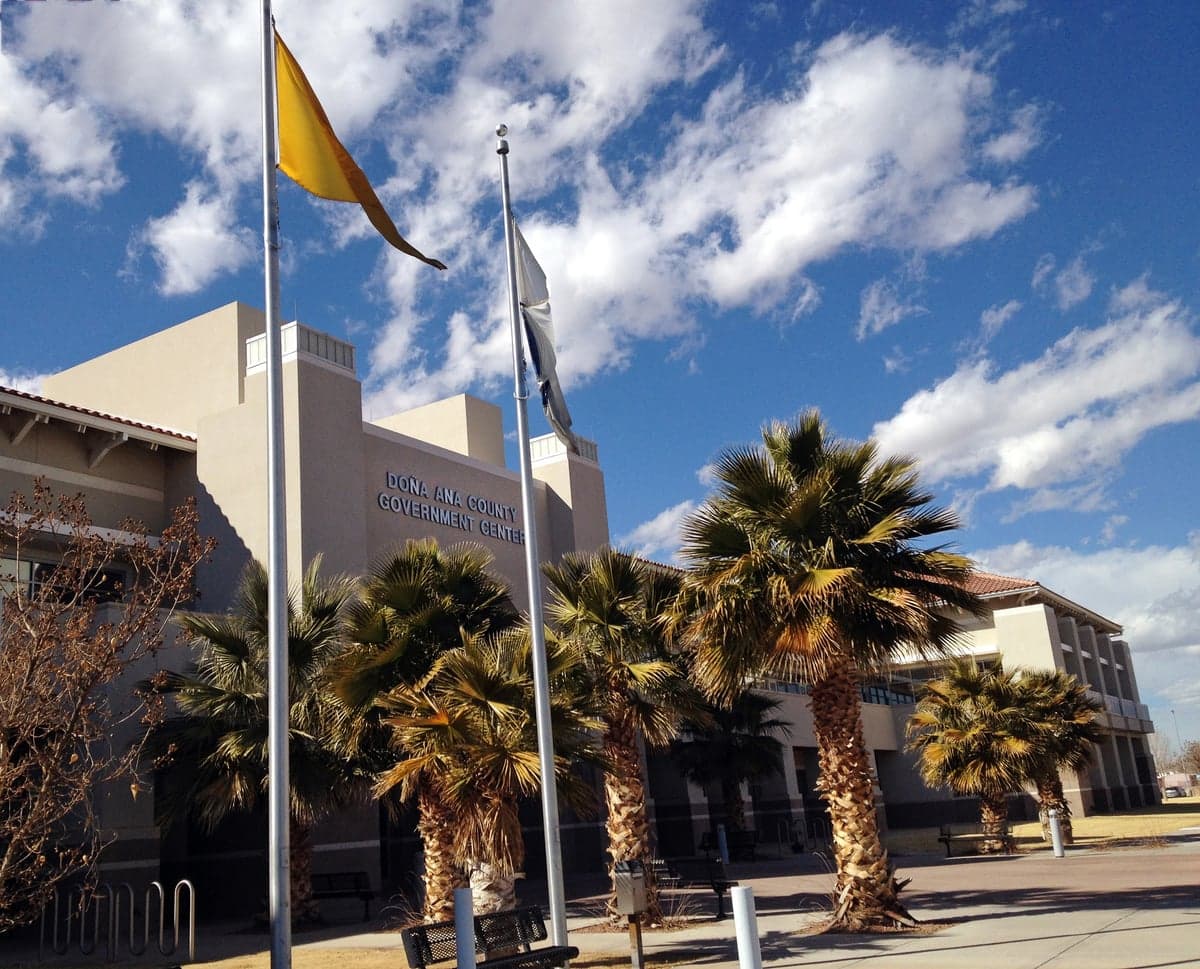
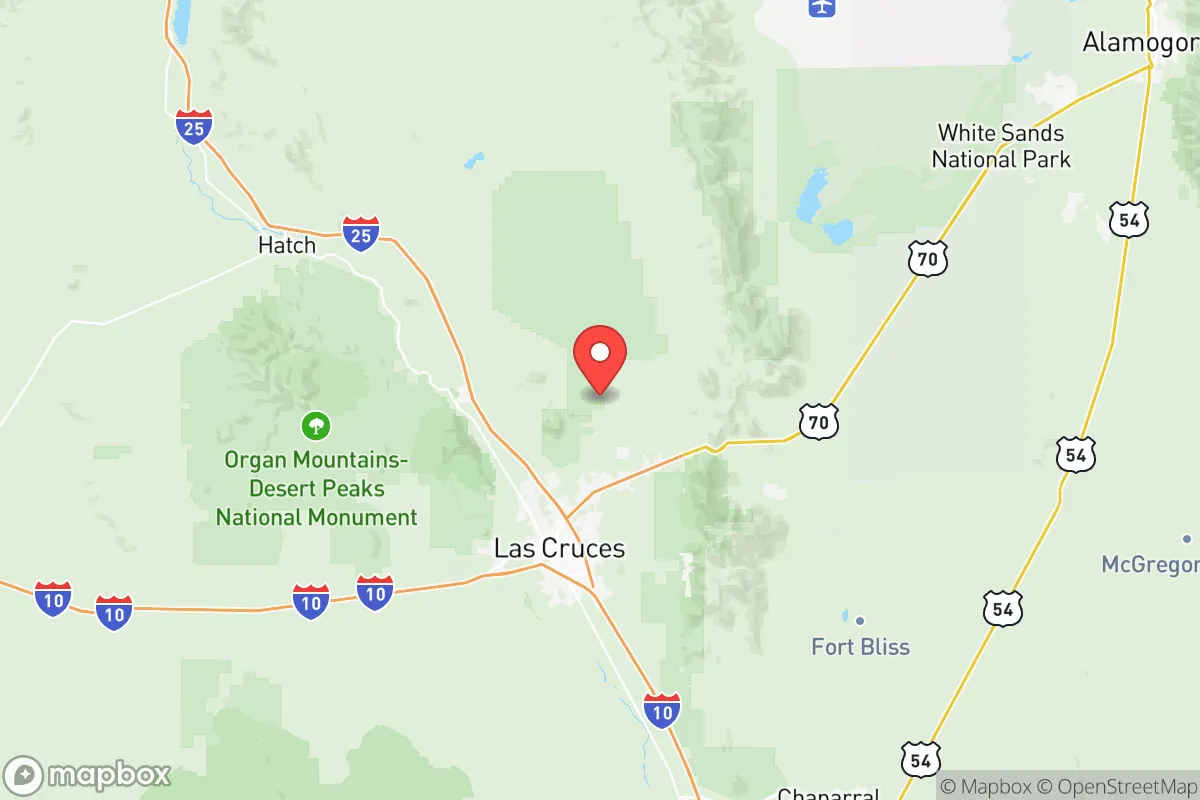
Photo: Wikipedia
Political ClimatePolitical Climate in Dona Ana County
Showing district-level results — no local-only data available.
Local Political AnalysisPolitical Analysis of Dona Ana County
Dona Ana County is a true battleground, with a Cook PVI of EVEN that makes it one of the most politically competitive counties in New Mexico. This isn't a place that's solidly red or blue; it's a place where the outcome of any election depends entirely on which side turns out. The county's politics are a direct reflection of its geography—the more rural, agricultural areas lean conservative, while the population centers in Las Cruces and the university corridor tilt left. This split has created a fascinating, and at times frustrating, dynamic for those of us who've lived here for decades, watching the pendulum swing back and forth.
How it compares
Compared to the rest of New Mexico, which has a Cook PVI of D+3, Dona Ana County is noticeably more conservative. The state as a whole leans Democratic, but this county is a genuine toss-up. That means the progressive policies coming out of Santa Fe—like the recent push for stricter gun control and expanded government healthcare mandates—don't always sit well here. In the rural pockets like Hatch and Anthony, you'll find a strong libertarian streak, where folks are deeply skeptical of government overreach into their personal lives and property rights. Meanwhile, the swing precincts in Mesilla and the East Mesa area of Las Cruces are where elections are won and lost. These are the neighborhoods where a candidate's stance on local issues—water rights, land use, and school choice—matters more than party affiliation. The county's EVEN rating means it's a bellwether for the state's political mood, but it's a mood that's far more skeptical of big government than the rest of New Mexico.
What this means for residents
For residents, this political climate means you have to be vigilant. The constant push from the state level to impose progressive social policies—like the 2023 law requiring paid family leave, which many small business owners here saw as an unfunded mandate—feels like a direct threat to our way of life. The county's swing status means that local elections are incredibly consequential. A single county commission seat can determine whether we get more sensible land-use regulations or a carbon copy of Santa Fe's agenda. It also means that your vote actually counts here, which is a double-edged sword. On one hand, it gives conservatives a real chance to push back against overreach. On the other, it means we're constantly fighting to keep the county from sliding further left, especially as Las Cruces grows and attracts more transplants from blue states.
One of the biggest cultural distinctions is the county's strong agricultural heritage, which fosters a deep respect for private property and personal responsibility. You see it in the fierce opposition to any proposed water regulations that would tell farmers how to manage their own land. The county's large Hispanic population, particularly in the Doña Ana and Berino communities, also tends to be more socially conservative and family-oriented, often voting against the progressive tide on issues like abortion and parental rights in schools. This creates a unique political landscape where the "blue" vote is concentrated in the university and government sectors, while the "red" vote is rooted in the land and local traditions. Looking ahead, the trend is concerning: as Las Cruces continues to urbanize, the county's EVEN rating could tip blue, making it harder to preserve the personal freedoms and limited government that have long defined life here. For now, it's a fight worth having, but one that requires constant attention.

State Political ClimatePolitical Climate in New Mexico
State Political AnalysisPolitical Environment in the State
New Mexico has a Democratic lean overall, with a Cook PVI of D+3, but that number hides a deeply fractured political landscape. The state’s blue tint is almost entirely driven by Bernalillo County (Albuquerque) and Santa Fe County, while the rest of the state—especially the eastern plains and southern border—votes reliably red. Over the last 10-20 years, the state has shifted leftward on cultural and regulatory issues, but the rural-urban chasm has widened dramatically, and conservative strongholds like Hobbs, Roswell, and Carlsbad have only grown more resistant to Santa Fe’s agenda.
Urban vs. rural divide
The political map of New Mexico is a tale of two worlds. Albuquerque and Santa Fe are the engines of Democratic power, with Santa Fe County delivering margins of 70%+ for Democratic candidates in recent cycles. These metros are home to the state’s government workforce, university communities, and a growing progressive activist class. Meanwhile, the southeastern corner—Lea County (Hobbs) and Eddy County (Carlsbad)—votes Republican by 30-40 points, driven by oil and gas workers who view Santa Fe’s regulatory push as a direct threat to their livelihoods. The eastern plains, including Clovis and Portales, are similarly red, anchored by agriculture and a strong military presence at Cannon Air Force Base. The Las Cruces area in the south is a purple battleground, with Doña Ana County flipping between parties depending on turnout, but trending left as the city grows. The rural northern counties, like Taos and Mora, are culturally conservative but vote Democrat out of habit and reliance on state spending—a unique New Mexico paradox.
Policy environment
Santa Fe has been on a progressive policy tear that should give any conservative pause. The state’s gross receipts tax is notoriously complex and high, often exceeding 8% in cities like Albuquerque, and there’s no broad-based income tax cut on the horizon. In 2021, the legislature passed the Energy Transition Act, mandating a 100% carbon-free grid by 2045—a move that directly pressures the oil and gas industry in Hobbs and Carlsbad. On education, the state has expanded universal pre-K and increased per-pupil spending, but test scores remain near the bottom nationally, and school choice is limited. Healthcare is dominated by the state’s Medicaid expansion, which covers over 40% of residents, creating a large government-dependent population. Election laws have been loosened: same-day voter registration and automatic voter registration at the DMV are now law, and the state has a permanent absentee ballot list—moves that critics argue reduce election integrity. There is no voter ID requirement for in-person voting, though a non-photo ID is needed for same-day registration.
Trajectory & freedom
New Mexico is becoming less free by any conservative measure, especially in the last five years. The 2021 Red Flag Gun Law (HB 87) allows courts to temporarily seize firearms from individuals deemed a threat by family or law enforcement, with no criminal conviction required—a direct infringement on Second Amendment rights. The state also banned concealed carry on school grounds and passed a universal background check law. On parental rights, the 2023 Reproductive Health Care Act removed nearly all restrictions on abortion, including parental notification for minors, and mandated insurance coverage for the procedure. The state has also expanded Medicaid coverage for gender transition procedures for minors, a flashpoint for parents. Property rights are under pressure from the Oil and Gas Act updates that give the state more power to deny drilling permits, and the Land Use Planning Act (still pending) could impose state-level zoning on rural counties. The 2022 Tax Package did cut the personal income tax rate from 5.9% to 5.3%, but it’s a small olive branch compared to the regulatory expansion.
Civil unrest & political movements
New Mexico has seen its share of political flashpoints. In 2020, Albuquerque experienced weeks of protests following the George Floyd killing, with some escalating into property damage and clashes with police. The Sanctuary State law (2019) prohibits state and local law enforcement from cooperating with federal immigration authorities, creating tension in border communities like Las Cruces and Deming, where many residents support stricter enforcement. The Otero County Commission made national headlines in 2022 by refusing to certify primary election results over concerns about Dominion voting machines—a move that was overruled by the state Supreme Court but highlighted deep distrust in election integrity. The New Mexico Civil Guard, a militia group, has been active in border surveillance operations near Sunland Park, while progressive groups like Somos Un Pueblo Unido push for driver’s licenses for illegal immigrants and other sanctuary policies. The 2023 legislative session saw a failed attempt to pass a state-level assault weapons ban, which would have been the most restrictive in the nation—it died in committee but signals the direction of the majority.
Projection
Over the next 5-10 years, New Mexico is likely to continue its leftward drift, but with significant caveats. The oil and gas boom in the Permian Basin (Lea and Eddy counties) is bringing in new residents from Texas who are culturally conservative and may shift the southeastern vote even further right. However, Albuquerque and Santa Fe are growing faster than the rest of the state, and in-migration from California and Colorado is accelerating the progressive tilt. The state’s high poverty rate (18% vs. 11% national) and low labor force participation mean that government dependency will remain a political anchor for the left. Expect more gun control, more environmental regulation, and continued expansion of government healthcare. The 2026 gubernatorial race will be a key test: if a Republican can win, it would signal a realignment, but the current map favors Democrats. For a conservative moving in now, the best bet is to settle in Hobbs, Carlsbad, or Clovis, where local governance is still sane, and brace for a state government that will keep pushing the envelope.
For a new resident, the bottom line is this: New Mexico offers low housing costs and stunning landscapes, but you’ll be living under a state government that is actively hostile to gun rights, parental authority, and economic freedom. The rural areas are still havens of common sense, but Santa Fe’s reach is long. If you value personal liberty and want to raise a family without the state interfering in your choices, you’ll need to pick your county carefully—and stay engaged in local politics, because the fight here is far from over.
* Values derived from national, state, county, city and local statistics and may differ in a specific area. Last updated: 2026-06-01T16:30:33.000Z
Narrative content on this page is AI-generated and may contain mistakes. Verify any details that matter before acting on them.
ReloMaps may earn a commission from affiliate links at no extra cost to you.

