
Photo: Wikipedia
Personal Sovereignty in Dona Ana County
Viable for self-reliance. Generally workable, though some barriers may limit total independence.
What does Personal Sovereignty tell us?
Personal Sovereignty measures your capacity for self-reliance and independence with minimal government friction. Higher scores mean fewer barriers between you and the way you want to live... but it assumes you have the space you need and good neighbors.
What does this tell us?
Personal Sovereignty measures your capacity for self-reliance and independence with minimal government friction. Higher scores mean fewer barriers between you and the way you want to live... but it assumes you have the space you need and good neighbors.
State Policy
Energy independence: Net exporter (250% of energy produced in-state)
Personal Liberty
Homesteading

Personal Liberty Analysis
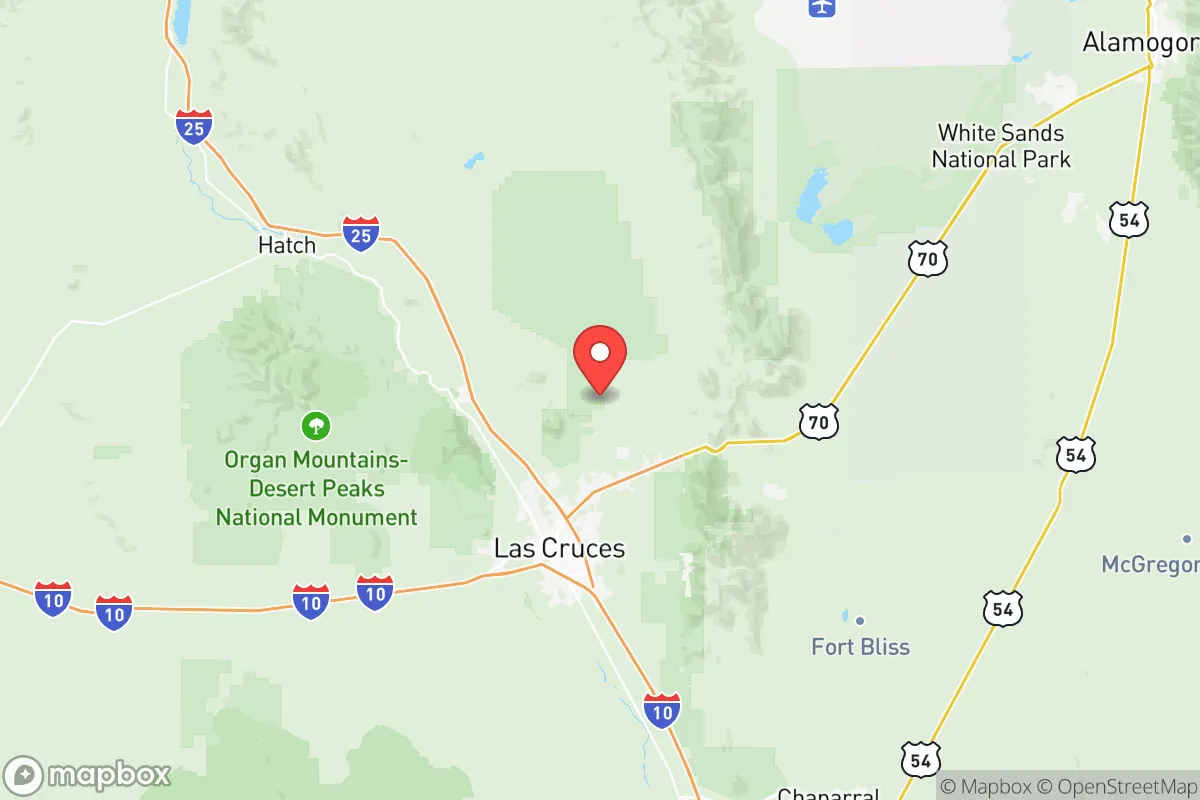
Doña Ana County offers a deeply uneven landscape for personal sovereignty, where state-level preemption battles and local enforcement choices directly affect daily life. New Mexico’s constitutional carry law (2021) and property tax rate of roughly 0.8% of assessed value lay a foundation for self-reliance, but the state’s progressive income tax (up to 5.9%) and 2021 red flag statute create real friction for those who view government reach as a threat to liberty. The practical reality for a strategic relocator depends heavily on whether you land inside Las Cruces city limits, the traditional corridor along Mesilla and Hatch, the border zones of Anthony and Sunland Park, or the unincorporated pocket near Organ — each jurisdiction applies state mandates with very different levels of restraint.
Tax burden, property costs, and regulatory climate across Doña Ana County communities
New Mexico’s property taxes stay low by national standards, but the gross receipts tax (GRT) you pay varies sharply by location. Las Cruces levies a combined GRT around 8.44%, while Mesilla often matches that range due to shared Dona Ana County rates. Farther south, Anthony and Sunland Park can run slightly lower — sometimes under 8.3% — because their municipal add-ons are smaller. That difference matters for anyone running a small business or buying substantial equipment for homestead build-out. Regulatory posture splits along urban/rural lines. Las Cruces enforces a unified development code with building permits, setback requirements, and zoning rules that limit livestock and accessory structures on standard residential lots. By contrast, unincorporated areas near Organ and the outskirts of Hatch operate under county jurisdiction, where enforcement is thinner, lot sizes can be larger, and you can often build a shop, fence pasture, or park equipment with fewer county inspector visits. For the prepper-minded relocator, the difference between a Las Cruces subdivision and raw land near Anthony is the difference between asking permission and filing a one-time notice.
Self-defense laws and local gun culture in Doña Ana County towns
New Mexico’s 2021 permitless carry statute lets adults carry concealed without a license, a significant win for self-defense advocates. The state still lacks a preemption law strong enough to prevent local restrictions on where firearms can be carried in government buildings or parks — and Las Cruces has used that ambiguity to post some facilities as restricted. No background check is required for private firearm sales anywhere in the state, but the 2021 red flag law allows courts to issue extreme risk protection orders based on third-party claims, which raises due-process concerns for those who prioritize absolute control over their own defense. Local culture differs notably: Hatch and Organ are deeply gun-friendly, with high concealed-carry rates and multiple shooting ranges within a short drive, while Las Cruces leans more moderate and carries some of the same urban firearm friction found in Albuquerque. Sunland Park, given its border proximity, sees more federal law enforcement presence and occasional messaging around firearm transport. The Doña Ana County Sheriff’s Office has historically taken a restrained approach to red flag petitions, but the law remains a live threat for anyone who might attract a complaint from a neighbor or ex-spouse. Anyone serious about self-defense should own a good pistol, know state transport law for crossing into Texas, and understand which city-owned facilities in Las Cruces restrict carry.
Self-reliance and off-grid living viability in Doña Ana County
The viability of off-grid homesteading depends directly on which piece of the county you claim. Unincorporated areas near Organ and north of Hatch offer 1- to 5-acre parcels zoned for agricultural use, where county rules allow livestock, gardens, and detached workshops with minimal bureaucratic friction. Las Cruces limits accessory structures and livestock on standard city lots, making serious self-reliance impractical inside the urban core. Zoning in Anthony and Sunland Park is more permissive for small-scale agriculture, but these areas still fall under municipal building codes that require permits for new residential structures. Off-grid feasibility in Doña Ana County is realistic but requires strategy: the state mandates a building permit even in unincorporated areas, though enforcement on remote parcels is light. Solar is a strong option with over 280 sunny days per year, and many rural properties already have well and septic in place. Water rights are the choke point — parcels along the Rio Grande corridor near Mesilla and Hatch have senior water rights that make irrigation viable, while land near Organ often relies on private wells with variable yields. Anyone planning true self-reliance should budget for a deep well, solar array with battery storage, and a backup generator. The county’s rural fire districts have varying response times, so structure spacing and defensible space become survival considerations, not just code compliance.
Personal liberties for families and individuals in Doña Ana County
Parental rights face headwinds in New Mexico. The state does not have a standalone parental rights in education law, and school districts in Las Cruces have adopted curriculum and health policies that can override parental input on sensitive topics. Medical autonomy is another contested zone — New Mexico mandates certain childhood vaccines for school attendance, with religious and medical exemptions available but subject to administrative friction. Las Cruces and Mesilla school boards have generally maintained these mandates without local variance, while the smaller Hatch and Anthony districts sometimes offer more flexibility in practice due to lower administrative overhead. Property rights are generally solid in Doña Ana County — eminent domain actions are rare, and the county’s comprehensive plan hasn’t aggressively downzoned rural parcels — but the state’s subdivision approval process can delay large lot splits. Free speech protections follow the First Amendment in public spaces, but Las Cruces has adopted ordinances limiting public gatherings in certain parks and event spaces, which can be a concern for political or religious assemblies that draw attention. For those who see each of these fronts as a battle against expanding government scope, the safest bet is unincorporated land near Organ or northern Hatch, where municipal reach is thinnest and community norms lean toward leave-me-alone independence.
Compared to neighboring Texas (no income tax, more robust preemption on firearms, but higher property taxes and stricter building codes in many counties) or Arizona (residential solar rights law, stronger parental rights statutes, but faster growth and stricter groundwater rules), Doña Ana County offers a middle path that rewards careful location selection. The county’s low property taxes, constitutional carry, and homestead-friendly rural zoning make it viable for those willing to trade some state-level friction for local buy-in. The strategic move is to avoid Las Cruces city limits, settle on unincorporated acreage near Organ or Hatch, plan for the water challenge, and accept that New Mexico’s red flag and vaccine mandates are live concerns you navigate rather than escape.

* Values derived from national, state, county, city and local statistics and may differ in a specific area. Last updated: 2026-06-01T16:30:33.000Z
Narrative content on this page is AI-generated and may contain mistakes. Verify any details that matter before acting on them.
ReloMaps may earn a commission from affiliate links at no extra cost to you.

