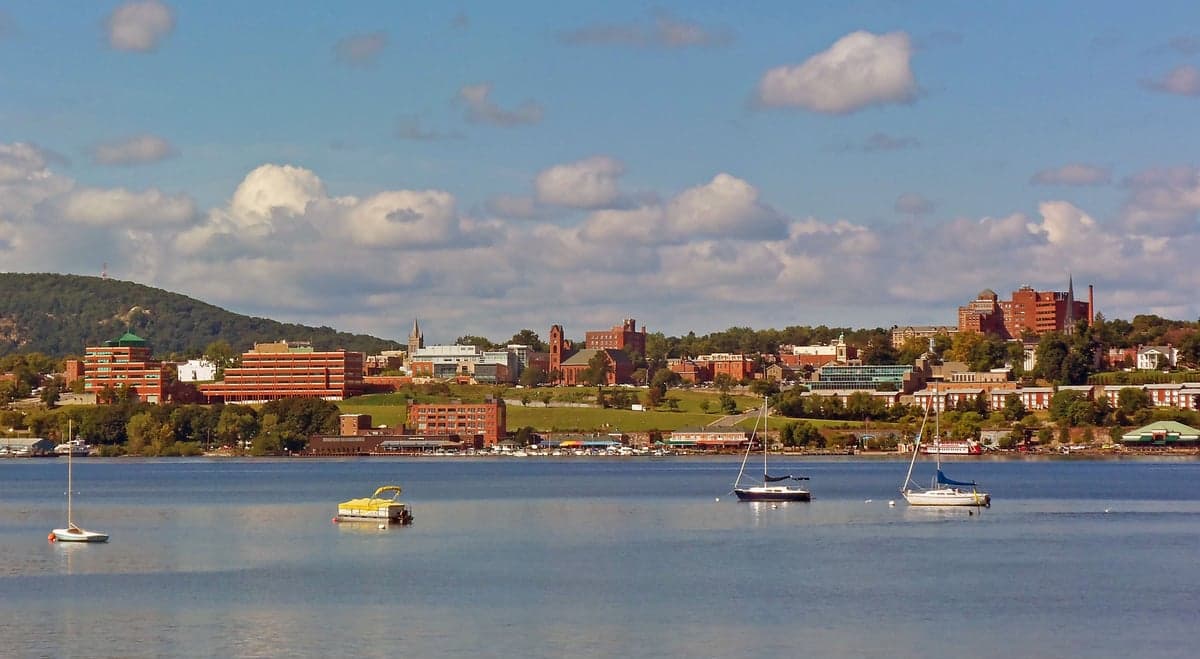
Photo: Wikipedia
Political ClimatePolitical Climate in Newburgh, NY
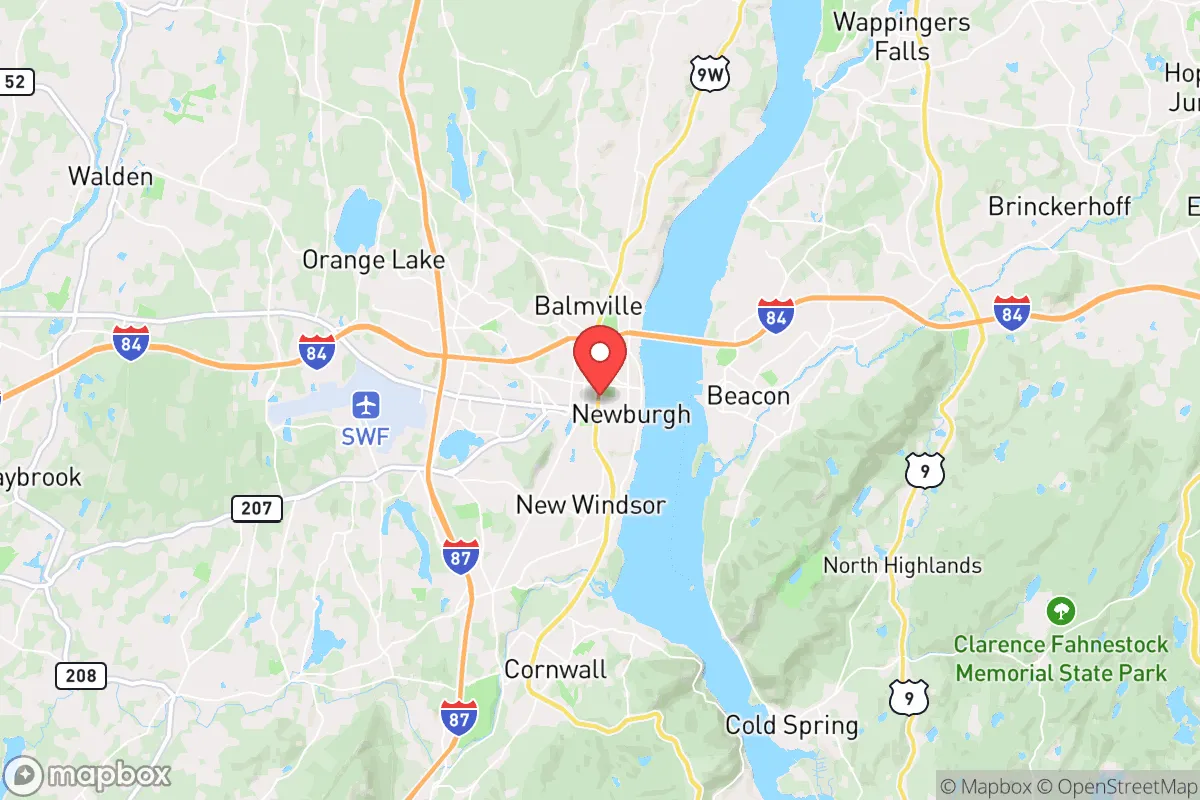
District shown is the primary district for this city’s centroid. Cities may span multiple districts.
Local Political AnalysisPolitical Analysis of Newburgh, NY
Newburgh, New York, has a Cook PVI of D+2, meaning it leans slightly Democratic, but that number doesn't tell the whole story of a city that’s been shifting in ways that worry a lot of us who’ve lived here for years. The political climate here isn’t static—it’s been moving steadily toward progressive policies, especially in the last decade, and that’s brought some real changes to how things run day-to-day. You see it in local zoning decisions, in how the city handles public safety, and in the growing influence of activist groups that push for things like defunding the police or imposing stricter environmental mandates on small businesses. It’s not the same Newburgh I remember from the 90s, and a lot of longtime residents are feeling like their voices are getting drowned out by newcomers and out-of-town organizers.
How it compares
If you drive just a few miles north or west, you’ll hit towns like New Windsor or Cornwall, where the politics are noticeably more conservative—think more focus on property rights, lower taxes, and a “stay out of my business” attitude. Even Beacon, across the river, has a similar D+ lean but feels more aggressively progressive, with higher taxes and more regulations on everything from short-term rentals to lawn care. Newburgh sits in a kind of political no-man’s-land: it’s not as red as the surrounding Orange County countryside, but it’s also not as uniformly blue as some of the Hudson Valley’s wealthier enclaves. That D+2 rating actually masks a lot of internal tension—the city council has flipped between moderate and progressive factions in recent elections, and the school board has become a battleground over curriculum and parental rights. Compared to nearby Middletown, which has a similar demographic mix but a more pragmatic, less ideological local government, Newburgh feels like it’s being pulled further left every year.
What this means for residents
For folks who value personal freedoms—like the right to run a small business without a dozen new permits, or the right to keep and bear arms without extra local restrictions—the trend here is concerning. The city has been pushing for more oversight on rental properties, which sounds good on paper but has led to higher costs for landlords and, ultimately, higher rents for tenants. There’s also been talk of adopting “sanctuary city” policies, which some residents worry could strain local resources and create friction with federal immigration enforcement. Property taxes in Newburgh are already among the highest in Orange County, and with the city’s push for more social programs and green energy mandates, those costs are only going up. If you’re a homeowner or a small business owner, you’re feeling the squeeze from both sides—higher taxes and more regulations, with less say in how your tax dollars are spent.
What daily life is like for families
On the ground, the political shift has made daily life feel a bit more uncertain. The school district, for example, has seen a lot of turnover in administration and a push for more progressive curriculum changes—things like critical race theory and gender identity discussions in elementary grades—that have divided parents. Crime rates have fluctuated, but the city’s response has been to focus on social services rather than enforcement, which leaves some neighborhoods feeling less safe than they used to. For families, the choice often comes down to whether you can afford to move to a nearby town with a more conservative school board and lower taxes, or whether you’re willing to stay and fight for the kind of community you want. It’s not all bad—there are still great parks, a strong sense of history, and plenty of good people—but the political direction is making it harder for the average family to feel like they have a stable future here.
Culturally, Newburgh has always had a bit of an independent streak—it’s a working-class city with a rich immigrant history, and that’s something to be proud of. But the recent push for things like bike lanes, arts districts, and “equity” initiatives feels more like a top-down makeover than something that grew organically from the community. The city’s policy on short-term rentals, for instance, has been a mess—heavy-handed restrictions that hurt homeowners who just want to rent out a room to make ends meet. In the long term, if Newburgh keeps moving in this progressive direction, I worry it’ll lose the character that made it special: a place where you could live affordably, raise a family, and be left alone to live your life. For now, a lot of us are watching the next election closely, hoping for a return to common sense.

State Political ClimatePolitical Climate in New York
State Political AnalysisPolitical Environment in the State
New York State has been a solidly blue stronghold for decades, with Democrats holding every statewide office and commanding supermajorities in both legislative chambers. Over the past 20 years, the state has lurched sharply leftward, driven by New York City’s massive population and its progressive activist class. While upstate regions once provided a competitive counterweight, recent cycles have seen even traditionally purple suburbs flip blue, leaving conservatives with little representation at the state level. The 2024 presidential race saw Joe Biden carry the state by roughly 23 points, a margin that has widened from the 14-point spread in 2016.
Urban vs. rural divide
The political map of New York is a tale of two worlds. New York City and its immediate suburbs—Westchester County, Nassau County, and Suffolk County on Long Island—generate the vast majority of Democratic votes. The five boroughs alone account for over 40% of the state’s electorate, and they vote about 80% Democratic. Upstate, the picture is starkly different. Erie County (Buffalo) and Monroe County (Rochester) are blue islands in a sea of red, but the rural counties—Allegany, Steuben, Chenango, and the North Country—routinely vote 60-70% Republican. The Hudson Valley is a battleground zone: Dutchess County and Ulster County have trended blue in recent cycles, while Orange County and Sullivan County remain competitive but shifting. The Capital Region around Albany is reliably Democratic, driven by state government employment. What this means for a conservative: your vote carries weight only if you live in a handful of upstate districts; statewide, you’re outnumbered roughly 2-to-1.
Policy environment
New York’s policy climate is aggressively progressive and interventionist. The state has the highest combined state and local tax burden in the nation, with income tax rates topping 10.9% for top earners and property taxes among the steepest anywhere. The regulatory posture is hostile to business: the Climate Leadership and Community Protection Act mandates a 70% renewable energy grid by 2030 and net-zero emissions by 2050, driving up energy costs. Education policy is dominated by the teachers’ unions, with school choice virtually nonexistent—no voucher programs, no charter school expansion outside NYC. Healthcare is heavily regulated, with the state expanding Medicaid eligibility and imposing strict insurance mandates. Election laws are among the most permissive in the country: no-excuse absentee voting, early voting, automatic voter registration, and same-day registration. The New York State Legislature has passed laws allowing non-citizens to vote in local elections in NYC, though this is being challenged in court. For a conservative, the policy environment feels like a top-down experiment in social engineering, with little room for local autonomy.
Trajectory & freedom
New York is becoming less free by nearly any measure, and the trend is accelerating. The SAFE Act of 2013 was one of the nation’s strictest gun control laws, banning assault weapons and requiring universal background checks. In 2022, the state passed the Concealed Carry Improvement Act (CCIA), which effectively ended public carry by requiring “good moral character” and banning guns in a long list of “sensitive places.” Parental rights have been eroded: the state’s Gender Expression Non-Discrimination Act (GENDA) and subsequent guidance allow schools to withhold information about a child’s gender identity from parents. Medical autonomy was curtailed during COVID with some of the nation’s longest-lasting mandates, including a private-sector vaccine mandate that was only repealed in 2023. Property rights are weak: rent control laws in NYC and the Housing Stability and Tenant Protection Act of 2019 severely limit landlords’ ability to raise rents or evict tenants. The state’s Green Amendment gives citizens standing to sue over environmental harms, which has been used to block development. On the plus side, the state repealed its ban on plastic bags in 2023 after public backlash, but the overall trajectory is one of expanding government control over daily life.
Civil unrest & political movements
New York has been a flashpoint for political activism on both sides. The Black Lives Matter protests in summer 2020 were massive, especially in NYC, Buffalo, and Rochester, with some turning violent and leading to property destruction. The state responded with police reform mandates that have since been blamed for rising crime. On the right, the Second Amendment sanctuary movement has seen over 30 counties pass resolutions declaring they won’t enforce “unconstitutional” gun laws, though these are symbolic. The New York State Rifle & Pistol Association has been active in lawsuits, winning the landmark Bruen decision at the Supreme Court in 2022. Immigration politics are a constant tension: New York is a sanctuary state, with laws prohibiting local law enforcement from cooperating with ICE. The influx of over 100,000 migrants to NYC since 2022 has strained shelters and schools, leading to visible encampments and public backlash. Election integrity remains a hot-button issue: the state’s move to no-excuse absentee voting and automatic registration has raised concerns about ballot security, though no major scandals have emerged. A new resident will notice the political divide in everyday life—yard signs, bumper stickers, and conversations at the grocery store are more polarized than in many other states.
Projection
Over the next 5-10 years, New York will likely become more progressive, not less. Demographic trends are working against conservatives: the state is losing population to Florida, Texas, and the Carolinas, and those leaving are disproportionately upstate and middle-class families. The remaining population is increasingly concentrated in NYC and its suburbs, which are becoming more diverse and more liberal. The state’s fiscal situation is precarious—the pension system is underfunded, and debt is high—which could force tax increases or service cuts. The congestion pricing plan for Manhattan, set to begin in 2024, will further squeeze commuters. On the cultural front, the state’s embrace of transgender rights, DEI mandates in schools, and climate activism will continue. For a conservative moving in now, expect to be a permanent minority in state politics, with your vote mattering only in local races and congressional districts. The best-case scenario is that a Republican governor could win in a wave year, as happened with George Pataki in the 1990s, but that seems unlikely given current trends.
For a conservative considering a move to New York, the bottom line is this: you’ll find like-minded communities in the rural upstate counties and some Hudson Valley towns, but you’ll be swimming against a strong progressive current at the state level. Your taxes will be high, your gun rights restricted, and your children’s education subject to policies you may disagree with. If you value local community and can afford the cost of living, places like Orleans County or Livingston County offer a quieter, more conservative lifestyle. But if you’re looking for a state that respects your freedoms and keeps government out of your life, New York is not that place—and it’s not getting better anytime soon.
* Values derived from national, state, county, city and local statistics and may differ in a specific area. Last updated: 2026-05-01T05:31:15.000Z
Narrative content on this page is AI-generated and may contain mistakes. Verify any details that matter before acting on them.
ReloMaps may earn a commission from affiliate links at no extra cost to you.

